Is the solution to America’s aluminum crunch hiding in landfills?

Advanced sorting technologies and stronger state recycling policies can help recover more scrap metal to meet U.S. aluminum demand, experts say.
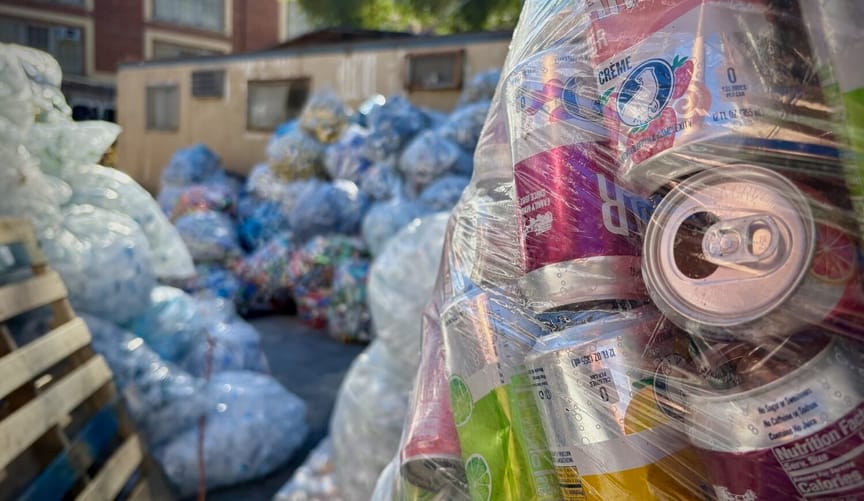
Close up of cans in a clear bag, with lots of other bags stacked in the background
Aluminum cans are bagged for recycling at the Sure We Can redemption center in Brooklyn, New York. (Maria Gallucci/Canary Media)

By Maria Gallucci, Canary Media, 19 October 2026

A global supply shortage and U.S. tariffs have roiled the aluminum market this year, putting greater pressure on the United States to produce more of its own metal. Plans to build or reopen giant smelters are moving forward, but they all hinge on securing huge amounts of cheap power — at a time when data centers are chasing every last electron.

Recycling aluminum, on the other hand, uses only 5% of the energy needed to make virgin metal in smelters, and the U.S. has an abundance of scrap. The problem is that millions of tons of it still wind up in landfills, owing to the country’s spotty recycling policies and the logistical headache of salvaging high-quality aluminum scrap.

As U.S. demand grows for the versatile metal — for soda cans, solar panels, lightweight cars, power cables, and data centers — policy experts are pushing states and the federal government to adopt measures that can boost aluminum recycling rates and reduce the country’s dependence on imported and smelter-made metal.

“It’s a secure supply chain issue,” said Joe Quinn, executive director of the Center for Strategic Industrial Materials at SAFE, a think tank that published a report this month on America’s aluminum deficit.

“There are environmental benefits all day long,” he said of recycling. ​“But I need the metal back in the market.”

A major reason why so much aluminum winds up as waste is that mechanical recycling systems aren’t up to the task.

Click to read the full story

____________________________________________________
Daily energy and environment updates. Free 30-day subscription

Is the solution to America’s aluminum crunch hiding in landfills? Read More »

NJ Shellfish Industry Gets Backing for Aquaculture Law Change

By John Reitmeyer, Budget/Finance Writer, NJ Spotlight, Sept. 28, 2026

Just as farmers use barns to shelter livestock or to store equipment, many of New Jersey’s clam and oyster growers rely on land facilities to support their operations.

These hatcheries, processing areas and other structures, though, are not legally considered to be part of a shellfish grower’s business under what’s known as aquaculture laws.

Industry experts say that holds back investment and generally makes life more difficult for the shellfish farmers operating in a multimillion-dollar sector of the state economy.

“It is really important to the industry,” said Scot Mackey, executive director of the Garden State Seafood Association.

Many miles from the New Jersey tidal flats and marshes where clam and oyster farmers are growing their products, lawmakers in Trenton are working on a bipartisan basis to provide some relief. Legislation approved by the state Assembly last week would rewrite the state’s definition of aquaculture to ensure it incorporates land facilities.

Bivalve farms

The measure is part of a package of bills drafted by lawmakers in response to concerns raised by New Jersey shellfish growers. More than 60 bivalve farms are located up and down New Jersey’s Atlantic coast and along the Delaware Bay, lawmakers said.

As part of this effort, lawmakers convened at the State House this month to hear directly from industry experts, including those growing Eastern oysters and hard clams in New Jersey. Mackey and others testified during the more than hourlong hearing.

Read the full story here

____________________________________________________
Daily energy and environment updates. Free 30-day subscription

NJ Shellfish Industry Gets Backing for Aquaculture Law Change Read More »

NJIT study finds lesser-known ‘forever chemicals’ in water, drinks

NJIT study finds lesser-known ‘forever chemicals’ in water, drinks Read More »

Trump’s Interior Department trots out another move against wind energy

The administration is seeking to reevaluate a key permit for Revolution Wind, a $6.2B project that is already generating power for the energy-hungry Northeast.

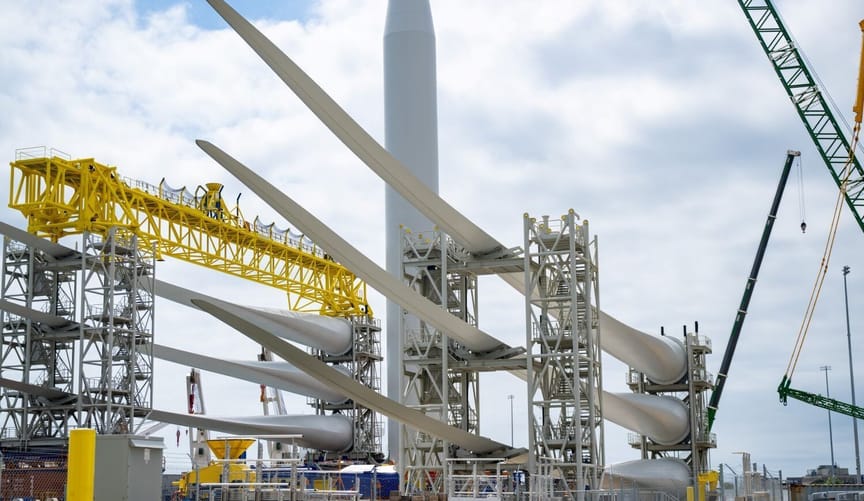
Wind turbines stacked on construction equipment against a cloudy sky
Offshore turbine components are staged at the State Pier in New London, Connecticut, on Aug. 25, 2025. (Tyler Russell/Connecticut Public via Getty Images)


By Maria
Gallucci,  Canary Media, 13 October 2026

After halting construction on offshore wind farms and canceling leases for future projects, the Trump administration just took another step to erode America’s troubled offshore wind industry.

The Interior Department wants to reevaluate a key approval for Revolution Wind — a $6.2 billion project that is already producing power off the coasts of Connecticut and Rhode Island. The wind farm began generating electricity in March, and its developer Ørsted installed the last of 65 turbines in September.

On Friday, Interior asked a federal court for permission to remand the agency’s 2023 approval of a construction and operations plan for the 704-megawatt wind farm. Experts say the move doesn’t immediately affect the project’s activities and is part of a longer legal process that could drag on into early next year.

Even so, the new filing ​“injects uncertainty into a nearly completed offshore wind project that electricity planners and consumers in the Northeast are counting on,” Hillary Bright, executive director of the offshore wind advocacy group Turn Forward, said in an emailed statement.

At full operation, Revolution Wind will generate enough clean electricity to power over 350,000 homes and is expected to play an important role in reducing the region’s grid stress during heat waves and winter cold spells.


Trump’s Interior Department trots out another move against wind energy Read More »

Opinion: NJ Gov. Sherrill risks turning a housing crisis into a sprawl program

By Jeff Tittel, The Jersey Vindicator, Oct. 13, 2026

I grew up believing affordable housing and environmental protection belong in the same sentence.

I was born in Newark and raised on the Newark-Hillside border in federally built workers’ housing. My father was a union factory worker and civil rights activist. My grandparents were labor radicals who held rent parties to help neighbors facing eviction. Housing was not an academic issue. It was about whether working people could keep a roof over their heads.

But I also learned what happens when working people get housing without environmental protection. Our home was down the street from an operating foundry. The pollution was so thick you could write your name in the soot on cars. The local stream was contaminated with industrial pollution. I remember that throwing a match into the water could make it flare.

Then I spent summers at Camp Midvale in Ringwood. It was a different world. You could breathe the air, swim in the streams, and drink the water. The camp brought together trade unionists, civil rights activists, farmworkers and conservationists. People including James Baldwin, Cesar Chavez, Joan Baez and Ossie Davis came through.

That contrast shaped my environmental philosophy: Working people should never have to choose between affordable housing and a healthy environment. I was also a founder of the Coalition for Affordable Housing and the Environment, which sought to advance both goals.

The New Jersey Developers’ great land rush

That is why I am concerned about Gov. Mikie Sherrill’s housing plan. New Jersey desperately needs affordable homes. But the governor’s September 2026 plan risks turning a housing crisis into a land rush for developers.

Read the full post here 

____________________________________________________
Daily energy and environment updates. Free 30-day subscription


Opinion: NJ Gov. Sherrill risks turning a housing crisis into a sprawl program Read More »

Solar researchers might give the U.S. a chance to catch up with China

Producers of solar panels in the United States say they are on the cusp of a technological breakthrough that could upend the industry and even threaten China’s grip on it.

The manufacturers are racing to develop new kinds of panels that can generate 25 percent more energy than most such devices available today. If they are successful, the advance will allow the world to meet the rapidly rising demand for electricity with less land and roof area.

The new technology, known as tandem solar, involves adding second and third layers of material, like a layer cake, to allow panels to convert more of the sun’s radiance into electricity.

Researchers have been working to perfect tandem panels for many years, but now several companies, including Tandem PV, First Solar and Hanwha Qcells, say they are preparing to sell such panels commercially soon, after successfully testing the devices and obtaining certifications from technical bodies.

“It is the next frontier,” said Mike Carr, executive director of the Solar Energy Manufacturers for America Coalition. He acknowledged that Chinese companies were also working on tandem solar but said their technology “is not better than ours and maybe even behind us.”

Read the full story here

____________________________________________________
Daily energy and environment updates. Free 30-day subscription

Solar researchers might give the U.S. a chance to catch up with China Read More »