Apparently fake public input has promoted fossil fuels while attacking clean energy

Sheep under solar panels

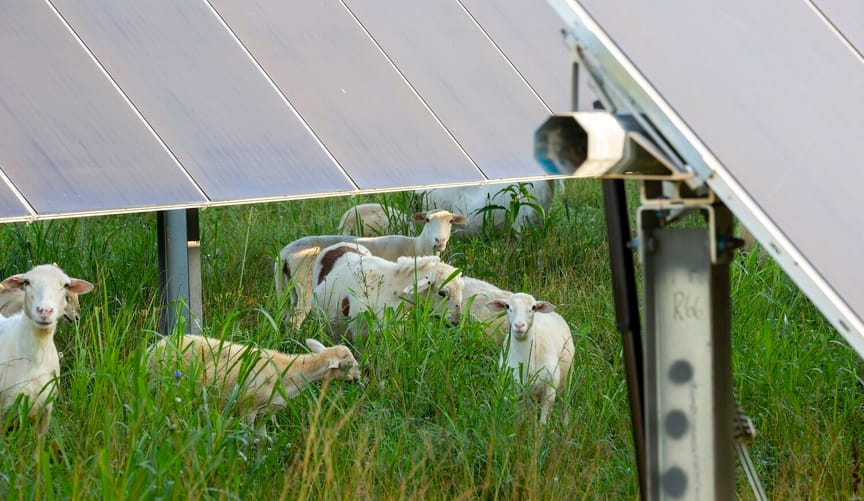
The Ohio Power Siting Board denied a permit application for a project that would have combined solar panels and grazing, like this one in Lancaster, Kentucky. (Jim West/UCG/Universal Images Group via Getty Images)

By Kathiann M. Kowalski, Canary Media, 25 August 2026

A troubling trend has emerged in some communities across the U.S.: Public officials are being inundated with seemingly fake public feedback aimed at blocking renewable energy and promoting fossil fuels.

In Ohio, one of the states grappling with this issue, regulators have done little to crack down on the problem, sparking concern among advocates for clean energy and good government that agencies will keep receiving public comments from people who didn’t authorize them or simply don’t exist.

“If we don’t address it, we’re definitely not going to fix it,” said Catherine Turcer, executive director for Common Cause Ohio, which works to strengthen public participation in U.S. democracy and hold officials accountable to citizens.

Fabricated comments corrupt public decision-making by diluting the impact of genuine people who take the time to share their views, Turcer explained. That’s especially true if officials focus on the number of pro and con comments rather than their substance.

“It skewers the whole process, and you don’t know who to trust,” said Beth Nagusky, an adjunct law professor who has taught at Case Western Reserve University and Cleveland State University and who was previously a utility regulator in Maine.

Read the full story here

_______________________________________________
Daily energy and environment updates
Free 30-day subscription

Apparently fake public input has promoted fossil fuels while attacking clean energy Read More »
Former Maryland coal field now generating solar energy

State policies encourage the development of projects such as the Annapolis Solar Park. (Photo courtesy of the City of Annapolis)

By Hannah Gaskill, Maryland Daily Record

The Maryland Board of Public Works approved an agreement Wednesday to utilize solar energy in a  former  district, representing a fundamental difference in state and federal energy priorities.

“What is indisputable in all this is that clean-energy projects that are ready to go right now are the ones that are also the ones most directly under attack by this federal administration, who is using energy policy like an ideology, who is not allowing data — nor science — to be able to lead the conversation but just simply internet conspiracy theories and talking points,” Gov. , a Democrat, said at an  meeting Wednesday.

The Board of Public Works approved a long-term, $470 million  purchase agreement with REV Renewables, a clean-energy generation and storage company, slated to provide 250,000 megawatt-hours of renewable energy via the Jade Meadow III Solar Project located on the reclaimed Lower Georges Creek Coalfield in .

Moore said the coalfield had been “periodically” used for mining operations since the 1800s but shuttered in the early 2000s, “mainly because of the costs.”

The Jade Meadow III Solar Project is currently active on the PJM Interconnection queue and anticipated to be functional for state energy accounts by 2028. Maryland is one of 13 states connected to PJM’s power grid, which also covers Washington, D.C.

The 20-year power purchase agreement is slated to save the state $300 million and provide enough renewable electricity to power nearly 15% of Maryland’s portfolio starting in 2028, officials said.

During Wednesday’s meeting, Moore said the agreement will help strengthen the grid and lower Maryland’s skyrocketing utility costs. 

Read the full story here

Daily energy and environment updatesFree 30-day subscription

Former Maryland coal field now generating solar energy Read More »

Pennsylvania is a slouch in solar power. Here’s how it can catch up

Pennsylvania’s legislature could do a lot more to speed up renewable-energy adoption, a new report says.


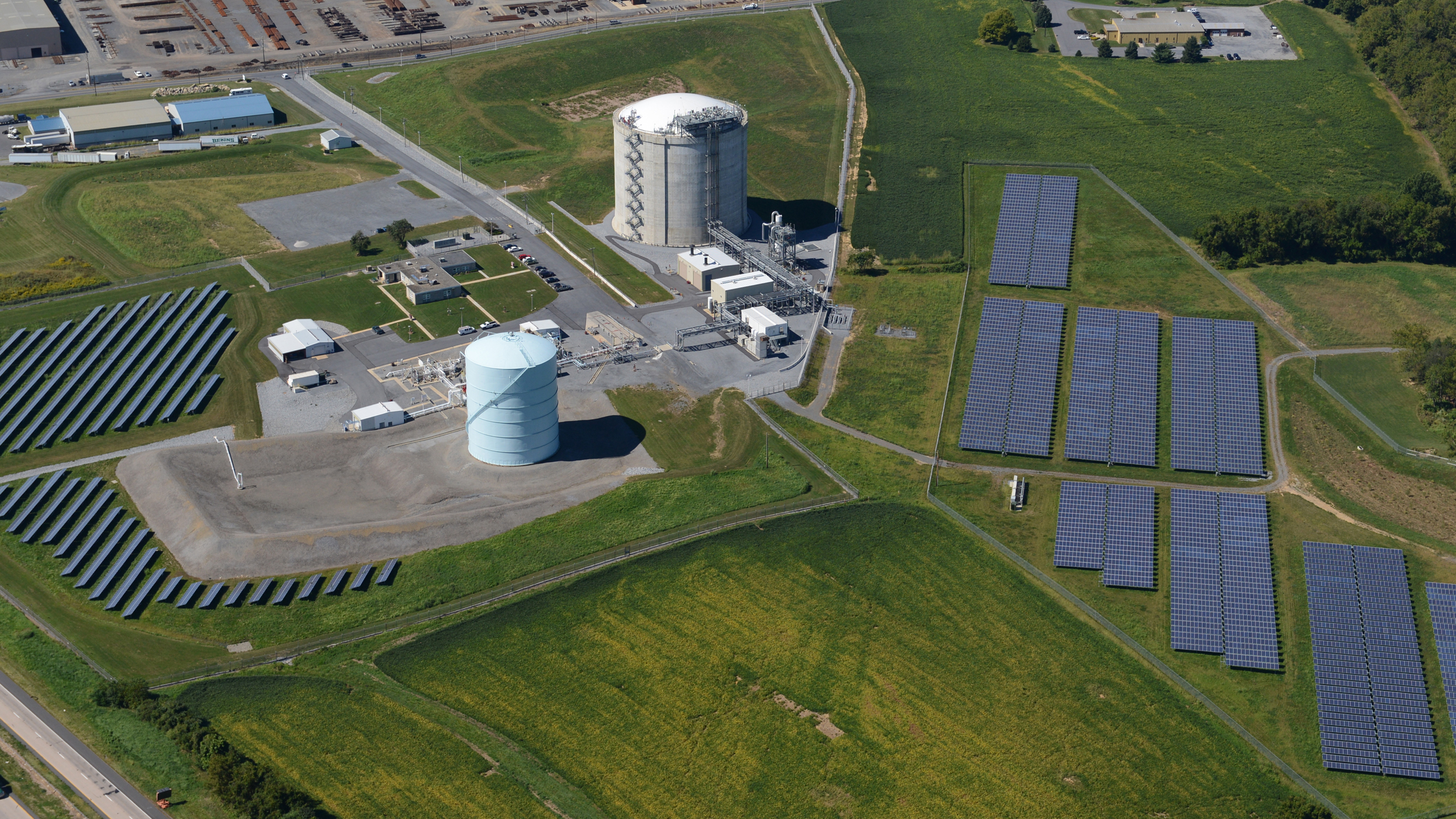
Solar panels surround a liquefied natural gas storage facility in Berks County, Pennsylvania, in 2013. Credit: Ryan McFadden/MediaNews Group/Reading Eagle via Getty Images

Solar panels surround a liquefied natural gas storage facility in Berks County, Pennsylvania, in 2013. Credit: Ryan McFadden/Reading Eagle 

The nonprofit PennFuture outlined ways for Pennsylvania to do so in a new report, accusing the state’s legislature of “policy inertia” for failing to pass bills that would increase adoption and reduce the cost of energy for consumers.

The advocacy group said a majority of state lawmakers favor a “more gas now” policy rather than enabling the development of increasingly cheap renewable energy and battery storage that would cut climate pollution. Among the measures that PennFuture suggested legislators support is allowing community solar, a way for renters and others who can’t install their own panels to tap into local solar arrays.

“Thoughtful solar policies can also facilitate development of PV [photovoltaic] panels on the countless rooftops of warehouses and distribution centers that populate the landscape,” the report said.

The report called on lawmakers to increase the share of renewable energy required by the state’s Alternative Energy Portfolio Standards, which currently mandate that some 18 percent of the electricity utilities distribute come from renewable sources. Neighboring New Jersey, by contrast, required utilities to source double that share last year and 50 percent by 2030.

David Hess, a former secretary of the state’s Department of Environmental Protection, said the Pennsylvania House, which has a slim Democratic majority, has passed many bills that would enable programs such as community solar, warehouse solar and expanding energy-efficiency programs at utilities.

But the bills have not become law because the Republican majority in the state Senate has opposed them, he said.

Read the full story here

_______________________________________________
Daily energy and environment updates
.
 Free 30-day subscription

Pennsylvania is a slouch in solar power. Here’s how it can catch up Read More »

Opinion: Keyport’s toxic disaster is a crisis Trenton makes — worse


What is happening in Keyport is not simply an environmental disaster. It is a government-created environmental failure that is now threatening to become a public health tragedy.

For more than four decades, New Jersey knew about the Aeromarine Landfill and failed to clean it up properly. Now residents are raising alarms about cancer, independent testing is finding dangerous contamination outside the landfill, and the state is scrambling to investigate what should have been investigated years ago.

This did not happen because New Jersey lacked environmental laws. It happened because New Jersey weakened some laws, stopped enforcing others, dismantled oversight by the New Jersey Department of Environmental Protection, and turned toxic-site cleanup into a development program.

The state weakened the Department of Environmental Protection, privatized much of the site remediation system, failed to require the proper cleanup of contaminated landfills, and eliminated much of the public participation and oversight in cleanups. Brownfield remediation increasingly became a vehicle for redevelopment rather than a requirement for permanent cleanup.

The philosophy became “pave and wave”: Pave over the contamination, wave goodbye to Department of Environmental Protection oversight, and call it economic development. That is not environmental protection. That is putting lipstick on a landfill.

Read the full article here

Daily energy and environment updatesFree 30-day subscription

Opinion: Keyport’s toxic disaster is a crisis Trenton makes — worse Read More »

London slowly sinking due to repeated heatwaves

Londoners are facing historic levels of subsidence risk after five successive heat waves dried out the clay soil on which much of the city is built.
Central London during the heat wave in July.
Central London during the heat wave in July. Photographer: Aaron Chown/PA/Getty Images


By Gautam Naik, Bloomberg

Insurance claims tied to subsidence — a phenomenon associated with bouts of hot, dry weather that shrink the soil and destabilize the foundations on which buildings stand — hit a record last quarter, according to data provided by the Association of British Insurers. On average, households claimed £20,000 ($27,200) for the risk, more than in any previous quarter and a 15% jump from the same period in 2025, the ABI said.

Laura Hughes, head of general insurance at the ABI, says the upward trend is likely to continue. “We expect to see more subsidence cases because of the hot weather,” she said in an interview.

Londoners have taken to social media to express their dismay. On Reddit, people offered personal accounts telling of “horrendous cracking” in their homes, and “doors sticking” due to subsidence. One said it was “genuinely scary” to discover that their kitchen had moved as the foundations of the home shifted.

Read the full article here 
_______________________________________________

Daily energy and environment updates. Free 30-day subscription


Read More »