You can’t see the forest for the trees, so cut them down

New Jersey has come up with a strange new conservation philosophy: destroy the forest to save it.

The state says it wants to restore Atlantic white cedar in the Pinelands. That goal is important. Atlantic white cedar forests are disappearing, threatened by sea-level rise, saltwater intrusion, altered hydrology, deer browsing, and a long history of logging and development. New Jersey once had roughly 115,000 acres of Atlantic white cedar; today, fewer than 25,000 acres remain.

But if the answer to losing forests is to bring in heavy equipment, clear-cut public forests and use herbicides, we need to ask a very basic question: At what point does restoration start looking an awful lot like destruction?

This is a clear-cut problem

The New Jersey Forest Service’s Atlantic White Cedar Restoration Project is a massive effort: a $20 million, 10-year program intended to restore about 10,000 acres. The money comes from natural resource damage settlements involving groundwater pollution. The state says the project will help restore cedar forests, protect water resources, and increase climate resilience.

But public money recovered because polluters damaged New Jersey’s natural resources should be used with extraordinary care. It should not become a blank check for industrial-style forestry on public lands.

The Pinelands were preserved for future generations. They were not preserved so that commercial logging interests could treat public forests like a timber farm.

Read more here 


____________________________________________________
Daily energy and environment updates. Free 30-day subscription

You can’t see the forest for the trees, so cut them down Read More »
Senate permitting bill could greatly expand power lines and clean energy

The U.S. transmission grid isn’t growing fast enough to meet surging electricity demand. Fast-tracking transmission upgrades could change that.

By Jeff St. John, Canary Media, 30 September 2026
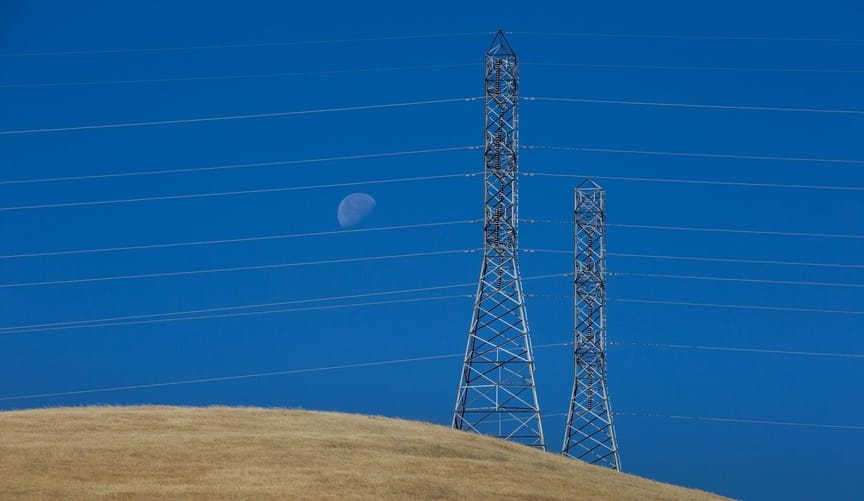
Two transmission towers on dry-grass hilll with blue sky and moon visible behind
(George Rose/Getty Images)

The U.S. Senate energy permitting bill unveiled Wednesday could streamline the buildout of high-voltage power lines across the country, potentially delivering billions of dollars in electricity cost savings and dramatically improving the power system’s reliability over the coming decade — if Congress manages to pass it into law.

So say grid experts digging into the transmission grid policy directives contained in the text of the long-awaited bipartisan reform package. The bill would order the country’s regional grid operators and utilities to streamline how power lines are planned and permitted. It would require the use of advanced transmission technologies that can expand the capacity of new and existing grids.

It would give state and federal regulators tighter oversight over less efficient local transmission planning. And it would require grid operators and utilities to coordinate grid buildouts to enable more new power plants, solar and wind farms, batteries, and other resources to serve growing demand for electricity.

“If Congress wanted to expand and de-congest the nation’s transmission grid, these are the policy changes that can get that done,” said Rob Gramlich, president of consultancy Grid Strategies and a longtime proponent of transmission grid reform. ​“It is very likely that this bill, if passed, would reduce consumer utility bills over time as the transmission system expands and access to low-cost generation improves.”

That view is backed up by analysis commissioned by the Center for Climate and Energy Solutions, a nonprofit research organization, which studied the impact of the bill’s reforms on four major grid regions — from the mid-Atlantic coast to the California border — that provide electricity to more than half the country.

Read more here

____________________________________________________
Daily energy and environment updates. Free 30-day subscription

Senate permitting bill could greatly expand power lines and clean energy Read More »

New York looks to start catching up to California and Texas on big battery storage

The state stepped in with a market-based contract in hopes of jump-starting the big battery construction that has so far proved elusive.

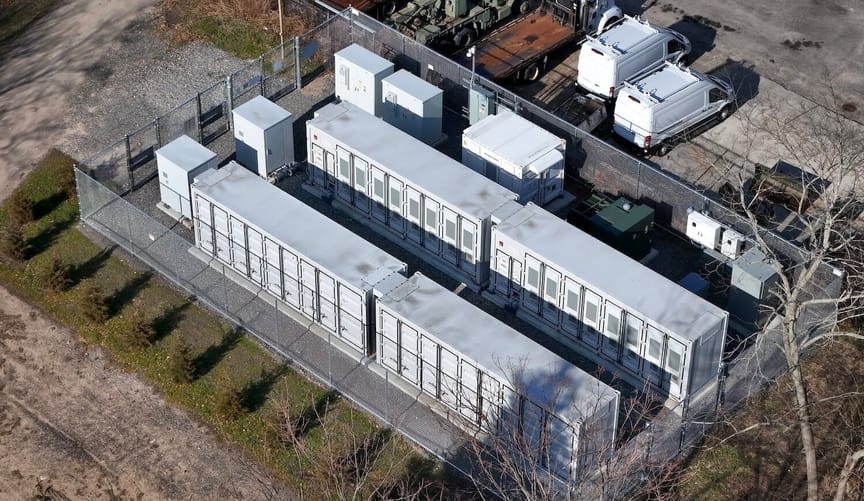
Aerial shot on diagonal of a fou-unit battery storage site
A battery storage facility in North Patchogue, New York (John Paraskevas/Newsday RM via Getty Images)

By Julian Spector, Canary Media, Sept 28, 2026

New York set an ambitious goal to eliminate fossil-fueled electricity by 2040. Doing so will almost certainly require widespread adoption of batteries to store renewable generation and make it available on demand, thereby reducing the need for fossil-fueled ​“peaker” plants. Yet the state has seen hardly any large-scale battery construction to date.

As of March, New York state contained just 80 megawatts of operational ​“bulk” storage, plus around 335 MW of small-scale batteries. That’s a far cry from the state’s goal of installing 1,500 MW by 2025, though officials claimed success by factoring in not-yet-built projects that had been awarded or contracted.

Now, New York is taking its biggest step yet to unlock the widespread grid storage that states like California and Texas have been enjoying for several years.

Eight grid battery projects won state contracts last week, which collectively will add 950 MW of non-emitting, on-demand power by 2030. That’s meaningful progress toward the state’s goal of 6 gigawatts by 2030. The New York State Energy Research and Development Authority plans to run two more solicitations like this one to accelerate the momentum.

Read the full story here

New York looks to start catching up to California and Texas on big battery storage Read More »

NJ’s Clean Water Action Working to Green-Up Congress

NJ’s Clean Water Action Working to Green-Up Congress Read More »

Feds will spend $2 billion to squeeze more electricity from the aging power grid

FILE – A worker prepares a plot of land for an AI data center, with a retired power plant being refurbished to provide electricity for the facility in the distance, March 24, 2026, in Independence, Mo. (AP Photo/Charlie Riedel, File)


By Associated Press Editors, September 24,2026

ALLENTOWN, Pa. (AP) — The Energy Department announced on Thursday that it will spend almost $2 billion to try to squeeze more electricity out of the nation’s aging and stressed power grid, as President Donald Trump’s administration steps up efforts to avoid blackouts amid skyrocketing energy demand spurred by artificial intelligence.

The money will go toward 31 projects across 26 states that are expected to produce more than 23 gigawatts of additional electricity capacity — enough to power 16 million homes. The projects will use new technologies such as sensors and other devices to measure real-time weather conditions to ensure safe transmission or direct power away from congested or overloaded paths, the department said.

The upgrades could improve power reliability and lower electricity costs for about 100 million Americans, officials said.

“These investments will get more out of the infrastructure we already have, move more electricity across the grid, and help deliver affordable, reliable and secure power that will fuel American prosperity for decades to come,” Energy Secretary Chris Wright said in a statement.

Wright was set to promote the grant program Thursday at a PPL Corp. facility in Allentown. The utility says two data centers in its territory came online this year and six more are under construction.

The announcement comes amid warnings that AI’s voracious demand for power is threatening to overwhelm U.S. power supplies, as massive new data centers come online faster than new power plants can be built. It also comes as electricity bills rise faster than inflation in many parts of the U.S., blamed in some areas on demand from data centers.

The snowballing opposition to data centers in communities across the country has thrown a wrench into the plans of the world’s richest companies and transformed the midterm election landscape.

Trump continues to stick up for data centers, even as politicians from both major political parties criticize them and many communities try to block them. Trump, a Republican, said last month that U.S. communities that don’t have data centers will “end up being backwards and poor.”

Click here for more

____________________________________________________

Daily energy and environment updates.  Free 30-day subscription

Feds will spend $2 billion to squeeze more electricity from the aging power grid Read More »

Here’s more on record NJ fine issued to Vineland data center

After a data center in Vineland received more than a $1 million fine, the head of New Jersey’s DEP said the facility is not out of the woods. For more, click the link in the image above


Environmental advocates want New Jersey’s largest artificial intelligence data center shut down after the state found developers illegally operated dozens of natural gas generators that release harmful air pollution.

Activists say the Vineland facility should be forced to halt operations until it gets the required air permits.

The state Department of Environmental Protection fined DataOne $1.07 million Tuesday for installing and operating 62 generators at its Cumberland County campus in violation of the state’s Air Pollution Control Act.
 

DataOne, the site’s developer, was ordered to apply for permits or stop using the generators. But the state did not order the facility to shut down.
Gov. Mikie Sherrill’s administration said the fine was the largest ever imposed on a data center in New Jersey.


Environmental advocates argue the penalty does not go far enough.

“We are glad that the NJ Department of Environmental Protection issued a record-breaking fine,” said Anjuli Ramos-Busot, director of the New Jersey Sierra Club, an environmental advocacy group. “However, DataOne must be required to cease operations and can only be allowed to resume if it has its proper and necessary permits.”

Read more here

____________________________________________________
Daily energy and environment updates. Free 30-day subscription

Here’s more on record NJ fine issued to Vineland data center Read More »