
Philly would have to divert 60% of its trash from landfills and incinerators under new legislation

Councilmembers Mark Squilla and Katherine Gilmore Richardson (back to camera) greet each other as City Council convenes for its fall session Thursday, Sept. 17, 2026.
Councilmembers Mark Squilla and Katherine Gilmore Richardson (back to camera) greet each other as City Council convenes for its fall session Thursday, Sept. 17, 2026.Tom Gralish / Staff Photographer

Philadelphia would be required to steer 60% of its trash away from landfills or incinerators over the next 20 years under legislation advanced by City Council on Monday.
The bill, which was passed out of Council’s Commerce Committee, directs the city to develop

a comprehensive “zero waste” strategy over the next three years. Included in that plan, according to the legislation, should be steps that move the city away from its reliance on traditional forms of waste disposal in favor of cleaner methods such as composting.

Council’s move came just days after a different committee voted unanimously to block Mayor Cherelle L. Parker’s administration from entering into a new four-year deal with a controversial incinerator in Chester, where the city has for years sent about a third of its trash to be burned.

That move was championed by City Councilmember Jamie Gauthier, a West Philadelphia progressive Democrat who has for more than a year pushed the city to end its relationship with Reworld. She and a coalition of activists said the incinerator emits harmful byproducts into the air that cause adverse health effects, and they advocated for the city to send all its trash to landfills.

Read the full article here.

Sign up here for Data Center Reporter updates.

Philly would have to divert 60% of its trash from landfills and incinerators under new legislation Read More »

Opinion-The Most Cynical Ploy Ever: BAAJA Provides EJ For Polluters

Permitting reform bill clears major hurdle toward becoming law

Validating Naomi Klein

The fact that some corporate Democrats want to ram this garbage down our throats in a lame duck Congress after a tidal wave election is obscene.

If this doesn’t make your head explode, nothing will.

It is fairly well known – and has gotten considerable media coverage – that Trump Executive Orders and the Justice Department have perverted civil rights laws to claim that they discriminate against white men.

Well, a little known or media covered “disparate impact” provision of Section 1402 of the BAAJA bill does exactly the same thing for fossil energy and polluters.

Just imagine how corrupt and deeply cynical you have to be to use a civil rights and hard fought EJ legal standard to protect polluters.

These are my ideas and research, but let’s let AI explain:

Click here to read the full article.

Sign up here for Data Center Reporter updates.
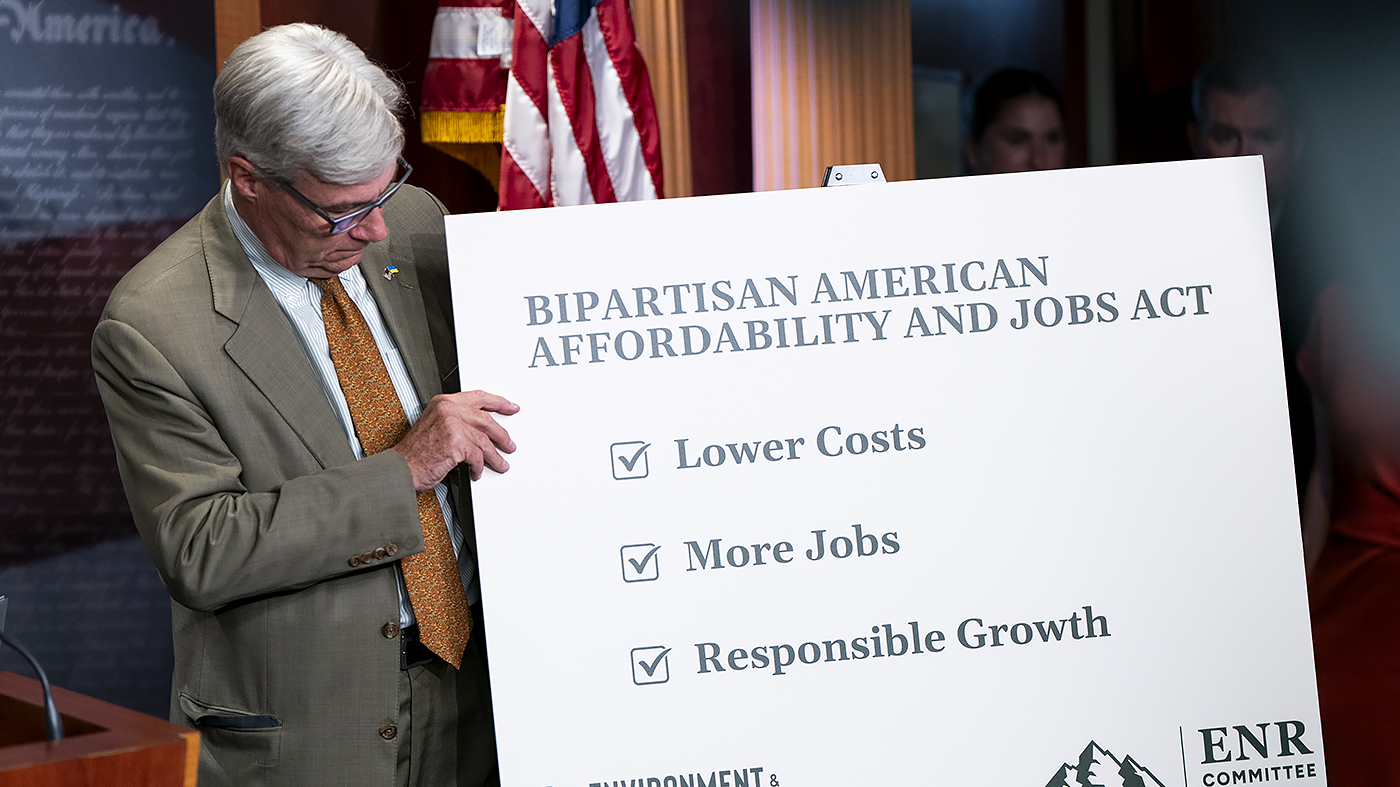
Opinion-The Most Cynical Ploy Ever: BAAJA Provides EJ For Polluters Read More »

Opinion: The Most Cynical Ploy Ever: BAAJA Provides EJ For Polluters

Validating Naomi Klein

The fact that some corporate Democrats want to ram this garbage down our throats in a lame duck Congress after a tidal wave election is obscene.


If this doesn’t make your head explode, nothing will.

It is fairly well known – and has gotten considerable media coverage – that Trump Executive Orders and the Justice Department have perverted civil rights laws to claim that they discriminate against white men.

Well, a little known or media covered “disparate impact” provision of Section 1402 of the BAAJA bill does exactly the same thing for fossil energy and polluters.

Just imagine how corrupt and deeply cynical you have to be to use a civil rights and hard fought EJ legal standard to protect polluters.

These are my ideas and research, but let’s let AI explain:

Read the full article here

Sign up here for Data Center Reporter updates.
Opinion: The Most Cynical Ploy Ever: BAAJA Provides EJ For Polluters Read More »

These cranberry bogs come with a side of solar

Two Massachusetts projects are the nation’s first to grow cranberries beneath solar panels, in another example of how agriculture and clean energy can coexist.

By Sarah Shemku, Canary Media, November 4, 2026


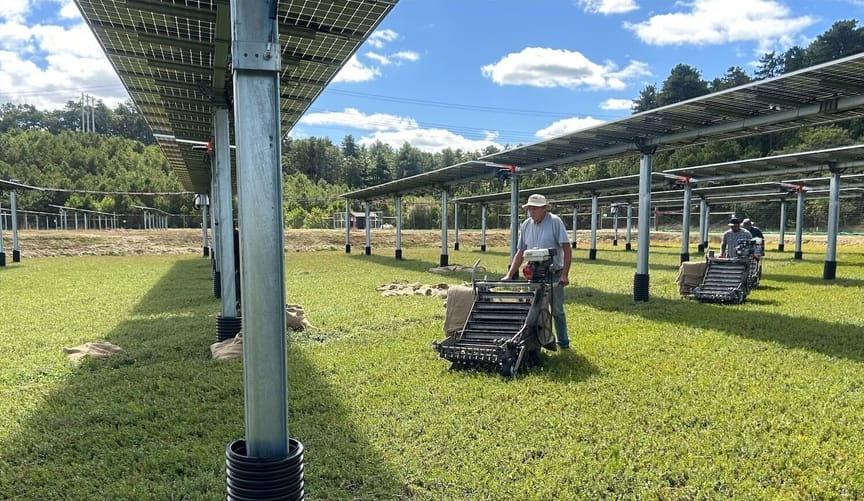
Solar panels on metal poles above a cranberry bog with several harvesters using specialized equipment
(Distributed Energy Infrastructure)

It’s cranberry season in southeastern Massachusetts. At bogs throughout the region, growers are collecting the ruby-red berries destined for holiday cakes, juice bottles, and cans of jellied sauce. At two farms, however, the harvesting process looks a little different: Pickers are navigating equipment around metal poles in the shade of solar panels.

The two bogs are the first in the country — perhaps the world — to grow cranberries beneath an operating solar installation. This fall marks the second season cranberries have been harvested from beneath the panels.

“We are literally proving it can be done,” said Prateek Tare, co-founder and executive vice president of Distributed Energy Infrastructure. His company constructed the two projects — a 4.4-megawatt array paired with a 13.5-megawatt-hour battery in the town of Kingston, and a 1-MW solar array in neighboring Plymouth.

Solar development is a major part of Massachusetts’ plan to reach net-zero carbon emissions by 2050. The state has offered solar incentives since 2001, evolving and expanding them over the decades to drive even more development.

However, the question of where to site solar projects has become a major point of contention in the densely populated and heavily wooded state. Building on rooftops and parking lots in developed areas can increase costs and limit generation capacity. But proposals for arrays on previously undeveloped land often spark protests from locals worried about the character of their community and environmental groups opposed to disrupting ecosystems. Using pre-cleared farmland has potential, but raises concerns about taking agricultural acres out of production. Many of these same dynamics are at play in communities across the U.S.

One of the solutions Massachusetts has been encouraging is agrivoltaics, or dual-use solar, which involves building solar panels above active agricultural operations. This strategy, which is gaining traction nationwide, allows farmland to be used for energy generation even as livestock graze or crops flourish beneath the elevated arrays.


These cranberry bogs come with a side of solar Read More »

Thousands Powerless As Thanksgiving Storm Batters New Jersey


Patch Staff,


More than 53,000 homes and businesses were without power across the state, with Jersey Central Power & Light reporting more than 33,500 customers and Atlantic City Electric reporting more than 17,300 customers affected as of 1 p.m. PSE&G was reporting more than 2,700 outages.

The Commodore Barry Bridge over the Delaware River is closed in both directions after the high winds blew loose part of the set-up for the ongoing bridge painting project, the Delaware River Port Authority said.

“The closure is a precaution to protect motorists while crews make repairs,” the agency said. “Crews are working as quickly and safely as possible. There is no estimated reopening time.” 

Cape May County was seeing the brunt of the flooding on Thursday morning, with Ocean City, Stone Harbor, Cape May and the Wildwoods particularly hard hit.

Click to read the full story 

Check out our new Data Center Reporter


Promo Video

Winds gusting to more than 50 mph and flooding reaching record levels has closed bridges and roads as a severe storm slams New Jersey on Thanksgiving.

More than 53,000 homes and businesses were without power across the state, with Jersey Central Power & Light reporting more than 33,500 customers and Atlantic City Electric reporting more than 17,300 customers affected as of 1 p.m. PSE&G was reporting more than 2,700 outages.

The Commodore Barry Bridge over the Delaware River is closed in both directions after the high winds blew loose part of the set-up for the ongoing bridge painting project, the Delaware River Port Authority said.

“The closure is a precaution to protect motorists while crews make repairs,” the agency said. “Crews are working as quickly and safely as possible. There is no estimated reopening time.”

Cape May County was seeing the brunt of the flooding on Thursday morning, with Ocean City, Stone Harbor, Cape May and the Wildwoods particularly hard hit.

Thousands Powerless As Thanksgiving Storm Batters New Jersey Read More »

NJ’s top court protects public access to waterfronts

People fish along the Manasquan Inlet on Sept. 18, 2022. (Photo by New Jersey Monitor)

By

The New Jersey Supreme Court has sided with the fishing, boating, and beach-going public in a test of a 2019 law passed to prevent private property owners from hogging the shoreline and other waterfronts.

The law in question requires property owners who apply for permits to develop tidal lands to provide additional public access if development would change a structure’s existing footprint. Lawmakers meant for the law to clarify and expand the public trust doctrine, a concept rooted in an 1821 lawsuit over access to oyster beds in the Raritan River. The doctrine holds that the sea and its shores are common to mankind, and all people have a right to them.

Sea Point, a homeowners’ association in Point Pleasant Borough, challenged the law in court after it applied in 2020 for a permit to rebuild a deteriorated bulkhead on its property along Beaver Dam Creek, and the Department of Environmental Protection conditioned approval on the submission of a public access plan, according to a state Supreme Court ruling released Tuesday.

The proposed project included extending the bulkhead two feet into the water and rebuilding piers and mooring piles that originally had been built without a permit, the ruling says.

Sea Point objected to the public access requirement, saying sufficient public access already existed elsewhere and offering to pay into a public access improvement project nearby, the decision says. The association characterized the law as unconstitutional, arguing it results in a taking of private property without just compensation.

The association took its fight to the Office of Administrative Law. That court sided with the state, the association appealed, and the appellate court upheld the decision.

Tuesday’s decision affirmed the lower courts’ rulings.

Read the full article here

________________________________________________________
Daily energy and environment updates. Free 30-day subscription

Check out our new Data Center Reporter

NJ’s top court protects public access to waterfronts Read More »