Texans thought Trump had spared a border wall at their cherished national park

Layers of desert mountains stretch across Big Bend National Park in Terlingua, Texas, April 20, 2026. Over the objections of environmentalists, local sheriffs and some state leaders, the Trump administration appears to be moving ahead with border infrastructure in one of Texas’ most beloved parks.

Layers of desert mountains stretch across Big Bend National Park in Terlingua, Texas

By
Emily Elconin and J. David Goodman, New York Times

But after bipartisan opposition grew, the wall was removed from the federal government’s border construction map. Many exhaled, believing that the West Texas park, with its towering mountains and cliffs, would be spared.

Then the bulldozers arrived this month.

The sight of the earthmoving machines along the Rio Grande near the Santa Elena Canyon, one of the park’s major attractions, pointed to the most significant evidence of border barrier construction in the park. Contractors ripped through mesquite trees and brush and leveled the ground for more than 1 mile of what appeared to be a future roadway.

Read the full story here.

Texans thought Trump had spared a border wall at their cherished national park Read More »

Will Ohio’s largest solar project get the OK after two-year wait?

The Oak Run solar and storage project has been in legal limbo since 2024, showing local opponents’ power to delay clean energy. A decision may come soon.
Large white rectangular building, with upper floors set back
The Thomas J. Moyer Ohio Judicial Center, in Columbus, Ohio, home of the Ohio Supreme Court (Getty Images)


By 
Kathiann M. Kowalski, Canary Media

Following a key legal deadline last Friday, the stage is now set for the Ohio Power Siting Board to make a final decision about whether the state’s largest solar and energy storage project to date can move ahead.

The OPSB initially approved the Oak Run Solar Project in March 2024, but the case has since been bogged down by an appeal filed by Madison County and three of its townships.

Oak Run Solar would bring 800 megawatts of solar and 300 MW of energy storage to a state that has become increasingly hostile to clean energy, even as mounting electricity demand increases power prices and threatens grid reliability.

Read the full story here

Get daily energy and environment updates. Free 30-day subscription

Will Ohio’s largest solar project get the OK after two-year wait? Read More »

Rhine River Hits Record Low, Deepening Shipping Crisis

A drone picture shows the banks of the river Rhine during a period of low water level in Cologne, Germany

A drone picture shows the banks of the Rhine River during a period of low water level in Cologne. REUTERS/Stephane Nitschke

By Eamon Akil Farhat, Rachel Graham and Sasha Draeger-Mazer, Bloomberg

Water levels on the Rhine River are dwindling further, with no relief in sight, forcing companies that rely on the waterway to adjust rapidly to keep goods flowing.

Levels at Kaub, Germany — the Rhine’s shallowest point — have fallen to the lowest since records began in 1880, and could drop further as another heat wave bakes Europe this week. Forecasters say it would take weeks of sustained rain to lift the river toward more normal levels, meaning the crisis could drag on into October.

The Rhine is a key shipping route through Europe’s industrial heartland, from Switzerland to Rotterdam, the continent’s busiest port. The disruption along the waterway is throwing up supply chain challenges for companies ranging from steelmaker Thyssenkrupp AG to BASF SE and Lanxess AG.

“Shipments by ship are severely restricted, with vessels carrying significantly lighter loads than usual,” specialty chemicals maker Lanxess said Tuesday in response to questions from Bloomberg. “As certain loading and unloading points are no longer accessible, we are switching to rail and road transport where possible. The situation is highly dynamic.”

Read the full story here


Rhine River Hits Record Low, Deepening Shipping Crisis Read More »

What needs to be built–and at what cost–to protect NJ from floods?

By Frank Brill, EnviroPolitics Editor

A NJ State Police crisis management official, testifying at a legislative hearing at the NJ shore Thursday, said the need for new storm-resilient infrastructure is now at its highest while grant funding expectations are at their lowest.

He cited studies estimating that hundreds of billions of dollars will need to be invested over the next 10 years to offset the state’s flooding risks. He said no turnkey solution exists to address the problem across all affected New Jersey sectors, including 597 state facilities, 3,000 bridges and tunnels, and 2,000 miles of highways.

Flooding is not just a problem for the shore. It also affects cities along rivers and streams and requires regional solutions.

“The water is coming and needs somewhere to go, “ he said. “The best strategy is to restrict building in those areas where we know it will be and remove infrastructure around it.”

Legislators from the state’s Senate and Assembly environmental committees were meeting in Lavalette to hear from interest groups representing business, utilities, university researchers, environmentalists, and labor about the need for storm resistance.

NJ Utilities Association President Richard Hennig stressed that his members can no longer focus on preparing for one particular storm. They now must anticipate multiple stressors, including extreme heat and historic-level electric-energy demands.

Clinton Andrew, a professor at the Rutgers Climate Change Center, said infrastructure resilience is clearly needed, pegging expected costs for transportation at $66 billion, energy at $91-$194 billion, and water supply and wastewater disposal at $12 billion each.

Andrew said a dedicated, sustained funding source is needed but does not yet exist. He pointed to New York and Rhode Island as states that have implemented dedicated funding for resilient infrastructure.

States issuing bonds to finance flood infrastructure

That reference set the stage for references throughout the hearing to a $5 billion bond issue that Senate Environment and Energy Committee Chairman Bob Smith is preparing.

Smith said that one of the reasons that New York’s bond issue was successful was that it named specific projects that would be funded. “We don’t want New Jersey voters to see this upcoming legislation as a slush fund,” he said.

The veteran senator told the overflow audience in the town’s municipal building: “We need your cards and letters. Tell us what projects will give us the biggest bang for our buck.”

London School of Economics: Financing “resilience” rather than “recovery”

Another possible funding source for stormwater protection is the ‘Polluters Pay’ bills (S2338/A3735) sponsored by Senator John McKeon and Assemblywoman Alixon Collazos-Gill. The legislation would force major fossil fuel companies to pay $50 billion over 20 years to fund state climate adaptation and infrastructure resiliency projects. The bills failed to pass in the last session but have cleared committees in both houses this year despite ongoing opposition from business organizations.

Don’t forget natural systems

Those testifying for the Nature Conservancy reminded the panel that effective climate resilience systems also include nature-based approaches such as coastal wetlands buttressing and urban tree programs.

“Some of our most effective infrastructure doesn’t always look like infrastructure,” said a Nature Conservancy representative. “Our coastline is  home to 200,000 acres of salt marshes that help protect a region where more than 700 million residents live.”

“A 2017 study by Lloyd’s of London found that New Jersey’s coastal wetlands prevented some $430 million in property damages behind marshes, he testified.

“Unfortunately, the marshes are under increasing pressure from rising seas, stronger storms and erosion that have cost many to lose elevation and, in some locations, slowly drown.”

Others weighing in

County utilities representatives spoke about tens of millions of dollars in recovery costs spent since Superstorm Sandy 14 years ago.

Michael Egenton of the NJ Chamber of Commerce noted his organization’s past support for the state’s Green Acres and Blue Acres programs that have saved hundreds of thousands of acres, as well as other predictable funding opportunities

NJ AFL-CIO lobbyist Eric Richard said the state needs additional pumping and drainage systems. “All our members are impacted by flooding,“ he said. “Organized labor stays ready to build a flood-resistant system.”

___________________________________________________________________________________________

Get your own daily energy and environment updates. Free 30-day subscription

What needs to be built–and at what cost–to protect NJ from floods? Read More »

We’re feeling one of the strongest El Nino’s ever recorded

About 1,000 miles south of Hawaii, the first signs of El Niño have come to Kiribati, an island nation in the central Pacific Ocean.

Alyssa Atwood, an associate professor in the Earth, ocean and atmospheric science department at Florida State University, is there now, deploying sensors to monitor ocean heat and salinity, and to track the bleaching of its magnificent coral reefs.

Already, around Christmas Island, one of this nation’s 33 atolls and islands, the ocean surface temperature is 2 degrees Celsius, or 3.6 degrees Fahrenheit, warmer than usual for this time of year, compared with the previous 30 years. As much as 10 percent of the corcore-astterals appeared bleached in a series of dives over the past few days, Atwood said.

Related: El Niño one for the record books

Bleaching occurs when corals become so stressed that they lose the symbiotic algae they need to survive. Bleached corals can recover, but if the surrounding water stays too hot for too long, they die.

“We expect this to get worse and worse and worse until the end of this year,” she said. “This is just the tip of the iceberg.”

That’s because the El Niño event that’s underway is expected to be one of the strongest ever recorded, and it has not yet

Read the full article here

We’re feeling one of the strongest El Nino’s ever recorded Read More »

U. S. energy use has battery storage demand soaring

By Summer Maxwell, Bloomberg Green Daily

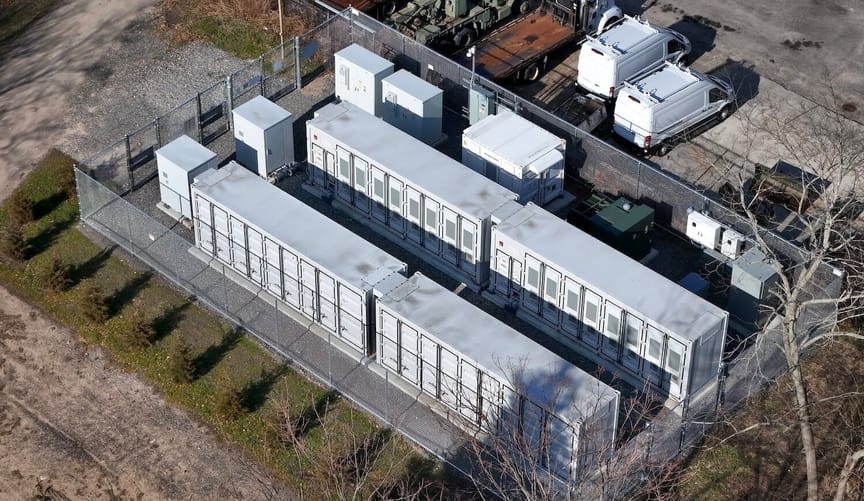
Demand for batteries has skyrocketed as electricity use across the US swells, driven by data centers’ booming energy needs and increasing electrification. It’s also getting harder to get them connected to power grids.

Falling prices have made batteries more attractive. But after decades of stagnant investment, grids are racing to make the upgrades needed to plug them in, straining supplies of transformers, circuit breakers and other equipment. As those upgrades get delayed, storage projects are piling up in interconnection queues from coast to coast.

Consolidated Edison Inc., a major utility in New York state, for example, says over the past two years the volume of battery storage projects waiting to be connected has grown by 300%. In California, regulators are expecting that holdups to grid upgrades will stall energy projects up and down the state.

“The whole process of interconnecting these new power plants got really log-jammed and bottlenecked,” said Joseph Rand, an energy policy researcher at the Lawrence Berkeley National Laboratory. “It in some ways broke this historic process of the way transmission grid operators have been operating for almost 20 years.”

Nationwide, some 750 gigawatts of energy storage projects — roughly equivalent to the generating capacity of more than 700 nuclear reactors — are in line to get grid connections, according to the lab’s research. Not all of these projects will get built. Many developers have already abandoned the queue due to delays. Still, the wait is growing; the median was five years in 2025, up from a year and a half in 2015.

The flood of battery projects is expected to continue. Wood Mackenzie, an energy consultancy, projects the US energy storage market will quadruple in the next six years.

Read the full article here


U. S. energy use has battery storage demand soaring Read More »