Fedswill spend $2 billion to squeeze more electricity from the aging power grid

FILE – A worker prepares a plot of land for an AI data center, with a retired power plant being refurbished to provide electricity for the facility in the distance, March 24, 2026, in Independence, Mo. (AP Photo/Charlie Riedel, File)


By Associated Press Editors, September 24,2026

ALLENTOWN, Pa. (AP) — The Energy Department announced on Thursday that it will spend almost $2 billion to try to squeeze more electricity out of the nation’s aging and stressed power grid, as President Donald Trump’s administration steps up efforts to avoid blackouts amid skyrocketing energy demand spurred by artificial intelligence.

The money will go toward 31 projects across 26 states that are expected to produce more than 23 gigawatts of additional electricity capacity — enough to power 16 million homes. The projects will use new technologies such as sensors and other devices to measure real-time weather conditions to ensure safe transmission or direct power away from congested or overloaded paths, the department said.

The upgrades could improve power reliability and lower electricity costs for about 100 million Americans, officials said.

“These investments will get more out of the infrastructure we already have, move more electricity across the grid, and help deliver affordable, reliable and secure power that will fuel American prosperity for decades to come,” Energy Secretary Chris Wright said in a statement.

Wright was set to promote the grant program Thursday at a PPL Corp. facility in Allentown. The utility says two data centers in its territory came online this year and six more are under construction.

The announcement comes amid warnings that AI’s voracious demand for power is threatening to overwhelm U.S. power supplies, as massive new data centers come online faster than new power plants can be built. It also comes as electricity bills rise faster than inflation in many parts of the U.S., blamed in some areas on demand from data centers.

The snowballing opposition to data centers in communities across the country has thrown a wrench into the plans of the world’s richest companies and transformed the midterm election landscape.

Trump continues to stick up for data centers, even as politicians from both major political parties criticize them and many communities try to block them. Trump, a Republican, said last month that U.S. communities that don’t have data centers will “end up being backwards and poor.”

Click here for more

____________________________________________________

Daily energy and environment updates.  Free 30-day subscription

Fedswill spend $2 billion to squeeze more electricity from the aging power grid Read More »
Here’s more on record NJ fine issued to Vineland data center

After a data center in Vineland received more than a $1 million fine, the head of New Jersey’s DEP said the facility is not out of the woods. For more, click the link in the image above


Environmental advocates want New Jersey’s largest artificial intelligence data center shut down after the state found developers illegally operated dozens of natural gas generators that release harmful air pollution.

Activists say the Vineland facility should be forced to halt operations until it gets the required air permits.

The state Department of Environmental Protection fined DataOne $1.07 million Tuesday for installing and operating 62 generators at its Cumberland County campus in violation of the state’s Air Pollution Control Act.
 

DataOne, the site’s developer, was ordered to apply for permits or stop using the generators. But the state did not order the facility to shut down.
Gov. Mikie Sherrill’s administration said the fine was the largest ever imposed on a data center in New Jersey.


Environmental advocates argue the penalty does not go far enough.

“We are glad that the NJ Department of Environmental Protection issued a record-breaking fine,” said Anjuli Ramos-Busot, director of the New Jersey Sierra Club, an environmental advocacy group. “However, DataOne must be required to cease operations and can only be allowed to resume if it has its proper and necessary permits.”

Read more here

____________________________________________________
Daily energy and environment updates. Free 30-day subscription

Here’s more on record NJ fine issued to Vineland data center Read More »

NY landfill operators push back on state leachate proposal

Regulators want to set a 99.9% removal requirement for a wide range of contaminants, including PFAS. But operators say the proposal is unworkable as currently written.


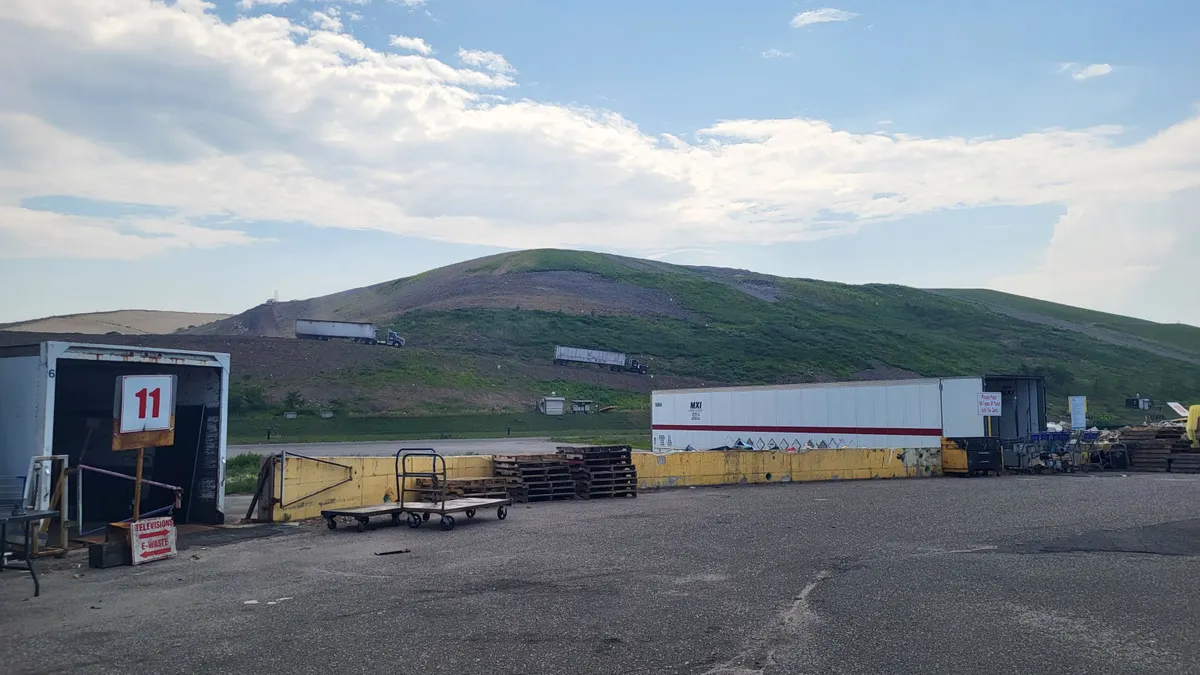
Several truck trailers and pallets sit on a concrete lot. Behind them, the mound of a landfill rises, with two 18-wheelers driving on a road along its slope.


By Jacob Wallace, Waste Dive, Sept 14, 2026

The town of Brookhaven, New York, operates a landfill that accepts incinerator ash and other materials. One town official said that designing leachate treatment facilities that meet the proposed rule would be “very, very difficult.”

In public hearings and written comments, landfill operators are pushing back against the New York Department of Environmental Conservation’s proposal to set a 99.9% limit on what commenters say would be more than 250 contaminants in landfill leachate.

The proposal comes amid criticism from environmental and public health groups who say leachate contains harmful compounds like per- and polyfluoroalkyl substances and dioxane that slip through water treatment processes unregulated.

Industry voices, including those from WM, Casella Waste Systems and the National Waste & Recycling Association, say additional controls could be implemented on leachate, but criticized the proposal as overly broad and expensive.


Read the full story here.


____________________________________________________
Daily energy and environment updates. Free 30-day subscription

NY landfill operators push back on state leachate proposal Read More »

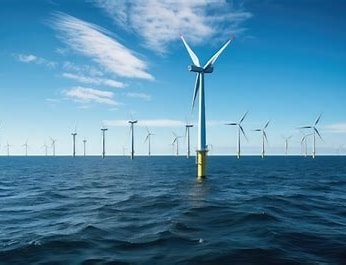
“Save LBI’ Challenges Push to Revive NJ Offshore Wind Energy

“Save LBI’ Challenges Push to Revive NJ Offshore Wind Energy Read More »

Scarinci attorney offers details on NJ recycled content law exemption


Scarinci attorney offers details on NJ recycled content law exemption Read More »

Penn State: Recycled concrete aggregate may help treat acid mine drainage


Industrial waste materials are put through a batch reactor test to determine their ability to treat acid mine drainage. Credit: Allison Fenske. All Rights Reserved

Penn State Institutes of Energy and the Environment

September 16, 2026

UNIVERSITY PARK, Pa. — A study led by Penn State researchers suggests that recycled concrete aggregate and an iron-rich byproduct of steel production could help treat acid mine drainage, the toxic runoff that pollutes thousands of miles of streams in Pennsylvania and other coal-mining regions.

The research, published in Mine Water and the Environment, evaluated whether recycled concrete aggregate (RCA) and an iron-rich material (IRM) could replace or supplement limestone, the standard material used in many systems that treat acid mine drainage. The findings, according to the researchers, suggest RCA could be a viable alternative in some locations, while IRM was less effective.

Acid mine drainage forms when mining exposes sulfur-containing rocks to air and water. The resulting chemical reaction creates sulfuric acid, which dissolves metals such as iron, aluminum, and manganese. When contaminated water enters streams, it lowers the water’s pH, deposits orange-colored iron, and harms aquatic life, vegetation, and drinking water supplies. This is typically treated by implementing a limestone treatment system, which neutralizes acidity and helps remove dissolved metals. Researchers, however, are exploring whether less expensive waste materials could serve a similar purpose, potentially turning materials that would otherwise be discarded into useful commodities for treating acid mine drainage.

More than 5,000 miles of streams in Pennsylvania are affected by acid mine drainage, underscoring the scale of the problem in a state with a long history of coal mining.

Allison Fenske, a Penn State alumna and assistant professor of environmental engineering at Juniata College, and Nathaniel Warner, an associate professor of civil and environmental engineering at Penn State, led the study. The researchers explored whether industrial waste materials already available in large quantities could provide a lower-cost option for treating polluted water.

Read More Here

____________________________________________________
Daily energy and environment updates. Free 30-day subscription


Penn State: Recycled concrete aggregate may help treat acid mine drainage Read More »