Solar researchers might give the U.S. a chance to catch up with China

Producers of solar panels in the United States say they are on the cusp of a technological breakthrough that could upend the industry and even threaten China’s grip on it.

The manufacturers are racing to develop new kinds of panels that can generate 25 percent more energy than most such devices available today. If they are successful, the advance will allow the world to meet the rapidly rising demand for electricity with less land and roof area.

The new technology, known as tandem solar, involves adding second and third layers of material, like a layer cake, to allow panels to convert more of the sun’s radiance into electricity.

Researchers have been working to perfect tandem panels for many years, but now several companies, including Tandem PV, First Solar and Hanwha Qcells, say they are preparing to sell such panels commercially soon, after successfully testing the devices and obtaining certifications from technical bodies.

“It is the next frontier,” said Mike Carr, executive director of the Solar Energy Manufacturers for America Coalition. He acknowledged that Chinese companies were also working on tandem solar but said their technology “is not better than ours and maybe even behind us.”

Read the full story here

____________________________________________________
Daily energy and environment updates. Free 30-day subscription

Solar researchers might give the U.S. a chance to catch up with China Read More »

A Supreme Court Battle Over Climate Change Begins

The justices are about to hear a lawsuit that could determine whether the oil industry faces billions of dollars in liability for damages caused by global warming.

A tangle of towering refinery pipes and scaffolding stands against a cloudy blue sky behind several yellow flowers.


Boulder has sued Exxon and Suncor saying they should help pay for the damage caused by global warming in the state. A Suncor refinery in Colorado last month.Credit…Mark Makela for The New York Times

By Karen Zraick, The New York Times Updated Oct. 5, 2026

Nearly a decade ago, the outdoorsy, liberal enclave of Boulder, Colo., sued two oil companies over their role in climate change. Now, the Supreme Court will consider whether the groundbreaking lawsuit can ever go to trial.

Its decision will resonate far beyond the Rockies.

A win for Boulder would likely clear the way for dozens of similar lawsuits nationwide aiming to extract billions of dollars from the fossil fuel industry to fight global warming. But if the court kills Boulder’s case, that could doom the others, handing a major victory to oil companies.

Boulder’s lawsuit says the two oil companies, Exxon Mobil and Suncor Energy, should help pay for the damage to the state of Colorado — such as worsening heat waves and wildfires — caused by climate change, which is driven by the burning of fossil fuels. The companies say Boulder’s lawsuit should be thrown out because it was filed under state law, when federal law should have precedence.

Read the full story here

____________________________________________________
Daily energy and environment updates. Free 30-day subscription

A Supreme Court Battle Over Climate Change Begins Read More »

N.J. Pinelands Commission approves Atlantic white cedar restoration project, despite objections

The vote gives the go-ahead for the New Jersey Forest Service to broaden cedar cover over 171 acres in Wharton State Forest.


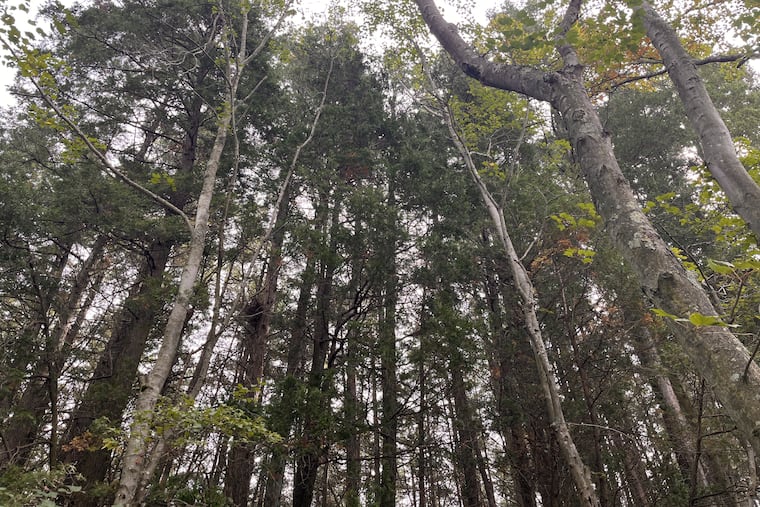
A grove of Atlantic white cedar within Wharton State Forest in New Jersey's Pinelands.
A grove of Atlantic white cedar within Wharton State Forest in New Jersey’s Pinelands.Frank Kummer

The New Jersey Pinelands Commission voted Friday, with one dissent, to approve an Atlantic white cedar restoration project that has drawn objections from some environmentalists.

The vote by the 15-member commission allows the New Jersey Forest Service to broaden cedar cover over 171 acres in Wharton State Forest.

It’s the first phase of an ambitious $19 million state plan to restore 10,000 acres statewide. The state holds the East Coast’s last major concentrations of the tree. It’s historical 115,000 acres have dwindled to 25,000.

But the process has been bumpy as some environmentalists have railed against cutting existing cedars and the potential use of herbicides.

Mark Lohbauer, a commissioner from Pennsauken, was the lone voice of dissent Friday. He said he did not believe there had been enough public input or discussion of the project.

A major sticking point for Lohbauer, and some representatives of area environmental nonprofits, is the location chosen for the project off Sandy Causeway in Waterford Township, Camden County.

They say the tract already has existing, healthy, mature cedars they fear will be cut down as part of the process.

» READ MORE: Environmentalists rally against New Jersey plan to restore Atlantic white cedars

He also questioned the potential use of herbicides.

Lohbauer spoke after a lengthy presentation by Bill Zipse, supervising forester, and Todd Wyckoff, the state forester.

Zipse said the area was chosen because it has healthy cedars that can provide a natural seed bank for regeneration. The plan calls for both cedars and competing hardwoods to be removed to create zones where new cedar can thrive.

He also said that if herbicide is used, it could be limited to one application. Herbicides are often the only way to control rapidly growing competing vegetation such as phragmites, a reedy grass, the foresters said.

____________________________________________________
Daily energy and environment updates. Free 30-day subscription

N.J. Pinelands Commission approves Atlantic white cedar restoration project, despite objections Read More »

Flags ordered lowered to honor New Jersey Senator Cunningham

e>Governor>Scutari orders flags lowered to honor Sen. Cunningham

State Sen. Sandra Bolden Cunningham speaks in Newark in 2015. (Photo: City of Newark).

Scutari orders flags lowered to honor Sen. Cunningham

Acting governor served alongside former Senate leader for 16 years; flags will fly at half-staff Tuesday


By David Wildstein, New Jersey Globe, October 09 2026 

Acting Gov. Nicholas Scutari ordered New Jersey and U.S. flags to fly at half-staff on Tuesday, October 13, to honor former Senate President Pro Tempore Sandra Bolden Cunningham, who died Wednesday after a lengthy illness.  She was 76.

Scutari, who served alongside Cunningham in the State Senate for sixteen years, signed the executive order Friday while serving as acting governor during Gov. Mikie Sherrill’s absence from New Jersey.  Sherrill is expected to return to the state tonight.

Cunningham, a Jersey City Democrat, served in the Senate from 2007 until her retirement in 2024.

During her legislative career, Cunningham held several leadership positions, including majority whip, deputy majority leader, and Senate president pro tempore.  She also chaired the Senate Higher Education Committee.

A champion of criminal justice reform, Cunningham helped enact New Jersey’s ban-the-box law, expanded expungement opportunities, and fought to restore voting rights to people on parole and probation.

She also advocated for affordable higher education and helped provide scholarships to students through the Sandra and Glenn Cunningham Foundation.

Scutari’s executive order directs flags at all state government buildings and agencies to be lowered in recognition of Cunningham’s public service and contributions to New Jersey.

____________________________________________________
Daily energy and environment updates. Free 30-day subscription

Forwarded this email? Subscribe here for more


Flags ordered lowered to honor New Jersey Senator Cunningham Read More »

74-year-old retiree helps track down abandonned Pa gas wells

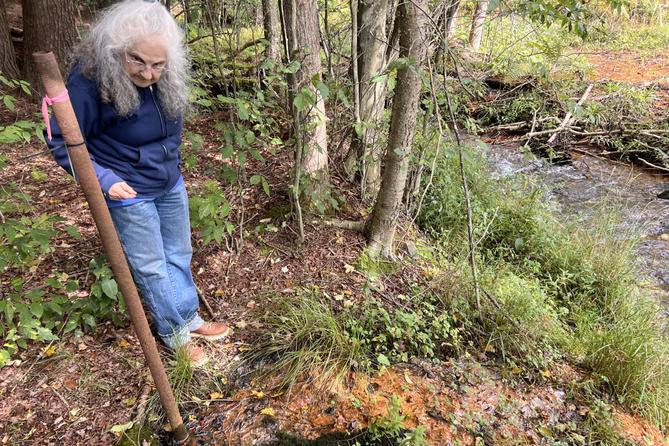
Bradford resident and retiree Barbara Laxon stands next to an abandoned, uncapped oil well.

By Kate Huangpu / Spotlight PA / Oct. 7, 2026

BRADFORD — Driving into Bradford, Barbara Laxon tells people to look out for the flare coming from the oil refinery running along the town.

At 74, Laxon spends much of her free time taking people on tours to show the traces of the oil and gas industry in her town — from an oil jack located in the parking lot of a McDonald’s to hidden wellbores near a local elementary school.

After exploring town, Laxon leads people into Allegheny National Forest to find abandoned oil wells. Parking on the side of the highway, she guides visitors carefully through swampy woods, warning them to watch their step.

“We would take the little side roads and just walk up the roads and see if we could see anything,” Laxon said. “You could see the slimy, shiny, brownish stuff trailing down the side of the hill.”

Pennsylvania has thousands of these wells. The full number is unknown, but estimates range from around 20,000 to as high as 750,000. They can emit methane, a greenhouse gas 25 times more potent at trapping heat in the atmosphere than carbon dioxide, and leak toxic substances that pollute their surroundings.

According to state law, operators of wells are responsible for plugging them. When an owner can’t be identified, or when the well is older than the 1984 state law that regulates oil and gas drilling, the Department of Environmental Protection is responsible for the plugging.

But in practice, companies often skip out on their responsibilities, leaving the state responsible for a steadily increasing bill. A 2022 state report found a “culture of non-compliance” in the industry, particularly with regard to “improper abandonment of oil and gas wells.

Read more here.

____________________________________________________
Daily energy and environment updates. Free 30-day subscription

74-year-old retiree helps track down abandonned Pa gas wells Read More »

Enviro groups split over bipartisan clean-energy deal

Environmental trade-offs

By Leslie Kaufman and Zahra Hirji

When Senate negotiators unveiled a sweeping permitting reform deal last week, clean-energy advocates welcomed provisions intended to speed construction of renewable energy and long-distance power lines.

Now, however, many environmental groups are pushing back over what could be sacrificed to get those projects built — and questioning whether the bipartisan deal would deliver enough clean energy in return.

Read More: What the Senate Permitting Deal Means for US Climate Emissions

The debate is still in early stages. A Senate vote isn’t expected until after the midterm elections, when the political landscape could look very different, and the 417-page bill could change substantially along the way. But the initial reactions are beginning to reveal some of the biggest fault lines.

Environmental groups have raised concerns that fall broadly into three areas: changes to the Endangered Species Act, rollbacks to Clean Water Act protections and, more fundamentally, whether longstanding safeguards for nature would be lost without securing enough renewable energy in return.

Tidal wetlands near Newark, California. Photographer: Sam Hall/Bloomberg

Tidal wetlands near Newark, California. Photographer: Sam Hall/Bloomberg


The Sierra Club cautioned that the deal could also end up boosting fossil-fuel projects more than renewables. “There is no task more urgent than building clean energy and transmission,” the nonprofit’s Chief Program Officer Holly Bender said in a statement. But the legislation “cannot guarantee that more wind and solar projects will actually get built” while the Trump administration continues to block projects, she warned, and other provisions would provide immediate benefits to oil and gas companies.

On Tuesday, more than 200 organizations, including the Center for Biological Diversity and Friends of the Earth, sent a letter to Senate Democratic leaders opposing provisions they say would weaken the Endangered Species Act, one of the country’s foundational conservation laws. Among other changes, the draft bill would alter the “best available science” standard agencies use when deciding whether to list species as endangered and whether federal actions could affect them once listed. It would also allow states to take over some consultations currently handled by federal wildlife agencies.

Enviro groups split over bipartisan clean-energy deal Read More »