Yes, Virginia, you can recycle your peanut butter jar–and almost everything else

In Germany, nearly 90 percent of plastic #1 PET bottles, which peanut butter is usually stored in, are recycled. (Elysa Weitala/For The Washington Post)

Column by , The Washington Post

Judging from my inbox, Climate Coach readers have a burning question: Do I need to clean my peanut butter jar before I recycle it?

You may laugh. But the peanut butter jar — sticky, messy and, for the recycling-inclined, guilt-inducing — represents what’s vexed and broken about our recycling system.

Properly designed, our recycling system could work more like the one in Germany, where roughly two-thirds of municipal waste (and almost 90 percent of plastic “#1” PET bottles, like those carrying most peanut butter) is recycled. Instead, the patchwork of thousands of local programs in the United States ends up recycling about 24 percent of municipal waste (around a third if composting is included), according to the most recent federal estimates, from 2018. Meanwhile, Americans burn or bury nearly 180 million tons of trash each year. 

None of this discourages Miriam Holsinger, co-president and chief operating officer of Eureka Recycling, a nonprofit recycler in Minneapolis.

Each year, Holsinger’s materials recovery facility, or MRF, receives roughly 100,000 tons of stuff tossed by Minneapolis, St. Paul and surrounding communities, including car parts, bowling balls, diapers and other items. Yet the vast majority ends up as new products, thanks to a gauntlet of machinery, including massive ballistic separators and optical sensors, that sorts more than 1,000 items per minute. Reclaimers — the next stop, where bales are washed, shredded and processed — pay for these raw materials.

Read the full column here

Yes, Virginia, you can recycle your peanut butter jar–and almost everything else Read More »

NJ towns use home rule to block data centers, a step beyond Governor Sherrill’s approach

Credit: (AP Photo/George Walker IV)


Two months ago, NJ Gov. Mikie Sherrill announced a plan to restrict — though not ban — artificial intelligence data centers statewide.

Many local leaders say that’s not enough. Since February, at least two dozen municipalities have prohibited the facilities within their borders.

Since 1917, New Jersey’s entrenched system of home rule, or local government authority, has blocked all sorts of development, from garbage dumps and hazardous waste disposal sites to marijuana dispensaries and mandated affordable housing. Once it kept what is now the Great Swamp, in Morris and Somerset counties, from becoming a 45-square-mile airport. Now town officials are training their zoning powers on data centers in a state with roughly two dozen of them, and several under construction.

While the buildings enable high-value global computing to advance health care, test disaster responses and automate supply chains, they bring tremendous local downsides. The servers can take up acres that residents instead may want for more houses. The buildings draw heavily on electricity and water supplies. And in some places, the irritating hum of constant operations can be heard a mile away.

Public pushback

“Municipal officials appear to be responding to a level of public pushback that’s difficult to ignore,” said Alyssa Maurice, assistant director and head of research and polling at the William J. Hughes Center for Public Policy at Stockton University. “Local governments may view data centers as attractive economic development opportunities, but residents are making a different calculation. Many residents appear to believe the potential downsides outweigh the economic benefits that local officials often point to, like increased tax revenue and relatively modest permanent job creation.”

Read the full story here

NJ towns use home rule to block data centers, a step beyond Governor Sherrill’s approach Read More »

Pa’s new budget leaves $2B tax exemption for data centers untouched

A data center owned by Amazon Web Services under construction next to the Susquehanna nuclear power plant in Berwick, Pa.

By Kate Huangpu of Spotlight PA

HARRISBURG — Despite a flurry of proposals to regulate data centers in the months leading up to this year’s state budget deadline, Pennsylvania lawmakers passed only one related measure as part of the $50.8 billion deal.

It mandates that data centers using more than 10 MW of electricity annually disclose their energy and water usage. Environmental advocates said the change, which covers most of the new data centers planned for the state, is positive but not especially meaningful.

Lawmakers left in place an increasingly unpopular sales tax exemption for data centers that is projected to cost the state $2 billion in tax revenue by mid-2031, and passed no other bills that would regulate the burgeoning industry.

This is despite the state House and Senate passing a bevy of recent bills seeking to rein in data centers, such as one that would ban developers from accessing a program that gives tax breaks to those who invest in certain “opportunity zone” areas, and another to allow local governments to temporarily pause development.

The measures came after polling this spring showed that 64% of Pennsylvanians saw data centers as a problem, and communities increasingly rallied against them.

However, none of these pieces of legislation made it to the governor’s desk.

Read the full story here

Pa’s new budget leaves $2B tax exemption for data centers untouched Read More »

Trump to auction off waters around American Somoa for deep-see mineral exploration


The proposed leasing notice was published on Friday as U.S. President Donald Trump’s administration seeks to expedite mining permits despite growing environmental concerns.

The unilateral U.S. move is also a departure from previous administrations that have respected the rules of the International Seabed Authority, a Jamaica-based U.N. body, which oversees deep international waters and has been debating mining rules for years.

More than 43 countries have called for a moratorium or ban on deep sea mining, which scientists have warned could unleash noise, light and suffocating dust storms and affect fragile marine life.

But the U.S. and others are eager to mine the seafloor for copper, iron, zinc and other minerals that are in demand for technology, military use and electric vehicles.

Read the full story here

Trump to auction off waters around American Somoa for deep-see mineral exploration Read More »

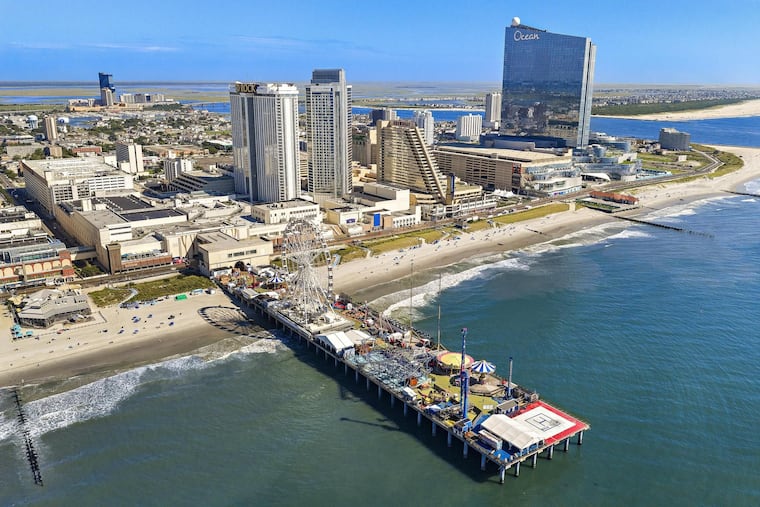
New mix of homes coming to Atlantic City’s Inlet section

Developer Keith Groff said the lighthouse row project will have market-rate housing at numerous price points.

WAYNE PARRY, STAFF WRITER

ATLANTIC CITY — The developer building about 30 new homes across from the Absecon Lighthouse says he aims to provide “what everyone wants back” in Atlantic City.

During a media tour Wednesday of the Lighthouse Row development in the city’s Inlet neighborhood, developer Keith Groff said the project, currently in the second of what will be at least three phases, will have market-rate housing at numerous price points.

The second phase will sell for $850,000 to $1.105 million, he said.

“We’re going to bring back what used to be here, that everyone wants back,” Groff said.

His project is creating new housing on vacant land near the ocean that the city has long sought to repopulate, with vibrant, walkable neighborhoods on land that once symbolized blight.

“We all want rateables, more people in the neighborhood,” Groff said. “It feels safe, with more people walking around.”

The Lighthouse Row project is just one of many underway in Atlantic City as the pace of building and investment accelerates.

From multibillion-dollar residential and entertainment projects to single-family homes, Atlantic City is experiencing a spate of development that, for the first time in decades, has drawn some of the state’s largest builders to the seaside resort, including K. Hovnanian and the Kushner Companies.

Builders, officials, and legal experts agree on several reasons for the increased interest in Atlantic City:

• Comparatively cheap land, and lots of it

• Free beaches and an established casino industry

• Intensive state oversight and support, with development incentives, coupled with a business-friendly city administration

• Continuation of a trend that started with the COVID-19 pandemic of remote work away from big cities

a trend that started with the COVID-19 pandemic of remote work away from big cities

Read the full story here

New mix of homes coming to Atlantic City’s Inlet section Read More »

What’s causing sharp drop in Chesapeake Bay’s crab population?

Crabs being sorted in Maryland. (Carolyn Van Houten/The Washington Post)

By Washington Post

A new report on the Chesapeake Bay’s signature blue crab has documented a steep, long-term decline in the crustacean’s population, raising concerns among environmental groups about the future of one of the region’s most important species.

Scientists aren’t sure exactly what’s behind the drop. The total number of blue crabs can fluctuate sharply, with population estimates varying by tens of millions — or even hundreds of millions — within just a few years. But experts said they’re concerned by what they’re seeing.

“It’s clear the bay’s most iconic species is under immense stress,” according to the Chesapeake Bay Foundation, which was not involved in the assessment but whose scientists closely monitor its results.

Habitat loss, especially the reduction of underwater grasses that shelter young crabs, may be playing a role, experts said. Changes in currents, winds and storms, pollution and runoff, and low-oxygen “dead zones” caused by algae blooms may also contribute, experts said.

“They’re a short-lived species and the biggest thing we’re seeing is a decline in the number of young crabs entering the population,” said Chris Moore, the Chesapeake Bay Foundation’s Virginia executive director. “That long-term trend of fewer young ones is very concerning.”

Healthy blue crabs are vital to the bay’s ecosystem. They eat worms, clams, and smaller crabs, and are prey for fish, great blue herons, and sea turtles. Blue crabs also generate $50 million to $80 million annually for the commercial crabbing industries of Maryland and Virginia, experts said.

What’s causing sharp drop in Chesapeake Bay’s crab population? Read More »