And you thought New Jersey was nothing but highways and refineries.

And you thought New Jersey was nothing but highways and refineries. Read More »
Morristown Daily Record
No one objects to the essential purpose of New Jersey’s Highlands Water Protection and Planning Act.
But for a distinct minority of Garden State towns, the landmark law to protect drinking water for almost 7 million people is drying out their financial resources and jeopardizing the fiscal future of their school systems.
“We want to preserve water and resources,” said Eric Wilsusen, mayor of Jefferson, an expansive rural township in the Highlands that also includes portions of Lake Hopatcong, New Jersey’s largest lake and a popular recreation destination. “We’re all for that. I grew up here. This is my playground. But we’re definitely taking the burden for preserving those resources for the rest of New Jersey. And it’s just, it’s really not fair.
The Highlands Act, approved in 2004 and signed into law by Gov. Jim McGreevey, imposes strict development limits and other restrictions in the region, which cuts through 88 towns across Bergen, Hunterdon, Morris, Passaic, Somerset, Sussex and Warren counties.
“It’s the place where New Jersey’s densely populated urban corridor gets its water,” said Ben Spinelli, executive director of the state-appointed Highlands Council. “Every day, over 860 million gallons of water are exported out of the region to other parts of the state. There are 332 of the state’s 564 municipalities on the receiving end of that pipeline.”
NJ Highlands towns pay a steep price to protect your water Read More »
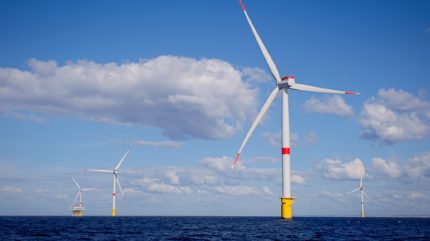
New Jersey residents will remember the company’s dramatic withdrawal in October 2023 from its Ocean Wind 1 and 2 offshore wind projects. The company cited high inflation, rising interest rates, and supply chain delays for its decision. In May 2024, New Jersey and Ørsted reached a $125 million settlement to resolve financial claims related to the scrapped deals.
The cancellation dealt a major setback to then New Jersey Governor Phil Murphy’s clean energy goals. Ørsted initially tried to bypass a $300 million completion penalty. However, both sides agreed to a $125 million payout from Ørsted. The state designated these funds for local wind ports, component manufacturing, and clean energy programs.
Despite its disastrous New Jersey experience, Ørsted went on to complete its offshore wind deal with New York State.
Why? The understanding at the time was that, while New Jersey locked Ørsted into older, lower-priced electricity contracts that became financially impossible to build because of inflation, New York allowed Ørsted to exit those agreements and re-bid its Sunrise Wind project at a higher, realistic price.
Construction of Sunrise Wind is under way, with several key construction milestones already complete. Full commercial operation is expected in the second half of 2027. Once fully operational, Sunrise Wind is expected to be New York’s largest offshore wind project, generating enough electricity to power around 600,000 homes.
_______________________________________________________
Daily energy and environment updates. Free 30-day subscription
The offshore oil company that abandoned NJ, is now exploring Taiwan Read More »
Rendering of future Anthro Energy facility in Kentucky
By Frank Brill, EnviroPolitics Editor
The U.S. battery sector is seeing a notable reshuffling of investment priorities as companies respond to evolving electric‑vehicle demand and the growing importance of grid‑scale storage.
Anthro Energy has broken ground on a new factory that will manufacture advanced electrolytes for EV batteries, a move highlighted by TechCrunch. The company’s technology is designed to support next‑generation solid‑state batteries — a long‑anticipated innovation that promises greater energy density, improved safety, and faster charging. While solid‑state batteries are not yet commercial at scale, the Kentucky facility positions Anthro Energy to play a key role as automakers and suppliers push toward that future.
Meanwhile, in Michigan, LG Energy Solution has opened a $2.6 billion plant dedicated to grid battery production, according to reporting from the Detroit Free Press. The facility was originally planned as part of a joint venture with General Motors to produce EV batteries, but the companies shifted course as the EV market cooled and demand projections softened. Instead, LG is leaning into the rapidly expanding market for stationary storage — batteries that support renewable energy integration, stabilize the grid, and help utilities manage peak demand.
Taken together, these two developments illustrate how the battery industry is diversifying its bets. Some companies are doubling down on long‑term EV innovation, while others are pivoting toward grid storage, where demand is accelerating as states and utilities invest in resilience and clean‑energy infrastructure.
For policymakers and industry watchers, the message is clear: the U.S. battery landscape is no longer defined solely by electric vehicles. It’s becoming a broader ecosystem—one that spans transportation, grid reliability, and emerging technologies that could shape both sectors for decades.
Get daily energy/environment updates. Free 30-day trial
Two Major Battery Investments Signal Strategy Shift in Clean‑Energy Economy Read More »
Signs in Archbald, Pennsylvania. (Heather Ainsworth/For The Washington Post)
Shapiro’s order stops short of a blanket moratorium on data center development. But administration officials said the new policies are structured so that it will be exceptionally difficult for most data center developers to meet the new requirements.
The new policy represents a shift for Shapiro, who has been mentioned as a possible presidential candidate in 2028 and has been trying to navigate hardening public opposition to data centers nationwide.
Daily energy and environment updates. Free 30-day subscription
Pennsylvania governor shows he knows how to read the polls Read More »