After gutting newsrooms, McClatchy plans to rebuild itself around AI


The local journalism that has long powered the 169-year-old company is no longer a viable business model, executives told McClatchy employees during a virtual town hall this month.


Two months after McClatchy Media laid off more than 90 journalists nationwide, executives at the storied local newspaper chain offered a blunt assessment of its future.

The award-winning local journalism that has long powered the 169-year-old company was no longer a viable business model, executives told McClatchy employees during a virtual town hall this month, and its survival depended on a wholesale reinvention — centered entirely around artificial intelligence.

From the rollout of new lifestyle websites that feature AI-generated articles and sponsored content to legal review and finance, executives revealed how AI is now integrated into virtually every part of the company. The demonstration comes after McClatchy, one of the nation’s largest newspaper conglomerates, carried out deep staff cuts in September at the Miami Herald, The Kansas City Star, and more than a dozen other local news outlets. An anonymous “person close to the executive decision-making” told The New York Times the layoffs were not about AI and were instead about “business performance in some areas.”

Editor’s Note: McClatchy owns the Centre Daily Times in State College, Pa. It does not own any daily newspapers in NJ or NY.

“We cannot continue to do the same things because the marketplace has changed,” McClatchy CEO Tony Hunter told staff during the off-the-record Nov. 6 meeting, according to audio provided to Nieman Lab. Executives told staff that McClatchy-owned publications have suffered a 17% decline in paid digital subscribers in the last year — and unique visitors have plummeted 39%.

Photo of a slide with audience figures shown during the town hall meeting


A companywide blueprint presented during the meeting highlights how McClatchy is systematically outsourcing the infrastructure for local news to AI agents — and rebranding around lifestyle verticals for sports fans, outdoor enthusiasts, and true-crime junkies.

Dubbed “Project Catalyst,” the companywide restructure will create an “AI-native operating model” that takes “repeated tasks off of humans” and embeds AI agents “directly into the daily workflow,” Jeff Dorsey, McClatchy’s chief operating officer, said at the town hall. Dorsey described the initiative as an effort to automate “non-core as well as core functions,” “get rid of things that just don’t offer the same value” they once did, and “provide cash, frankly, to keep the business afloat.”

McClatchy, which operates 29 daily newspapers across 14 states, didn’t respond to multiple requests for comment.

Read the full story here

After gutting newsrooms, McClatchy plans to rebuild itself around AI Read More »


Trump continues to wage war against Atlantic offshore wind projects

New Jersey beach
Plans for the wind farm near Atlantic City had been postponed but the Army Corps says it is now planning a review of the approval 
 

The Trump administration’s opposition to the offshore wind energy sector continues with a series of efforts to review previously approved projects. In the latest development, the U.S. Army Corps of Engineers confirmed on Tuesday, November 17, that it plans to review the previously issued approval for the Atlantic Shores South project, proposed but later postponed by France’s EDF Renewables.

The project is one of four lease areas held by the company off the southern coast of New Jersey. The Atlantic Shores South project is on a federal lease that dates to an auction in November 2015, through a competitive lease sale, and was executed with US Wind in March 2016. In 2018, the lease was assigned to EDF Renewables.

The Army Corps was one of the many reviews the project had to undergo during the approval process. It proposed up to 200 wind turbines to be located about nine miles off the coast of Atlantic City, New Jersey. Despite strong local opposition, the project received approval for its Construction and Operations Plan in September 2024.

The project was proposed in the New Jersey solicitations, but encountered delays and did not proceed. It was not selected by New Jersey, and then Shell, which was one of the partners, announced it was withdrawing from offshore wind energy. EDF had said it still wanted to proceed with the project, but in June 2025, reports said they had filed with the New Jersey Board of Public Utilities to terminate its Offshore Renewable Energy Certificates (OREC).

The Environmental Protection Agency has also challenged the Atlantic Shores South project. It said it would review the permitting, contending the prior administration had rushed the review.

Continue reading the story here

Take a peek at our new Data Center Reporter


Trump continues to wage war against Atlantic offshore wind projects Read More »

Andry residents in this NJ town are seeking neighboring data center bans

A housewife in Kenilworth, NJ says she and her neighbors did not know that her town leaders had approved a data center until it was under construction. She formed a groiup that is now alerting neighboring towns and winning construction bans.

Related: Sierra Club reports data centers are on track to wipe out years of climate gains

Get EnviroPolitics free for 30 days

Andry residents in this NJ town are seeking neighboring data center bans Read More »

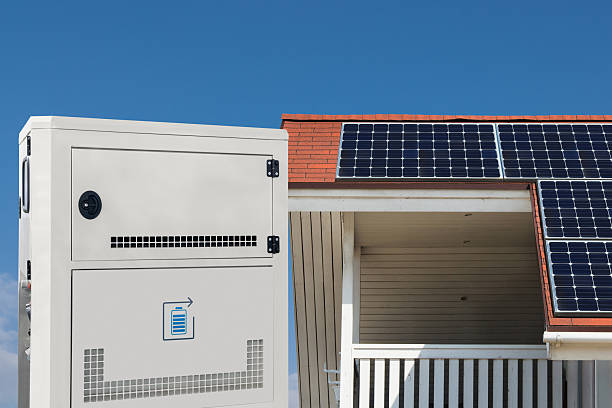
Virtual power plant program offers NJ residents a way to expand and save on electric use

1,300+ Residential Solar Battery Storage Stock Photos and ...


By Daniel T. McKillop, Scarinci, Hollenbeck law firm

On November 12, 2026, the New Jersey Board of Public Utilities (NJBPU) approved the PowerUp New Jersey initiative, which combines an interim virtual power plant program with expanded battery storage incentives. The initiative is intended to address rising electricity demand, grid reliability concerns, and growing pressure on the state’s electric infrastructure. For organizations with battery systems, solar installations, electric vehicle charging equipment, or significant electrical loads, the program may create new pathways for participation in New Jersey’s evolving energy marketplace.

New Jersey’s recent approval of a statewide virtual power plant (VPP) program is more than an energy policy development. For many businesses, institutions, developers, and property owners, it could create new opportunities to reduce operating costs, enhance resiliency, and generate revenue from existing energy infrastructure.

What Is a Virtual Power Plant?

A virtual power plant is not a traditional generating facility. Instead, it is a coordinated network of distributed energy resources such as battery storage systems, solar-plus-storage installations, smart building controls, electric vehicle chargers, and other flexible electrical loads. Using advanced software and communications technology, utilities or third-party aggregators can coordinate these resources to reduce electricity consumption or discharge stored energy during periods of peak demand.

Related: NJ Board of Public Utilities Unanimously Approves Virtual Power Plant Program

When aggregated across hundreds or thousands of participating customers, the combined impact can provide benefits similar to those of a conventional power plant. In addition to supporting grid reliability, VPP participation may create compensation opportunities for participating customers.

Read the full article here

Take a peek at our new Data Center Reporter

Virtual power plant program offers NJ residents a way to expand and save on electric use Read More »

Audi creates subsidiary focused on automotive recycled plastics

Design exemplifying the life cycle of a car
Audi’s new circular economy subsidiary covers the end of a vehicle’s life cycle. It combines the purchase of used vehicles and components, vehicle dismantling, the sale of used parts, and access to recycled raw materials for the Audi supply chain. (AUDI AG)

By Beatriz Santos, Sustainable Plastics,
November 17, 2026

German car maker Audi has established a new subsidiary to recover raw materials from end-of-life vehicles, with recycled plastics identified as one of its key priorities.

Audi Circular Solutions GmbH, a wholly owned subsidiary of Audi AG, will begin operations in early 2027. The company will develop a business model covering the purchase and dismantling of used vehicles, the resale of spare parts and the recovery of secondary raw materials for Audi’s supply chain. The subsidiary will initially establish a central sales channel for used Audi parts, before expanding into vehicle purchasing and dismantling through a network of specialised partners across Europe.

Recycled plastics will be a key focus, Audi said, as the car maker seeks to prepare for upcoming regulatory requirements and reduce its dependence on virgin raw materials. The announcement comes as automotive manufacturers prepare to comply with the EU’s End-of-Life Vehicles Regulation (ELVR). Under the regulation, new passenger cars and vans must contain at least 15% recycled plastics by weight from September 2032, rising to 25% from September 2036. At least 20% of those targets must be met using plastics recovered from end-of-life vehicles.

Read the full story here.

Have a look at Data Center Reporter

Audi creates subsidiary focused on automotive recycled plastics Read More »

NJ regulators approve virtual power plant, battery storage programs

By New Jersey Globe,

The Board of Public Utilities approved programs Thursday aimed at putting less strain on the grid and lowering energy costs statewide. (Photo by Dana DiFilippo/New Jersey Monitor)

The Board of Public Utilities on Thursday unanimously approved the launch of an interim virtual power plant program and the next phase of the state’s energy storage program.

The approved programs make up PowerUp New Jersey, the state’s bid to tap into smart devices and smaller-scale battery projects to soften the impact peak demand has on power prices by paying for reductions in power use or stored energy transmitted to the grid.

“Residents and businesses can lend power from their homes — through smart devices, in-house batteries, solar panels, and other energy sources — to help support the grid when they are not using them, and we will pay you for that energy. That means more money in your pockets, less strain on the grid, and lower energy costs across our state,” Gov. Mikie Sherrill said in a statement.

Virtual power plants seek to remotely reduce the power draw of certain devices, like smart thermostats or electric vehicle chargers, during the parts of the day that grid demand is highest and compensate ratepayers for their reduced electricity use.

Price effects are magnified when demand for electricity approaches the grid’s capacity to generate power. Relatively small amounts of additional generation can have an outsized impact on per-kilowatt-hour rates under those conditions.

The project aims to reduce peak energy use at each of the state’s four regulated utilities —companies like PSE&G or Atlantic City Electric that transmit electricity to ratepayers — by 3%.

Existing devices paid for by state energy efficiency or electric vehicle charger programs could already meet up to 82% of the sought-after reductions at each of the utilities if three-quarters of the eligible devices were enrolled in the virtual power plant program. The state is seeking an overall reduction of 547.1 megawatts across the four electric distribution companies. Read the full story here.

Read the full story here.


NJ regulators approve virtual power plant, battery storage programs Read More »