
States are starting to embrace plug-and-play solar. Get up to speed on the cost, payback, and safety bona fides of the systems before they hit shelves near you.
By Alison F. Takemura, Canary Media, 17 April 2026
Balcony solar is poised to take the U.S. by storm.
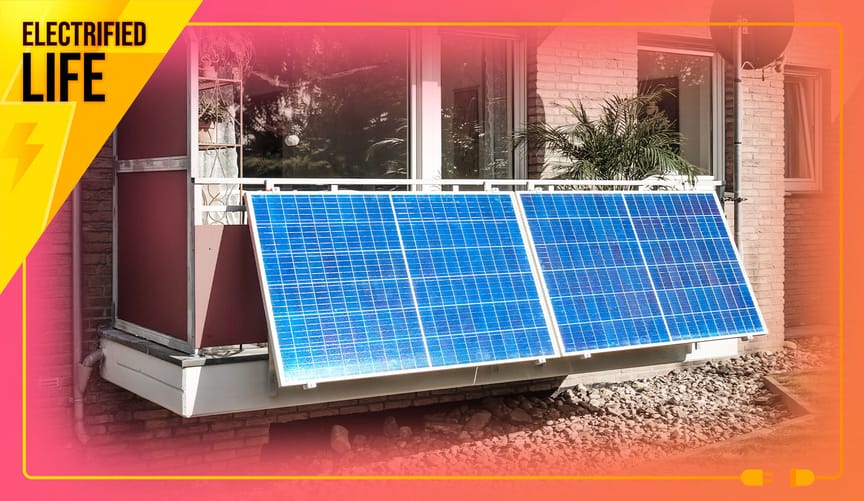
The DIY systems, which you can hang on a balcony and plug into a normal 120-volt outlet, help lower energy bills and carbon emissions. Already huge in Germany, solar that’s as easy to install as an appliance would be a game changer for the four out of 10 U.S. households that can’t get rooftop systems for financial or logistical reasons.
In 2025, deep-red Utah became the first state to pass a bill making it easier to adopt plug-in solar systems. So far this year, four more states have all advanced similar measures — and nearly two dozen others are weighing bills of their own.
Considering a balcony power plant yourself? Check our tracker to see the status of plug-in solar legislation in your state, and keep reading for some FAQs on the tech.
What is balcony (or plug-in) solar?
Balcony solar systems are modest in size, ranging from just one to a few solar panels. Most states, including California and New York, are considering capping systems at 1,200 watts — a sixth of the average home-solar installation.
The panels connect to an inverter that converts their direct current into alternating current, the kind our homes use. A plug from the inverter fits into a typical 120-volt outlet (15 or 20 amps), pumping the power of the sun directly into a home’s existing wiring.
The systems can cover a small but meaningful fraction of a home’s electricity use: An 800-watt unit can power the equivalent of a fridge or a few small appliances when the sun’s shining.
Stop missing out. Get your free, 30-day EnviroPolitics newsletter trial today.