
Grid operator PJM wants states and utilities to hold data centers responsible for buying their own power — or risk being cut off from grid service.
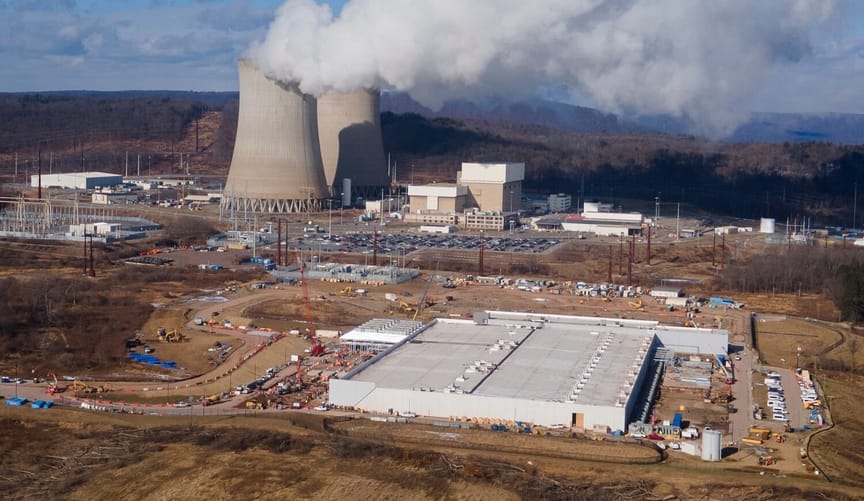
A data center owned by Amazon Web Services under construction in Berwick, Pennsylvania, in January 2025 (AP Photo/Ted Shaffrey, File)
By Jeff St. John, Canary Media
PJM Interconnection, the biggest grid operator in the U.S., has finally settled on a plan to prevent data centers from causing other customers’ utility bills to soar further in its 13-state territory.
That plan relies heavily on states themselves, and the utilities they regulate, to force data centers to secure their own power supplies — or face the possibility of getting their power cut off during grid emergencies.
Last week, PJM’s board of managers sent proposals along these lines to the Federal Energy Regulatory Commission (FERC), which must grant the grid operator permission before it can implement the new plan for its system, which serves about 67 million people from Virginia to Illinois. The multipart plan is PJM’s attempt to quiet down months of mounting pressure from state governors and the Trump administration to contain skyrocketing costs while staying within its regulatory limits.
“Historically, PJM has been very nervous to step into what it considered — or what are legally — the states’ rights,” said Julia Hoos, who leads coverage of Eastern U.S. power markets for Aurora Energy Research. But with its new proposals, PJM is “making a definitive request to the states to accomplish what it needs.”