
The state’s plan to replace defunct coal infrastructure with renewable energy has fallen short, but the experience holds lessons for future coal-to-solar efforts.
By Kari Lydersen, Canary Media, August 11, 2026
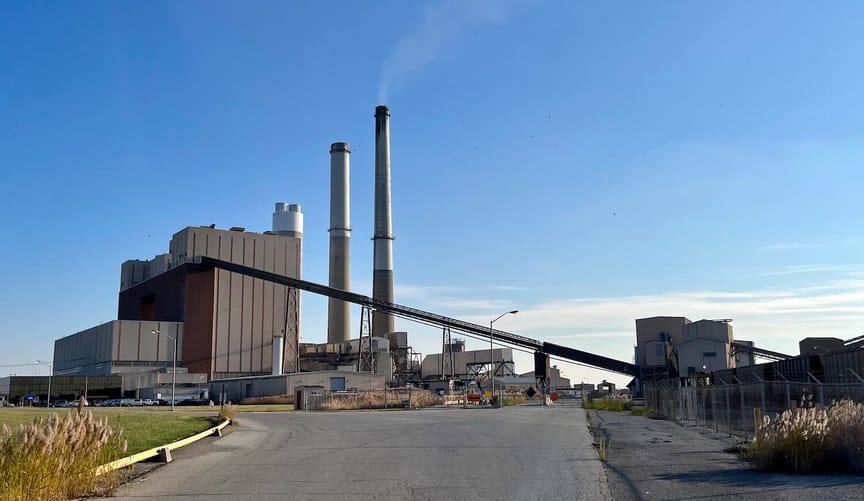
The state created its Coal to Solar and Energy Storage Initiative five years ago, hoping it would speed clean energy deployment by using the grid infrastructure and land left behind when coal plants close — as well as replace some of the lost local tax revenue and jobs.
The program was supposed to lead to at least six significant solar and battery storage arrays and five larger stand-alone battery banks. But in the end, only three relatively small solar farms with storage were built, and no stand-alone storage was built, finds a new report by the University of Illinois’ Climate Jobs Institute and the nonprofit Prairie Rivers Network.
“It’s a kind of sexy idea — we’re building solar on coal plants. It’s a neat picture of the green transition,” said Roshan Krishnan, a report co-author and research specialist at the Climate Jobs Institute, which studies the impacts of state energy policies. “But in reality, it ends up being more complicated.”
The researchers stressed that the lackluster results don’t mean that redeveloping shuttered coal plants into clean energy hubs is a bad idea — it’s just that the design of this specific effort didn’t make the conversion attractive for developers. The silver lining is that the results offer lessons for future coal-to-solar initiatives in Illinois and beyond.
“The clean energy transition and how we incorporate a just transition and energy community reinvestment is new. It’s uncharted territory,” said Amanda Pankau, the lead author of the report and director of energy and community resiliency at Prairie Rivers Network. “This isn’t just a dead end; there are other paths forward.”