
By Kate Huangpu / Spotlight PA / Oct. 7, 2026
At 74, Laxon spends much of her free time taking people on tours to show the traces of the oil and gas industry in her town — from an oil jack located in the parking lot of a McDonald’s to hidden wellbores near a local elementary school.
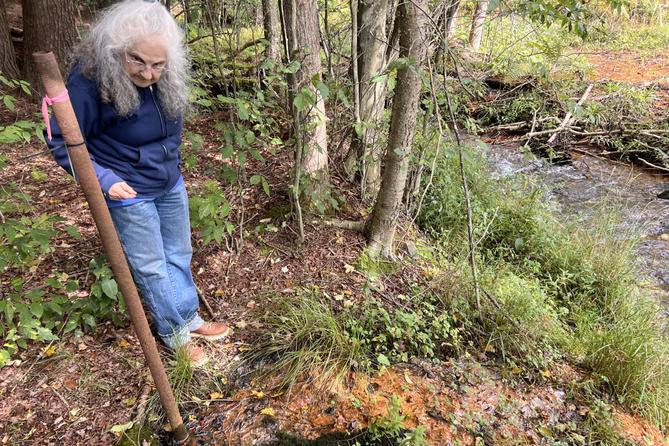
After exploring town, Laxon leads people into Allegheny National Forest to find abandoned oil wells. Parking on the side of the highway, she guides visitors carefully through swampy woods, warning them to watch their step.
“We would take the little side roads and just walk up the roads and see if we could see anything,” Laxon said. “You could see the slimy, shiny, brownish stuff trailing down the side of the hill.”
Pennsylvania has thousands of these wells. The full number is unknown, but estimates range from around 20,000 to as high as 750,000. They can emit methane, a greenhouse gas 25 times more potent at trapping heat in the atmosphere than carbon dioxide, and leak toxic substances that pollute their surroundings.
According to state law, operators of wells are responsible for plugging them. When an owner can’t be identified, or when the well is older than the 1984 state law that regulates oil and gas drilling, the Department of Environmental Protection is responsible for the plugging.
But in practice, companies often skip out on their responsibilities, leaving the state responsible for a steadily increasing bill. A 2022 state report found a “culture of non-compliance” in the industry, particularly with regard to “improper abandonment of oil and gas wells.
____________________________________________________
Daily energy and environment updates. Free 30-day subscription