
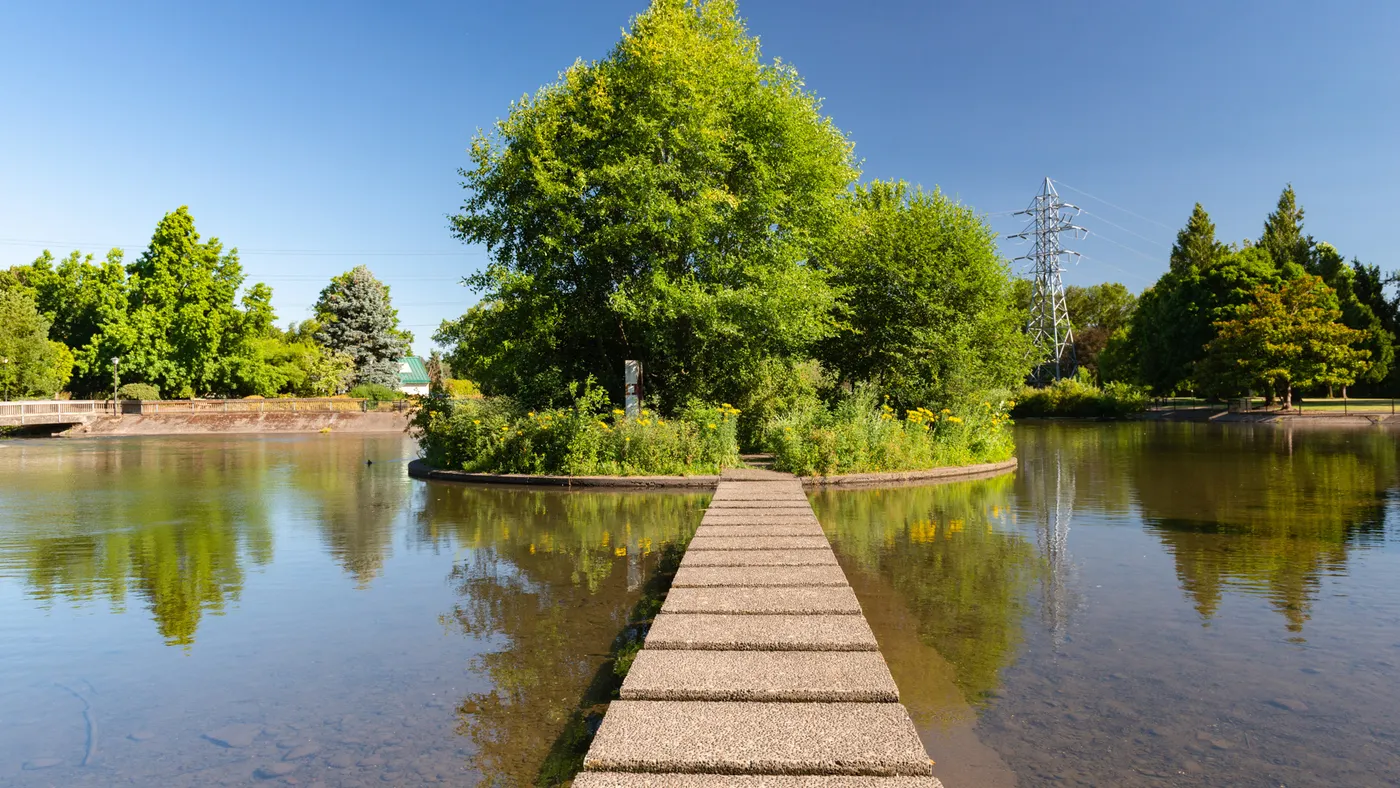
For decades, the state of Oregon has been aware of the closed landfill beneath Alton-Baker Park in Eugene. A former sand and gravel pit, the Day Island Landfill accepted waste between 1963 to 1974, closing two years before the federal Resource Conservation and Recovery Act ushered in a new era of landfill regulations.
The landfill was sited just feet from the Willamette River, a drinking water source for several towns downstream. During its operational years, the landfill accepted roughly 950,000 tons of material, including municipal waste from Lane County and chemical waste from wood treatment company J.H. Baxter & Co., according to records first unearthed by Lookout Eugene-Springfield.
Now, residents are raising new questions about the site’s impacts on public health. Investigators have previously noted contamination in adjoining ponds likely caused by leachate that has seeped out of the facility. But responsibility for remediation has been passed along, with the EPA, then the Oregon Department of Environmental Quality, determining the county would need to apply for funds to manage its monitoring and potential cleanup.
So far, the county has not done so. Mason Leavitt, GIS analyst and program coordinator with Beyond Toxics and a Eugene resident, often advocates for landfill restrictions in the state. He said the landfill represents a quandary for regulators, since records exist for just two of its 12 years of operating life, providing only a limited window into what’s buried beneath the park.
But the popular park’s connection to a yearslong Superfund cleanup just up the road also associated with J. H. Baxter’s wood treatment operations presents a troubling picture to residents.
“Until voluntary cleanup is done and all of these things are fully scoped out, I think people are still gonna wonder and feel some level of unease, especially given the site’s relationship to an ongoing environmental disaster,” Leavitt said.
Take a peek at our new Data Center Reporter