
The nation’s biggest grid operator is about to start working on a fix that would make it much easier to add batteries to existing power plants and solar and wind farms.

PJM Interconnection is finally taking steps that could let a lot of new battery capacity connect to its grid without eons of delay.
PJM is the biggest grid operator in the U.S., serving customers across 13 mid-Atlantic, Midwestern, and Southern states. Its grid is notoriously bogged down and congested, especially now that data centers are clamoring for more power, and that’s leading to high electricity prices in its territory.
Among other shortcomings, it’s been falling behind its counterparts elsewhere in the country in pursuing a straightforward solution: allowing power plants to add batteries on-site in order to get more out of grid connections that aren’t always used to full capacity.
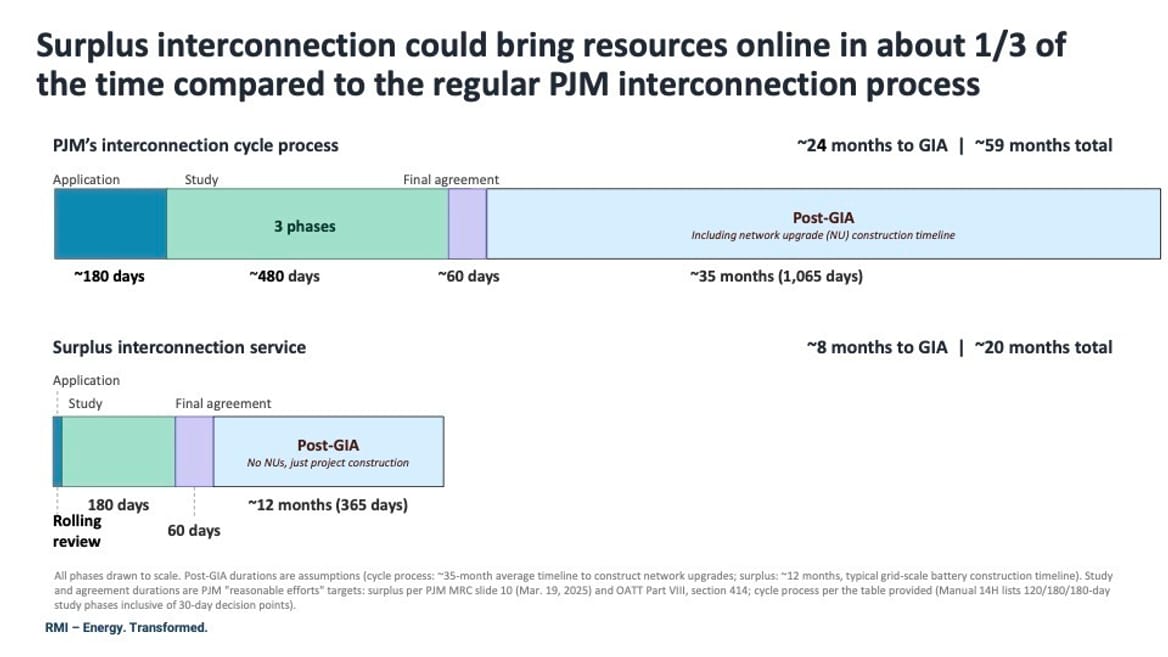
The Federal Energy Regulatory Commission has directed grid operators to pave the way for these kinds of battery additions under Surplus Interconnection Service (SIS) rules. The idea is to let existing power plants — mainly solar and wind farms — add batteries that can soak up excess power when it’s not needed, and then inject it through existing grid connections when power plants aren’t generating at their full potential.
That could be particularly valuable when region-wide demand for electricity spikes, usually on hot summer afternoons or cold winter mornings. PJM has seen the cost of capacity resources to keep the grid running during these times skyrocket over the past few years, largely due to pressures to supply power to proposed data centers.
But PJM has been a laggard in reforming its SIS procedures, according to grid experts and clean energy groups that have been pushing for changes for years. It has approved very few such projects, even as grid operators in other regions have crafted regulations and processes that have opened the door to tens of gigawatts of SIS capacity.
Now — better late than never — PJM has agreed to kick off a stakeholder process to reform its market rules to clear the way for SIS battery additions. Its Market Implementation Committee is set to consider the next steps at its Nov. 4 meeting, according to Jon Gordon, a senior director at clean-energy trade group Advanced Energy United. If a plan wins approval, PJM could complete work on the changes and seek FERC’s permission as early as April 2027 to enact them.
“We have members who are really rip-roaring to go on this,” said Gordon of Advanced Energy United. “What I’ve learned is that the devil’s really in some of the wonky details that have become obstacles to solving this problem.”
attery might have different offtakers, different obligations,” she said.
To fix this problem, PJM has proposed a set of changes that, in essence, will allow hybrid projects to separate the contributions of their different resources in both PJM’s energy market and capacity market. “You might think of it as an itemized receipt,” Siegner said. “It makes it easier to split the bill.”
That simple fix could unlock an enormous amount of pent-up demand for batteries to help meet PJM’s growing hunger for capacity. The new energy storage capacity could be added to existing projects or be integrated into plans for tens of gigawatts of clean power projects that have won permission to connect to PJM’s grid, she said.
This new pathway for bringing batteries more quickly online would be especially welcome in PJM states with energy storage targets, including Illinois, Maryland and New Jersey, Siegner said. Laws passed in Indiana and Virginia that require major utilities to identify and analyze the potential for surplus interconnection could also help boost deployment.
These market rule changes could still be a long way off. Even if PJM moves proposed reforms through swiftly, FERC’s approval of them might take until late next year.
That slow pace is “frustrating,” Advanced Energy United’s Gordon said. “We’re not talking about physical limitations to the grid. We’re just talking about this quagmire of administrative processes and legal rights.”
If the barriers to surplus interconnection service can be lifted, that could spur a lot of investment in batteries, relatively cheaply and speedily, he said. “Given PJM’s desperate situation for capacity, anything that would help PJM manage peaks better — like getting batteries online — would make a massive difference.”
In particular, data center developers might want to bankroll batteries. Data centers are under increasing pressure from state and federal regulators to build their own capacity resources to avoid pushing more costs onto everyday customers — and PJM’s attempts to solve that problem have been stalled.
Earlier this month, FERC rejected PJM’s painstakingly developed plan to require data centers and other “large loads” to supply their own capacity or face having their power cut off during grid emergencies.
Given that setback, data center developers and other PJM stakeholders that are trying to curb rising electricity prices are eager for options that can serve their needs as quickly as possible, Siegner said — and surplus interconnection is one of the best ones out there.
“I would like to think that if you threw a battery onto an existing solar project, given how capacity-constrained PJM is today, you could find someone as an offtaker,” she said.