NJ Sen. Ray Lesniak on politics, gambling and governors

Senator Ray Lesniak on NJTV’s “On the Record with Michael Aron”

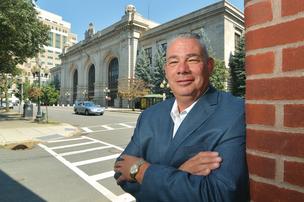
One of the most quotable–and influential–figures in New Jersey politics over the past three decades is Senator Ray Lesniak. Watch his interview with NJTV‘s political expert Michael Aron for a taste of what makes a big time political power broker tick: how a dramatic personal encounter shaped his interest in drug rehabilitation, how he views gambling and economic development, and how he rates the governors of his era (most kindly, but not all).

Like what you’re reading? Click here to get free updates 

Video excerpts from the interview:
Mike Aron’s short bio introduction of Senator Lesniak 
An early champion of the environment before his interest turned to national politics 
He enjoys sitting in the back row of the Senate and not always following the party line
A ‘progressive’ who is a champion of more gambling in more places in NJ
He thinks kindly of most of the governors of his era, except one. Guess who  

Watch the entire On the Record episode here


Recent blog posts:
Pa drillers did not report half of spills leading to fines
NJ open space advocates live to fight another Monday
Lisa Jackson wants you to know her Apple’s greening up

EnviroPolitics Podcast – Episode 7 – Barnegat Bay  
In warmed Chesapeake Bay waters, a deadly virus lurks 

NJ Sen. Ray Lesniak on politics, gambling and governors Read More »

Pa drillers did not report half of spills leading to fines

Pennsylvania quarantined the cattle on Don Johnson’s Tioga County farm
in 2010 after a leak of hydraulic fracturing flow-back fluid from a well site.


"Half the spills at Marcellus Shale well sites that resulted in fines weren’t spotted by gas companies, which are required by state law to look for and report spills of drilling-related fluids."

That is one of the main conclusions of a Pittsburgh Post-Gazette review of hundreds of thousands of state and company documents for every incident at a Marcellus well site that led to a fine against a driller through the end of 2012.

According to the newspaper, the documentation showing that companies often failed to detect spills on their own sites offers a look at self-regulation in the shale gas industry.

"State regulation of the industry was the subject of a withering state auditor general review of the Department of Environmental Protection’s oversight issued July 22. The audit detailed the agency’s shortcomings, including failing to consistently issue enforcement orders to drilling companies after regulators determined that gas operations had damaged water supplies, even though the state’s oil and gas law requires it. "

Like what you’re reading? Click here to get free updates 

The Post-Gazette investigation using well permit file documents and other DEP data focused on 425 incidents involving 48 companies that resulted in nearly $4.4 million in fines.

Of those 425 fines, 137 were due to spills at or near a well site. They ranged from relatively small incidents involving a couple of gallons of diesel fuel on a well pad to larger accidents involving thousands of gallons of hydraulic fracturing flow-back fluid that killed vegetation or fish."

Post-Gazette reporter Sean D. Hamil writes:

"But what is surprising — to politicians, environmental groups, the industry itself and state officials — was the number of spills that were not first spotted by the drillers themselves. About a third were first identified by state inspectors while others, about one-sixth, were discovered by residents, according to the Post-Gazette’s analysis.

"State law requires that reportable spills and even muddy runoff events be called in to the state within two hours of discovery. At least 60 percent of the 137 spills occurred while drilling crews were on site; it was not always possible to discern from reports whether crews were working.


Read the full story here

Recent blog posts:
NJ open space advocates live to fight another Monday
Lisa Jackson wants you to know her Apple’s greening up

EnviroPolitics Podcast – Episode 7 – Barnegat Bay 
In warmed Chesapeake Bay waters, a deadly virus lurks 
Honey, I shrunk the inverter and Google paid me $1 million  

Pa drillers did not report half of spills leading to fines Read More »

NJ open space advocates live to fight another Monday

The battle to win public support for New Jersey’s bankrupt open space and farmland preservation program was thought lost a month ago.

Now, due to an unplanned Summer voting session (you can thank criminals), advocates’ hopes–and lobbying entreaties–have been revived. At least until Monday.

All is revealed in our podcast conversation with NJ Keep it Green’s Tom Gilbert.

If player (above) does not work by clicking arrow, Check out the episode here

Like what you’re reading? Click here to get free updates

Related environmental news stories:
NJ Assembly to vote on green acres funding Monday
Open-Space funding gets one last chance on ballot
Funding for open space hangs by a thread in New Jersey
Open-Space Bill Sails Through Senate, but Assembly
Maybe Next Year: Open-Space Funding Not Likely
Poll Shows Voters Favor Using Corporate Business

NJ open space advocates live to fight another Monday Read More »

Lisa Jackson wants you to know her Apple’s greening up

Apple, which once drew fire from campaigners for working conditions in China and heavy reliance on fossil fuels, is now leading other technology companies in controlling its own power supply and expanding its use of renewable energy, The Guardian reports.

The job of polishing Apple to a brighter green belongs to former EPA Administrator (and NJDEP Commissioner) Lisa Jackson who is "leading the effort to shrink Apple’s carbon footprint — and make sure customers realize the company is doing its bit to decarbonize its products and the internet."

The Guardian’s Suzanne Goldenberg writes:

"Data centers require huge loads of electricity to maintain climatic conditions and run the servers carrying out billions of electronic transactions every day.

"Apple has constructed two solar farms to service its data center in Maiden, NC and is working on a third. It also operates fuel cells, running on biogas pumped in from a landfill. All of the power generated on-site is fed into the electricity grid.

“On any given day 100 percent of the data center’s needs are being generated by the solar power and the fuel cells, Jackson said.

"With Apple’s solar farm, customers could now be confident that downloading an app or video-chatting a friend would not increase carbon pollution, Jackson said.

“If you are using your iPhone, iPad, Siri or downloading a song, you don’t have to worry if you are contributing to the climate change problem in the world because Apple has already thought about that for you. We’ve taken care of that. We’re using clean energy.”

Check out the Climate Desk video above and read the entire Guardian story here.

Related energy and environment stories:
Apple Widens Its Solar Energy Footprint – Renewable Energy World
Apple Solar Frenzy: Benefiting Shareholders And The World Alike (AAPL) – Seeking Alpha


Lisa Jackson wants you to know her Apple’s greening up Read More »

EnviroPolitics Podcast – Episode 7 – Barnegat Bay

EnviroPolitics Editor Frank Brill interviews participants at a July 21, 2014 hearing held by the New Jersey Senate and Assembly’s environmental committees on the health of New Jersey’s Barnegat Bay.

You’ll hear from Rutgers University bay expert, Research Professor Michael Kennish, Ocean County Freeholder John Bartlett, Clean Ocean Action’s Cindy Zipf and Senate Committee Chairman Bob Smith.

If you like the show, please subscribe on iTunes or Stitcher which will notify you when future episodes go live. Your comments are welcome at: Editor@EnviroPolitics.com

Please spread the word to your friends and colleagues and let us know who you’d like us to interview on future shows.

Check out this episode!

Recent blog posts

Honey, I shrunk the inverter and Google paid me $1million 
Free EnviroPolitics issue plus an unbeatable offer
NJ Sierra Club blasts extension for coal-power plant

Fear of contamination shuts frack waste injection well


EnviroPolitics Podcast – Episode 7 – Barnegat Bay Read More »

In warmed Chesapeake Bay waters, a deadly virus lurks

Rodney Donald, at MedStar Washington Hospital Center
"The last thing Rodney Donald was expecting during his family’s vacation on the Chesapeake Bay was to almost lose a leg to an aggressive bacteria growing in the brackish waters," Caelainn Hogan writes today in the Washington Post.
 
“I’ve grown up on the bay my whole life, and I’m 66,” said Donald, propped up in a bed at MedStar Washington Hospital Center, his right leg stretched out, swathed in bandages. “I’d never even heard about it.”

Vibrio vulnificus, of the same family as vibrio cholera, is a rapid-spreading flesh-eating bacteria that naturally occurs in saltwater or estuaries, particularly from May to October."

 
Like what you’re reading? Click here to get free updates

Two strains of the pathogen, vulnificus and parahaemolyticus, can be picked up from eating raw seafood, particularly oysters, causing symptoms similar to food poisoning. In high-risk areas, thorough cooking of all shellfish is recommended.

Vulnificus can cause an invasive infection of the skin when even a small cut or graze is exposed to water containing the bacteria. The first symptoms include redness or swelling of the skin, followed by lesions.
Those who harvest oysters are particularly at risk because they frequently cut their hands and legs on the sharp shells and rocks.

In warmed Chesapeake Bay waters, a deadly virus lurks Read More »