NYDEC sets webinar, public meetings on storage rules


The New York Department of Environmental Conservation has scheduled a live webinar from 10 a.m. to 12 noon on August 26 to explain its proposed revisions to regulations for the bulk storage of petroleum and chemicals and for the management of used oil. DEC says the revisions reflect changes in state law and federal laws and regulations.

During the webinar, DEC staff will present an overview of why the regulations are being revised, summarize the changes being made, and answer questions submitted via a "chat" feature. The webinar will be able to accommodate up to 500 participants. 

You  can access the webinar here any time after 9:45 AM on August 26,2014.

Public information meetings will be held in Albany on September 4, 2014; New York City on September 9, 2014; and Rochester on September 11, 2014.

Like what you’re reading? Click here for free blog updates
 

Legislative public hearings
will be held to receive verbal and written comments about the proposed rules will be held in Albany on October 14, 2014 Rochester on October 16, 2014 and New York City on October 23, 2014.

Prior to each hearing, a public information meeting will also be held from 1 p.m.- 2:30 p.m. at the same location. Seating is limited.More information here. 

Recent blog posts:
Report on sick Susquehanna River fish makes waves 
Yonkers paint company enters $90,000 EPA settlement
Fugitive Jersey boa constrictor slithers into social media
Boa constrictor on the loose at the Jersey Shore, really
Critics get another bite at proposed NJDEP coastal rules

NYDEC sets webinar, public meetings on storage rules Read More »
Report on sick Susquehanna River fish makes waves

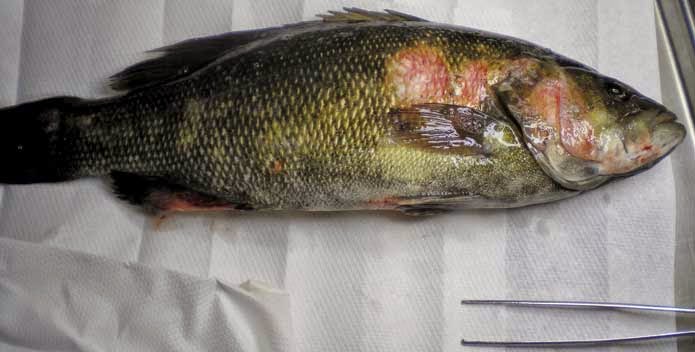
Lesions on smallmouth bass. Photo by C. Yamashita, Pa. Fish and Boat Commission

Chemicals in the Susquehanna River are likely the cause of the smallmouth bass fishery problems such as skin lesions, according to a comprehensive study just released by a U.S. Geological Survey biologist.

Rick Dandes reports today in The Daily Item that he new report, from the Environmental Integrity Project, also says there is "far more nitrogen and phosphorus pollution in the Chesapeake Bay than states and the federal Environmental Protection Agency have led residents to believe."

"The sampled fish were collected from eight sites in the Susquehanna River, from 2007 to 2010. Twenty fish were collected at each site. The selected sites were chosen to specifically address potential effects of specific wastewater treatment plants by collecting fish upstream and immediately downstream of these plants.
"William Yingling, of Freeburg, a retired physician, and longtime Susquehanna River fisherman, said the findings confirmed his long-held health concerns for those who fish in and use the river for recreation.

“Ever since the Chesapeake Bay Initiative of the 1980s,” he said, “the environmental emphasis has been placed on nutrient (nitrogen and phosphorus) pollution (from fertilizers). But in the report by the U.S. Geological Society, one of the co-authors, Dr. Vicki Blazer makes it very clear that the smallmouth bass problem is being caused by chemical endocrine disrupter pollution.”

It may accompany nutrient pollution, but it is not the same thing, and it is by far the most serious problem that is damaging the fish, Yingling said.


Read the full story: Report on Susquehanna makes waves

Recent blog posts: 
Yonkers paint company enters $90,000 EPA settlement 
Fugitive Jersey boa constrictor slithers into social media   
Boa constrictor on the loose at the Jersey Shore, really 
Critics get another bite at proposed NJDEP coastal rules 
Open-space funding heads to NJ ballot in November 

Report on sick Susquehanna River fish makes waves Read More »

Yonkers paint company enters $90,000 EPA settlement

The U.S. Environmental Protection Agency today announced a legal settlement with T.C. Dunham Paint Company of Yonkers, New York,
resolving alleged violations of federal hazardous waste law.

An EPA Region 2 news release said: 


“EPA inspections
revealed the company had generated hazardous wastes that were improperly
labeled and stored in Yonkers. As part of the agreement announced today, T.C.
Dunham Paint Company will come into compliance with all federal hazardous waste
laws and pay a $90,000 penalty.

“EPA
inspectors found more than 100 drums of paints and solvents, many of which were
leaking and corroded,” said EPA Regional Administrator Judith A. Enck. “Every
business needs to comply with environmental laws to ensure that human health
and the environment are not damaged.” 


Recent blog posts:

Yonkers paint company enters $90,000 EPA settlement Read More »

Fugitive Jersey boa constrictor slithers into social media

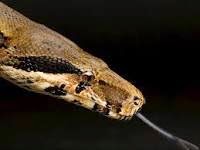
Move over Jersey Devil, the Cape May Python is courting urban legend status with its own Twitter page.

The six-foot-long boa constrictor that escaped during an aquarium clearing has already garnered the attention of local radio and newspapers (and this blog on a slow news day).

Now it’s ramping up its bid for notoriety with a Twitter Page called Cape May Python.

The snake’s site profile declares: Just a simple snake that enjoys long slithers on the beach, sunsets, and delicious tasty small animals (YUM).

Like what you’re reading? Click here for updates


Recent blog posts:

Boa constrictor on the loose at the Jersey Shore, really
Critics get another bite at proposed NJDEP coastal rules
Open-space funding heads to NJ ballot in November
NJ Sen. Ray Lesniak on politics, gambling and governors
Pa drillers did not report half of spills leading to fines

Fugitive Jersey boa constrictor slithers into social media Read More »

Boa constrictor on the loose at the Jersey Shore, really


And you thought rip currents and beach fees were your biggest vacation worries..


The Philadelphia Inquirer reports today that:


“A snake that was spotted eating a seagull in a tree in Cape May County last month has been identified as an escaped red tail boa constrictor.”

Like what you’re reading? Click here to get free updates

Actually, there’s little to fear police say, since 
the six-foot-long snake prefers amphibians, rodents, rabbits and birds to humans.


Good, nothing to fear. Just carry a live rabbit with you when visiting Cape May this summer.


Full story here


Related news story:
Something completely different in Villas: Large python or boa on the loose 

Recent blog posts: 
Critics get another bite at proposed NJDEP coastal rules
Open-space funding heads to NJ ballot in November
NJ Sen. Ray Lesniak on politics, gambling and governors
Pa drillers did not report half of spills leading to fines
NJ open space advocates live to fight another Monday

Boa constrictor on the loose at the Jersey Shore, really Read More »

Critics get another bite at proposed NJDEP coastal rules


In response to the widespread property and environmental damage left behind by Superstore Sandy in the fall of 2012, the New Jersey Department of Environmental Protection (DEP) instituted numerous emergency amendments to existing regulations covering flood hazard areas and coastal management and coastal permits.


Based on lessons learned from the Sandy rebuilding experience, the DEP decided this year to “consolidate the Coastal Permit Program Rules and the Coastal Zone Management rules into one chapter and to make other changes intended to further encourage appropriate redevelopment of more resilient coastal communities.”


Public comment on the revised rule, which was the subject of three public hearings in June and July, ended on August 1. But, spurred on by environmental groups that have criticized the revision, the State Senate’s Environment and Energy Committee is taking another bite at the apple on Monday, August 11 at a 10 a.m. hearing in Trenton.


   Like what you’re reading? Click here to get free updates   

New Jersey Future complains that “instead of providing greater protections, the rule increases exposure to risk.”  It focuses on two provisions. “The first allows for more development in high-risk areas; and the second permits more non-water-dependent uses such as restaurants at marinas, which will allow more businesses in dangerous locations and threaten sensitive coastal habitats.”


Clean Ocean Action likes the fact that the proposal would change the definition of  “dredged material” to make it clear that that it is not a solid waste under the Solid Waste rules. “This will enable increased beneficial use of dredged materials for beach protection, marsh creation, capping of contaminated soils or sediments, and other projects, as long as the material meets certain criteria,” COA says. 

But the organization objects to another provision that allow permit by certification for bulkhead reconstruction and recreational dock and pier construction in lagoons. While conceding that the change will streamline the permitting process for homeowners and businesses, COA fears “that it also eliminates much of the oversight on these types of projects, and fails to encourage natural living shorelines as alternatives.
“


It will be interesting to see whether the DEP testifies on Monday in defense of its proposed regulatory change. The department is under no obligation to do so, and can argue that the public had ample opportunity to comment at the public hearings. 


EnviroPolitics will attend the meeting and let you know of the outcome.


Recent blog posts:
Open-space funding heads to NJ ballot in November
NJ Sen. Ray Lesniak on politics, gambling and governors
Pa drillers did not report half of spills leading to fines
NJ open space advocates live to fight another Monday
Lisa Jackson wants you to know her Apple’s greening up

Critics get another bite at proposed NJDEP coastal rules Read More »