NYC Mayor planning to divert food from landfills


The administration of New York City Mayor Michael Bloomberg hopes to introduce legislation requiring hospitals, hotels, universities and other large-scale producers of food waste to recycle it into something useful rather than just send it to landfills or incinerators, Crain’s New York Business reports today. 

A bill could be introduced next month and passed before Mayor Michael Bloomberg and City Council Speaker Christine Quinn leave office at the end of the year. But it would not take effect until at least 2015, and only then if food-waste processing facilities could handle the enormous quantities of food that institutions throw away. Food waste accounts for a third of the city’s more than 20,000 tons of daily refuse.

A spokesman for the mayor’s office did not respond to an inquiry about the plan. A City Council spokeswoman said the administration has told the council about the effort but has not shared a bill or enough detail for the speaker’s office to be able to comment yet. However, Ms. Quinn has been vocal about expanding composting in the city and has indicated a desire to pass a great deal of legislation before her term expires.

Vermont, Connecticut and Massachusetts have already adopted bans on sending commercial food waste to landfills, though it is too soon to know if they are effective because their trigger mechanisms have yet to kick in: Until sufficient processing capacity is available, businesses are off the hook.

 But waste-handling companies are actively adding this capacity: Waste Management has at least three dozen organic processing plants in the U.S. and has investments in others, such as Harvest Power, which turns yard trimmings and food waste into energy, soil, mulch and fertilizer at 28 sites across North America. There’s even one in Brooklyn, but it only accepts wood, leaves, brush and other vegetative material.


NYC Mayor planning to divert food from landfills Read More »

EPA extends Maywood Superfund site comment period


Originally set to expire on on September 23, the deadline for public comment on a cleanup plan for the Maywood Chemical Company Superfund site in Maywood, Lodi and Rochelle Park, NJ has been extended to October 22 by the Environmental Protection Agency (EPA).


The  proposal calls for a combination of removing and treating contaminated soil. The plan was explained to the public in a meeting held by the EPA on September 9, 2013.

According to EPA background documents, the site consists of three connected areas: the Stepan property, the Sears and adjacent commercial properties, and the Maywood Interim Storage Site (MISS) owned by the federal government. The site also includes certain vicinity residential and commercial properties. It is located in a highly developed commercial and residential area that includes portions of the Borough of Maywood, Lodi, and Rochelle Park.

"From 1916 through 1955, the Maywood Chemical Company processed radioactive thorium ore. The residues or tailings from the process operation, clay-like dirt, contained significant quantities of low-level radioactive materials. In addition, other processing operations generated various types of waste products (such as lanthanum, lithium compounds, detergents, alkaloids, essential oils, and products from tea and cocoa leaves).

"Maywood Chemical pumped process wastes to diked areas west of the plant. In 1932, State Route 17 was built through the disposal area. Process wastes subsequently migrated onto adjacent properties in Rochelle Park. Some of the waste materials were excavated and used as fill dirt and mulch for nearby properties in Maywood and Lodi. Waste materials were also transported via the old Lodi Brook stream channel (later replaced by a storm water drainage system). The result was chemical and radioactive contamination over much of the local area.

"The Maywood Chemical Company was bought by the Stepan Chemical Company (later, the Stepan Company) in 1959. The Stepan Company is currently the owner/operator of a portion of the original Maywood Chemical Company property. Many of Maywood Chemical’s operations were discontinued in the 1960s. The Stepan Company currently focuses on the production of specialty chemicals.

Click here to see the proposed cleanup plan   Background information on the site

Related environmental news stories:
EPA Proposes Plan to Address Contaminated Soils
Maywood Chemical Co. Superfund site to get $17 million cleanup
EPA lays out plans to clean contaminated former chemical company site

—————————————————————————————————————————– 
For more information like this, try a
FREE subscription to EnviroPolitics.  
Our daily newsletter also tracks NJ & PA legislation—from introduction to enactment


EPA extends Maywood Superfund site comment period Read More »

Water privatization contract for Dover Air Force Base awarded to a subsidiary of Middlesex Water Company

New Jersey-based Middlesex Water Company announced today in a news release that it has entered into an agreement through its subsidiary, Tidewater Utilities, Inc. with the U.S. Department of Defense for the privatization of the water system of Dover Air Force Base (DAFB) in Dover, Delaware.
Tidewater, also located in Dover, will provide DAFB with potable water service under a 50-year agreement. Tidewater intends to integrate the DAFB water system into its regulated utility operations, subject to Delaware Public Service Commission regulatory approval. Tidewater will own and maintain all DAFB water utility assets and make all necessary capital improvements to provide continued reliable utility service to the Base. Once implemented, the privatization is expected to be accretive to earnings immediately.
DAFB executes hundreds of missions throughout the world and provides 25 percent of the Nation’s strategic airlift capability, projecting global reach to over 100 countries around the world. The Base operates the largest and busiest air freight terminal in the Department of Defense and is also home to the Air Mobility Command Museum, which welcomes thousands of visitors each year.

Middlesex Water Company, Tidewater’s parent company, organized in 1897, is one of nine U.S. based publicly-traded investor-owned water and wastewater companies. The Company provides regulated and unregulated water and wastewater utility services in New Jersey, Delaware and Pennsylvania through various subsidiary companies. 


—————————————————————————————————————————–  
For more information like this, try a 
FREE subscription to EnviroPolitics.  
Our daily newsletter also tracks NJ & PA legislation—from introduction to enactment


Water privatization contract for Dover Air Force Base awarded to a subsidiary of Middlesex Water Company Read More »

North Jersey also felt Superstorm Sandy’s punch


State lawmakers learned last night that Superstorm Sandy not only punished the Jersey Shore. Big cities up north also felt her punch.


Members of the environmental committees of the state Senate and Assembly, meeting jointly in Jersey City, heard that the state’s second-largest city suffered damage to 6,100 residential housing units (mostly not covered by basic insurance) and 15 high-rise office buildings. The waterfront was flooded and damage to city properties totaled $22 million.

Jersey City Office of Emergency Management and Homeland Security Director Greg Kierce said the storm highlighted the need for better evacuation procedures, better communication — especially with non-English speakers — and more communication between agencies to coordinate relief efforts

But in the end, there are some things that simply can’t be changed. “I still haven’t found out how you can elevate a brownstone,” he said, referring to the building elevation requirements on FEMA’s new flood maps.

NJ Spotlight’s Scott Gurion covered the hearing and filed this story: North Jersey Still Struggling to Recover from Hurricane Sandy 

It was the second meeting held by the twin committees on the state’s recovery efforts. EnviroPolitics attended the first meeting in Atlantic City in August. See our stories and videos here and here

If you or your organization testified last night and did not make it into the NJSpotlight story, send us a link to your testimony and we may use it in an update to this post.

—————————————————————————————————————————–  
For more information like this, try a 
FREE subscription to EnviroPolitics.  
Our daily newsletter also tracks NJ & PA legislation—from introduction to enactment

North Jersey also felt Superstorm Sandy’s punch Read More »

New study finds lower methane leaks from fracking

Whether it will quell the fears of environmental opponents remains to be seen, but a new study finds that lesser amounts than feared of the greenhouse gas, methane, are being released to the air at natural gas drilling sites.

A long-awaited study led by the University of Texas at Austin shows that methane emissions are about 10 percent lower than recent estimates by the U.S. Environmental Protection Agency.

The Associated Press reports today that the findings “bolster a big selling point for natural gas, that it’s not as bad for global warming as coal. And they undercut a major environmental argument against fracking, a process that breaks apart deep rock to recover more gas.”

The results were published Monday by the Proceedings of the National Academy of Sciences.

A best-case scenario

About 90% of the study funding came from nine energy companies that drill for natural gas with the rest coming from an environmental group. But study authors said they controlled how the research was done and how the wells were chosen for study. And even Robert Howarth of Cornell University, 1 of the scientists who first raised the methane leak alarm, calls the results “good news.”

Howarth, who didn’t participate in the new work, did caution that the results may represent a “best-case scenario.” It might be, he said, that industry can produce gas with very low emissions, “but they very often do not do so. They do better when they know they are being carefully watched.”

He and the study authors say more research is needed to explain why some studies have found high rates of leaking methane and others have not.


Not comprehensive, but it produced hard numbers

The University of Texas study wasn’t a comprehensive study of all the places natural gas can leak. But Steve Hamburg, chief scientist at the market-oriented Environmental Defense Fund, which helped fund the study, noted that it presents “direct measures of things that everyone’s been hand-waving about before. These are hard numbers using the best scientific approach that we can.”

The study found that during the process of extracting natural gas from the ground, total leakage at the study sites was 0.42% of all produced gas. That is a bit less than what the EPA suggested is the national average. The U.S. produced 24.1 trillion cubic feet of natural gas in 2012, so that means about 101 billion cubic feet of methane leaked into the air during the first stage of production. Additional leaks occur in the second half of the process: delivery from wells to homes and power plants.


Related environmental news stories:

Gas Leaks in Fracking Disputed in Study – New York Times
Fracking May Emit Less Methane Than Previous Estimates – Climate Central

—————————————————————————————————————————–  
For more information like this, try a 
FREE subscription to EnviroPolitics.  
Our daily newsletter also tracks NJ & PA legislation—from introduction to enactment


New study finds lower methane leaks from fracking Read More »

NJ Legislature continues hearings on Sandy recovery

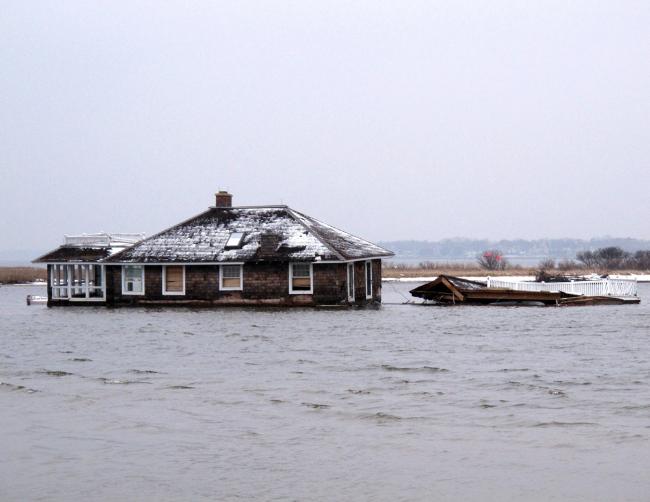
USA Today photo 

The focus of the Legislature’s review of New Jersey’s response to Superstorm Sandy moves from the shore to hard-hit northern cities tonight as the Senate and Assembly environmental committees convene for a joint meeting in Jersey City.

(7 p.m. in City Council Chambers at City Hall, 280
Grove Street)


The two committees held a similar session on August in Atlantic City where they heard from shore area residents who were struggling with the task of repairing their homes or finding new apartments. Many blamed the delay on a frustratingly slow response by insurance companies and government agencies. 

Lawmakers hear other side of NJ’s Sandy recovery story


Environmental groups also recommended measures they said the state should implement to minimize the impact of future storms.  

New Jersey environmentalists on what Sandy taught us


——————————————————————————————————————————–  
For more information like this, try a 
FREE subscription to EnviroPolitics.  
Our daily newsletter also tracks NJ & PA legislation—from introduction to enactment


NJ Legislature continues hearings on Sandy recovery Read More »