Former Pennsylvania Gov. Bill Scranton has died at 96

Bill Scranton – Times Tribune
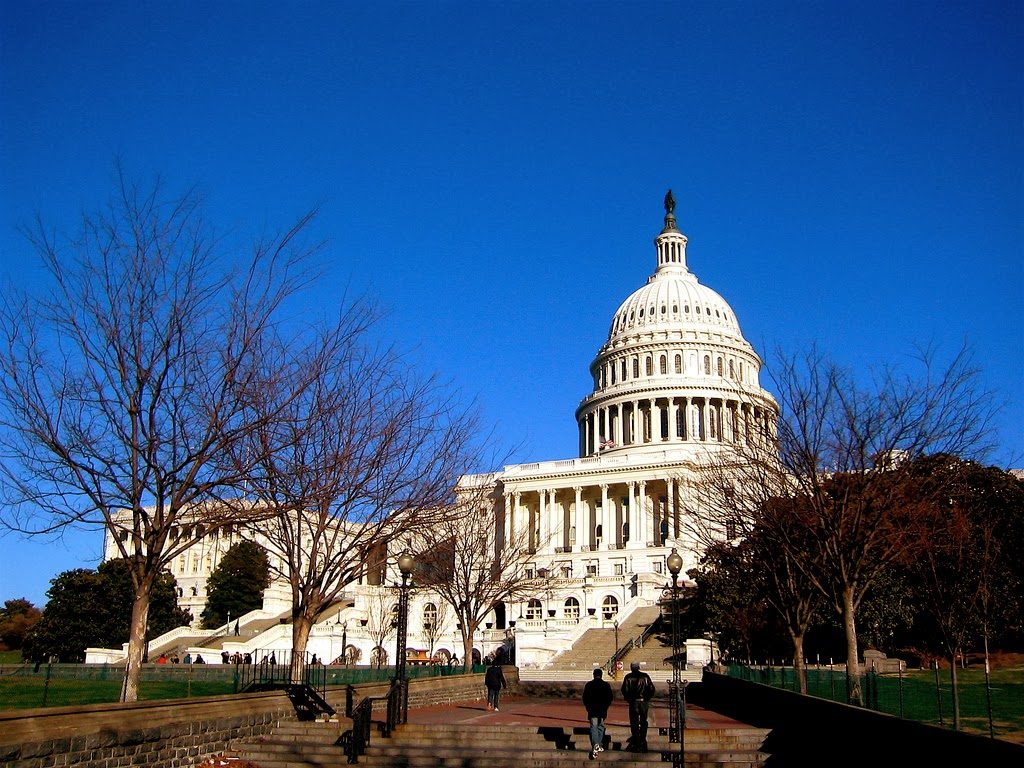
Former Pennsylvania Gov. William W. Scranton, known by many as a moderate who frequently reached across party lines, died on Sunday in Montecito, Calif. of a cerebral hemorrhage.
He was 96.
The Philadelphia Business Journal‘s Jared Shelly writes:
"Scranton served as the 38th Governor of Pennsylvania from 1963 to 1967. He made an unsuccessful bid for the Republican nomination for president in 1964, losing to eventual candidate Barry Goldwater.
"The Republicans had been beaten in two straight gubernatorial elections before Scranton’s victory. It had even seen John F. Kennedy win Pennsylvania in the 1960 presidential election, which was considered a turning point for the long-held Republican state.
"Scranton’s moderate status on many issues helped him become victorious.
"During his term, he focused on education, starting the community college system in the state, and the state Board of Education began during his term.
"He ran as what we would call today a progressive agenda," said G. Terry Madonna, director of the Center for Politics & Public Affairs at Franklin and Marshall College.
“He also had a deep knowledge of economics, helping to start the Dept. of Community Affairs and making major investments in infrastructure."
Read the full story here.
———————————————————————————————————————————
For thorough coverage of environmental news, issues, legislation and regulation in NJ, PA, NY & DE, try a
 FREE subscription to EnviroPolitics. Our daily newsletter also tracks NJ & PA environment and energy bills–from introduction to enactment
———————————————————————————————————————————

Former Pennsylvania Gov. Bill Scranton has died at 96 Read More »

Want publicity for your upcoming environmental event?

In upcoming weeks, the following events will take place in New Jersey and Pennsylvania:

  • New Jersey Green Infrastructure Forum
  • Pennsylvania DEP’s Alternative Fuel Workshop
  • Forum on Northeast New Jersey Environmental Sustainability
  • Eastern Regional Meeting – Society for Petroleum Engineers of PA
  • …and many more (new events added daily)

Each has appeared in our Enviro-Events Calendaran online listing that attracts more than a thousand environmental-minded viewers every week.

The calendar contains dates, times, locations and summaries of what to expect at a host of upcoming environmental seminars, forums, webinars and educational, social, and networking opportunities, too.

We focus on New Jersey, Pennsylvania, New York and Delaware–but you’ll also find some events of particular value that are held in other states–even other countries!

Use our calendar to publicize your upcoming environmental event

If you want to place your upcoming event before a receptive audience, email your information about it to: editor@enviropolitics.com.

We’ll list is without charge. Yes, for free


Tips for successful event listings


Tip #1
: Please follow our style to get your listing posted extra fast. The more we have to re-type or re-format, the less motivated we get.

Tip #2
Before you schedule an event, check our calendar to see if someone else in your location or area of interest is holding their event on or near the same date.No sense in competing if you don’t have to.

Tip #3: Federal, state and local government agencies–and trade associations, too–will find our calendar to be a great way to spread the word about regularly scheduled meetings. But please let us know when you need to cancel or postpone an event. 

Tip #4: Tell your friends, colleagues and PR staff about this great service. They’ll think you’re a genius.


Stay on top of all upcoming events with free email alerts 

Hop on over to Enviro-Events Calendar and sign up for free email alerts.
 
You’ll also find a form to use if you want our updates to appear in your Google Reader, or any other web reader that you may be using.

Questions?  Comments?  We’d love to hear from you.Please use the response box below.


Want publicity for your upcoming environmental event? Read More »

New Jersey looks to capture energy from biomass waste


Each year in New Jersey more than 8 million tons of waste — yard litter, household table scraps and livestock manure, among other debris — is thrown away in garbage dumps, burned in incinerators, or disposed of elsewhere.


So what, you ask?  


A Rutgers University study says that we should be looking at this “waste” as a “resource” and suggests that half of it could be put to use to generate electricity or even create a cleaner-burning fuel to power motor vehicles.


———————————————————————————————————————————
For thorough coverage of environmental news, issues, legislation and regulation in NJ, PA, NY & DE, try a
 FREE subscription to EnviroPoliticsOur daily newsletter also tracks NJ & PA environment and energy bills–from introduction to enactment
———————————————————————————————————————————

“If tapped, those 5.4 million tons of waste could generate more than 1,124 megawatts of electricity — a larger amount than New Jersey’s highly touted solar program now generates, or the equivalent of approximately 311 million gallons of gasoline-equivalent fuel,” Tom Johnson reports in NJ Spotlight.


“How to tap that resource and turn it into an asset to produce clean energy is part of a revamped initiative launched by the New Jersey Board of Public Utilities this past week.” 


Learn more in Tom’s story: Board of Public Utilities Hopes to Get Into Garbage in a Big Way 


Here’s the Rutgers study on biomass resources 


Related environmental news stories:
Judge Rules Biomass Plants Have to Obey the Law – SustainableBusiness.com
Appalachian State University Receives Biomass Grant – Domestic Fuel
The Price of Being Politically Innocuous – Biomass Magazine (blog)
Greenfield biomass project dead for now – MassLive.com

Our most recent posts:
EPA is wiping out an overly burdensome regulation

Another setback for offshore wind’s Fishermen’s Energy 
Roth appointed chair of ABA’s environment section

Former e-waste exec draws a 14-month jail sentence

NJ enviros sue to change direction of energy investments
   

New Jersey looks to capture energy from biomass waste Read More »

EPA is wiping out an overly burdensome regulation

EPA reduces regulatory burden for industrial facilities using
solvent wipes.  Common-sense exclusion expected to save
industry up to $27.8 million per year.


The U. S, Environmental Protection Agency announced that it has modified the hazardous waste management regulations under the RCRA (Resource Conservation and Recovery Act) to conditionally exclude solvent-contaminated wipes from hazardous waste regulations provided that businesses clean or dispose of them properly. The agency said that the rule is based on its final risk analysis, which was peer reviewed in 2008 and published for public comment in 2009, that concluded wipes contaminated with certain hazardous solvents do not pose significant risk to human health and the environment when managed properly. EPA estimates that the final rule will result in a net savings of between $21.7 million and $27.8 million per year.

Wipes are used in conjunction with solvents for cleaning and other purposes by tens of thousands of facilities in numerous industrial sectors, such as printers, automobile repair shops and manufacturers of automobiles, electronics, furniture and chemicals.

————————————————————————————————————————————————————————– 
For thorough coverage of environmental news, issues, legislation and regulation in NJ, PA, NY & DE, try a
 
FREE subscription to EnviroPolitics. Our daily newsletter also tracks NJ & PA environment and energy bills–from introduction to enactment 

———————————————————————————————————————————— 

“Today’s rule uses the latest science to provide a regulatory framework for managing solvent-contaminated wipes that is appropriate to the level of risk posed by these materials,” said Mathy Stanislaus, assistant administrator for EPA’s Office of Solid Waste and Emergency Response. “I’ve heard directly from stakeholders about the benefits of this rule and the need to finalize it. The rule reduces costs for thousands of businesses, many of which are small businesses, while maintaining protection of human health and the environment.”  


Today’s final rule excludes wipes that are contaminated with solvents listed as hazardous wastes under RCRA that are cleaned or disposed of properly. To be excluded, solvent-contaminated wipes must be managed in closed, labeled containers and cannot contain free liquids when sent for cleaning or disposal. Additionally, facilities that generate solvent-contaminated wipes must comply with certain recordkeeping requirements and may not accumulate wipes for longer than 180 days.

Read the full EPA news release here

Our most recent posts: 
Another setback for offshore wind’s Fishermen’s Energy
Roth appointed chair of ABA’s environment section
 
Former e-waste exec draws a 14-month jail sentence
NJ enviros sue to change direction of energy investments  
Energy Tech Future: Will we see you Monday in Philly?  
FirstEnergy to deactivate two coal power plants in Pa

EPA is wiping out an overly burdensome regulation Read More »

Another setback for offshore wind's Fishermen's Energy


** Updated twice on July 22 to add related news stories**

Like a buoy that the company hopes will one day mark the sea channel to the wind farm it wants to build off the New Jersey coast, Fishermen’s Energy was swamped by a cold new wave of government rejection on Friday but quickly bounced back to the surface.


The Star-Ledger reports that the state Board of Public Utilities rejected a settlement that would have advanced the company’s latest plan to build a 25 megawatt offshore wind farm, saying New Jersey taxpayers would be on the hook for too much money should the anticipated federal grants fall through.

————————————————————————————————————————————————————————–
For thorough coverage of environmental news, issues, legislation and regulation in NJ, PA, NY & DE, try a
 
FREE subscription to EnviroPolitics. Our daily newsletter also tracks NJ & PA environment and energy bills–from introduction to enactment

———————————————————————————————————————————— 

The five turbine demonstration wind farm to be built in state waters three miles off the coast of Atlantic City, was first proposed in 2011 and would be the first along the East Coast. It would power 10,000 homes and cost $200 million.

But the BPU agreed with a staff recommendation to reject a settlement negotiated between Fishermen’s Energy and the state Division of Rate Counsel, which serves as the public’s watchdog on utility issues. BPU staffers objected to several aspects, most notably a $19.2 million contingency fee that state residents would pay Fishermen’s Energy if expected federal grants to fund the project fell through, and the project was abandoned.

It was the latest in a  string of setbacks for but the company but perhaps not unexpected.
In a news release handed out minutes after the meeting ended, Fishermen’s Energy said it was "pleased to continue to work with the New Jersey Board of Public Utilities toward a successful launch of the offshore wind industry in New Jersey."

Related environmental news stories:
BPU puts another obstacle in way of offshore wind pilot

New Jersey BPU rejects offshore wind project

Fishermen’s Energy now monitoring wind in water off Ocean City
Fishermen’s Energy Receives Department of Energy Grant
Fishermen’s Energy Installs Advanced Wind Monitoring System in Federal Waters


Another setback for offshore wind's Fishermen's Energy Read More »

Roth appointed chair of ABA’s environment section

David A. Roth
David A. Roth,  a partner in the environmental department of Greenbaum, Rowe, Smith & Davis LLP’s Woodbridge. NJ office, has been appointed as chair of the American Bar Association (ABA) Section of Environment, Energy, and Resources (SEER) Environmental Disclosure Committee for the 2013-2014 term.

A resident of Hawthorne, NJ,  Roth has a concentration in real estate, environmental and health and safety law with special emphasis on compliance counseling and environmental aspects of real estate and business transactions. He assists clients in resolving issues arising under solid and hazardous waste laws, the federal Clean Water Act, the New Jersey Industrial Site Recovery Act (ISRA), the Toxic Substances Control Act, right-to-know programs, the Occupational Safety and Health Act and emerging product safety laws.


In recent years Roth has functioned as national environmental counsel for a group of consumer product and manufacturing companies.

Roth is a director of the Environmental Law Section of the New Jersey State Bar Association. 

Our most recent posts: 

Former e-waste exec draws a 14-month jail sentence


————————————————————————————————————————————————————————– 

For thorough coverage of environmental news, issues, legislation and regulation in NJ, PA, NY & DE, try a
 
FREE subscription to EnviroPoliticsOur daily newsletter also tracks NJ & PA environment and energy bills–from introduction to enactment 

———————————————————————————————————————————— 

Roth appointed chair of ABA’s environment section Read More »