Sandy aid: Did NJ towns hurt most get the most money?

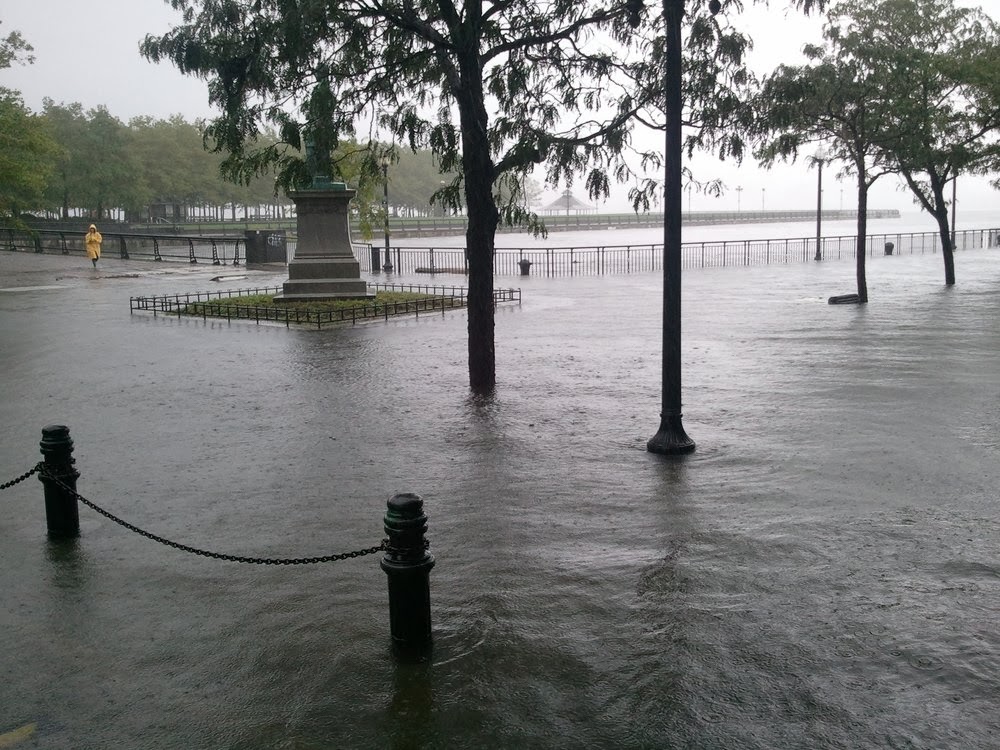
Hoboken NJ park flooding after tropical storm Irene – Gary Holtzman photo 
An analysis by NJ Spotlight in collaboration with WNYC/NJ Public Radio has discovered "multiple irregularities in how funds have been allocated" but concluded  that "there’s no proof at this point that politics necessarily played a role in state decisions about who got help and who did not in the aftermath of Sandy." 

"An in-depth analysis by NJ Spotlight in collaboration with WNYC/NJ Public Radio has discovered multiple irregularities in how funds have been allocated through the Hazard Mitigation Grant Program Energy Allocation Initiative — the program at the heart of Hoboken Mayor Dawn Zimmer’s allegations against the Christie administration.

"An examination of the fund shows that despite a scoring system that awarded various towns and cities points for eligibility based on factors such as population size, population density, and previous FEMA claims, Hoboken has been awarded the same amount — $142,080 — as much smaller towns like Mt. Arlington and Old Tappan, neither of which experienced much damage from Sandy or previous storms.

"And Hoboken was awarded far less than Nutley, which was allocated $556,000, despite being relatively unscathed by the storm.

"Responding to inquiries from NJ Spotlight, a Department of Environmental Protection spokesman said a proper, objective process was followed in the scoring and ranking of these applications, and that it’s ongoing, so some of these awards might still be adjusted before they’re finalized and checks are cut. He said it’s unfair to draw conclusions from the data at this point. But many details about the behind-the-scenes process remain unclear, and the problems seem to extend beyond simply a few errant numbers."

Sandy aid: Did NJ towns hurt most get the most money? Read More »
Injection well OK for Pa fracking water; more coming

The Pittsburgh Post-Gazette reports that a natural gas drilling company soon will be disposing of fracking wastewater underground.

Seneca Resources Corp. has received federal approval to operate
a new drilling wastewater injection well in Elk County, and more of those deep
injection wells for the disposal of Marcellus and Utica shale gas drilling
wastewater are on tap for Pennsylvania.

The U.S. Environmental Protection Agency
announced last week that it had approved Seneca’s proposal to convert one of
its existing vertical gas wells into an injection well that will pump up to
60,000 gallons a day of drilling wastewater and salty brine about 2,400 feet
below the surface into the Elk 3 Sandstone formation.

That formation is about 1,700 feet below
groundwater aquifers that supply residential water to residents of the area,
said Karen Johnson, chief of the EPA Region III groundwater and enforcement
branch.

The EPA has permitted 30,000 Class II
injection wells for drilling brine and wastewater disposal nationally — about
a third of those in Texas — but the Seneca disposal well is just the ninth
such well approved in Pennsylvania.

Ms. Johnson said more are in the offing for
the state, including three more new disposal wells that could receive federal
permits as early as this summer.

“We continue to have frequent meetings
with [gas well] operators and a number of additional permits are under
review,” she said. “Independent companies and big operators are all
saying they are going to need more capacity for disposal.”

Drillers use about 4 million gallons of water
and chemicals per well to hydraulically fracture or “frack” the deep
Marcellus Shale gas formation with about a quarter of that eventually flowing
back to the surface.

Drillers are no longer allowed to use municipal wastewater treatment
facilities for disposal, Ms. Johnson said, and — while many drillers recycle
their water — there is still a need for additional disposal locations

Read the full story here 


Injection well OK for Pa fracking water; more coming Read More »

Capitol Hill Calendar: January 30, 2014


Hearings on Energy and Environment Issues and Legislation

————————————————————————
 
This report is made possible by our friends at BillTrak
Signup for their free Congressional Newsletter here
  

————————————————————————-


THURSDAY, JANUARY 30, 2014

 
SENATE

10:00 a.m. Senate Chamber
Senate will continue consideration of S. 1926, Homeowner Flood Insurance Affordability Act, with up to four roll call votes starting at 11:15 a.m., and a vote on final passage of the bill at approximately 2 p.m.

SENATE COMMERCE, SCIENCE, AND TRANSPORTATION
Subcommittee on Oceans, Atmosphere, Fisheries, and Coast Guard
10:00 a.m. SR-253 (202) 224-8172
To hold hearings to examine West Coast and Western Pacific perspectives on Magnuson-Stevens Act re-authorization.
9:30 a.m. SD-366
Oversight hearing to examine opportunities and challenges associated with lifting the ban on United States crude oil exports.
 
SENATE ENVIRONMENT AND PUBLIC WORKS
Subcommittee on Clean Air and Nuclear Safety
9:30 a.m. SD-406

Oversight hearing to examine the Nuclear Regulatory Commission’s (NRC) implementation of the Fukushima Near-Term Task Force recommendations and other actions to enhance and maintain nuclear safety.


Capitol Hill Calendar: January 30, 2014 Read More »

Capitol Hill Calendar: January 30, 2014


Hearings on Energy and Environment Issues and Legislation


————————————————————————
 
This report is made possible by our friends at BillTrak
Signup for their free Congressional Newsletter here
  

————————————————————————- 


THURSDAY, JANUARY
30, 2014

SENATE

10:00 a.m. Senate Chamber
Senate will continue consideration of S. 1926,
Homeowner Flood Insurance Affordability Act, with up to four roll call votes
starting at 11:15 a.m., and a vote on final passage of the bill at
approximately 2 p.m.

SENATE COMMERCE, SCIENCE, AND
TRANSPORTATION
Subcommittee on Oceans, Atmosphere,
Fisheries, and Coast Guard
10:00 a.m. SR-253 (202) 224-8172
To hold hearings to examine West Coast
and Western Pacific perspectives on Magnuson-Stevens Act re-authorization.

SENATE ENERGY AND NATURAL RESOURCES
9:30 a.m. SD-366
Oversight hearing to examine
opportunities and challenges associated with lifting the ban on United States
crude oil exports.

SENATE ENVIRONMENT AND PUBLIC WORKS
Subcommittee on Clean Air and Nuclear
Safety
9:30 a.m. SD-406

Oversight hearing to
examine the Nuclear Regulatory Commission’s (NRC) implementation of the
Fukushima Near-Term Task Force recommendations and other actions to enhance and
maintain nuclear safety.


Capitol Hill Calendar: January 30, 2014 Read More »

UPDATE on Delaware River oil spill at Delta refinery

** Update -5:40 p.m. PADEP spokesman tells MetroPhilly that today’s cold temperatures and wind direction helped minimize the containment and cleanup of the oil spill at Delta’s refinery in Trainer**  


** Updated at 1:25 p.m. with addition of PADEP statement**

The Philadelphia Business Journal and NBC10 report that some 1,000 gallons of crude oil has spilled into the Delaware River in Trainer, Delaware County near the Monroe Energy oil refinery and close to the Commodore Barry Bridge. 

Monroe Energy refinery


Workers were moving the crude oil from a boat in the

river when a line ruptured. Boaters started to notice the oil around 1 p.m. Monday and called it into the Delaware Riverkeeper Network, according to a report from NBC10. 

A response team arrived at the scene, using boom to contain the spread. Crews used skimmers and vacuums to remove the oil from the water.

At this point, it’s uncertain just how much oil the crews were able to remove and how much remains.

Monroe Energy is owned by Delta Airlines which purchased it from the Phillips 66Company in an effort to keep its fuel prices down. According to Monroe’s website, it “entered into strategic supply and marketing arrangements with BP and Phillips 66.”


UPDATE: The Pennsylvania Department of Environmental Protection released this statement on the Delaware River oil spill:

DEP emergency responders reacted immediately when notified yesterday afternoon of a crude oil spill at the Monroe Energy refinery in Trainer, Delaware County. 

DEP emergency responders joined the U.S. Coast Guard and other members of an incident management team to assess the release of about 1,000 gallons of oil into the Delaware River.

Monroe Energy promptly reported the spill, which occurred when a pipe ruptured as crews were off-loading crude oil, and took the necessary actions to minimize environmental impacts.

“While any spill into our waterways is unacceptable, reporting protocols were followed and we were able to respond quickly and effectively – the frigid weather and quick containment response have helped to minimize the impacts of this incident,” DEP Secretary Chris Abruzzo said. “DEP staff is on the scene and will continue to monitor and assist with the cleanup until it has been completed, and we will review the cause of this incident to determine whether additional action is warranted.”  

Recent posts: 


UPDATE on Delaware River oil spill at Delta refinery Read More »

What do NJ and Blanche Dubois have in common?

 A Streetcar Named Desire characters Blanche Dubois and Stanley Kowalski
 

What do New Jersey and Blanche Dubois have in common?

Before the answer, a little background.

Two competing approaches to the vexing problem of funding open-space, farmland, and historic sites preservation bumped heads in the New Jersey Legislature last session and went nowhere.

One approach takes the traditional route of public bonding. The other would dedicate a portion of the state’s sales tax to the purposes above so no future governor could ‘re-direct’ the funds (some dare call it stealing) to other uses (like closing budget gaps).

Like what you’re reading? Click here to subscribe to this blog 

A new, two-year term is under way and Senator Bob Smith is the first out of the gate with his bill that takes the sales-tax-dedication approach.

In a pitch for SCR-2 this morning in the Senate Environment and Energy Committee, Smith played up a lesser-known feature of the legislation–funding for the purchase of flood-prone properties.

NJ State Senator Bob Smith

Devastated by Hurricane Sandy, he noted that New Jersey has no stable funding source for such buyouts and is relying solely on federal funds–support won’t last forever.

What’s this got to do with Blanche Dubois, the memorable character in Tennessee Williams’s
A Streetcar Named Desire?

Listen to this excerpt from today’s hearing.

Related environmental news stories:
Open-Space Funding Debate Spills Over Into New Legislative Term
How to pay to preserve what open space land NJ has left

Recent posts:
Get 2 free issues of EnviroPolitics–then add 30 more!
NJ Gov. Christie vetoes bill to limit forest fire impacts
NY Gov. Cuomo’s brownfields plan targets upstate sites

Pa sets more hearings on proposed drilling rules
Pa Gov. Tom Corbett touts his Energy=Jobs plan
NJ Gov. signs bill extending LSRP cleanup deadlines  

What do NJ and Blanche Dubois have in common? Read More »