Tougher standards lie ahead for dry cleaning fluid PERC


The Environmental Protection Agency (EPA) likely will be tightening standards for a solvent widely used in the dry cleaning industry following the release Friday of a final agency assessment that characterizes PERC as a
“likely human carcinogen.” 
The assessment provides estimates for both
cancer and non-cancer effects associated with exposure to Perchloroethlene (PERC)
over a
lifetime.

While the EPA
said it does not believe that wearing clothes dry cleaned with PERC will result in
exposures which pose a risk of concern, the agency already is requiring
that use of the solvent be phased-out dry cleaners in residential buildings by
December 21, 2020. 
The solvent is used by about 85% of U.S. dry cleaners. It also is used as a metal
degreaser and in the production of many other chemicals.


Areas where the assessment could lead to tighter regulation include:


  • Establishing
    cleanup levels at the hundreds of Superfund sites where PERC is a
    contaminant
  • Revising
    EPA’s Maximum Contaminant Level for perc as part
    of the carcinogenic volatile organic
    compounds group in drinking water
    , as described in the agency’s
    drinking water strategy 

  • Evaluating whether to propose additional
    limits on the emissions of PERC into the atmosphere
    , since PERC is
    considered a hazardous air pollutant under the Clean Air Act

National Academy of Sciences backs EPA findings 
In 2008, the EPA suggested that PERC be
classified as a “likely human carcinogen.” Moreover, it found that PERC’s
most dangerous noncancer toxicity is brain and nervous system damage — and set
safe exposure levels well below levels that cause such damage.


But rather than finalize the ruling, which was criticized by chemical industry manufacturers, the EPA asked the respected National
Academy of Sciences to review it’s PERC risk analysis and to tell the EPA if
it’s system for analyzing chemical risk was correct.


Now the expert panel appointed by the National Academy of Sciences says
the EPA was basically correct. The panel agreed that:


  • PERC is a “likely human carcinogen.” This means that while there’s no
    definitive proof that the chemical causes cancer in humans, there’s strong
    evidence it does — and there’s proof that the chemical causes various cancers
    in animals.
  • PERC’s most dangerous non-cancer effect is nerve and brain damage. Safe
    exposure levels for drinking water and air quality should be set well above
    levels that can cause such damage.
  • The EPA’s system for evaluating chemical risk is basically sound, although
    procedures for evaluating the strength of relevant studies need to be
    strengthened.


**We invite your comments in the opinion box below. If one is not visible, activate it by clicking on the tiny ‘comment’ link, also below**

Related:
EPA Releases Final Health Assessment for Tetrachloroethylene

National Academy of Sciences Panel Agrees With EPA Analysis of the Risks of PERC

Our most recent posts:
NJ energy & environment bills in committee this week

NY Supreme Court rules on ‘how clean is clean’ question


********************************************************************************************************
For
thorough coverage of environmental news, issues, legislation and
regulation in New Jersey and Pennsylvania,
try a free, 30-day subscription to our daily
newsletter
EnviroPolitics. It tracks all energy and environmental legislation–from introduction to enactment. 

********************************************************************************************************

Tougher standards lie ahead for dry cleaning fluid PERC Read More »

NJ energy & environment bills in committee this week

The New Jersey Senate’s Economic Growth Committee is scheduled to take up a bill today that would require recycling operations and their key officials, salespeople and consultants to be licensed under the same regulatory framework currently required of persons operating solid waste companies in the state.

S-1351, which won’t be formally introduced until today, is sponsored by the committee’s chairman, Raymond Lesniak (D-Middlesex). It is based on the findings of a report issued in December, 2011 by the State Commission of Investigation alleging that organized crime has re-established a foothold in New Jersey’s garbage industry and also was making inroads into recycling.

The committee, which will be meeting at 10:30 a.m. in Room 1 of the Statehouse Annex, also will consider two other bills. They are:


S-658  (Stack) Prohibits imposition of sewerage service connection fee
by regional sewerage authorities and public utilities upon certain
municipalities and boards of education; and
S-1209  (Whelan) Permits NJ boat manufacturers to qualify for EDA loans
for renewable energy technology, equipment, or systems.


[UPDATED at 12:50 p.m.  — The committee took testimony this morning on S-1351 but postponed a vote until its next meeting which currently is scheduled for February 16]

More energy and environment legislation in committee on Thursday

On Thursday (February 9), the Senate Environment and Energy Committee will consider the following energy and environment bills:


S-178
 
(Connors) Establishes Hooked on Fishing-Not on Drugs Program in
DEP and appropriates $200,000 therefor from Drug Enforcement and Demand
Reduction Fund. Related Bill: A-638
 
S-246  (Gordon) Prohibits drilling technique of hydraulic fracturing. [See related story below]
Related Bill: A-567
    
S-822  (Smith) Revises “Electronic Waste Management Act.”
Related Bill: A-1459
     
S-831  (Smith) Establishes notification requirements for combined
sewer overflows.
      
S-1083  (Smith) Establishes certain apprentice hunting licenses.
Related Bill: A-1544
      
S-1177  (Smith) Prohibits the use of certain fishing gear on artificial
reefs.
Related Bill: A-1343
     
S-1460  (Sweeney) Requires deposit of property tax refunds for certain
industrial sites under federal or State orders for remediation with
commissioner of environmental protection to help ensure compliance.
********************************************************************************************************
For
thorough coverage of environmental news, issues, legislation and
regulation in New Jersey and Pennsylvania, try a free, 30-day subscription to our daily
newsletter
EnviroPolitics. It tracks all energy and environmental legislation–from introduction to enactment. 

********************************************************************************************************

NJ energy & environment bills in committee this week Read More »

NY Supreme Court rules on ‘how clean is clean’ question

NY Supreme Court rules on ‘how clean is clean’ question Read More »

NJ Senator challenges critics to fix his state forest bill

Bob Smith, sponsor of a bill aimed at improving the health of  New Jersey’s state forests, has taken heat for months from the leaders of several environmental groups who object to provisions in the legislation that encourage a more active role for logging in managing the forests.

Today, he turned the tables on them with an interesting maneuver.

At the beginning of this morning’s meeting of the Senate Environment and Energy Committee (Energy & environmental bills in committee today in NJ) Smith, the panel’s chairman, allowed testimony on his bill but limited it to address a single question:

“What do you believe to be the state of the state’s forests?”

Supporters and critics alike agreed that it was pretty bad. 

With that established, he announced that the committee would vote to release the bill, S-1085, at its upcoming March 8 meeting. In the interim, he counseled all “stakeholder groups” to work together to develop a unified set of recommendations.

In other words, if you don’t like my bill, take your best shot at fixing it.

A herd of feral cats

Among those testifying today were the State Forester and representatives from the NJ Highlands Coalition,   NJ Conservation Foundation, NJ Forestry Association, NJ Sierra Club, Sourland Planning Council, Old Bridge Shade Tree Commission, NJ Farm Bureau, NJ Audubon Society, the Pinelands Preservation Alliance (although the Pinelands are exempt from the bill), Central Jersey Rife and Pistol Club, NJ Outdoors Alliance, NJ PEER, and the NJ Littoral Society.

A few of the organizations supported the bill last session when it passed the Senate but failed to be posted at the Assembly’s last voting session. Most did not, and some of their criticism was pretty sharp, suggesting that Smith was selling out to logging interests and/or claiming that his bill would decimate ancient stands of trees.  

It’s easy to criticize. Far tougher to reach a compromise

But now that all of the major groups are on record agreeing that the forests are hurting, they’ll need to come up with a plan that can help–or face some criticism themselves.

Can these often competing interests, which Smith today jokingly labeled a “herd of feral cats,” structure a compromise? Stay tuned.

Our most recent blog posts:
NJDEP releases revamped guidance on vapor intrusion


If you missed yesterday’s seminar on NJ’s LSRP program

NJ Senator challenges critics to fix his state forest bill Read More »

Energy & environmental bills in committee today in NJ

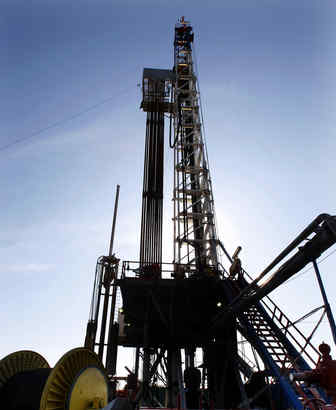
 Photo by Anthony Smedile for the Atlantic City Press

Scores of  energy and environment bills already have been introduced during the first few weeks of the New Jersey Legislature’s new two-year session.

This morning, the Senate Environment and Energy Committee will discuss and possibly vote on six of them, including a controversial measure that would allow tree harvesting in state forests.

The bills are:

S-81  Bateman, C. (R-16)
Prohibits health care institutions from discharging
medications into sewer or septic systems.


S-84
  Bateman, C. (R-16); Smith, B. (D-17)
Establishes pilot program in DEP for chemical clean-outs in schools.   

S-826  Smith, B. (D-17); Cardinale, G. (R-39)
Concerns calculation of value for conveyance of certain
State-owned lands.
 

S-1084  Smith, B. (D-17)
The “Adopt a Barnegat Bay Stormwater Management
Basin Act.” 

S-1085
 
Smith, B. (D-17)
Establishes forest harvest program on State-owned
land.


S-1270
 
Smith, B. (D-17) Establishes uniform real property taxation for
commercial renewable energy systems and limits municipal construction permit
fees for non-commercial renewable energy systems.

The “forest harvest” bill, sponsored by committee chairman Bob Smith (D-Middlesex) is the most controversial of the half-dozen. The legislation made it through the state Senate at the tail end of the last term but failed to be posted for a final vote at the Assembly’s last voting session.

It was opposed by several major environmental groups, but won the support of other organizations and also was backed by the state Department of Environmental Protection. (See “Related” stories below)

You can listen via the Internet to today’s discussion. It’s scheduled to begin at 10 a.m.

Related:
Proposal to harvest New Jersey forests divides environmentalists

Opinion: Good stewards of our forests take cues from Mother Nature
Editorial:  ‘forest harvest’ should be sent to the chopping block

Logging measure stalls in NJ Legislature


Our most recent blog posts:
NJDEP releases revamped guidance on vapor intrusion

If you missed yesterday’s seminar on NJ’s LSRP program

********************************************************************************************************
For
thorough coverage of environmental news, issues, legislation and
regulation in New Jersey and Pennsylvania, try a free, 30-day subscription to our daily
newsletter
EnviroPolitics. It tracks all energy and environmental legislation–from introduction to enactment.

Energy & environmental bills in committee today in NJ Read More »

NJDEP releases revamped guidance on vapor intrusion

The New Jersey Department of Environmental Protection has released its revamped
Vapor Intrusion Technical
Guidance Document.

The document is designed to provide more in-depth assistance to investigators who evaluate

and respond to evidence of volatile chemicals migrating from subsurface
soils into overlying buildings.

Douglas I. Eilender, a member of the Environmental & Energy Department at the Cole Schotz
law firm, summarizes the changes in a blog report to the firm’s clients.

Related:
EPA weighs using vapor intrusion as a Superfund criteria
New York State Vapor Intrusion Guidance 


———————————————————————————————————————————-


Like this post? You’ll love our daily newsletter, 
EnviroPolitics

Try it free for 30 days!
  No obligation. Cancel anytime with one click


NJDEP releases revamped guidance on vapor intrusion Read More »