WASHINGTON —The Supreme Court on Monday turned away appeals filed by various oil companies trying to shut down a lawsuit in Hawaii that seeks to hold them accountable for climate change.
The decision means that the municipality of Honolulu can move forward with a closely watched lawsuit against companies, including Sunoco and Shell, that raises claims under Hawaii state law.
The companies argue that climate change is inherently an issue of federal law that should not be addressed by state courts. Other companies that were sued include ExxonMobil, Chevron and BP.
The Hawaii Supreme Court ruled in October 2023 that the case could move forward, focusing on allegedly deceptive marketing and public statements made by the oil companies rather than the physical impacts of climate change.
The state court concluded that the lawsuit was not displaced by federal law because it “does not seek to regulate emissions and does not seek damages for interstate emissions.”
The Biden administration had urged the Supreme Court not to take up the cases.
If you like this post, you’ll love our daily environmental newsletter, EnviroPolitics.It’s packed daily with the latest news, commentary, and legislative updates from New Jersey, Pennsylvania, New York, Delaware…and beyond. Please do not take our word for it, try it free for a full month.
Jan 16, 2025 – A Manhattan judge has dismissed New York City’s lawsuit seeking to hold oil and gas companies accountable for misleading statements about the environmental benefits of their products.
The ruling issued by Justice Anar Rathod Patel on Tuesday amounts to yet another legal defeat in a nationwide effort by local and state governments to sue large polluters. In 2019, state Attorney General Letitia James’ office lost a case alleging ExxonMobil had misled shareholders about the cost of climate change to its business. In November, James’ office lost a lawsuit that sought to hold PepsiCo liable for litter accumulating on the banks of the Buffalo River.
The new ruling came in a case initiated by Mayor Bill de Blasio’s administration. It centered on ExxonMobil, BP and Shell’s alleged “greenwashing” of the gasoline they sell by minimizing its harm to the environment. But Patel wrote in his ruling that there was a fundamental flaw to the city’s arguments about the harm caused by the alleged misleading statements about climate change.
“The city cannot have it both ways by, on one hand, asserting that consumers are aware of and commercially sensitive to the fact that fossil fuels cause climate change, and, on the other hand, that the same consumers are being duped by defendants’ failure to disclose that their fossil fuel products emit greenhouse gases that contribute to climate change,” Patel wrote.
Over the past year, large oil companies received favorable rulings on similar claims in Delaware and Maryland. About 30 climate cases are still pending in state courts, including in New Jersey, Pennsylvania and Connecticut.
If you like this post, you’ll love our daily environmental newsletter, EnviroPolitics.It’s packed daily with the latest news, commentary, and legislative updates from New Jersey, Pennsylvania, New York, Delaware…and beyond. Please do not take our word for it, try it free for a full month.
From the United States Environmental Protection Agency
NEW YORK (January 16, 2025) – After carefully considering public comment, the U.S. Environmental Protection Agency has finalized its third periodic review of the cleanup of polychlorinated biphenyls (PCBs) in the Upper Hudson River. The EPA looked at all the project data for water, fish and sediment collected between 2016-2021, and the fish data from 2022. The EPA’s review concludes that the levels of PCBs in water and fish are going down overall, but more fish data is needed. The agency needs at least eight years of data after dredging to draw science-based conclusions about the rate of recovery in the fish. The eighth year of fish data was collected in 2024. The results of that sampling will be available in 2025. The EPA will release an addendum to the report when enough fish data is available, as soon as this year but no later than 2027.
The EPA released the draft version of its review in early July 2024 for public comment. The 120-day public comment period ended on November 7.
Some commenters asked the EPA to conclude that the cleanup is not protective of people’s health and the environment. However, the EPA is not making a decision about protectiveness at this time. The EPA addendum will include a protectiveness determination.
“In issuing this final report today, we want to express how much EPA appreciates hearing from Hudson River communities for the past few months,” said EPA Regional Administrator Lisa F. Garcia. “While the science tells us that we can’t make a final determination yet about how well the cleanup is working, we will make a determination as soon as we can. Many of the comments we received talked about people’s personal connection to the river and reflect the passion that so many people have for this iconic river and this will drive our effort to continue to clean up and protect the Hudson River.”
The EPA prepared a separate document that responds to the variety of comments received.
As the EPA continues to collect and evaluate data, it is also enhancing the monitoring program to get a better understanding of the river’s recovery. This includes a series of special studies that will be looking more closely at water, fish and sediment in specific areas of the river. Several of these studies are already underway.
Fish consumption restrictions and advisories will continue to be necessary to protect people’s health. The primary risk to people at the site is from eating fish they catch that contains unsafe levels of PCBs. The cleanup plan that the EPA selected in 2002 for the Upper Hudson River called for dredging followed by an extended period of natural recovery – a gradual period of improvement in water, fish and sediment that the EPA projected would occur over a more than 50-year timeframe.
The fishing restrictions in the Upper Hudson River will need to remain in place until PCB levels in fish are reduced and New York State determines that changes can be made. In the Lower Hudson River, the general population can eat some types of fish that they catch, based on the New York State advice. However, anyone who can get pregnant and children under 15 should not eat any fish or crabs from the Hudson River. The EPA is working closely with the New York State Department of Health to support their education and outreach program to inform area newcomers and others who may be looking to the river as a food source.
The EPA is also committed to ensuring that General Electric Company (GE) remains accountable for the PCBs that came from its former manufacturing plants in Hudson Falls and Fort Edward and is actively working throughout the Upper and Lower Hudson River to study and address PCBs. An extensive floodplain study is underway in the Upper Hudson River to evaluate PCB contamination in soil in shoreline areas along a 43-mile stretch of river between Hudson Falls and Troy, New York. The EPA is also overseeing the deconstruction of the Powerhouse and Allen Mill in Hudson Falls, New York – two structures located adjacent to the former GE Hudson Falls plant. Under the latest agreement with GE, the EPA began an investigation in the Lower Hudson River in 2023 which includes extensive fish, water and sediment sampling between Troy and the Battery in New York City.
If you like this post, you’ll love our daily environmental newsletter, EnviroPolitics.It’s packed daily with the latest news, commentary, and legislative updates from New Jersey, Pennsylvania, New York, Delaware…and beyond. Please do not take our word for it, try it free for a full month.
Cleanup Plan announced for Welsbach & General Gas Mantle Superfund Site (Camden Radiation) at Gloucester Marine Terminal
The U.S. Environmental Protection Agency has finalized changes that add measures to its cleanup plan to address radiological contamination at the former Welsbach Facility at the Welsbach & General Gas Mantle (Camden Radiation) Superfund Site. The former Welsbach Facility is located within the footprint of the Gloucester Marine Terminal in Gloucester City and Camden, New Jersey. These changes adapt the original plan to address some additional radioactive material that was found at the site, while minimizing disruptions to the port facility’s operations.
“This updated cleanup plan highlights EPA’s ongoing commitment to protecting public health and ensuring a safe environment for the port communities,” said EPA Regional Administrator Lisa F. Garcia. “We continuously assess conditions and adapt our strategies to ensure the cleanup remains scientifically sound while accommodating the ongoing operations at the Gloucester Marine Terminal.”
The amended cleanup plan focuses on addressing radiological contamination at the former Welsbach Facility. The plan adds key actions that include:
Removal of radiologically contaminated soil and waste material from selected areas at the Gloucester Marine Terminal, including under buildings, to a depth of approximately 10 feet.
Disposal of excavated material at an off-site, licensed, and EPA-approved facility.
Backfilling of excavated areas with clean soil to restore the site.
Restoring paved areas to their previous condition.
Implementing institutional controls, such as deed restrictions, to limit access to remaining contaminated areas.
EPA’s changes to the original cleanup plan are necessary after EPA found a greater volume and depth of soil contamination than initially assessed, including radiologically contaminated materials beneath structures at the port facility. Removing these materials would significantly increase the original cleanup costs, delay the project, and cause major disruptions to port operations. EPA’s study on current site conditions confirms that the amended cleanup plan will protect public health and the safety of port workers, even with some contamination remaining at depth and under certain structures after the cleanup is completed. Removal of contaminated material under structures would only be completed if and when the property owner demolishes those structures.
EPA added the Welsbach & General Gas Mantle (Camden Radiation) site to the federal Superfund list in 1996. Because of the nature, size and complexity of the site, EPA divided the investigation and cleanup into multiple phases. In 1999, EPA selected a plan for the first phase of the cleanup, which included the excavation and off-site disposal of radiologically contaminated soil and building materials, and backfilling of the areas with clean soil. To date, EPA has removed more than 200,000 cubic yards of radiologically contaminated soil and building materials from more than 90 properties in the Gloucester City and Camden areas and has investigated more than 900 properties.
If you like this post, you’ll love our daily environmental newsletter, EnviroPolitics.It’s packed daily with the latest news, commentary, and legislative updates from New Jersey, Pennsylvania, New York, Delaware…and beyond. Please do not take our word for it, try it free for a full month.
LOS ANGELES (AP) — The windy, flame-fanning weather that put the nation’s second most-populous metropolitan region on edge eased up Wednesday as firefighters made significant gains against the two massive wildfires burning around Los Angeles.
A “Particularly Dangerous Situation” red-flag warning expired without causing explosive fire growth as feared, though forecasters said gusty winds could linger into early Thursday, mostly in the mountains. Temperatures were predicted to drop, and a deep marine layer was expected to move in over the weekend, according to the National Weather Service in Los Angeles.
Those improved conditions should help fire crews make even more headway and allow residents to return to their neighborhoods to begin rebuilding.
“Good news: We are expecting a much-needed break from the fire weather concerns to close this week,” the weather service posted on social media Wednesday afternoon. “Bad News: Next week is a concern. While confident that we will NOT see a repeat of last week, dangerous fire weather conditions are expected.”
If you like this post, you’ll love our daily environmental newsletter, EnviroPolitics.It’s packed daily with the latest news, commentary, and legislative updates from New Jersey, Pennsylvania, New York, Delaware…and beyond. Please do not take our word for it, try it free for a full month.
Farmers could be at risk due to the chemicals leaching into food and water, the agency said in its draft risk assessment, which is now open for comment.
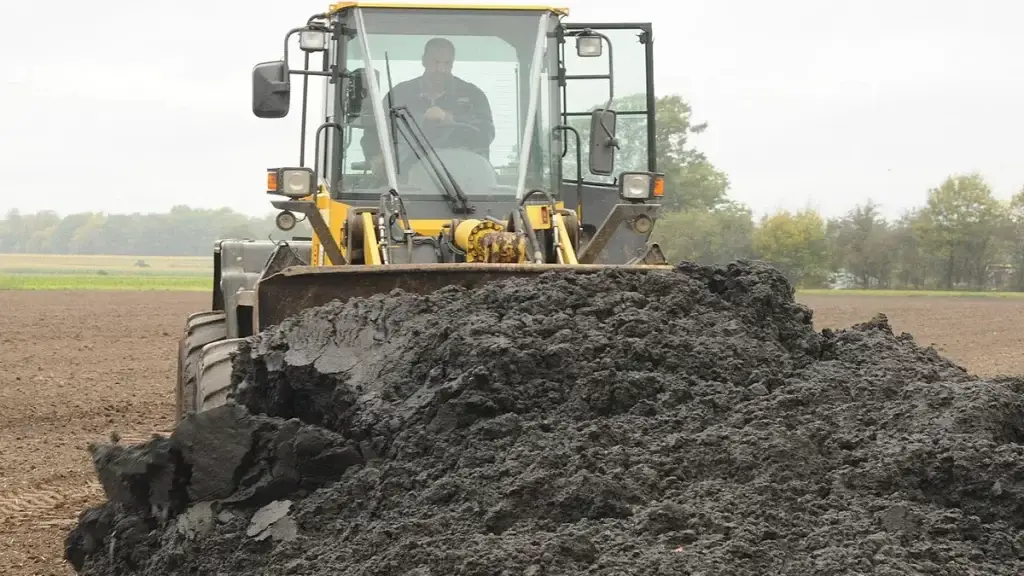
The U.S. EPA warns that two kinds of PFAS chemicals can harm human health when found in biosolids at concentrations as low as 1 part per billion after the material has been disposed of or used as fertilizer. The agency determined the chemicals could leach from the material, commonly known as sewage sludge, whether it’s land applied, disposed of in a landfill or incinerated.
The EPA released its draft risk assessment Tuesday. It’s the first comprehensive look performed by the agency at contamination from PFOA and PFOS, two forms of perfluoroalkyl substances, in biosolids.
The acknowledgment comes after years of concern from farmers and state regulators, who have been raising alarms about land application despite its reputation as an effective means of organics recycling.
“They’ve known about PFAS in sludge for well over a decade and their impacts on drinking water, so this report is a long time coming,” Jared Hayes, senior policy analyst at the Environmental Working Group, said. “This report helps confirm the things that we knew.”
The EPA’s draft risk assessment is not an enforceable document, but could guide future actions. It recommends a focus on sources of PFAS chemicals that are upstream of wastewater treatment plants in order to remove treatment at the source.
The agency noted that it plans to set “technology-based limits” on wastewater discharges from industrial sources upstream of wastewater treatment plants, including landfills, under the Effluent Limitations Guidelines program. The agency has been studying PFAS in landfill leachate for several years, and announced in 2023 that new guidelines are “warranted.”
If you like this post, you’ll love our daily environmental newsletter, EnviroPolitics.It’s packed daily with the latest news, commentary, and legislative updates from New Jersey, Pennsylvania, New York, Delaware…and beyond. Please do not take our word for it, try it free for a full month.