Ericsson is new environmental chair at Cole Schotz

Richard J. Ericsson

Richard J. Ericsson has joined the law firm of Cole, Schotz, Meisel, Forman & Leonard, P.A. as a member
and will chair of the Hackensack, NJ firm’s Environmental Law practice.

He was previously with
Farer Fersko in Westfield.

Ericsson’s experience includes
counseling clients on the impact of environmental laws on corporate and
property transactions and financing, the cleanup and redevelopment of
contaminated properties, responding to governmental enforcement actions,
and air, water and waste regulatory compliance. His practice also
concentrates on issues related to development permits, environmental
insurance, brownfield funding and cost recovery.

Prior to joining his previous firm, Mr. Ericsson was an attorney with
the New Jersey Department of Environmental Protection, where he handled
enforcement of Superfund and Spill Act cleanup obligations as well as
air water and waste regulatory requirements.

Ericsson serves as co-chair of the Regulatory Affairs Committee
for the National Association of Industrial and Office Properties (NAIOP)
New Jersey Chapter. He is past chair of the American Bar Association’s
Environmental Transactions and Brownfields Committee, part of the
organization’s Section of Environment, Energy and Resources. He has been
recognized by his peers and clients as a leader in his field through
accolades such as Chambers USA and New Jersey Super Lawyers.

Ericsson earned his undergraduate degree at Skidmore College and
his law degree at Vermont Law School. He is a frequent speaker on
environmental and brownfields topics.

In addition
to its Hackensack location, Cole Schotz has offices in New York, Delaware,
Maryland and Texas. Founded in 1928, the firm has grown to 120 attorneys who
work in nine primary areas of practice: Bankruptcy & Corporate Restructuring;
Litigation; Real Estate; Tax, Trusts & Estates; Corporate, Finance &
Business Transactions; Employment; Environmental; Intellectual Property and
Construction Services.


Like this post? You’ll love our daily newsletter, EnviroPolitics
Try it free for 30 days!
  No obligation. Cancel anytime with one click 


Ericsson is new environmental chair at Cole Schotz Read More »

In New Jersey, energy is the big new environmental story

Remember back when toxic waste, leaking landfills, industrial discharges and syringes on the beaches were scoring daily headlines in New Jersey newspapers?

The good old days of prop-wielding PIRG-ies jamming committee hearings in Trenton and legislators scrambling to outdo each other in solving environmental problems with groundbreaking new laws and tighter regulations have abated–almost to silence.

It must even be difficult for the NJ Sierra Club’s Jeff Tittel to get up every day and work up his normal quotient of outrage. Thank God, he’s got Chris Christie to prod him.

Yes, many of the state’s environmental problems (most involving pollution) have been addressed.

New Jersey today is greener and healthier and public interest has moved on to other issues. Like jobs and upside-down mortgages and outsized corporate influence in every aspect of life. (You have been paying attention to the ‘Occupy wherever’ movement, haven’t you?)

That does not mean that that there are no important environmental issues left.

They’ve just shifted.

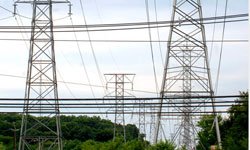
Today the focus is on energy–the power that heats your latte, cools your townhouse, and lets you  flip through the pages on your iPhone 4S at record speed.

The environmental imlications–and they are huge–reside in decisions about what resources are consumed to produce that power, how it travels to your home and whether you consume it wisely or squander it

These are the new environmental issues that New Jersey’s businesses, governor, legislators and regulators are grappling with in 2011/2012.

They don’t make for sexy reading like back when the mob would bury drums of chemicals in the back reaches of some field, nor are they as photo-friendly as foamy stuff oozing out of of a discharge pipe and into a river.

In fact, they’re pretty darn boring.

They’re complicated, too, involving engineering and technical terms that will put you to sleep within minutes of the opening of a legislative or BPU hearing. And they involve all sorts of economic projections and jargon. The boys down at Goldman Sachs love this stuff. Hold on to your wallets, New Jersey!

Tom Johnson is one of New Jersey’s original environmental reporters. He reported environmental news for the Star-Ledger back when the stories were a lot more fun to write. Today, he’s covering the new environmental beat–energy–for New Jersey Spotlight.

Tom not only understands what he’s following but he translates it in terms that the rest of us can understand, too–minus the political and ideological shadings that often creep into other reports.

Some of his recent stories include:
Coalition Formally Asks State to Extend Utility-Sponsored Solar Installations 

Regional Grid Operator Agrees to Ease Impediments to Building New Power Plants

Today, Tom reported on a stakeholders’ meeting at which Assemblyman Upendra Chivukula and his colleagues grappled with recent problems that are troubling the state’s wildly successful solar-energy industry. Also covering the hearing was a less likely source of environmental reporting–Blue Jersey–the daily blog that chronicles state political news with a distinctly (and often delightfully) left-leaning flair.  

Blue Jersey contributor deciminyan (I have no idea why they use names like that–maybe it’s a blog thing) did a solid job of framing some of the larger issues. He then summarized the meeting and even shot and appended two video interviews.  Nice job, deciminyan! 
**Warning: Shameless Plug Ahead**

If environmental/energy (call it what you will ) news is important to you, you should check out our daily newsletter, EnviroPolitics.  We carry all the environmental and political news of the day, from every daily newspaper, many blogs (like Tom’s and denciminyan’s) and other sources worth reading in New Jersey, Pennsylvania, New York and Delaware. We also track all environmental and energy legislation in New Jersey and Pennsylvania–from introduction to enactment. Our publication has become ‘must reading’ for scores of the region’s leading businesses, attorneys, consultants, utilities, real estate and development interests, green organizations, educators, students and legislators and regulators, too. If you never heard of us, take a second to remedy that embarrassing oversight by filling in this form.  Why? It will get you a free, no-obligation, 30-day subscription. It will impart knowledge and inner peace. Well, OK, at least you’ll learn important stuff. Take us up on the offer. You won’t regret it. If you do, complain to Jeff Tittel.


Like this post? You’ll love our daily newsletter, EnviroPolitics
Try it free for 30 days!
  No obligation. Cancel anytime with one click 


In New Jersey, energy is the big new environmental story Read More »

New York report on fracking cost impacts to be delayed

The state’s environmental agency
says a key advisory panel will not be issuing a report on the impacts
of hydrofracking by a November 1 deadline, delaying part of the process
of allowing the natural gas drilling on some private lands in New York
until early next year.

WXXI’s Karen DeWitt reports:

The State’s Environmental Commissioner
Joe Martens, says the report from the advisory committee, will be not be
issued next month as originally planned, partly because data on costs
of fracking to other state agencies, including the departments of
health and transportation, aren’t ready yet.


Martens says the
panel, made up of industry, environmental and community representatives,
will be meeting through January of 2012 to try to issue a report that
will now also address costs to local governments , as well as the state
costs.


“There’s no firm timetable,” Martens said.

Martens
says the data on the potential costs of hydro fracking to the state is
“unlikely” to be ready in time for the governor’s budget proposal in
January, and he says if it’s not completed until February or March, it
might be “push it out” beyond the start of the new fiscal year, on April
1st.


The DEC Commissioners was asked, following the three hour
meeting, whether he thinks hydrofracking permits will be issued in
2012.


“It is really hard to predict,” Martens said. “We have a lot of work left to do”.

Commissioner
Martens says just the review of the thousands of comments that have
been received during an ongoing public comment period will take months.
The public comment period is scheduled to end December 12th.


Rob
Moore, with Environmental Advocates, and a panel member, says giving
the group extra time to complete its work is a “positive development”.


“We
don’t let the budget clock dictate the state’s deliberations on this,”
said Moore. “The gas has been down there one hundred million years, it
will be down there forever, we’ve got plenty of time to get to it.”


Eric
Goldstein, with the Natural Resources Defense Council, also a panel
member, says he’s relieved that the process is slowing down a bit.


“The entire fracking train from here on in will be traveling at a more reasonable pace,” said Goldstein.

See full story here. 


Like this post? You’ll love our daily newsletter, EnviroPolitics
Try it free for 30 days!
  No obligation. Cancel anytime with one click 

New York report on fracking cost impacts to be delayed Read More »

New natural gas regulation controversy flares up in PA

Rarely does a day go by without new controversy over how the administration of Pennsylvania’s Republican Gov. Tom Corbett is regulating the natural gas industry.

The latest flareup centers on a new PADEP policy that would treat most facilities as individual air pollution sources. 

That would minimize the 
application of federal emissions control programs and cause a
deterioration of the state’s air quality, according to several
environmental organizations.

The Pittsburgh Post-Gazette‘s Dan Hopey reported yesterday that: 

The recently announced policy from the state Department of
Environmental Protection policy addresses how the department will
determine if emissions from two or more stationary air pollution sources
— facilities such as gas wells, pipelines, compressor stations,
storage tanks and refineries — should be “aggregated” and regulated as a
single source.

The new policy uses the physical distance between the shale gas
facilities as a major qualifying criteria for determining if they should
be considered a single, major source of air pollutants that would be
required to meet stricter emissions standards, instead of individual
emissions sources subject to lesser pollution monitoring and controls.

Kathryn Klaber, president of the Marcellus Shale Coalition, said the
change is simply a clarification of “a very complex and long-standing
body of guidance” from the federal government.

“This is not a new policy,” she said. “You still have to get a
permit. You still have to comply with all the rules. But how big are we
going to define the source?

“Predictability and clarity in an otherwise uncertain area of the law
is in everyone’s best interest. Transparency in the process benefits
everybody involved.” 

Environmental groups see it differently.

“The department is sticking its head in the sand if it looks at these
shale gas facilities individually instead of as a group, because the
emissions from that drilling group have a cumulative impact,” said
Thomas Au, conservation chair of the Sierra Club Pennsylvania Chapter
and co-chair of its oil and gas committee.

The DEP should be looking at “clusters of related drilling
facilities” for purposes of controlling emissions, Mr. Au said. That
approach was part of the emissions aggregation policy adopted by the
Rendell administration in December 2010.

Read the entire story here. Let us know in the comment box below what you think. 


Like this post? You’ll love our daily newsletter, EnviroPolitics
Try it free for 30 days!
  No obligation. Cancel anytime with one click 


New natural gas regulation controversy flares up in PA Read More »

Sun setting on solar industry in PA? Who’s to blame?

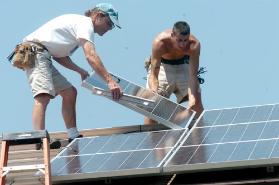
Solar energy installers in Pennsylvania say their alternative energy businesses and jobs are in danger of failing and some are putting the blame on Republican Gov. Tom Corbett.

The Associated Press reports:


The Pennsylvania Sunshine program, passed in
2008, provided $100 million in solar rebates to homeowners and
businesses to install such systems. That led to a boom, but the program
has only a few millions dollars left, and the state has no plans to
renew it.

“Some firms have moved to Ohio already, and we are
considering that. By springtime we’re going to be looking at layoffs, or
have to open another location in another state,” said Joe Morinville,
the owner of Energy Independent Solutions in McKee’s Rocks.

He said some of his competitors have already left Pennsylvania for states that are continuing to support for the industry.

Karen
Foltz, a spokeswoman for Pittsburgh-based Vox Energy Solutions, said
the current climate for solar businesses in the state is hardly
welcoming.
“People are losing their jobs,” said Foltz.

One environmental group puts the blame on the governor.

“He is so against renewable energy, it’s a
crime,” says Sharon Pillar, a solar project manager for the environmental group PennFuture. She says she believes Corbett is “100% backed” by
Marcellus Shale companies who see solar energy as a competitor.

Pillar said that in 2005, Pennsylvania
was a national leader in legislation supporting the solar industry, but
has now fallen far behind neighboring states such as New Jersey that
have more robust subsidies.

In other states the solar industry is doing quite well, the AP notes in a separate story:

The high costs that for years made it impractical as a mainstream
source of energy are plummeting. Real estate companies are racing to
install solar panels on office buildings. Utilities are erecting large
solar panel “farms” near big cities and in desolate deserts. And
creative financing plans are making solar more realistic than ever for
homes.

Solar power installations doubled in the United States last
year and are expected to double again this year. More solar energy is
being planned than any other power source, including nuclear, coal,
natural gas and wind.

Should Pennsylvania renew its solar subsidy program? Why? Share your thoughts in the opinion box below. Signed comments are appreciated but anonymous submissions also are accepted

Related:
Solar industry touts gains in New Jersey

Like this post? You’ll love our daily newsletter, EnviroPolitics
Try it free for 30 days!
  No obligation. Cancel anytime with one click 

Sun setting on solar industry in PA? Who’s to blame? Read More »

Get snappin’ this weekend on your enviro-photos

Last week, we invited your submissions (Got an enviropolitical photo you’d care to share?)
Joanne Pannone got things rolling with the picture below of a guy who didn’t need Desert Storm or Hip Hop to teach him the value of camouflage. 

Owl in dead tree limb in Robbinsville, NJ Credit: Joanne Pannone

What have you got for us? Pry off that lens cap and get snappin’ this weekend.
Submit your photos by email to: editor@enviropolitics.com 
We’ll share them on this blog and on our Facebook page.

Have a great weekend.
Like this post? You’ll love our daily newsletter, EnviroPolitics
Try it free for 30 days!  No obligation. Cancel anytime with one click 


Get snappin’ this weekend on your enviro-photos Read More »