The EPA is updating its hazardous waste recycling rule

The U.S. Environmental Protection Agency (EPA) today proposed new safeguards for recycling hazardous materials. The proposal modifies EPA’s 2008 Definition of Solid Waste (DSW) rule, which revised hazardous waste regulations to encourage recycling of hazardous materials. 

The agency said that the new proposal, now open for public comment, will “improve accountability and oversight of hazardous materials recycling, while allowing for important flexibilities that will promote its economic and environmental benefits.” 

EPA also is releasing for public comment its draft expanded environmental justice analysis of the 2008 DSW final rule, which evaluates the rule’s potential impact on low-income and minority communities. The agency is seeking public comment on the environmental justice analysis as well as on suggested changes received from peer review. The analysis and peer review comments will be available in the docket for this rule-making once the proposal is published.

“Safe recycling of hazardous materials conserves vital resources while protecting the environmental and economic health of our communities,” said Mathy Stanislaus, assistant administrator for EPA’s Office of Solid Waste and Emergency Response.  “Today’s proposed enhancements show EPA’s commitment to achieving sustainable materials management through increased recycling, while retaining safeguards to protect vulnerable communities and the environment.”  

“EPA’s re-examination of the 2008 DSW final rule identified areas in the regulations that could be improved to better protect public health and the environment with a particular focus on adjacent communities by ensuring better management of hazardous waste,” the agency said in a news release. 

“Today’s proposal includes provisions to address those areas through increased transparency and oversight and accountability for hazardous materials recycling. Facilities that recycle onsite or within the same company under the reduced regulatory requirements retained under the proposal would be subject to enhanced storage and record-keeping requirements as compared to the 2008 rule.  Companies that send their hazardous materials offsite for recycling would have tailored storage standards, while being required to send their materials to a permitted hazardous waste recycling facility.  The proposed rule also creates a level playing field by requiring all forms of hazardous waste recycling to meet requirements designed to ensure materials are legitimately recycled and not being disposed of illegally.”  

EPA will accept comment on this proposal for 60 days after publication in the Federal Register. The docket for the rule-making is EPA-HQ-RCRA-2010-0742 and can be accessed at http://www.regulations.gov once the proposal is published.

More information about this rulemaking: http://www.epa.gov/waste/hazard/dsw/rulemaking.htm 

————————————————————————————————————-
Like this post? You’ll love our daily newsletter, EnviroPolitics

Try it free for 30 days!  No obligation. Cancel anytime with one click.


The EPA is updating its hazardous waste recycling rule Read More »
Will NJ’s governor limit the legislature’s fracking ban?

Governor Chris Christie may seek to limit to five years the permanent ban on hydrofracturing (fracking) contained in a bill that received final passage in the state legislature last week.

Bob Jordon of Gannett’s Statehouse Bureau wrote today that Christie may call for the change by returning the legislation to the Senate and Assembly in a conditional veto. A CV is a deal-cutting method used by governors to say: Hey, Legislature, if you make changes x, y and z, I’ll sign your bill.

Christie hasn’t publicly commented on the fracking ban contained in S-2576, but his close ally, Senator Joseph Kyrillos, offered an unsuccessful amendment on the Senate floor that called for the ban to serve for five years only. 

In arguing for the limit, Kyrillos said:

““I understand the thrust (of the proposed permanent ban), and from what I can see this practice is not in the form that we would like, and there’s potential danger, but it’s also possible that over time the practice can be refined,” Kyrillos said.

“There is great promise of natural gas finds in the country, in Pennsylvania and perhaps someday in New Jersey, though that’s not the case today. I think it’s more prudent, as we try to deal with more ways to be energy independent and motivate our economy for the next generation, to preserve the option in case we get to the point of environmental safety.”

No natural gas drilling is taking place currently in New Jersey.  The gas-rich Marcellus Shale bypasses the Garden State in its stretch from Western New York into Pennsylvania. 

But environmentalists are concerned that another shale deposit, the Utica formation, eventually will come into play.

For more on how New Jersey, New York and Pennsylvania are dealing with ‘fracking,’ check out our recent posts:

Three years and still no fracking tax in PA…here’s why
NJ bans fracking. NY un-bans it. PA skips a frack tax

Corbett stares down PA lawmakers on gas-drilling fees
Winning hearts and minds of six-year-olds–for fracking

Marcellus Shale sites included in EPA fracking study
PA bill requires disclosure of chemicals in fracking fluid

————————————————————————————————————-
Like this post? You’ll love our daily newsletter, EnviroPolitics

Try it free for 30 days!  No obligation. Cancel anytime with one click. 

Will NJ’s governor limit the legislature’s fracking ban? Read More »

Three years and still no fracking tax in PA…here’s why

PA Gov. Tom Corbett

Wonder why the Pennsylvania’s legislature and governor last week approved a state budget that slashes funding for education and social welfare but ignores an obvious source of offsetting revenue–a tax on natural drilling industry?

Wonder no more. 

The Times-Tribune‘s Harrisburg bureau chief Robert Swift reports today that the natural gas industry spent more than $3.5 million last year to lobby lawmakers and state officials.

That’s more than three times the amount spent by the casino industry, over the same period, to influence the influential.
All that lobbying cash not only squashed hopes of enacting a drilling tax but apparently also stymied every other major legislative initiative that the industry disliked.
Swift reports that:

“While the Marcellus drilling boom led to a slew of bills dealing with matters ranging from greater protection for water supplies, a moratorium on natural gas drilling in state forests and state safety inspections of gas pipelines, only two became law in 2010. These are narrowly drawn measures to provide more public access to well production data and make landowners who lease land for natural gas drilling subject to roll-back taxes…”

“The natural gas industry has decided it’s better to spend money on lobbying and campaign contributions than to pay a severance tax, said Rep. Greg Vitali, R-166, Havertown, sponsor of a severance tax bill.

“That $3.5 million figure is staggering,” he added. “It isn’t the type of spending you would find from fledgling companies.”

But it is the kind of spending that gets results–and the industry sure got it’s money’s worth last year.
Here’s a list of the gas industry’s top lobbying spenders:

  • Marcellus Shale Coalition: $1.1 million
  • Range Resources Appalachia: $392,000 
  • Chesapeake Energy: $382,000
  • Pennsylvania Independent Oil and Gas Association: $247,000
  • East Resources Management: $225,000
  • Chief Oil and Gas: $186,000
  • Alpha Natural Resources: $160,000
  • Dominion Transmission: $146,000
  • Exco Resources: $130,000
  • BG North America: $124,000
  • EQT Corp.: $105,000
  • Talisman Energy: $85,000
  • Equitable Gas Co.: $78,000
  • Columbia Gas of Pennsylvania: $75,000
  • Consol Energy: $75,000
  • CNX Gas Corp.: $59,000
  • Exxon Mobil: $55,000
  • Cabot Oil and Gas: $50,000
  • Pennsylvania General Energy: $48,000
  • XTO Energy: $41,000
  • National Fuel Gas: $36,000
  • NiSource: $36,000
  • Anadarko Petroleum: $21,000

What’s your view on this?  Let us know in the comment box below.  If you don’t see one, click the tiny ‘comments’ link to open it.
————————————————————————————————————-
Like this post? You’ll love our daily newsletter, EnviroPolitics

Try it free for 30 days!  No obligation. Cancel anytime with one click. 

Three years and still no fracking tax in PA…here’s why Read More »

NJ bans fracking. NY un-bans it. PA skips a frack tax

What a difference a state makes.

Within several days of each other, New Jersey, New York and Pennsylvania reacted, respectively, to the controversial natural gas extraction technique of hydrofracturing (fracking) by:
           1. banning it;
           2. un-banning it, and
           3. letting it proceed unabated and untaxed.

In New Jersey, lawmakers in both houses passed and sent to the governor legislation that would prohibit the use of fracking anywhere in New Jersey.

That’s a bit less courageous than it might sound since God didn’t see fit to locate the gas-rich Marcellus Shale underneath the state.

Bill sponsors argue, however, that other layers of shale do lie below NJ, and it’s just a matter of time before the gas industry comes poking around.
 

In New York, the state DEC announced it would lift its current moratorium on natural gas drilling, as it released recommendations
for state regulations that call for:
  • A fracking ban in the New York City and Syracuse watersheds
  • No fracking within 500 feet of an aquifer
  • A ban on surface drilling on state-owned land; and 
  • Strict regulation of fracturing on privately held lands.
 

In Pennsylvania, where legislation to ban fracking has never gotten even inches off the ground, and where drilling on private and public land is turning some sections of the state into swiss cheese, the GOP-controlled legislature dropped plans to vote on a bill to impose ‘impact fees’ on shale gas wells.

Lawmakers backed down immediately after Republican Gov. Tom Corbett huffed and puffed that he’d veto any such attempt.

What will be interesting to watch now is whether New Jersey Governor Chris Christie will veto the fracking ban bill that’s been dropped on his desk.

Signing it will only further inflame environmentalists, already enraged by the governor’s decision to pull the state out of RGGI, a regional compact set up to combat climate-altering carbon emissions.

With no drilling taking place, his signature would be an easy way to avoid an unneeded controversy. But controversy is Christie’s middle name.

It’s something to look forward to in July as news-making slides into its summer slumber.

Tell us what you think about hydrofracturing and the divergent approaches to regulation taken by New Jersey, New York and Pennsylvania.  Use the comment box below. If one isn’t visible, click on the tiny ‘comments’ line to open it. 

————————————————————————————————————-
Like this post? You’ll love our daily newsletter, EnviroPolitics

Try it free for 30 days!  No obligation. Cancel anytime with one click. 


NJ bans fracking. NY un-bans it. PA skips a frack tax Read More »

Corbett stares down PA lawmakers on gas-drilling fees

PA Governor Tom Corbett

Pennsylvania’s Republican majority legislators, who have been working to adopt natural gas impact fees in conjunction with the state’s budget legislation, abandoned that plan yesterday after Governor Tom Corbett made it clear that he’d veto any legislation containing the fees.

Corbett, who has been a hardline supporter of the natural gas industry (which helped fund his election campaign last year), said he would not consider any fees on natural gas wells until the Marcellus Shale commission, that he appointed, submits its report next month on the effects of drilling.

The Republican governor was unequivocal in his stance.

“I have sent this message back: If something gets to my desk, it will be vetoed,” he said.

For more, see today’s Morning Call story: Debate on gas drillers’ impact fee put off

————————————————————————————————————-
Like this post? You’ll love our daily newsletter, EnviroPolitics

Try it free for 30 days!  No obligation. Cancel anytime with one click. 

Corbett stares down PA lawmakers on gas-drilling fees Read More »

Winning hearts and minds of six-year-olds–for fracking

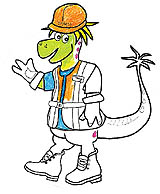
Hi boys and girls. Meet Tailsman Terry, the Friendly Fracosaurus.

He’s going to tell you all about the wonderful world of fracking.

It’s healthy. It’s patriotic. And best of all it’s fun.

Have your parent or older brother or sister read the fun story of fracking to you as you use your crayons to color in the pictures of happy drilling sites.

See the happy trees and animals and the smiling sun.

Look at the happy trucks and pipelines that you may get to see when Tailsman Terry and his friends start getting energy from the ground near you.

Hey, look, there’s a mom and dad smiling with a man from the fracking company who just got permission to drill on your property.

And isn’t it great that everything will be put back nice and clean and happy when they’re all done? 

What? You don’t have the Friendly Fracosaurus Coloring Book?  Don’t worry, little friend. You can get one for free at the next community picnic or your mom or dad can use their computer to get one just for you.

So, get those crayons ready and have a happy fracking day.

NOTE TO GROWNUPS: For more information on the gas industry’s educational campaign for kids, check out Color Me Fracked in today’s Pittsburgh Post-Gazette. 

 
Our most recent blog posts:
Marcellus Shale sites included in EPA fracking study

PA bill requires disclosure of chemicals in fracking fluid
Amended Marcellus gas tax in place for PA Senate vote

NJ bill restricting wind turbines set for June 20 hearing

New group will lobby for more rental units in New Jersey


————————————————————————————————————-
Like this post? You’ll love our daily newsletter, EnviroPolitics

Try it free for 30 days!  No obligation. Cancel anytime with one click. 

Winning hearts and minds of six-year-olds–for fracking Read More »