EPA adopts final greenhouse gas emissions rule

 
greenhouse gas - CO2 graphic
The U.S. Environmental Protection Agency (EPA) today announced a final rule to address greenhouse gas (GHG) emissions from the largest stationary sources, while shielding millions of small sources of GHGs from Clean Air Act permitting requirements.

The agency described the rule as a “phased-in, common-sense approach will address facilities like power plants and oil refineries that are responsible for 70 percent of the greenhouse gases from stationary sources that threaten American’s health and welfare.” EPA’s phased-in approach will start in January 2011, when Clean Air Act permitting requirements for GHGs will kick in for large facilities that are already obtaining Clean Air Act permits for other pollutants. Those facilities will be required to include GHGs in their permit if they increase these emissions by at least 75,000 tons per year (tpy).   In July 2011, Clean Air Act permitting requirements will expand to cover all new facilities with GHG emissions of at least 100,000 tpy and modifications at existing facilities that would increase GHG emissions by at least 75,000 tpy. These permits must demonstrate the use of best available control technologies to minimize GHG emission increases when facilities are constructed or significantly modified.   Under the new emissions thresholds for GHGs that begin in July 2011, EPA estimates approximately 900 additional permitting actions covering new sources and modifications to existing sources would be subject to review each year. In addition, 550 sources will need to obtain operating permits for the first time because of their GHG emissions. 

In April 2010, EPA set the first national GHG tailpipe standards for passenger cars and light trucks. When GHG emissions limits for these vehicles go into effect in January 2011, EPA is also required to address GHG emissions from stationary sources under the Clean Air Act’s permitting programs, which it is doing in the outlined plan. 

The final rule addresses a group of six greenhouse gases: carbon dioxide (CO2), methane (CH4), nitrous oxide (N2O), hydrofluorocarbons (HFCs), perfluorocarbons (PFCs), and sulfur hexafluoride (SF6).

Related documents:

 —————————————————————   
  Like this? You’ll love our daily newsletter 
  EnviroPolitics
Try it free for 30 days!
 
   ————————————————————-  

Our most recent posts:
NJDEP Commissioner briefs state lawmakers
 

Environmental bills in the NJ Legislature

Don’t worry, shale gas will rock your world 

Information on BP’s oil disaster in the Gulf 

In the oil spill disaster, a huge opportunity?


EPA adopts final greenhouse gas emissions rule Read More »

NJDEP Commissioner briefs state lawmakers

 Bob Martin - DEP photo

New Jersey’s Environmental Protection Commissioner Bob Martin appeared before the Senate Environment and Energy Committee this morning to report on what the agency is up to and where it’s headed.
Martin reviewed major staff changes at his department  and ticked off  a list of recent activities and accomplishments, including:

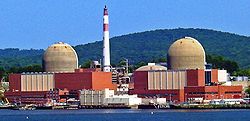
  • DEP’s assumption of oversight of the cleanup of tritium leaking from the Oyster Creek nuclear plant in Lacey Township
  • “Adamant” opposition to offshore drilling
  • Continued opposition to offshore LNG facilities
  • Formal petition calling on the EPA to investigate and take action to curb air emissions at RRI’s Portland power plant in Pennsylvania  which blow over to New Jersey’s Warren County
  • Keeping state parks open this summer and maintaining critical functions at the department despite budget cuts
  • Continued opposition to Army Corps of Engineers dredging of the Delaware River.  Martin said that, if Pennsylvania wants the river dredged, it should accept the resulting dredge spoils. Under the current plan, all spoils will be dumped in New Jersey. 
  • Working on legislation to help the financing of offshore wind energy projects.  Martin said the only way the economics for such projects makes sense is if New Jersey also gets the manufacturing  (turbines) associated with the project.
  • Stakeholder meetings already held or pending on

      — Coastal access
      — Water Quality
     — CAFRA rules
     — Barnegat Bay and Oyster Creed nuclear generating plant
     — Highlands

The commissioner listed the department’s three short-term priorities as:

  • Retrofitting diesel engines
  • Environmental justice issues
  • “Dying” Barnegat Bay and Oyster Creek nuclear plant

In response to a question from a member of the committee, Martin said he expects the state will hold a one-week bear hunt in December.  He noted that the number of  bears “harvested” during that week will be closely monitored and the hunt could be stopped if it appeared to be resulting in over-harvesting .
Martin is scheduled to make a  similar presentation this afternoon before the Assembly Environment and Solid Waste Committee.

Related:
Environmental bills this week in NJ Legislature
Exelon forced to clean up tritium leak 
DEP wants EPA to cut pollution at Portland Generating Station

—————————————————————
If environmental legislation is important to you, try
our daily newsletter—
EnviroPolitics. We track all environmental legislation in New Jersey and Pennsylvania—from introduction to enactment! 
 Try it free for 30 days
!

—————————————————————


Our most recent posts:
Don’t worry, shale gas will rock your world

Information on BP’s oil disaster in the Gulf

In the oil spill disaster, a huge opportunity?

Pittsburgh: A good place to live and to lawyer

NJ union pension fund sues to remove coal boss

NJDEP Commissioner briefs state lawmakers Read More »

Environmental bills this week in NJ Legislature

New Jersey Dome Thursday will be an active day for environmental legislation at the New Jersey Statehouse, as DEP Commissioner Bob Martin appears before two of
three committees that will be considering  more
than a dozen bills affecting the environment and energy. Here’s the lineup: SENATE ENVIRONMENT AND ENERGY  (10 AM Room 10) Honorable Bob Martin, the Commissioner of Environmental Protection, has been invited to address the committee and discuss the State’s environmental priorities for 2010. Bills for consideration: A-917  Chivukula, U.J. (D-17); Lampitt, P.R. (D-6) Requires State to use energy-efficient outdoor lighting fixtures. S-463  Smith, B. (D-17); Buono, B. (D-18) Concerns net metering and authorizes licensing of local renewable energy collaboratives by the BPU. S-987  Allen, D.B. (R-7) Exempts residential electric vehicle charging systems from real property taxation.  S-1406  Smith, B. (D-17); Bateman, C. (R-16) Establishes "New Jersey Property Assessment Clean Energy (NJ PACE) Municipal Financing Program."  S-1765  Smith, B. (D-17); Bateman, C. (R-16) Requires EDA to establish a "High Performance Green Building Demonstration Project."  S-1780  Beach, J. (D-6) Requires State to use energy-efficient outdoor lighting fixtures.
  ASSEMBLY AGRICULTURE AND NAT. RESOURCES (2 PM Room 8) Bills for consideration: A-828  Albano, N.T. (D-1); Milam, M.W. (D-1) Establishes conflict resolution procedures through Department of Agriculture for complaints against commercial fishing docks and fish processing facilities.     A-2282  DeCroce, A. (R-26); Bramnick, J.M. (R-21) Creates alternate voting members on county agriculture development boards.  AR-63  Amodeo, J.F. (R-2); Albano, N.T. (D-1) Urges FDA and Interstate Shellfish Sanitation Conference to work collaboratively to improve shellfish safety. 
    ASSEMBLY ENVIRONMENT AND SOLID WASTE (2 PM, Room 9) Honorable Bob Martin, the Commissioner of Environmental Protection, has been invited to address the committee and discuss the State’s environmental priorities for 2010. Bills for consideration: A-624  Moriarty, P.D. (D-4) Provides for State income tax deduction to private well owners for water testing costs.  A-1052  Quijano, A. (D-20); Cryan, J. (D-20); Chivukula, U.J. (D-17) Requires State entities to purchase biofuels in place of fossil fuels when it is reasonable, prudent and cost effective to do so.   A-1851  Gusciora, R. (D-15); Jasey, M.M. (D-27); Greenstein, L.R. "Historic Property Reinvestment Act"; provides credits against certain taxes for certain costs of rehabilitating historic properties.  A-2217  McKeon, J.F. (D-27); Chiusano, G.R. (R-24); McHose, A.L. (R-24); Extends expiration date of special appraisal process for Green Acres and farmland preservation programs from 2009 to 2014 for lands in Highlands Region. A-2501  Chivukula, U.J. (D-17) Requires post-construction restoration of optimal soil conditions under the "Soil Erosion and Sediment Control Act."

—————————————————————
If environmental legislation is important to you, try
our daily newsletter—
EnviroPolitics. We track all environmental legislation in New Jersey and Pennsylvania—from introduction to enactment! 
 Try it free for 30 days
!

—————————————————————

Our most recent posts:
Don’t worry, shale gas will rock your world

Information on BP’s oil disaster in the Gulf

In the oil spill disaster, a huge opportunity?

Pittsburgh: A good place to live and to lawyer

NJ union pension fund sues to remove coal boss

Environmental bills this week in NJ Legislature Read More »

Don’t worry, shale gas will rock your world

By some estimates, there’s 1,000 trillion cubic feet recoverable in North America alone—enough to supply the nation’s natural-gas needs for the next 45 years.

The new techniques of horizontal drilling and hydrofracturing–to literally blast the gas out out of rocks thousands of feet below ground–makes the extraction of shale gas suddenly economical.

This newly accessible energy supply will be a game changer. Shale gas will revolutionize the energy industry—and change the world. It will prevent the rise of any new cartels. It will alter geopolitics.

It will lessen world dependence on the output of dangerous countries. It will bring the U.S. and China closer together.

And it will slow the transition to renewable energy.

These are the conclusions of Amy Myers Jaffe, the Wallace S. Wilson Fellow for Energy Studies at the James A. Baker III Institute for Public Policy at Rice University.

Her ebullient prognosis, How Shale Gas Is Going to Rock the World, appears, not surprisingly, in today’s edition of the Wall Street Journal. The drill-baby-drill editorial department there must be in terrible state of anxiety over the political damage to offshore drilling caused by the disastrous eruption of the BP rig in the Gulf of Mexico.

With thousands of new gallons of crude adding daily to the widening pollution damage–and no remedy currently in sight–Ms Jaffe provides what must be for the WSJ a welcome opportunity to divert attention to the next great reason not to invest in non-polluting energy sources like wind and solar.

We love the blog format that many online newspapers have adopted, since it allows for a variety of responses from readers. The writer gets to have his/her say but readers no longer have to silently accept it. And we all benefit from the exchange.

While Ms. Jaffe quickly dismisses potential environmental harm from hydrofracturing, reader Jeffrey LaMarca responds with this:

The problem is that fracking not only carries risks of contamination in the event of accidents (which are inevitable) but that we have little clue as to the long-term consequences of injecting millions of gallons of toxic chemicals into the ground at high pressure and creating underground explosions and fractures. Pointing out that the fracking is taking place 1000+ feet underground is like saying that it’s fine to dump all our garbage and waste into the ocean so long as it’s 1000+ miles offshore.

The feeling of euphoria at having found a cost-free solution to a problem is invariably followed years later by the realization that the costs are huge and often irreversible. Shale gas has potential but how about a sober look as opposed to the unabashed cheerleading of this article written by a Houston oil guy.

What do you think? Use the comments block below to share your views. If one isn’t visible, activate it by clicking on the tiny ‘comments’ line.

—————————————————————
Like this? You’ll love our daily newsletter–
EnviroPolitics Try it free for 30 days!

—————————————————————

Our most recent posts:

Information on BP’s oil disaster in the Gulf

In the oil spill disaster, a huge opportunity?

Pittsburgh: A good place to live and to lawyer

NJ union pension fund sues to remove coal boss
NJDEP Commissioner Martin shuffles his deck

Don’t worry, shale gas will rock your world Read More »

Information on BP’s oil disaster in the Gulf

If you’re like us, you’re both horrified and fascinated by the ongoing story of the environmental disaster in the Gulf of Mexico unleashed by the massive oil leak and fire at a BP drilling platform.

A single-source of great information on the spill can be found at Deepwater Horizon oil spill on the Wikipedia site. It offers a summary, lots of background information, and a continuously updated list of news stories and commentary in the References section at the bottom of the page.

We find it to be an extremely convenient way to learn about the spill and keep up to date on developments without looking all over the net for information.

An interesting view of what engineers face as they try to stem the flow is offered by Al Jazeera in the video below.

What sources of news and commentary on the spill have you found helpful? Use the comment block below to share your recommendations. If the block isn’t visible, activate it by clicking on the tiny ‘comments’ line.

—————————————————————
Like this? You’ll love our daily newsletter–
EnviroPolitics Try it free for 30 days!

—————————————————————

Our most recent posts:

In the oil spill disaster, a huge opportunity?

Pittsburgh: A good place to live and to lawyer

NJ union pension fund sues to remove coal boss
NJDEP Commissioner Martin shuffles his deck
Feds give green light to first offshore wind farm


Information on BP’s oil disaster in the Gulf Read More »

In the oil spill disaster, a huge opportunity?

Thomas L. Friedman 

Fred R. Conrad/The New York Times

Thomas L. Friedman
New York Times columnist Thomas Friedman writes:

“The only meaningful response to this man-made disaster is a man-made energy bill that would finally put in place an American clean-energy infrastructure that would set our country on a real, long-term path to ending our addiction to oil.”

Friedman says that the oil  spill is to the environment “what the subprime mortgage mess was to the markets — both a wake-up call and an opportunity to galvanize a constituency for radical change that overcomes the powerful lobbies and vested interests that want to keep us addicted to oil.”
Whether or not the nation capitalizes on the opportunity depends, Friedman believes, on the guy behind the desk where the buck inevitably stops.

“ If President Obama wants to seize this moment, it is there for the taking. We have one of the worst environmental disasters in American history on our hands. We have a public deeply troubled by what they’ve seen already — and they’ve probably seen only the first reel of this gulf horror show. And we have a bipartisan climate/energy/jobs bill ready to be introduced in the Senate — produced by Senators John Kerry, Joe Lieberman and Lindsey Graham — that would set a price on carbon and begin to shift us to a system of cleaner fuels, greater energy efficiency and unlock an avalanche of private capital to the clean energy market.

“American industry is ready to act and is basically saying to Washington: “Every major country in the world, starting with China, is putting in clear, long-term market rules to stimulate clean energy — except America. Just give us some clear rules, and we’ll do the rest.”

  What do you think?  Is America missing the boat?  What is our national energy policy?  Do we even have one?  Is a national carbon tax preferable to ‘cap-and-trade’ ? And will it get us moving in the direction we need to go?  Click on the tiny ”comments’ line below and tell us what you think.              —————————————————————  
             Like this? You’ll love our daily newsletter–
             EnviroPolitics
Try it free for 30 days!
 
           —————————————————————

Our most recent posts:
Pittsburgh: A good place to live and to lawyer
NJ union pension fund sues to remove coal boss
NJDEP Commissioner Martin shuffles his deck
Feds give green light to first offshore wind farm
NRDC keeps chromium lawsuit alive in NJ

In the oil spill disaster, a huge opportunity? Read More »