NJ environmental bills on Senate short list

What pieces of environmental legislation are likely to top the agendas of the environmental committees in the Senate and Assembly when the New Jersey state legislature returns from its summer recess later this month?

EnviroPolitics put that question to the chairmen of both committees:
Senator Bob Smith (D-Middlesex/Somerset) and
Assemblyman John F. McKeon (D-Essex).

Today we have Senator Smith’s answer:

The top two environmental issues for the Senate Environment Committee this fall are:

1. Licensed Site Professionals, and
2. Electronic-Waste Recycling

Identical bills creating a Licensed Site Professional (LSP) program within the Department of Environmental Protection
(S-1897/A-2962) have been introduced by the two environmental committee chairmen.

The idea is to streamline the DEP’s review process for contaminated sites in order to whittle away at the department’s backlog of more than 20,000 cases.

LSPs hired by companies seeking to remediate contaminated sites would be authorized to: review and submit all necessary paperwork to the DEP, develop remedial plans, supervise the cleanup and certify that it is performed in conformance with DEP’s technical requirements.

The DEP supports the LSP program. It also has the backing of the business community. Several of the state’s major environmental organizations are concerned, however, that the LSP’s might be pressured by those paying their fees to cut corners.

For more see: Bills aim to speed enviro-cleanups in New Jersey

Electronic Waste Recycling – Senator Smith and Assemblyman Reed Gusciora were the sponsors of a relatively new state law requiring the recycling of all used computers and television sets. Their legislation was passed in a flurry of activity in the final days of the last two-year legislative session which ended early in January, 2008.

Several New Jersey-based electronics manufacturers and their trade associations complained that the bill contained numerous flaws. The sponsors are now working with those parties and others on a bill that would implement changes.
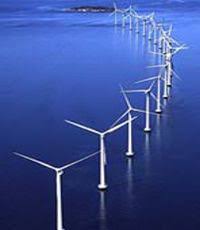
Other current issues: Senator Smith is the sponsor of numerous bills working their way through the Legislature that are designed to stimulate the development and installation of alternative energy sources, including solar and wind. He says the most important is
S-1538 which would change the state’s legal definition of “farming” to allow the installation of solar panels and windmills on tens of thousands of preserved farmlands across the state. Down the pike: Smith says there is a major effort under way to reach agreement on a stable funding source to offset property losses in areas affected by the Highlands Act and to replenish the state’s landmark farmland and open space preservation program. He predicts an agreement sometime in the spring of 2009.

NJ environmental bills on Senate short list Read More »

Hess cogen unit must pay $6.3M damages

A jury in San Diego has ordered New Jersey’s Hess Microgen, a subsidiary of the oil giant Hess Corp., to pay a total of $8.2 million for deliberately withholding deliveries to harm a competing contractor.

The San Diego Union Tribune reported September 5 that lawyers for Xnergy, a Carlsbad, CA contractor that serves biotechnology and high-technology companies, argued in the trial that Hess Microgen sought to damage Xnergy so it could win the contractor’s jobs for itself.

Hess Microgen “engaged in blatant corporate bullying and corporate blackmail by bringing jobs to a halt, effectively holding the projects hostage,” said Xnergy’s lawyer, L.B. “Chip” Edleson of San Diego.

The 12-person jury apparently agreed in verdicts that found Hess Microgen had breached its duty of acting in good faith and intentionally interfering with a contract. The jury, in a separate decision, awarded almost $6.3 million in punitive damages for breach of faith and other misconduct.

Edleson’s law partner told the Union Tribune that Hess Microgen faces similar lawsuits in San Diego, San Francisco and Reno over three other cogeneration projects. The other San Diego suit against Hess Microgen was filed by the city of San Diego over cogeneration equipment failures and other problems at a San Diego Police Department installation.

MORE:

Hess cogen unit must pay $6.3M damages Read More »

Offshore LNG plans torched and advanced

Controversial plans for the development of liquefied natural gas (LNG) terminals off the coast of New Jersey and New York were back in the news this week as three of the proposals came under fire and one advanced a step.
In New Jersey, the activist group Clean Ocean Action (COA), announced it was launching a campaign to inform the public and lawmakers about what it sees as the dangers of building the terminals 15 to 20 miles off the coast. COA leaders say they also hope to keep the possibility of offshore LNG facilities out of the final state Energy Master Plan which is due this fall.
Three separate proposals for the construction of LNG facilities of the Jersey coast have been advanced by:

*Atlantic Sea Island Group, which wants to build Safe Harbor Energy, an 80-acre island 19 miles off Sea Bright as a terminal for giant LNG carriers

* Exxon Mobil, which proposes a floating terminal 20 miles east of Manasquan where LNG carriers would link with an undersea pipeline that would carry the gas to shore

* Liberty Natural Gas , seeks to build an anchorage 15 miles off Asbury Park where tankers would link to a pipeline
COA, which opposes all three plans, released a 60-page report that contends the U.S. has a glut of natural gas reserves and does not need imports. The report also claims the facilities would endanger the marine environment and New Jersey’s fishing and tourism industries. It also raises security issues, maintaining that offshore LNG terminal would be vulnerable to terrorists.

Bill Cooper, president of the Center for Liquefied Natural Gas in Washington, told a Gannett reporter that, which the country has vast natural gas reserves, current U.S. policy either severely restricts drilling or flat out prohibits it. As a result, he said natural gas must be imported an that necessitates LNG terminals.
*****************************

In New York on Thursday, the Federal Energy Regulatory Commission denied requests by New York, ‘Connecticut, Suffolk County and several area towns to reconsider its approval of permist granted to Broadwater Energy for the installation of an LNG terminal in Long Island Sound.

Broadwater’s proposal is opposed by the governors of both New York and Connecticut and has come under withering fire from numerous environmental and outdoor organizations and many newspaper editorial boards. Despite that, the company has continued to methodically advance its case with federal agencies, hoping they will overrule the local opposition.
For a summary of the latest Broadwater development, see Long Island editor/publisher Denise Civiletti’s blog report.
Ocean advocates ready to fight LNG terminals
(Courier-Post – 9/4/08)

Another coastal LNG facility bites the dust
(EnviroPolitics Blog – 6/9/08)

LNG platforms – A northeast update
(EnviroPolitics Blog – 4/30/08)
NY nixes LNG platform; focus shifts to NJ
(EnviroPolitics Blog – 4//10/08)
New developments in NY’s LNG barge saga
(EnviroPolitics Blog – 4/3/08)

Offshore LNG plans torched and advanced Read More »

NJ enviro group ready to rip LNG plans

Clean Ocean Action (COA), a New Jersey shore environmental group that had big success years ago in curbing waste dumping off the coast, is focusing its attention on plans by three separate developers who want to install liquefied natural gas facilities off the coast.

Several other state environmental groups say they are studying the issue with an open mind, recognizing the short-term need for new energy supplies in the expanding northeast market while alternative energy sources are being developed. They haven’t immediately opposed the LNG idea since natural gas is a cleaner-burning fuel than oil or coal.

COA has scheduled a news conference tomorrow in Trenton to unveil a study entitled: “LNG: An Un-American Energy Source, Liquefied Natural Gas: An Expensive, Dirty, Foreign Fossil Fuel that Threatens Our Natural Gas Energy Independence.

Sounds like COA folks have made up their mind, doesn’t it?

Share your thoughts on the LNG plans by clicking below on the comment line.

NJ enviro group ready to rip LNG plans Read More »

Nuclear plant developer suing enviros over ‘slur’

Alternate Energy Holdings, Inc, which is seeking to build a nuclear power plant in Idaho, has filed a defamation suit against the SnakeRiver Alliance, an environmental group opposed to the project, after the enviro group’s director called the company “scammers.”

“We have passed two independent financial audits and if anything were even slightly amiss, we’d have heard about it,” said AEHI President and CEO Donald Gillispie. “These radical groups are allowed to make almost any claim they wish, regardless of the facts, and the media rarely questions them. Someone has to hold them accountable. “

If corporations in New Jersey filed suit every time critics like the Sierra Club’s Jeff Tittle said something nasty about them, the court calendar would be clogged with defamation actions. Tittle would be so busy answering interrogatories that the state’s media would have to file an amicus brief in hopes of preserving their most cherished source of story-making quotes.

Hey, maybe that’s the point. The Big Chill. Close down the opposition through legal intimidation. Bleed your opponents dry with court costs. Send them to the sidelines, regardless of the merits of your case, while your project chases its permits.

Or maybe the environmental Davids have gone overboard in using a compliant media to slay corporate Goliaths. Maybe the tactics that win you easy headlines–hyperbole, half-truths and sometimes outright inaccuracies–are beginning to take their toll on the environmental movement’s credibility.

What do you think? Click on the “comment” line below and share your thoughts.

NOTE: While attribution is admired, you can choose to answer anonymously if you’re afraid of a corporate lawsuit or an environmental tongue-lashing.

Nuclear plant developer suing enviros over ‘slur’ Read More »

A Call for a Summit on the Delaware Estuary

Jennifer Corbett/News Journal

The governors of Maryland, Virginia and Pennsylvania convene every year to evaluate the progress of joint efforts to insure a positive environmental future for the Chesapeake Bay.

W. Michael McCabe, who served as the U.S. Environmental Protection Agency’s Mid-Atlantic regional administrator and deputy administrator from 1995 to 2001, thinks it’s time that the states devote equal attention to the Delaware River and its estuary.

In an Aug. 24 op-ed piece in the (Wilmington) News Journal, McCabe notes that 50 years ago industrial pollution had turned the Delaware River into “a biological dead zone,” so bad that the U.S. Navy was able to reduce ship maintenance by anchoring vessels its waters “because it was so polluted nothing would grow on the hulls.”

But times have changed. Marine scientists from the University of Delaware College of Marine Studies and Rutgers University recently discovered a colony of sponges and reef-building worms stretching for more than a mile along the bay floor.

McCabe says the fact that rich pockets of aquatic life still exist in what once was one of the nation’s most polluted industrial rivers is
“a tribute to pollution control laws and the tenacity of nature.”

Additional progress is noted in a recent report by the Partnership for the Delaware Estuary which examined not only just the Delaware River and Bay, but the whole estuary system, including the tributaries that feed into it.


News Journal file photo
McCabe says the study found “dramatic reductions in oxygen-robbing sewage and chemicals and dangerous toxins.”
Anyone who’s tempted to run up a “Mission Accomplished” banner should note that the State of the Estuary Report also found that “run-off from pesticides, fertilizers, sediment and transportation-linked pollutants” are now the greatest threat to the estuary’s water quality and that “contaminants derived from chemicals that aren’t regulated under water quality programs — such as pharmaceuticals and personal care products” are an emerging concern.

In addition, the Partnership reports that the Delaware’s extensive wetlands are under tremendous pressure from development, with an analysis showing a 12 percent loss of tidal marshes over the last decade.

Delaware residents will select a new governor in November who will face a number of important issues relating to the river, including “a proposal to deepen the ship channel to 45 feet, the location of a disposal site for dredging the Port of Wilmington, and recent lawsuits requiring industry to use the best available technology to limit the discharge of heated wastewater.”

McCabe recognizes that the Delaware River “is not only a living resource supporting a diverse environment, but also a working river supporting a population of almost 8 million people and the commerce they generate.”

The challenge for the incoming governor will be to balance all interests while engage neighboring states in a cooperative effort to assist the river’s environmental rebound.

Anyone for a summit meeting?

A Call for a Summit on the Delaware Estuary Read More »