EPA: Solvent 1,4-Dioxane can cause cancer and damage liver

From the United States Protection Agency

Today, the U.S. Environmental Protection Agency (EPA) released its final supplement to the risk evaluation and final risk determination for the solvent 1,4-dioxane under the Toxic Substances Control Act (TSCA). EPA has determined that this chemical poses an unreasonable risk of injury to human health. 1,4-Dioxane has the potential to cause cancer and harm the liver and nasal tissue.

Although 1,4-dioxane was one of the first ten chemicals to be reviewed under amended TSCA, EPA’s 2020 risk evaluation did not evaluate general population exposures to 1,4-dioxane in drinking water or air, did not evaluate all the ways people could be exposed to 1,4-dioxane as a byproduct, did not evaluate the potential for simultaneous exposure to more than one source of 1,4-dioxane (aggregate risk) and did not evaluate potential exposures to fenceline communities.

These omissions led several Scientific Advisory Committee on Chemicals members to say that EPA’s “failure to assess 1,4-dioxane exposure in the general population may leave substantial portions of the population at risk. This is particularly concerning for drinking water.” The final supplement to the 1,4-dioxane risk evaluation addresses these concerns and provides the public with a more complete understanding of the risks presented by 1,4-dioxane.

1,4-Dioxane is a solvent used in a variety of commercial applications, such as in a laboratory, or in dish soap or laundry detergent used by cleaning services or laundromats, and industrial applications, such as the manufacture or processing of other chemicals (e.g., adhesives, sealants). It is also generated as a byproduct in several manufacturing processes, resulting in its presence as a contaminant in commercial and consumer products like dish soaps and laundry detergents which contribute to its presence in surface water when these products are washed down the drain.

People may be exposed to 1,4-dioxane at work or through consumer products. If industrial or commercial facilities release 1,4-dioxane into the air, people may breathe it in. Additionally, people may be exposed to 1,4-dioxane in water. Water can be contaminated with 1,4-dioxane through industrial or commercial sources, or when consumer and commercial products that contain 1,4-dioxane are washed down the drain or disposed of in landfills.

EPA found that 1,4-dioxane presents unreasonable risk to workers and the general population, including fenceline communities. Ingesting or breathing 1,4-dioxane can cause cancer, liver toxicity, and adverse effects to nasal tissue.

Learn more about risk management for 1,4-dioxane.


If you like this post, you’ll love our daily environmental newsletter, EnviroPolitics. It’s packed daily with the latest news, commentary, and legislative updates from New Jersey, Pennsylvania, New York, Delaware…and beyond. Please do not take our word for it, try it free for a full month.

EPA: Solvent 1,4-Dioxane can cause cancer and damage liver Read More »

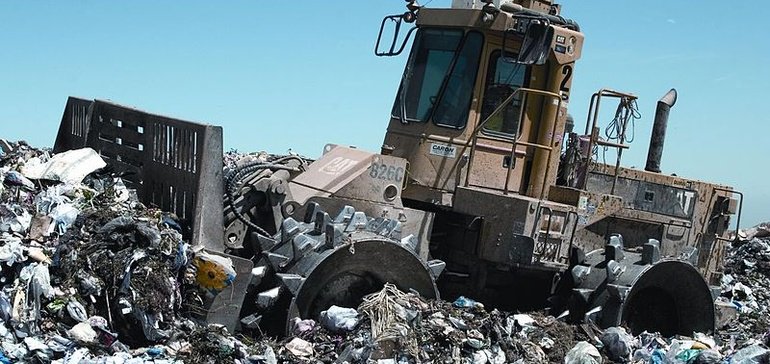
EPA proposing changes to landfill regulations

By Jacob Wallace, Waste Dive

  • The U.S. EPA is soliciting comments on a series of white papers regarding landfill management practices through Jan. 23, 2025, the agency announced in a release. The agency said it is looking for ways to “streamline, improve, and harmonize the current suite of emissions regulations” for municipal solid waste landfills.
  • The agency has previously indicated that it would update emissions regulations for new and existing landfills next year. It previously issued an update in 2016 but that was not fully adopted until 2021. 
  • In eight white papers, the agency included a series of possible changes to its New Source Performance Standards and Emissions Guidelines for new and existing landfills. Those changes include adding an organic waste diversion credit, allowing a regular aerial monitoring program, creating a methane emission threshold to trigger regulations for landfills and more.

If you like this post, you’ll love our daily environmental newsletter, EnviroPolitics. It’s packed daily with the latest news, commentary, and legislative updates from New Jersey, Pennsylvania, New York, Delaware…and beyond. Please do not take our word for it, try it free for a full month.

EPA proposing changes to landfill regulations Read More »

EPA proposing changes to landfill regulations

By Jacob Wallace, Waste Dive

  • The U.S. EPA is soliciting comments on a series of white papers regarding landfill management practices through Jan. 23, 2025, the agency announced in a release. The agency said it is looking for ways to “streamline, improve, and harmonize the current suite of emissions regulations” for municipal solid waste landfills.
  • The agency has previously indicated that it would update emissions regulations for new and existing landfills next year. It previously issued an update in 2016 but that was not fully adopted until 2021. 
  • In eight white papers, the agency included a series of possible changes to its New Source Performance Standards and Emissions Guidelines for new and existing landfills. Those changes include adding an organic waste diversion credit, allowing a regular aerial monitoring program, creating a methane emission threshold to trigger regulations for landfills and more.

Read the full story here


If you like this post, you’ll love our daily environmental newsletter, EnviroPolitics. It’s packed daily with the latest news, commentary, and legislative updates from New Jersey, Pennsylvania, New York, Delaware…and beyond. Please do not take our word for it, try it free for a full month.

EPA proposing changes to landfill regulations Read More »

Trump team eager to undo predecessor’s environmental protections

During first term, Trump’s team undid or weakened hundreds of federal regulations on environment, energy and wildlife

By Benjamin J. Hulac, Washington Correspondent, NJ Spotlight News

WASHINGTON — After winning the White House and majorities in the Senate and House, Republicans are poised to carry out a broad deregulatory agenda to slash environmental protections when they assume power in January.

When he takes office on Jan. 20, President-elect Donald Trump, a skeptic of global organizations like the United Nations, is expected to withdraw from the 2015 Paris climate accord, an international deal to rein in planet-warming greenhouse gases.

Trump and congressional Republicans are also gearing up to cut environmental and clean-energy programs, hamstring public transit and pull away from international environmental agreements.

Two other federal programs critical to New Jersey — offshore wind development and a tax to fund toxic waste cleanup — are also in the crosshairs.

Presidential administrations hold enormous discretion over what federal departments prioritize and the issues they pursue, and each president seeks to make a mark promptly upon taking office, typically by issuing a flurry of executive orders and memoranda. 

Second-term fallout

A second Trump term could add an additional 4 billion tons’ worth of carbon emissions by 2030, or the equivalent of the annual emissions from the world’s 140 lowest-emitting nations, according to Carbon Brief, a U.K.-based climate research organization.

That would generate more than $900 billion worth of environmental damages, Carbon Brief said.

During his first term, Trump and Cabinet officials rolled back or weakened hundreds of federal regulations on the environment, energy and wildlife.

Read the full story here

If you like this post, you’ll love our daily environmental newsletter, EnviroPolitics. It’s packed daily with the latest news, commentary, and legislative updates from New Jersey, Pennsylvania, New York, Delaware…and beyond. Please do not take our word for it, try it free for a full month.

Trump team eager to undo predecessor’s environmental protections Read More »

Look who’s making solar cells again

By Paul Gerke, Renewable Energy & World

Don’t call it a comeback! For the first time in years, a company is making solar cells in the United States.

Suniva, which lays claim to the title of “oldest U.S. manufacturer of high-efficiency monocrystalline silicon solar cells,” recently restarted production at its Norcross, Georgia facility and has sent out the first shipments of its made-in-the-USA product to North American manufacturer Heliene.

Matt Card, Suniva’s president and chief operating officer, celebrated what he called “a historic milestone” on LinkedIn.

“Suniva has fulfilled its promise to bring back solar cell manufacturing to the United States! America’s oldest and largest solar cell manufacturer is producing,” he wrote.

Suniva had been inoperative since 2017 when the company filed for bankruptcy, but bolstered by Inflation Reduction Act incentives, announced plans to give it another go last fall. The cells manufactured at the Norcross facility are the first to qualify for the 10% Domestic Content Bonus Investment Tax Credit under the U.S. Department of the Treasury’s guidance published in May 2023. The company wants to ramp up production to produce about 1 gigawatt (GW) of cells per year.

In May, Heliene signed a $400 million, three-year sourcing contract to incorporate Suniva’s U.S.-made solar cells into its U.S.-made solar modules. The company has a facility in Ontario, Canada, and a growing footprint in Minnesota.

Read the full story here


If you like this post, you’ll love our daily environmental newsletter, EnviroPolitics. It’s packed daily with the latest news, commentary, and legislative updates from New Jersey, Pennsylvania, New York, Delaware…and beyond. Please do not take our word for it, try it free for a full month.

Look who’s making solar cells again Read More »

Tech funded by Bill Gates explores new wind-energy approach

The Airloom turbine uses vertical blades—what company calls “wings”—that revolve on an oval track mounted on posts. The turbine track can be expanded by enlarging the oval and increasing the number of posts, generating more wattage. Multiple turbines can also be used together, according to the company.


By Frank Brill, EnviroPolitics Editor

As the world races to combat climate change, innovations in renewable energy are at the forefront of the global effort to transition away from fossil fuels. One of the most promising areas of development is wind energy, which has long been seen as a reliable and scalable source of clean power. Now, a cutting-edge wind technology, backed by Bill Gates and his investment firm Breakthrough Energy Ventures, is aiming to dramatically reshape the wind energy landscape.

The company behind this breakthrough is Heliogen, which is pioneering a new approach to harnessing wind energy that could revolutionize the industry. While traditional wind turbines rely on large rotating blades to capture kinetic energy from the wind, Heliogen’s innovative technology focuses on increasing the efficiency of wind energy production through advanced materials, artificial intelligence (AI), and next-generation design. This new wind energy system promises to lower costs, increase energy output, and, most importantly, help accelerate the transition to a cleaner energy future.

A New Frontier in Wind Energy: More Efficient, Less Expensive

The primary challenge with current wind turbine technology is efficiency. Traditional wind farms, with their massive turbines and long, sweeping blades, face limitations in terms of both energy capture and maintenance costs. These turbines can be expensive to manufacture, install, and maintain, and their size can also create logistical challenges, especially in more remote or environmentally sensitive areas.

Heliogen’s innovation targets these pain points by reimagining how we capture and use wind energy. At the heart of the technology is a method that enhances the strength and durability of wind turbine components, using advanced materials that are both lighter and stronger than the metals currently used in conventional turbines. Additionally, the company is leveraging AI-driven optimization software to predict wind patterns with unprecedented accuracy, which helps to maximize energy production and reduce downtime.

By designing wind systems that are not only more efficient but also less costly to produce and maintain, Heliogen’s technology could unlock a new wave of wind energy projects, particularly in regions where large-scale wind farms were previously unfeasible. This technology is not just a step forward for wind energy—it’s a leap.

Heliogen’s Innovative Wind Technology: What Makes It Different

Traditional wind energy generation relies on large horizontal-axis wind turbines (HAWTs) or vertical-axis wind turbines (VAWTs). These turbines use massive blades to capture kinetic energy from the wind. The energy captured from the blades’ rotation is then converted into electricity through a mechanical process involving a gearbox, generator, and other components.

While this technology has been effective for the past few decades, there are several key challenges:

  • Size and scale: Traditional turbines are massive, with some blades reaching up to 100 meters in length. This requires significant land area and infrastructure to install, which can be both costly and environmentally invasive.
  • Maintenance: The larger and more complex the turbine, the more difficult and expensive it is to maintain. Mechanical parts, especially in extreme weather, can wear down more quickly.
  • Efficiency: Traditional turbines have relatively limited energy efficiency, as they are often affected by wind speed variability and turbulence.

Heliogen is changing this traditional approach by utilizing advanced materials, artificial intelligence (AI), and modular designs to create a new, more efficient wind energy system. Their goal is to make wind energy generation more affordable, efficient, and scalable—especially in regions where large, traditional wind farms may not be practical.

Bill Gates and Breakthrough Energy Ventures

Bill Gates has long been a champion of clean energy innovation. Through his philanthropic work, including his Breakthrough Energy Ventures initiative, Gates has invested in numerous companies that are pushing the boundaries of sustainable technologies. Breakthrough Energy Ventures focuses on startups that are developing breakthrough solutions across a variety of sectors—from energy storage to clean agriculture to carbon capture.

The investment in Heliogen is just the latest example of Gates’ commitment to accelerating the global shift toward clean energy. “We need to innovate faster than ever before if we want to meet the climate challenge,” Gates said in a statement regarding the venture. “Heliogen’s technology is poised to make wind energy not just more efficient, but dramatically cheaper, which is a crucial step in reducing global emissions.”

The Road Ahead: Challenges and Opportunities

While Heliogen’s wind technology shows great promise, there are still challenges to overcome. Scaling up any new energy technology is a complex and costly endeavor, and the company will need to prove that its systems can be deployed at a large scale and in a variety of environments. Moreover, competition in the renewable energy sector is fierce, with numerous companies working to develop their own advanced solutions for wind, solar, and other forms of clean energy.


If you like this post, you’ll love our daily environmental newsletter, EnviroPolitics. It’s packed daily with the latest news, commentary, and legislative updates from New Jersey, Pennsylvania, New York, Delaware…and beyond. Please do not take our word for it, try it free for a full month.

Tech funded by Bill Gates explores new wind-energy approach Read More »