
How you can learn to navigate New Jersey’s DEP
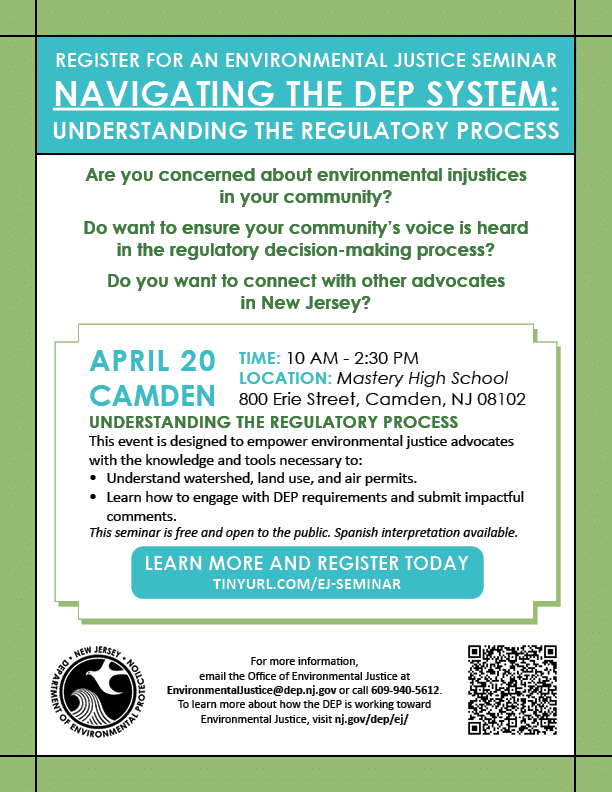
How you can learn to navigate New Jersey’s DEP Read More »

By DANIEL HAN, Politico 3/29/2024 12:32 PM EDT
New Jersey’s controversial ballot design that gives party-backed candidates an advantage will be scrapped in the June primary, a federal judge ruled on Friday.
U.S. District Judge Zahid Quraishi granted the preliminary injunction sought by Rep. Andy Kim and two Congressional candidates to eliminate the so-called county line, a feature unique to New Jersey elections that has given local party bosses inordinate influence over elections, in the June primary. In 19 of 21 counties in the state, candidates backed by county political parties appear in a single column or row, placing them more prominently on primary ballots and giving them a nearly insurmountable edge.
New Jersey ballot design scrapped by judge (The Hill)
Judge orders New Jersey to redesign primary ballot (WHYY)
The judge ordered the use of office block ballots for the June primary, where candidates are placed together by the office they are seeking. His ruling applies to all offices on the ballot.
“The integrity of the democratic process for a primary election is at stake, and the remedy Plaintiffs are seeking is extraordinary,” Quraishi wrote in his opinion. He added that the plaintiffs “have met their burden and that this is the rare instance when mandatory relief is warranted. “
Click to read the full article
If you liked this post, you’ll love our daily environmental newsletter, EnviroPolitics. It’s packed daily with the latest news, commentary, and legislative updates from New Jersey, Pennsylvania, New York, Delaware…and beyond. Please do not take our word for it, try it free for an entire month. No obligation.
Judge Strikes Down New Jersey’s Party Line Ballot Tradition Read More »

By EVAN JONES | ejones@mcall.com | The Morning Call, March 28, 2024 at 1:16 p.m.
The long-awaited process to restore passenger rail to the Lehigh Valley has left the station. If it ever reaches its final destination, the process will take at least a decade and need plenty of funding.
Several people were on hand Wednesday morning, virtually and in person, for the unveiling of the Lehigh Valley Passenger Rail Feasibility Analysis prepared by PennDOT and consulting company WSP. The Lehigh Valley Transportation Study hosted the event.
“This is the very, very initial study on passenger rail for this region,” said PennDOT representative Angela Watson. “This is the study I would call akin to a feasibility study to inform you as to what are the potential likely corridors that you could consider should you decide as a community to move forward and consider passenger rail for the Lehigh Valley.”
The report has identified the five “most likely” corridors for restoring passenger rail service from the Lehigh Valley to New York, Philadelphia, or Reading, out of 12 possible corridors examined. The five corridors are:
If you liked this post, you’ll love our daily environmental newsletter, EnviroPolitics. It’s packed daily with the latest news, commentary, and legislative updates from New Jersey, Pennsylvania, New York, Delaware…and beyond. Please do not take our word for it, try it free for an entire month. No obligation.
Long-awaited Lehigh Valley passenger train study revealed Read More »

By Spolzino Smith Buss & Jacobs law firm, March 11, 2024
More than two dozen New York City Council members have come out strongly in favor of the carrot over the stick. In two letters to state officials, the council members urge swift passage of the Green Buildings Act, which would provide tax relief for co-ops and condos pegged to their success at reducing their buildings’ carbon emissions as required by the state’s Climate Leadership and Community Protection Act and Local Law 97 of the city’s Climate Mobilization Act.
The carrot of tax relief, the letters contend, is preferable to the stick of fines co-op and condo boards face if they fail to comply with carbon reduction goals laid out in Local Law 97, which went into effect Jan. 1.
The first letter, written by Justin Brannan (D-Brooklyn) and signed by 25 other council members, was sent to Majority Leader Andrea Stewart-Cousins and Speaker Carl Heastie, the Bronx Times reports. The letter reads: “This legislation will deliver clear wins for our environment, our economy and our constituents. We hope you will consider passing it as quickly as possible so together we can achieve New York City and state climate goals.”
The second letter, signed by Kristy Marmorato (D-Bronx) and eight other city council members, was sent to the office of Gov. Kathy Hochul. It reads: “The enactment of (the Green Buildings Act) will not alleviate all of the problems associated (in) compliance with Local Law 97, but it would certainly help to balance the state goals of improving our city’s environment with maintaining the viability of affordable homes. We urge you to prioritize its passage, as your support in swiftly enacting this legislation is essential for ensuring our constituents are not alone shouldering the burden of complying with this law.”
The Green Buildings Act, A-5050 in the Assembly, was introduced by Ed Braunstein (D-Queens). A companion bill in the state Senate, S-934A, was introduced by Kevin Parker (D-Brooklyn). The bills tie a reduction in carbon emissions to a 10-year property tax abatement. Based on a sliding scale, the abatements would start at 5% of the cost of energy-efficiency projects that result in an emissions reduction of between 2% and 5%, up to a 9.5% abatement for an emissions reduction of between 25% to 29%. Buildings that cut their greenhouse gas emissions by 30% or more would receive a tax abatement of up to 20 years.
Eligible retrofits include the installation of solar panels and green roofs, improvements to electrical systems and insulation, installation of energy-efficient appliances and lighting, and much more.
“There’s no question that the implementation of Local Law 97 is going to present co-ops and condos with a huge financial burden,” Braunstein told Habitat after he introduced his bill in the Assembly. “Offering financial relief in the form of a tax abatement will help them offset the costs of the work they need to do.”
If you liked this post, you’ll love our daily environmental newsletter, EnviroPolitics. It’s packed daily with the latest news, commentary, and legislative updates from New Jersey, Pennsylvania, New York, Delaware…and beyond. Please do not take our word for it, try it free for an entire month. No obligation.
NYC Council Members Support State Green Buildings Act Read More »

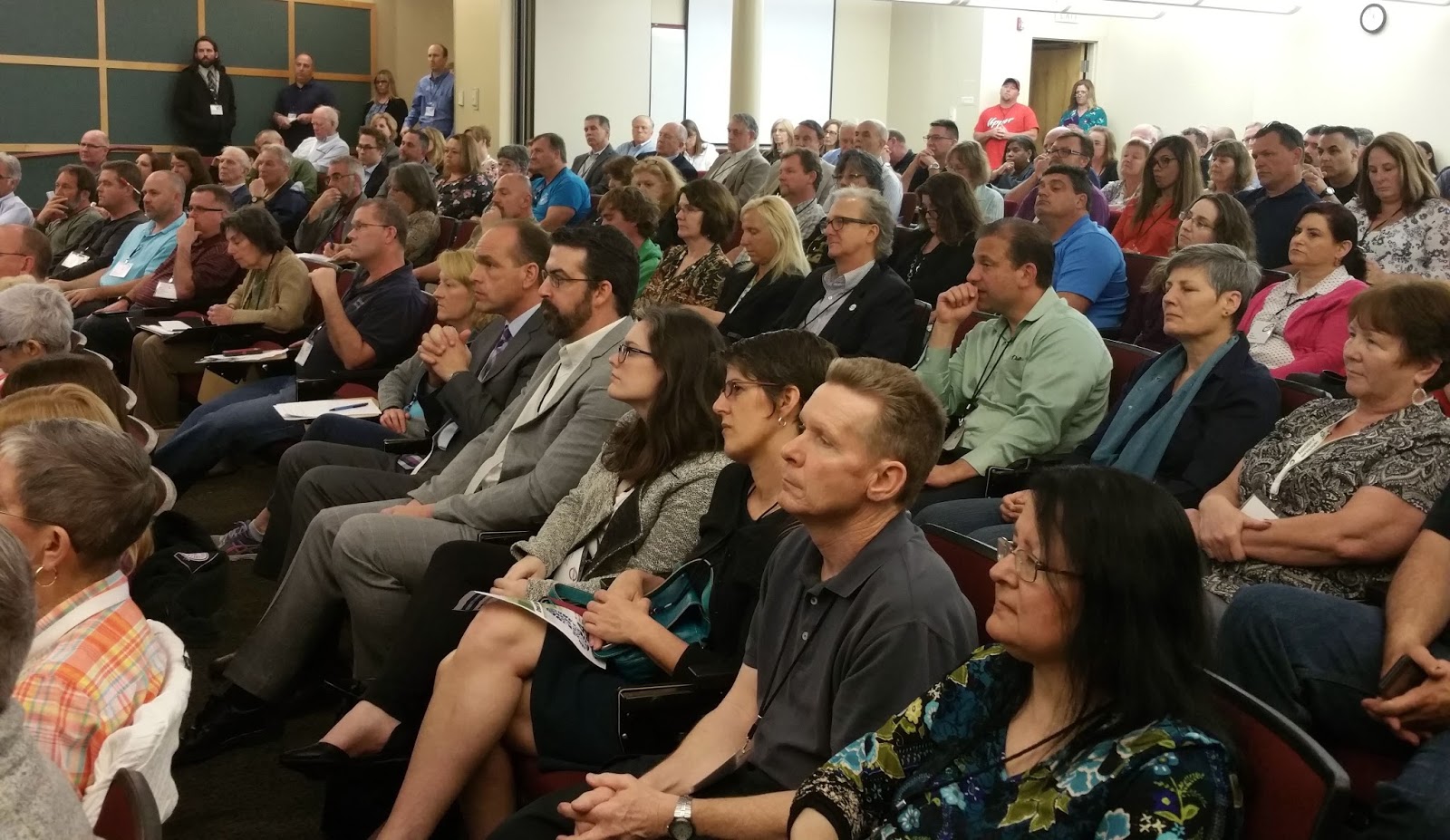
The Association of New Jersey Recyclers has announced presenters for its April 23 annual membership meeting at the EcoComplex in Mansfield. NJ
Innovative Lithium-ion Battery Recycling, Janet Robertson. Director, Government Affairs & Communications, Princeton NUEnergy
Electrification of Heavy Industrial Equipment and Machinery, Raymond Wang, CEO, HEVI Corp.
NJDEP Update, presented by Jill Aspinwall, NJDEP
NJDEP Recycle Coach and New Program Features, Kim Stuart, Recycle Coach
Plastic Bag Ban Two Years In, JoAnn Gemenden, NJ Clean Communities
Deposit/Bottle Bill Update, Wayne DeFeo, DeFeo Associates
Trenton Renewables Food Waste Recycling Update, Brian Blair, General Manager, Trenton Renewables
The Recycling Partnership’s “State of Residential Recycling” and Digital Tools
Asami Tanimoto, Senior Business Systems & Analytics Manager
Lydia Keenan, Manager of Solutions Adoption
Kevin Goolsby, Solutions Adoption & External Engagement Coordinator
See our Events Page for more information
If you liked this post, you’ll love our daily environmental newsletter, EnviroPolitics. It’s packed daily with the latest news, commentary, and legislative updates from New Jersey, Pennsylvania, New York, Delaware…and beyond. Please do not take our word for it, try it free for an entire month. No obligation.
ANJR announces presenters for its April 23 membership meeting Read More »
