Cold weather surfers face microbial danger at Jersey shore

Surfers at beaches where stormwater drainage pipes discharge into the ocean risk catching more than waves on a rainy day.

By Monmouth University’s Urban Coast Institute

Monmouth University researchers studying the influence of weather and ocean conditions on microbial pollution found that within 6-24 hours of moderate rainfall, enterococcus bacteria levels exceeded state health safety standards about half the time at tested beaches. While rain is a known driver of illness-causing microbial pollution at New Jersey beaches, this was the first peer-reviewed study to formally investigate the linkage.

Endowed Professor of Marine Science Jason Adolf and Specialist Professor Jeff Weisburg of Monmouth University’s Biology Department collected water samples with students on dry days and following storms at five Monmouth County beaches with outflow pipes in 2019 and 2020. The research was conducted both in the summer bathing season when the state monitors pollution levels weekly, and in September-May, which is not regularly monitored by the state. Although the throngs of beachgoers largely vanish after Labor Day, the fall and winter months are considered prime surfing season for the Jersey Shore and its waters remain crowded with riders taking advantage of hurricane swells.

“Without a system on the beach to warn them, surfers could unknowingly be exposed to bacteria that can cause respiratory infections, nausea, abdominal pain, and fevers,” said Dr. Weisburg, whose research focus is immunology and disease. “Since the restrictions on which beaches you’re allowed to surf at are lifted in the offseason, surfers should take advantage of the other beaches open to them and steer clear of outfall pipes during and after rains.”

The samples were tested for enterococcus levels and checked for relationships with data for three important drivers: precipitation, which transports animal waste and other pollutants to beaches via stormwater discharges; water temperature, which determines how easy it is for bacteria to thrive; and tide stage, which can control whether the pollutants are diluted or concentrated.

The research found that rainfall within 6-24 hours of sampling and higher water temperatures were the best predictors of high enterococcus counts, although exceedances of the state regulatory threshold of 104 colony-forming units (CFU) per 100 mL seawater were found in all seasons – even in seas as cold as 44 degrees, following rainy periods. Although not an explicit part of this study, observations during sampling suggested that these bacteria spikes subsided quickly at these sites, within one or two days of occurring.

The researchers created a model that could predict the likelihood of bacteria spikes at the sampling sites with accuracy based on data for rainfall accumulations, water temperature, and water levels. When the model focused on sites having stormwater drainage in the surf zone, its predictions that levels would exceed the state threshold were correct 69 percent of the time; it was a perfect 100 percent when it predicted levels would stay safely below the threshold.

Read the full story here


If you liked this post, you’ll love our daily environmental newsletter, EnviroPolitics. It’s packed daily with the latest news, commentary, and legislative updates from New Jersey, Pennsylvania, New York, Delaware…and beyond. Don’t take our word for it, try it free for an entire month. No obligation.

Cold weather surfers face microbial danger at Jersey shore Read More »

Ban on semiautomatic weapons upheld by Illinois Supreme Court


By JOHN O’CONNOR AP Political Writer

SPRINGFIELD, Ill. — The Illinois Supreme Court has upheld the state’s ban on the sale or possession of the type of semiautomatic weapons used in hundreds of mass killings nationally.

The law bans dozens of specific brands or types of rifles and handguns, .50-caliber guns, attachments and rapid-firing devices. No rifle is allowed to accommodate more than 10 rounds, with a 15-round limit for handguns. The most popular gun targeted is the AR-15 rifle, which can be found in at least 25 million American households, according to 2021 research by Georgetown University.

In a 4-3 decision Friday, the high court found that the Protect Our Communities Act does not violate the federal Constitution’s guarantee of equal protection of the law nor the state constitution’s bar on special legislation.

The court also decreed that state Rep. Dan Caulkins, a Decatur Republican, and like-minded gun-owners who brought the lawsuit had earlier waived their claims that the law infringes on the Second Amendment to own firearms and could not raise it before the Supreme Court.

The Second Amendment claim is alive, however, in several federal lawsuits filed in southern Illinois, later consolidated and awaiting appeals court action.

Read the full story here


If you liked this post, you’ll love our daily environmental newsletter, EnviroPolitics. It’s packed daily with the latest news, commentary, and legislative updates from New Jersey, Pennsylvania, New York, Delaware…and beyond. Don’t take our word for it, try it free for an entire month. No obligation.

Ban on semiautomatic weapons upheld by Illinois Supreme Court Read More »

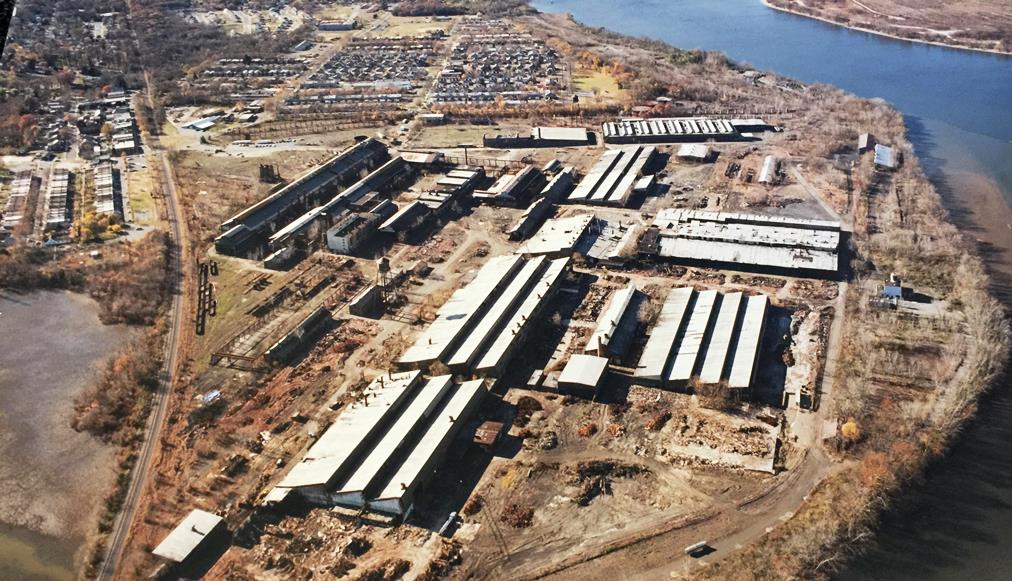
Estimated cleanup cost soars $24.6M for N.J. Superfund site

But EPA says the previously chosen cleanup method is still the best choice for Woodbrook Road Dump in South Plainfield

From the Environmental Protection Agency

NEW YORK – The U.S. Environmental Protection Agency (EPA) has extended the public comment period for its proposed changes to address contaminated soil and debris at the Woodbrook Road Dump Superfund site in South Plainfield, New Jersey to September 13, 2023. EPA held a public meeting at the South Plainfield Township Courtroom on July 27, 2023, to explain the proposed changes to the public.

The proposed changes that are being announced today document that the estimated cost of the selected cleanup rose from $45.4 million in 2018 to $70 million in 2023 due in part to inflation and increased construction costs. In addition, in 2021, New Jersey created the Peter J. Barnes III Wildlife Preserve which includes the Woodbrook Road Dump site.

In 2020, EPA reviewed the selected cleanup plan for the site. The results of EPA’s review, carried out in coordination with the New Jersey Department of Environmental Protection, confirmed that the 2013 selected cleanup plan remains the best option.

EPA’s cleanup plan for the site was originally documented in a 2013 Record of Decision and modified in a 2018 Explanation of Significant Differences. The cleanup plan includes:

  • Removing an estimated 4,000 cubic yards of soil and debris that contains capacitors, capacitor parts and PCB-contaminated soil and debris with PCB concentrations greater than 100 parts per million (ppm) to an approved off-site disposal facility.
  • Removing an estimated 143,000 cubic yards of soil and debris that contains PCBs at concentrations greater than 1.1 ppm to an approved off-site disposal facility.

Written comments on the proposed Explanation of Significant Differences may be mailed or emailed to Diane Salkie Sharkey, Remedial Project Manager, U.S. Environmental Protection Agency, 290 Broadway – 18th Floor, New York, NY 10007, Email: salkie.diane@epa.gov.

For additional background and to see all changes in the proposed Explanation of Significant Differences, visit the Woodbrook Road Dump Superfund site profile page.


If you liked this post, you’ll love our daily environmental newsletter, EnviroPolitics. It’s packed daily with the latest news, commentary, and legislative updates from New Jersey, Pennsylvania, New York, Delaware…and beyond. Don’t take our word for it, try it free for an entire month. No obligation.

Estimated cleanup cost soars $24.6M for N.J. Superfund site Read More »

Metals company to pay $103M for contaminating properties in Carteret, NJ

By Anthony G. Attrino | NJ Advance Media for NJ.com

A metals refinery company that operated in Middlesex County for decades has agreed to a $103 million settlement for the wrongful emission of toxic wastes from smelting operations, according to court documents.

United States Metals Refinery Co., of Delaware, owned a smelter from the early 1900s to 1991 on Middlesex Avenue in Carteret that discharged a by-product known to cause cancer and other health issues affecting adults and children, according to lawsuits filed in state and federal courts.

“The contaminants primarily consisted of lead, copper, arsenic, benzene, and other chemicals and heavy metals,” said Boris Shmaruk, one of the attorneys representing Carteret residents.

The total settlement of $103 million will be broken down into two categories – $61 million for cleanup, remediation, community outreach and additional sampling and analysis. The other $42 million will be paid to about 1,200 affected property owners in the “zone of contamination.”

Each property owner will receive about $18,000, according to the Vlasac & Shmaruk law firm.

Read the full story here


If you liked this post, you’ll love our daily environmental newsletter, EnviroPolitics. It’s packed daily with the latest news, commentary, and legislative updates from New Jersey, Pennsylvania, New York, Delaware…and beyond. Don’t take our word for it, try it free for an entire month. No obligation.

Metals company to pay $103M for contaminating properties in Carteret, NJ Read More »

KAHULUI, Hawaii (AP) — A wildfire tore through the heart of Maui on Wednesday with alarming speed and ferocity, destroying dozens of homes and businesses in a historic tourist town, killing at least six people and injuring at least two dozen others, and forcing panicked residents to jump into the ocean to flee the flames.

CORRECTS DATE TO AUG. 8 – People watch as smoke and flames fill the air from raging wildfires on Front Street in downtown Lahaina, Maui on Tuesday, Aug. 8, 2023. Maui officials say wildfire in the historic town has burned parts of one of the most popular tourist areas in Hawaii. County of Maui spokesperson Mahina Martin said in a phone interview early Wednesday says fire was widespread in Lahaina, including Front Street, an area of the town popular with tourists.  (Alan Dickar via AP) HIHO102 HIHO102
People watch as smoke and flames fill the air from raging wildfires on Front Street in downtown Lahaina, Maui, on Tuesday. Officials say wildfire in the historic town has burned parts of one of the most popular tourist areas in Hawaii…. (Alan Dickar via AP)


By JENNIFER SINCO KELLEHER and AUDREY McAVOY, Associated Press

KAHULUI, Hawaii (AP) — A wildfire tore through the heart of Maui on Wednesday with alarming speed and ferocity, destroying dozens of homes and businesses in a historic tourist town, killing at least six people and injuring at least two dozen others, and forcing panicked residents to jump into the ocean to flee the flames.

Fire was widespread in Lahaina Town, including on Front Street, a popular shopping and dining area, County of Maui spokesperson Mahina Martin said by phone early Wednesday.

Photos posted by the county overnight showed a line of flames blazing across an intersection and leaping above buildings in the town center that dates to the 1700s and is on the National Register of Historic Places. Aerial video from after sunrise revealed entire blocks of buildings reduced to ash and thick smoke in the air.

“Do NOT go to Lahaina Town,” the county tweeted hours before all roads in and out of West Maui’s biggest community were closed to everyone except emergency personnel. More than 2,100 people spent the night in evacuation centers.

Crews on Maui were battling multiple blazes concentrated in two areas: the tourist destination of West Maui and an inland, mountainous region. In West Maui, 911 service was out and residents were directed to call the police department directly.

Read the full story here


If you liked this post, you’ll love our daily environmental newsletter, EnviroPolitics. It’s packed daily with the latest news, commentary, and legislative updates from New Jersey, Pennsylvania, New York, Delaware…and beyond. Don’t take our word for it, try it free for an entire month. No obligation.

KAHULUI, Hawaii (AP) — A wildfire tore through the heart of Maui on Wednesday with alarming speed and ferocity, destroying dozens of homes and businesses in a historic tourist town, killing at least six people and injuring at least two dozen others, and forcing panicked residents to jump into the ocean to flee the flames. Read More »

Conversations on the future of natural gas in NJ and NY

By RY RIVARD and MARIE J. FRENCH, Politico

The New Jersey Board of Public Utilities held a two-day technical conference looking at the future of natural gas utilities in the state last week. The proceeding, which is expected to produce a report next summer outlining the regulators’ view of the industry’s future, was ordered by Gov. Phil Murphy in a major speech earlier this year on climate change and clean energy.

Some of the discussion may have been more reassuring to the industry than the governor’s sweeping goals might seem. Murphy has, on paper, pledged to help hundreds of thousands of homes and businesses dump natural gas by the end of the decade and has pledged to move the state to clean energy. But in opening remarks that got a lot of attention, BPU President Joseph Fiordaliso said gas isn’t going anywhere anytime soon.

“Gas is here to stay,” Fiordaliso said. “What we have to do is improve the quality of it. We need backup. We don’t have enough clean energy to generate the energy that is necessary to supply the 9.3 million here in the state of New Jersey with energy. And, until that day comes, things like nuclear power and gas will help us to provide the reliability that the citizens of New Jersey demand and should have every day of the week.”

Other notable quotes and exchanges from the conference:

“I think the whole point of this proceeding should be — is that really true? Is gas here to stay? Or do we have a moral and economic imperative to basically end as quickly as possible the use of gas?” — John Reichman of EmpowerNJ

“We’re not even 100 percent sure on the questions and we wanted to make sure we were getting input before we framed a proceeding and missed something.” — Stacy Peterson, deputy executive director for BPU.

“Sometimes businesses say, ‘The [business] climate isn’t so great here, I’m going to Pennsylvania,’ in Pennsylvania they say, ‘Hey, it’s not so great here, I’m going to West Virginia’ — eventually you end up in Texas where they don’t believe in capacity markets and the grid does down or Florida, where you’re uninsurable.” — Eric Miller, New Jersey energy policy director for NRDC

“Certainly at this point we should not be paying subsidies to support expansion of the gas system.” — The state’s ratepayer watchdog, Brian Lipman, on gas main extensions.

“Cows defecate at a pretty stable rate.” — Andrew McNally, from South Jersey Gas, on the stability of investments in non-traditional gas, like methane capture from cows. — Ry Rivard

Read the full story here


If you liked this post, you’ll love our daily environmental newsletter, EnviroPolitics. It’s packed daily with the latest news, commentary, and legislative updates from New Jersey, Pennsylvania, New York, Delaware…and beyond. Don’t take our word for it, try it free for an entire month. No obligation.

Conversations on the future of natural gas in NJ and NY Read More »