EPA announces the largest investment ever in brownfields communities made through Investing in America agenda

New York Projects Slated to Get Over $6M for Cleanup and Tech Assistance at Polluted Brownfield Sites

The so-called Winkelman property in Syracuse is the most tax-delinquent parcel in the city, with an outstanding bill of $2.6 million. 

From the U.S. Environmental Protection Agency

NEW YORK (May 25, 2023) – The U.S. Environmental Protection Agency (EPA) announced that 7 selectees from New York will get $6.4 Million from President Biden’s Investing in America Agenda to expedite the assessment and cleanup of brownfield sites in New York while advancing environmental justice. Thanks to the historic boost from the Bipartisan Infrastructure Law, this is the largest-ever funding awarded in the history of the EPA’s Brownfields MARC Grant programs.

These investments are part of President Biden’s Investing in America Agenda to grow the American economy from the bottom up and middle-out from rebuilding our nation’s infrastructure to driving over $470 billion in private sector manufacturing and clean energy investments in the United States, to creating a manufacturing and innovation boom powered by good paying jobs that don’t require a four-year degree, to building a clean-energy economy that will combat climate change and make our communities more resilient.

“We’re working across the country to revitalize what were once dangerous and polluted sites in overburdened communities into more sustainable and environmentally just places that serve as community assets. Thanks to President Biden’s historic investments in America, we’re moving further and faster than ever before to clean up contaminated sites, spur economic redevelopment, and deliver relief that so many communities have been waiting for,” said EPA Administrator Michael S. Regan. “This critical wave of investments is the largest in Brownfields’ history and will accelerate our work to protect the people and the planet by transforming what was once blight into might.”

Thanks to the historic $1.5 billion boost from President Biden’s Bipartisan Infrastructure Law, EPA’s Brownfields Program is helping more communities than ever before begin to address the economic, social, and environmental challenges caused by brownfields and stimulate economic opportunity, and environmental revitalization in historically overburdened communities.

State Funding Breakdown:

EPA announced 262 communities that have been selected to receive 267 grants totaling more than $215 million in competitive EPA Brownfields funding through the Multipurpose, Assessment, Revolving Loan Fund, and Cleanup (MARC) Grant Programs. This represents the highest funding level ever announced in the history of the Brownfields Program.

The following organizations in New York have been selected to receive EPA Brownfields funding through the Multipurpose, Assessment, Revolving Loan Fund, and Cleanup (MARC) Grant Programs.

  • Greater Syracuse Land Bank, NY has been selected to receive $1,000,000. Grant funds will be used to update an inventory of brownfield sites and conduct 20 Phase I and 18 Phase II environmental site assessments, and develop eight cleanup plans and four reuse plans. Grant funds also will be used to update an inventory of foreclosable brownfield sites and support community engagement activities. Assessment activities will focus on the South Avenue Corridor, the Near Eastside Neighborhood, the 15th Ward, and the Hawley-Green Neighborhood in the City of Syracuse, all within the city’s urban core. Priority sites include a former dry cleaners and gas station, four vacant and abandoned former automobile repair shops, a vacant commercial building, and an auto garage and junkyard.
  • Syracuse Industrial Development Agency, NY has been selected to receive $800,000. Grant funds will be used to conduct one Phase I and three Phase II environmental site assessments of sites in the target area and to clean up the 341 Peat Street site. Grant funds also will be used to conduct community engagement activities. The target area for this project is the Near Eastside neighborhood in the City of Syracuse, which is just 1.4 miles east of downtown Syracuse with dilapidated buildings, piles of illegally dumped trash and debris, and associated blight that is highly visible from Highway 690 as people travel into the city. Priority sites include the 341 Peat Street site, which was first developed in the 1890s and historically operated as a structural steel works facility, a forge and a foundry for an iron and steel company, a machine shop, an equipment repair facility, and a varnish supplier. Other priority sites are located on Greenway Avenue and include the 79,600-square-foot Winkelman property, a 0.93-acre former industrial site, and a 0.29-acre site consisting of an abandoned roadway.
  • Wayne Country Regional Land Bank Corporation, NY has been selected to receive $800,000. Grant funds will be used to conduct six Phase I and four Phase II environmental site assessments, prepare two cleanup plans and one site reuse plan, update the county’s site inventory, and conduct community engagement activities. Grant funds also will be used to clean up four sites on Canal Street. The target area for this project is the Canal/Geneva Street Corridor in the City of Lyons’ historic downtown district, which sits along the Erie Canal. Priority sites include five properties on Canal Street, a property at 30 Geneva Street, and one property at 1 Clyde Road. These properties include former mixed commercial row-style buildings, a former gas station, a former fueling station and convenience store, and a former restaurant and bar.
  • Wayne County, NY has been selected to receive $1,000,000. Grant funds will be used to conduct 15 Phase I and 14 Phase II environmental site assessments and develop eight cleanup plans, two site reuse plans, and one area-wide plan. Grant funds also will be used to update a brownfield inventory and support community outreach activities. Assessment activities will focus on the Village of Newark and the Towns of Lyons, Sodus, and Wolcott. Priority sites include an underutilized industrial property, a 13,000-square-foot abandoned former two-story medical office, and a formerly occupied photo etching company in the City of Newark; a former coal-fired electric generation plant located on the Erie Canal and a 21-acre former warehouse and shipping facility in the Town of Lyons; a 3.5-acre former malt house for the Genesee Brewing Company and a 4.25-acre water treatment plant in Wayne County; and the 200-acre Former Butler State Prison in the Town of Wolcott. Non-lead coalition members include the Town of Lyons, the Village of Newark, and the Greater Rochester Enterprise.
  • Mohawk Valley Economic Development District Inc., NY has been selected to receive $1,000,000. The grant will be used to capitalize a revolving loan fund from which the Mohawk Valley Economic Development District, Inc. will provide loans and subgrants to support cleanup activities. Grant funds also will be used to conduct community engagement activities and market the fund. RLF activities will focus on the Utica Industrial Central Corridor Brownfield Opportunity Zone (BOA), the Gloversville BOA/Local Waterfront Revitalization Program (LWRP) area, and the Ilion LWRP area.
  • Sullivan County, NY has been selected to receive $800,000. The grant will be used to capitalize a revolving loan fund from which Sullivan County will provide ten loans and ten subgrants to support cleanup activities. Grant funds also will be used to market the RLF program. RLF activities will target the entire county with a focus on housing projects and the multi-owner Turick site. Priority sites include vacant homes in the Towns of Bethel, Liberty, Thompson, and the Village of Monticello.
  • Syracuse Economic Development Corporation, NY has been selected to receive $1,000,000. The grant will be used to capitalize a revolving loan fund from which the Syracuse Economic Development Corporation will provide loans and subgrants to support cleanup activities. Grant funds also will be used to conduct cleanup planning and community engagement activities and market the fund. RLF activities will focus on the East Adams and Hawley-Green neighborhoods, which are in some of the City of Syracuse’s densest urban areas.

You can read more about this year’s MARC selectees, here


If you liked this post you’ll love our daily environmental newsletter, EnviroPolitics. It’s packed with the latest news, commentary, and legislative updates from New Jersey, Pennsylvania, New York, Delaware…and beyond. Don’t take our word for it, try it free for an entire month. No obligation.

EPA announces the largest investment ever in brownfields communities made through Investing in America agenda Read More »

Princeton researchers find wastewater sector emits almost twice the methane gas as originally thought

February 28, 2023

Two researchers are photographed next to a mobile methane emissions lab.
Independent studies by Princeton researchers Cuihong Song and Daniel P. Moore concur that methane emissions from municipal wastewater in the U.S. are actually closer to double than formerly calculated. (Photos by Bumper DeJesus)

By Colton Poore, Princeton University’s Adlinger Center

Municipal wastewater treatment plants emit nearly double the amount of methane into the atmosphere than scientists previously believed, according to new research from Princeton University. And since methane warms the planet over 80 times more powerfully than carbon dioxide over 20 years, that could be a big problem.

“The waste sector is one of the largest anthropogenic sources of methane in the world,” said Mark Zondlo, professor of civil and environmental engineering and associated faculty at the Andlinger Center for Energy and the Environment. “As cities continue to urbanize and develop net-zero plans, they can’t ignore the liquid wastewater treatment sector.”

Mark Zondlo and Z. Jason Ren

Zondlo led one of two new studies on the subject, both reported in papers published in Environmental Science & Technology. One study performed on-the-ground methane emissions measurements at 63 wastewater treatment plants in the United States; the other used machine learning methods to analyze published literature data from methane monitoring studies of various wastewater collection and treatment processes around the globe.

Related news:
Methane gas emissions
Importance of methane gas emissions

“Not many people have studied the methane emissions associated with wastewater infrastructure, even though we know that it’s a hotspot for methane production,” said Z. Jason Ren, who led the second study. Ren is a professor of civil and environmental engineering and the Andlinger Center for Energy and the Environment.

The Intergovernmental Panel on Climate Change (IPCC) has established guidelines that allow researchers and institutions like the U.S. Environmental Protection Agency (EPA) to estimate methane emissions from wastewater treatment plants based on their specific treatment processes. However, those guidelines were developed from limited measurements at a relatively small number of wastewater treatment plants.

Read the full story here


If you liked this post you’ll love our daily environmental newsletter, EnviroPolitics. It’s packed with the latest news, commentary, and legislative updates from New Jersey, Pennsylvania, New York, Delaware…and beyond. Don’t take our word for it, try it free for an entire month. No obligation.

Princeton researchers find wastewater sector emits almost twice the methane gas as originally thought Read More »

Safe to go back into the water? Check here for NJ beach closings

Each week during summer, recreational beach water quality monitoring is performed by the New Jersey Department of Health at some 195 ocean and 25 bay monitoring stations along the coast of New Jersey. Samples are analyzed for the presence of Enterococci, a type of bacteria found in animal and human waste that is an indicator of possible poor bathing water quality.

The New Jersey State Sanitary Code requires that the concentration of bacteria not exceed 104 colonies of Enterococci bacteria per 100 milliliters of sample. An exceedance of this concentration may be harmful to human health. When a sample exceeds the state standard, a swimming advisory is issued and additional sampling is conducted and continues each day until the sample result is below 104 Enterococci/100 mL. If two consecutive daily samples exceed the standard, the bathing beach closes until sample results are below the standard. In addition to bacteria monitoring, regional health or enforcement agencies may close beaches at any time at their discretion to protect public health and safety.

There are two categories of actions that take place when water quality exceeds the recreational standard; advisories and closings.

Advisories:

Any initial sample that exceeds the state standard requires that the local health agency issue a swimming advisory at the bathing beach where the sample was collected.  Swimming Advisories warn the public of potentially unhealthy water conditions. Additional sampling is conducted until water quality results are again within the standard.

Beach Closings:

Beaches are closed if two consecutive samples collected at a bathing beach exceed the state standard. Beach closings remain in effect until subsequent sampling indicates bacteria levels are again below the standard. The closure applies to water activities like swimming, wading, and playing in the water. Other beach-related activities like sunbathing and walking on the beach are unaffected.

Health authorities may close beaches at any time for any reason as a precaution in order to protect public health. Precautionary beach closings can be caused by wash-ups of debris or trash or household medical products, breaks or spills to sewer lines that may discharge to a bathing beach, extraordinary weather events, or any other condition that may affect public health. If a health authority closes a beach due to a wash-up of debris, they may limit all access to the beaches, if needed, to protect public health.

Check this site for New Jersey beach advisories and closings

If you liked this post you’ll love our daily environmental newsletter, EnviroPolitics. It’s packed with the latest news, commentary, and legislative updates from New Jersey, Pennsylvania, New York, Delaware…and beyond. Don’t take our word for it, try it free for an entire month. No obligation.

Safe to go back into the water? Check here for NJ beach closings Read More »

Eversource takes first step to exit wind farm development 

Wind turbines located off of Block Island in Rhode Island. Eversource Energy officials announced Thursday, May 25, 2023 that they are selling the company's 50 percent ownership stake in 175,000 acres ton which a wind farm can be developed that are located 25 miles off the southern coast of Massachusetts 
Wind turbines located off of Block Island in Rhode Island. Eversource Energy officials announced Thursday, May 25, 2023 that they are selling the company’s 50 percent ownership stake in 175,000 acres ton which a wind farm can be developed that are located 25 miles off the southern coast of Massachusetts Don Emmert / AFP via Getty Images

By Luther Turmelle, Staff writer, Stamford Advocate

Eversource Energy took its first steps Thursday to getting out of the wind farm development business, selling its 50 percent ownership stake in a 175,000- acre site located 25 miles off the southern coast of Massachusetts.

The company sold its ownership stake for $625 million to its joint venture partner, the wind farm developer Orsted, Eversoujrce officials said. The Danish energy company currently owns the other 50 percent of the joint venture.

The deal between the two companies is expected to close by the end of the third quarter this year. Because Orsted is a Danish company, the lease sale will require the approval of the U.S. government’s Committee on Foreign Investment.

At the same time that Eversource is selling its ownership stake in the uncommitted wind farm site, the company has also signed a letter of intent with Orsted to buy tax credits that the Danish company has in the South Fork Wind project. The two companies are currently equal partners in that project, which is under construction 35 miles east of Montauk Point on Long Island and is scheduled to begin operating this fall, producing enough electricity to power 70,000 average homes.

If you liked this post you’ll love our daily environmental newsletter, EnviroPolitics. It’s packed with the latest news, commentary, and legislative updates from New Jersey, Pennsylvania, New York, Delaware…and beyond. Don’t take our word for it, try it free for an entire month. No obligation.

Eversource takes first step to exit wind farm development  Read More »

NJ Senate pushes ‘on’ button for electric vehicle battery recycling

From the New Jersey Senate Democrats

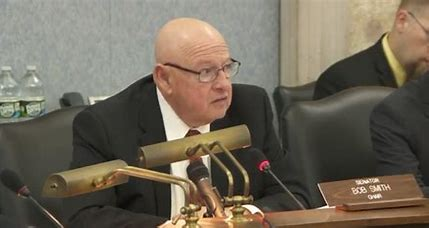
TRENTON – New Jersey would be a leader with the creation of a statewide program to provide for the recycling of electric vehicle batteries, under terms of legislation authored by Senator Bob Smith that was approved by the Senate today.

Senator Smith’s initiative, one of the most advanced in the country, has gained the support of the National Resources Defense Council, a leading international environmental organization.

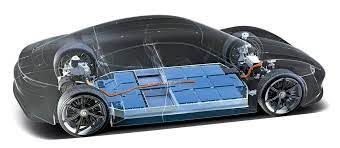
The bill, S-3723, entitled the “Electric and Hybrid Vehicle Battery Management Act,” would require producers of electric vehicle batteries to develop policies and practices for the safe reuse, recycling, or disposal of the lithium-ion batteries used in electric and hybrid-electric cars and trucks in the state.

“The steady growth in the use of electric vehicles is good for the environment, public health, and the economy,” said Senator Smith, who chairs the Environment Committee. “We should take the next step by ensuring the safe and responsible management of the lithium batteries that are used to power these zero-emission vehicles. The best way to accomplish this is to create a ‘circular market’ that recycles or safely disposes of the batteries.”

Related news:
EV Batteries 101: The Basics
How Long Should An Electric Car’s Battery Last?

The U.S. Needs Minerals for Electric Cars

Senator Smith’s bill would put the responsibility on the EV industry to create a framework that would facilitate a local market for recycled batteries and their ingredients.

“New Jersey is taking a step in the right direction by proposing the NJ Electric Vehicle Battery Management Act because it will lead to the increased reuse and recycling of the lithium-ion batteries that power electric vehicles. Several minerals within these batteries can be reused to avoid additional mining, but recycling policies are few and far between and it’s up to state officials to create new pathways for reuse,” said Eric Miller, Director of New Jersey Energy Policy at NRDC. “Without electric vehicles, we won’t be able to address air and climate pollution in New Jersey, but we also need to ensure that the batteries that allow these vehicles to run are not causing additional waste and pollution problems.”

A 2018 study found that only 50 percent of lithium batteries that reach the end of life are recycled.

Anyone seeking to discard an EV or EV battery would be able to bring it to a location designated by the producer, or to a recycling center authorized by the DEP, under the bill. The producers would be required to accept the batteries at no cost to the consumer.

The bill would prohibit anyone from disposing of the batteries in landfills.

“Strengthening the lithium-ion battery aftermarket will help advance the Biden Administration’s efforts to strengthen domestic production of EV components at the same time we promote a growing market in New Jersey,” Senator Smith said. “We can take advantage of the opportunities created by the national EV policies by fostering a vibrant marketplace for electric vehicles and the products that support them.”

The legislation would take effect one year after enactment, giving the industry the opportunity to put in place the business practices and the Department of Environmental Protection the time to adopt rules and regulations for the program.

The measure was approved with a Senate vote of 34-0.

NJ Senate pushes ‘on’ button for electric vehicle battery recycling Read More »

Newest plan for NJ’s most contentious park draws positive reaction

By DAVID CRUZ, SENIOR POLITICAL CORRESPONDENT, NJ Spotlight

A long-awaited plan for a facelift of Liberty State Park was unveiled by Shawn LaTourette, commissioner of the Department of Environmental Protection. In three phases, the facelift will begin this fall with the cleanup of the park’s 230-acre-plus contaminated interior, which will be turned into an urban park with wetlands and tree canopy.

During an open house on Wednesday night, LaTourette said there would be no commercialization or privatization in the park’s future. “It’s a crown gem of our state park system, but if we’re honest it’s a rough cut gem, one that we will fashion together and shine together to better serve the needs of all of our families,” LaTourette said.

“I think it’s awesome that they’re going to clean up the park finally. I mean it’s been like 60 years we’ve been living around this contamination so I think that’s a plus for the area and the environment. I also think that adding active recreation is a plus as well,” said Hudson County Commissioner Jerry Walker.

See the video report here

Newest plan for NJ’s most contentious park draws positive reaction Read More »