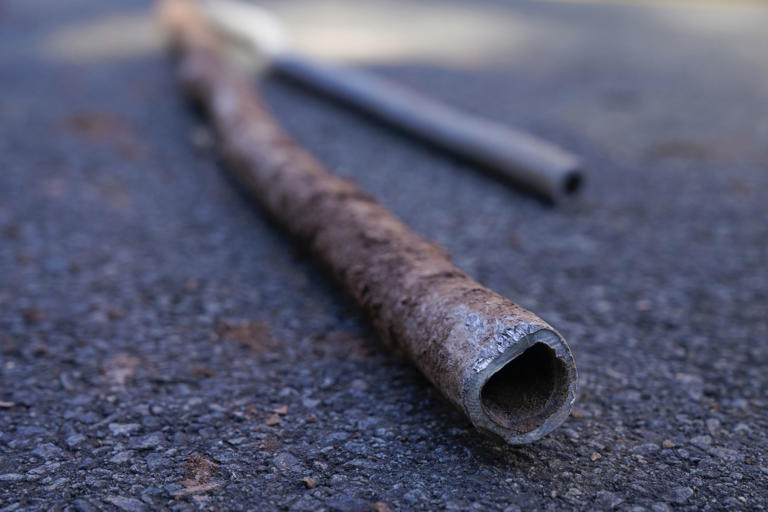
Biden’s EPA accelerating program to remove 100% of lead pipes across the nation, focusing on underserved communities

About 800 of the 18,000 lead service lines in Newark have been replaced this year. Credit…Bryan Anselm for The New York Times

WASHINGTON (Nov. 30, 2023) – Today, the U.S. Environmental Protection Agency (EPA) announced a proposal to strengthen its Lead and Copper Rule that would require water systems across the country to replace lead service lines within 10 years. EPA is also proposing improvements to protect public health, such as lowering the lead action level and improving sampling protocols utilized by water systems.

“The Biden-Harris Administration is using every tool available, the EPA says, “to help communities and water systems Get the Lead Out—including investing a historic $15 billion through the Bipartisan Infrastructure Law to replace lead service lines, providing technical assistance to communities and supporting the development of a national inventory of lead service lines. ”

“Lead in drinking water is a generational public health issue, and EPA’s proposal will accelerate progress towards President Biden’s goal of replacing every lead pipe across America once and for all,” said EPA Administrator Michael S. Regan. “With collaboration and the focused actions proposed today, EPA is delivering on our charge to protect all Americans, especially communities of color, that are disproportionately harmed by lead in drinking water systems.”

Related lead pipe replacement news:
To protect kids, EPA wants total removal of lead pipes for the first time (W-Post)
Cities must replace harmful lead pipes within 10 years (Portland Press)
Newark is racing to Replace Lead Pipes in Under 3 Years (New York Times)
EPA rule changes would accelerate lead pipe replacement (WBAL TV)

“EPA’s proposed Lead and Copper rule is grounded in the best available science and successful practices utilized by drinking water systems to protect children and adults from lead in drinking water,” said EPA Assistant Administrator for Water Radhika Fox. “Cities like Newark, New Jersey, Benton Harbor, Michigan, and Green Bay, Wisconsin, have all successfully gotten the lead out of their water systems. Our proposed rule applies the lessons learned to scale these successes to every corner of the country.”

“Here in Newark, New Jersey, our community persevered through a lead crisis and I’m proud of the work we did removing all 23,000 lead pipes in the city in under three years,” said Kareem Adeem, Director of the Newark Department of Water and Sewer Utilities. “EPA’s new proposed rule will prompt more communities across the country to reduce exposure to lead in drinking water. This action is commendable and represents a positive step forward toward safeguarding the health and well-being of current and future generations.”
The proposed Lead and Copper Rule Improvements are a major advancement in protecting children and adults from these significant, and irreversible, health effects from lead in drinking water. Key provisions in the proposal include:

  • Achieving 100% Lead Pipe Replacement within 10 years.
  • Locating legacy lead pipes.
  • Improving tap sampling.
  • Lowering the Lead Action Level.
  • Strengthening protections to reduce exposure.

If you liked this post, you’ll love our daily environmental newsletter, EnviroPolitics. It’s packed daily with the latest news, commentary, and legislative updates from New Jersey, Pennsylvania, New York, Delaware…and beyond. Don’t take our word for it, try it free for an entire month. No obligation.
Biden’s EPA accelerating program to remove 100% of lead pipes across the nation, focusing on underserved communities Read More »

Day 1 at COP28: Nations begin coughing up pledges

BY JOEL KIRKLAND, Power Switch

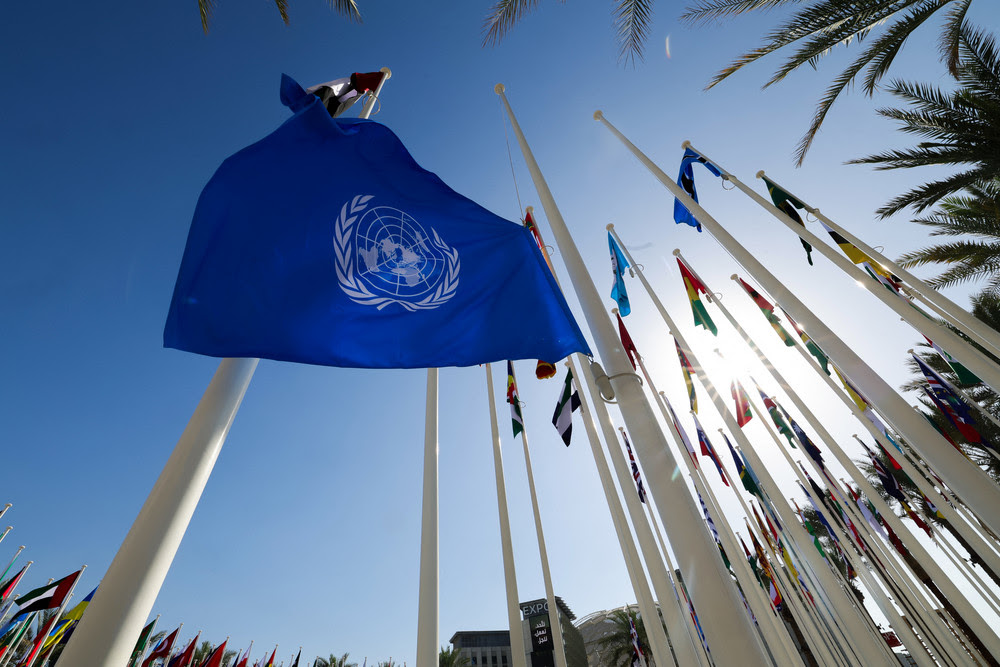
The United Nations climate summit, COP 28, in Dubai, began with a parade of wealthy nations offering big cash pledges to help poorer countries cope with global warming.

Related:
COP28 Talks Reach Deal on Much-Debated Climate-Damage Fund (WSJ)
COP28 kicks off with climate disaster fund victory (Reuters)
COP28 Climate Talks Come to Oil Country (Bloomberg News)

That could put pressure on China, the world’s biggest climate polluter, to contribute money to the cause after nearly 200 nations agreed today to a framework for a new global fund meant to help vulnerable people.

Right off the bat, the United Arab Emirates pledged $100 million for the fund, write Zia Weise and Sara Schonhardt. The pledge seemed aimed at defusing critics who question whether the oil-rich country hosting the climate conference can be an honest broker.

Germany pried open its checkbook and added another $100 million pledge. The European Union promised almost $250 million.

Then there came the United States, with a $17.5 million pledge.

As tiny as it was, the U.S. pledge was notable because the Biden administration — and pretty much every administration before it — has resisted the creation of a “loss and damage” fund (in U.N. jargon). President Joe Biden’s support came only after other nations agreed that contributions would be voluntary and couldn’t require something akin to climate reparations for the damage done over a century of U.S. industrial growth.

Continue reading


If you liked this post, you’ll love our daily environmental newsletter, EnviroPolitics. It’s packed daily with the latest news, commentary, and legislative updates from New Jersey, Pennsylvania, New York, Delaware…and beyond. Don’t take our word for it, try it free for an entire month. No obligation.
Day 1 at COP28: Nations begin coughing up pledges Read More »

EPA Awards $387M for Water Infrastructure Upgrades in Pa.


PHILADELPHIA (November 29, 2023)
 – The U.S. Environmental Protection Agency (EPA) has awarded Pennsylvania $386,932,000 to support clean water efforts and to better deliver safe drinking water across the state. Most of this funding, $340,612,000, came from President Biden’s Bipartisan Infrastructure Law (BIL) which is the largest federal investment in water infrastructure in our nation’s history. This BIL funding will supplement the $46,320,000 in FY 2023 funding appropriated to Pennsylvania’s Clean Water and Drinking Water State Revolving Funds (SRFs).  

“These awards show that EPA is not just a regulator – but is a funder and partner,” said EPA’s Mid-Atlantic Regional Administrator Adam Ortiz. “The Bipartisan Infrastructure Law ensures communities most in need and those grappling with emerging contaminants such as PFAS have access to funding that will deliver cleaner and safer water for generations to come.” 

EPA awards grants to states annually to capitalize the State Revolving Funds (SRFs) which provide low or no-interest loans for water infrastructure projects. Pennsylvania will use this money to help communities across the state fund necessary water projects that some borrowers may not have been able to afford otherwise.  

“Pennsylvania’s water will always be a top priority for the PA Department of Environmental Protection,” said DEP Interim Acting Secretary Jessica Shirley.  “This funding will support infrastructure projects that enhance clean water efforts across the state, further providing recreation opportunities and protecting drinking water.” 

The Bipartisan Infrastructure Law delivers more than $50 billion to EPA to improve our nation’s drinking water, wastewater, and stormwater infrastructure – the single largest investment in water that the federal government has ever made. Learn more about the Bipartisan Infrastructure Law.  


If you liked this post, you’ll love our daily environmental newsletter, EnviroPolitics. It’s packed daily with the latest news, commentary, and legislative updates from New Jersey, Pennsylvania, New York, Delaware…and beyond. Don’t take our word for it, try it free for an entire month. No obligation.

EPA Awards $387M for Water Infrastructure Upgrades in Pa. Read More »

Six numbers show why COP28 could be a heavy lift for world leaders

By Kristoffer Tigue, Inside Climate News

More than 70,000 diplomats, politicians, business leaders and environmental advocates from all around the world are expected in Dubai on Thursday for COP28, the United Nations’ flagship climate change summit. 

Each year, delegates from nearly 200 nations gather at the conference to discuss how they can limit rising global temperatures through the end of the century in hopes of avoiding the most dire consequences of climate change, including upwards of three-quarters of Earth’s species disappearing for good.

But this year’s conference could be an especially important one as carbon emissions continue to reach historic highs and the planet approaches potential tipping points that scientists fear could send global warming spiraling out of control. With climate and energy experts stressing the need to immediately reduce the use of fossil fuels if nations hope to keep the Paris Agreement targets alive, and with wars raging in Europe and the Middle East, world leaders face significant challenges at the talks.

Read the full story here


If you liked this post, you’ll love our daily environmental newsletter, EnviroPolitics. It’s packed daily with the latest news, commentary, and legislative updates from New Jersey, Pennsylvania, New York, Delaware…and beyond. Don’t take our word for it, try it free for an entire month. No obligation.

Six numbers show why COP28 could be a heavy lift for world leaders Read More »

BILLYPENNGRAM for Nov. 26, 2023

#BILLYPENNGRAM OF THE DAY
Ginko carpet on Quince Street in Philadelphia
(Photo by @tvpromoter)
Want to see your photo here? Tag #billypenngram on Instagram

If you liked this post, you’ll love our daily environmental newsletter, EnviroPolitics. It’s packed daily with the latest news, commentary, and legislative updates from New Jersey, Pennsylvania, New York, Delaware…and beyond. Don’t take our word for it, try it free for an entire month. No obligation.

BILLYPENNGRAM for Nov. 26, 2023 Read More »

Proposed NYC budget cuts ‘devastating’ for community composters

Cuts to the New York City Sanitation Department could lead to dozens of layoffs, the closure of several mid-sized community composting facilities, and the delayed rollout of curbside organics service.

Two brown DSNY organics collection bins on the side of a street
New York City compost bins distributed by DSNY in Windsor Terrace, Brooklyn. The image by Tdorante10 is licensed under CC BY-SA 4.0

By Jacob Wallace, Waste Dive

Mayor Eric Adams is proposing eliminating the New York City community composting program and delaying rollout of curbside residential organics collection in certain boroughs by seven months as part of sweeping budget cuts.

The proposal, published Thursday, is part of across-the-board 5% budget cuts Adams has directed all city agencies to make as the city faces a projected budget shortfall beginning this fiscal year and extending into future years. The mayor has indicated an additional 5% cut may be necessary again in January.

The cuts would have ripple effects throughout the city’s management of organics and waste: reducing litter cleanup, shuttering farmer’s market food waste drop-off sites, and ending funding for several mid-sized community composting sites, those familiar with the funding said.

“It’s a tremendous loss,” Beth Slepian, vice chair of the Brooklyn Solid Waste Advisory Board, said. “This creates a huge access issue for people to composting.”

Read the full story here


If you liked this post, you’ll love our daily environmental newsletter, EnviroPolitics. It’s packed daily with the latest news, commentary, and legislative updates from New Jersey, Pennsylvania, New York, Delaware…and beyond. Don’t take our word for it, try it free for an entire month. No obligation.

Proposed NYC budget cuts ‘devastating’ for community composters Read More »