
BILLYPENNGRAM – NOV. 18, 2022
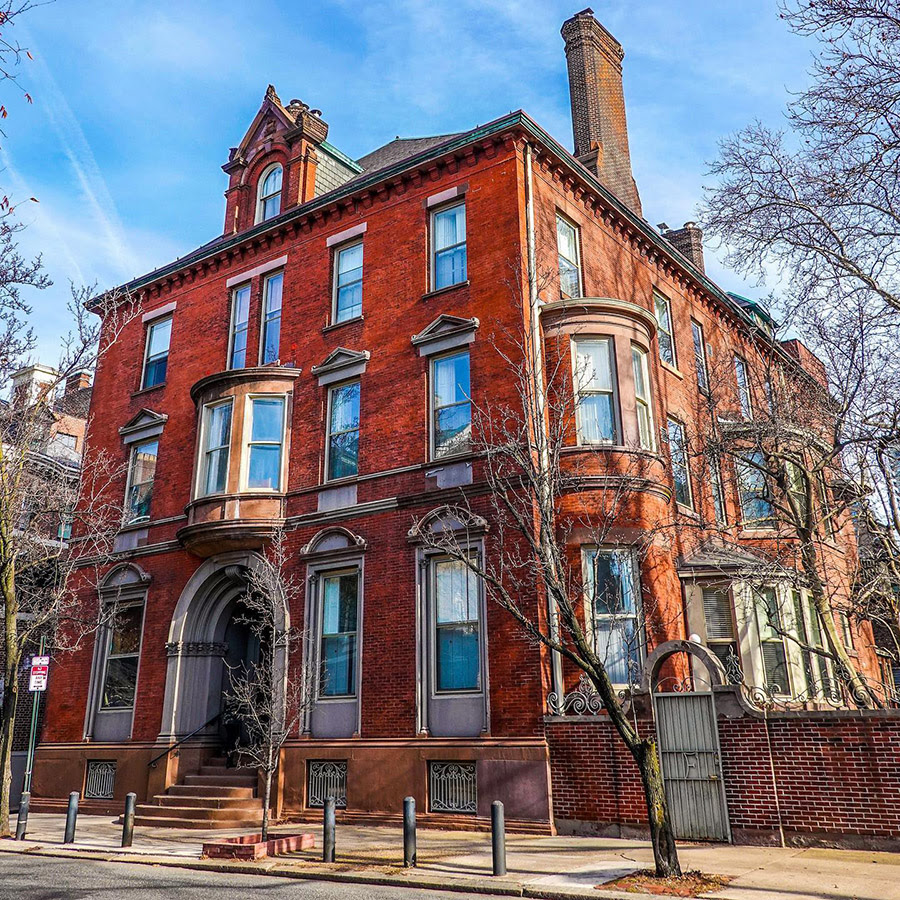 |
| #BILLYPENNGRAM OF THE DAY Cold brick stunner (Photo by @_marcphilly_) |
| Want to see your photo here? Tag #billypenngram on Instagram |
BILLYPENNGRAM – NOV. 18, 2022 Read More »
|
| #BILLYPENNGRAM OF THE DAY Cold brick stunner (Photo by @_marcphilly_) |
| Want to see your photo here? Tag #billypenngram on Instagram |
BILLYPENNGRAM – NOV. 18, 2022 Read More »

By Rick Noack, The Washington Post
PARIS ― Before the World Cup got underway in Qatar last month, a fourth of French soccer fans said in surveys that they would boycott the controversial tournament. There was widespread outrage over the Persian Gulf state’s treatment of LGBTQ people and migrant workers, as well as the contest’s carbon footprint.
But that was before their national team stormed into the soccer final. With France now gearing up for the Sunday match with Argentina, moral predicaments that once dominated French World Cup coverage are quickly becoming an afterthought.
World Cup Briefing: A Bug in the System
“The French probably did not believe the team would get that far,” said Laurent Grün, a soccer history researcher in eastern France who decided to not watch the tournament. Even some of his own family members who previously joined the boycott have by now given in.
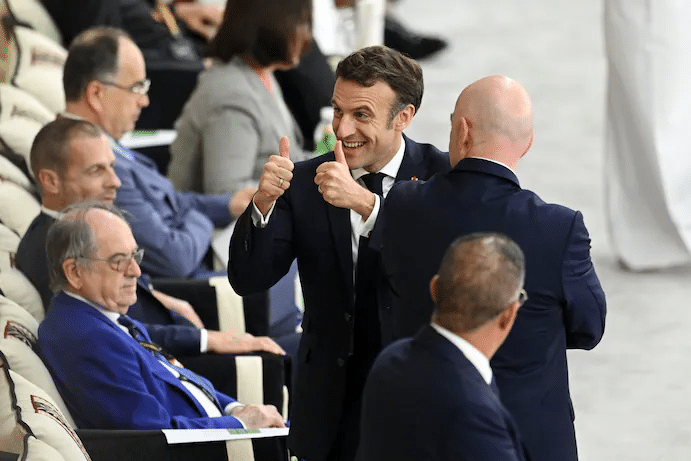
Among the France national team supporters watching the match will be President Emmanuel Macron, a soccer fan who had already traveled to Qatar for the Wednesday semifinal and is making a second trip to the Gulf state this weekend. “I am backing the France team and I think that the French are too,” Macron said Thursday.
The French president is one of only a few top European officials who have attended the World Cup this year. But his presence in Qatar, and his recent insistence that “sports should not be politicized,” appeared to capture the predominant sentiment among French soccer fans in these final days of the World Cup.
For those fans who were having second thoughts about their initial boycott plans, Macron’s defense of the tournament has served as a justification to give in.
If you liked this post, you’ll love our daily environmental newsletter, EnviroPolitics. It’s packed with the latest news, commentary, and legislative updates from New Jersey, Pennsylvania, New York, Delaware…and beyond. Please don’t take our word for it, try it free for an entire month. No obligation.
Soccer sparks the frosty French Read More »

By Tom Johnson, NJ Spotlight
Offshore wind farms in New Jersey should consider scaling back how much new offshore wind capacity is approved next year because economic and financial uncertainties could lead to higher prices, according to the Division of Rate Counsel.
Rate Counsel Director Brian Lipman suggested slowing down the pace of offshore wind development as higher interest rates, supply chain disruptions, and inflationary pressures are causing some developers to seek to renegotiate the contracts they have been awarded to build wind farms.
“This is of great concern,’’ Lipman told the staff of the state Board of Public Utilities Tuesday during a stakeholder meeting. The board was meeting to discuss making a third solicitation for offshore wind projects early next year. Lipman suggested that the board’s staff develop guidelines to prevent after-the-fact increases to contracts awarded to developers.
Ørsted, the developer of New Jersey’s first offshore wind farm about 15 miles off Atlantic City, has acknowledged it is not earning what it expected on its U.S. projects. If the company seeks to renegotiate its contract, it must file a petition with the BPU, Lipman said.
“Ratepayers simply cannot afford drastically higher electric bills,’’ he said. Utility customers already have been hit with steep increases this winter in their heating bills because of the rising costs of natural gas. Monthly bills increased for the state’s four gas utilities from 15% to as much as 24% this fall.
If you liked this post, you’ll love our daily environmental newsletter, EnviroPolitics. It’s packed with the latest news, commentary, and legislative updates from New Jersey, Pennsylvania, New York, Delaware…and beyond. Please don’t take our word for it, try it free for an entire month. No obligation.
From ABC News
The German police have confiscated guns, swords, and night vision equipment and made arrests after they broke up an alleged plot to overthrow the government.
From the New York Times
The Reichsbürger movement accused of plotting to overthrow Germany’s government picked up momentum from conspiracy theories that grew during the pandemic.

By Katrin Bennhold and Erika Solomon, New York Times
Published Dec. 8, 2022Updated Dec. 9, 2022, 10:09 a.m. ET
BERLIN — A ragtag band that had been dismissed as wacky and harmless gadflies, the Reichsbürger, or Citizens of the Reich, has tilted at windmills on Germany’s far-right political fringe for decades.
But after the authorities accused members of plotting to overthrow the government and kill the chancellor, a sharply different view of the obscure group emerged Thursday: as a serious terrorist threat, supercharged by conspiracy theories about the coronavirus and vaccines.
Among the 25 members of the cell arrested this week were a judge, a doctor, a cook, a pilot, a classical tenor and three police officers, officials said. At least 15 had links to the military, including former or current soldiers and two reservists with access to weapons. The arrests put Germany on high alert and, after months of surveillance, set off one of the biggest anti-terrorist crackdowns in German postwar history.
From NBC News
By Andy Eckardt and Patrick Smith
MAINZ, Germany — Authorities in Germany arrested 25 people Wednesday who are suspected of planning to violently overthrow the government in a far-right extremist plot.
More than 3,000 police officers, including special forces members, made 130 early morning searches across 11 of Germany’s 16 federal states in one of the biggest counterterrorism operations in the country’s history.
Suspects from the so-far-unnamed group include a nobleman with a historic royal title and various armed forces veterans. It is centered on the so-called Reichsbürger, or Reich Citizens, movement, which is motivated by conspiracy theories about the role and the legitimacy of the modern German state.
If you liked this post, you’ll love our daily environmental newsletter, EnviroPolitics. It’s packed with the latest news, commentary, and legislative updates from New Jersey, Pennsylvania, New York, Delaware…and beyond. Please don’t take our word for it, try it free for an entire month. No obligation.
Plot disrupted to overthrow German government Read More »
| From Bloomberg Balance of Power Blog |
Two weeks of climate talks in the Egyptian resort of Sharm El-Sheikh delivered a compromise accord in the fight against global warming. The UN-sponsored COP27 meeting ran over time and ended on Sunday morning with bleary-eyed ministers and diplomats agreeing to set up a fund to help vulnerable nations face the costs of climate disasters Key reading: How a Flawed But Historic Climate Deal Emerged From COP Chaos UN Adopts Historic Pact on Payments for Climate Damages Breakthrough on Climate Compensation and 7 Other COP27 Takeaways ‘Carbon Neutral’ Companies Are Relying on Junk Carbon Offsets It was a historic win for the countries facing rising seas, devastating floods, and drought. The deal also redraws the old divide between rich and poor nations into a new order that puts countries responsible for planet-warming greenhouse-gas emissions against those suffering the consequences. Still, the approval came at the cost of leaving out of the final agreement more ambitious commitments such as emissions peaking in 2025 and a phase-down of all fossil fuels — not just coal as agreed at COP26 in Glasgow last year. 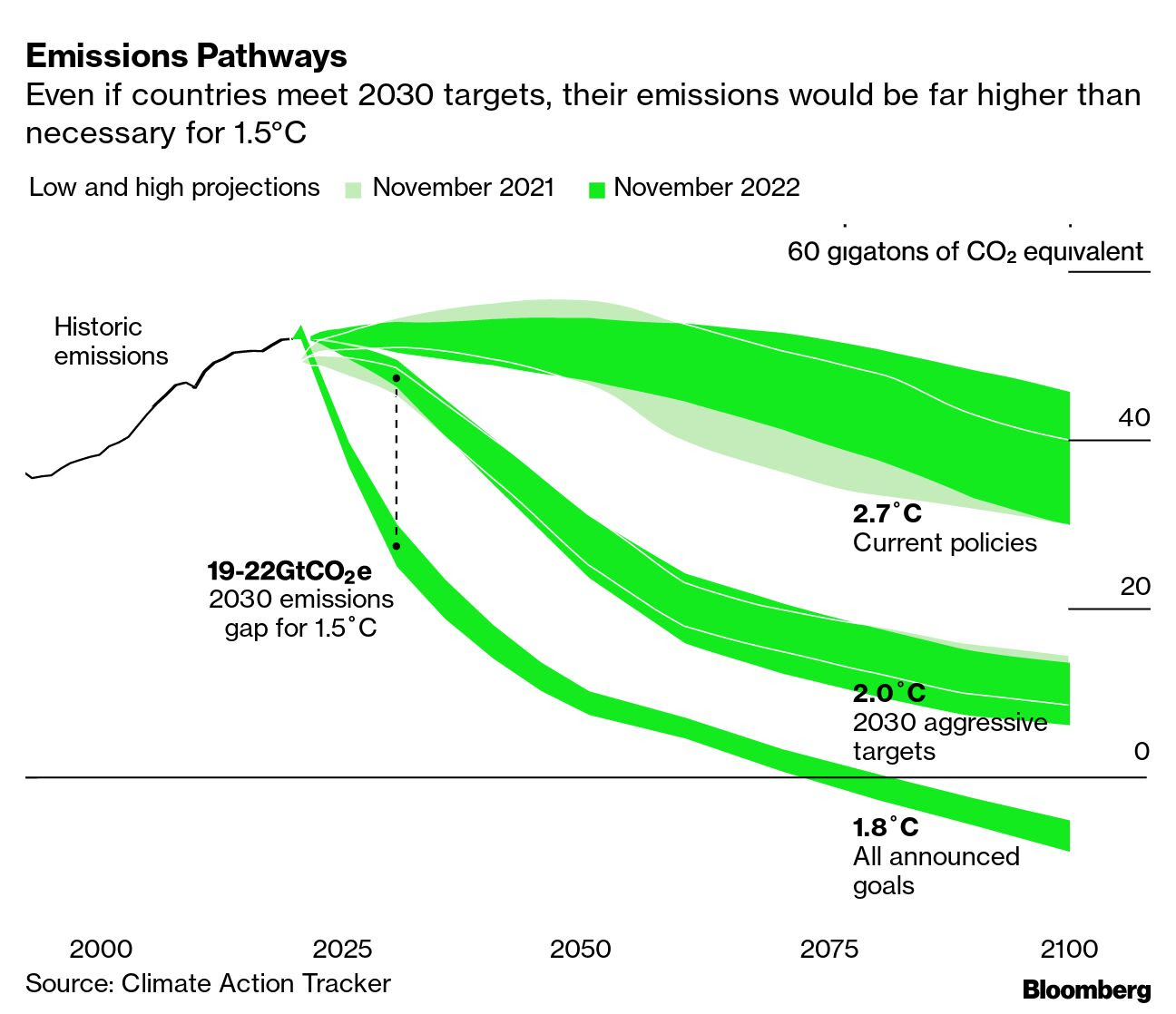 The US went further on a proposal that wasn’t even on the table at the start of the summit. US negotiator Trigg Talley said the world’s biggest economy and largest historic emitter was ready to support the “phase out” — not just “down” — of all fossil fuels It didn’t go through, with Saudi Arabia, Iran, Russia, and other oil-producing countries pushing back hard. At one point, the draft agreement included language that would have weakened past commitments. The final text leaves the commitment to keep global warming at 1.5 Celsius by 2100 hanging by a thread. — Laura Millan Lombraña If you liked this post, you’ll love our daily environmental newsletter, EnviroPolitics. It’s packed with the latest news, commentary, and legislative updates from New Jersey, Pennsylvania, New York, Delaware…and beyond. Please don’t take our word for it, try it free for an entire month. No obligation. |

Senate: Board List For 11-21-22 (Second Revision)
S2619 – Excludes solid waste, recycling, fuel, and certain insurance costs from appropriations cap for certain local units.
S3114 – Eliminates the prohibition on paper bags, and allows packaging options, for certain grocery orders for three years; requires program for disposition of reusable bags; extends timeframe for use of certain bags by food banks and pantries.
S3249 – Amends lists of projects eligible to receive loans for environmental infrastructure projects from NJ Infrastructure Bank for FY2023.
Don’t miss environmental news like this Click for free updates
A1438 – Increases maximum penalty for certain violations concerning asbestos hazard abatement; allocates money from increased penalties to asbestos programs.
S2196 – Increases maximum penalty for certain violations concerning asbestos hazard abatement; allocates money from increased penalties to asbestos programs.
A3444 – Establishes Organic Farming Board in t Department of Agriculture.
S3140 – Establishes Organic Farming Board in Department of Agriculture.
For complete details, log on to www.GovNetNJ.com.
If you have any questions or need assistance, please call 1-800-GOVNET-9.
Environmental bills up for votes in the NJ Senate on November 21, 2022 Read More »