He hiked Pennsylvania’s toughest trail in 2.5 days, tested all the way

    Reporter Jason Nark sets off on the Black Forest Trail on Aug. 9. The signpost for the trail says it’s 42 miles, but it turned out to be longer.

    By Jason Nark, Philadelphia Inquirer

    It was some time after lunch, on a recent Saturday afternoon, that I began to regret my decision to hike Pennsylvania’s Black Forest Trail.

    Maybe it was the $1 bag of beef-flavored ramen I’d cooked, or the gnats drinking my sweat, or the 30-pound pack that was digging into my hips.

    Mostly, it was the trail itself. The Black Forest Trail is named after the ubiquitous eastern hemlocks that shade the landscape with their dense canopies. It’s widely considered Pennsylvania’s most challenging trail by the state’s hiking enthusiasts. Reviews of the North-Central Pennsylvania loop on the ever-popular AllTrails hiking app attest to that.

    “This is without a doubt the hardest trail in PA. The ascents and descents will test your mental fortitude, not just your physical fitness,” one hiker wrote.

    That’s where I was after lunch on my first day. I was about seven miles into what I thought was a 42-ish-mile hike (more on that later), and I realized I’d planned poorly and would have to push hard to be home by Monday afternoon.

    Read the full story


    If you like this post, you’ll love our daily environmental newsletter, EnviroPolitics. It’s packed daily with the latest news, commentary, and legislative updates from New Jersey, Pennsylvania, New York, Delaware…and beyond. Please do not take our word for it; try it free for a full month

    He hiked Pennsylvania’s toughest trail in 2.5 days, tested all the way Read More »

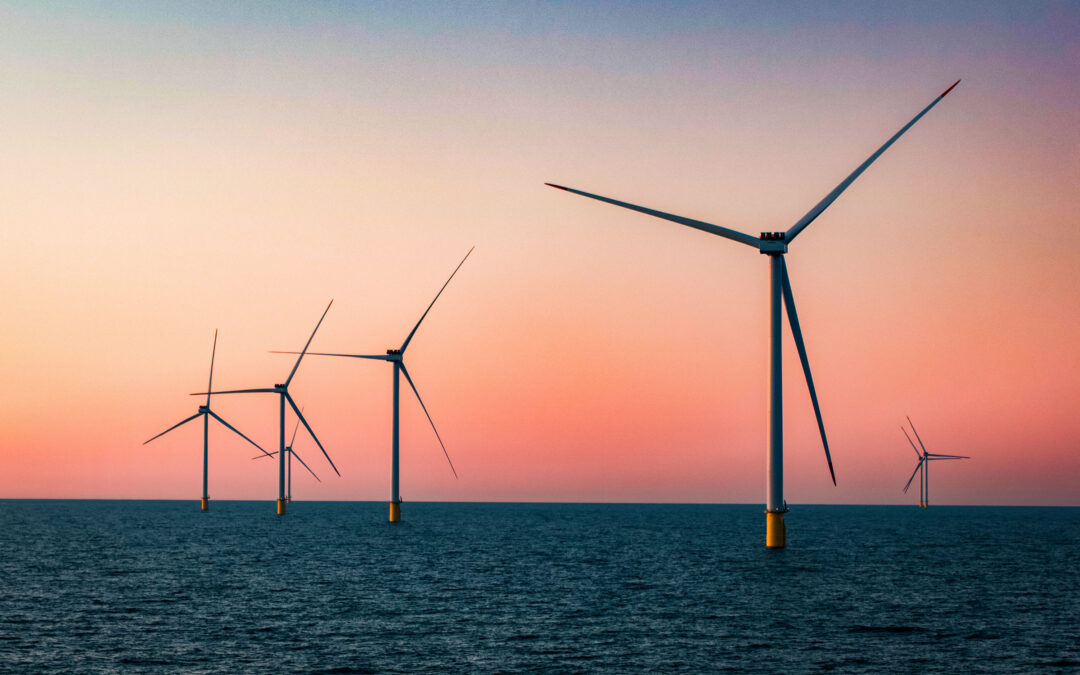
    Trump hates on offshore wind energy. China can’t get enough

    By Bloomberg News (Bloomberg) — Off the coast of southern China, a giant, double-headed turbine rises out from among its conventional counterparts, held up by a spiderweb of steel cables and tethered to the seabed below via three bright-yellow mooring points.

    The OceanX design pushes the boundaries of engineering, harnessing more wind power than any other floating turbine operating in the world today. It’s also an eloquent symbol of the ambitions of Chinese green technology companies, securing their dominance of yet another clean-energy industry as stalwarts in Europe, the US, and Japan run up against political and economic setbacks.

    China, whose reliance on imports means energy security is always at the forefront of its mind, has led the world in using renewable electricity sources — including expansive solar farms in western deserts and rows of turbines built at sea, where they can access reliable and stronger air currents. This year, it will install nearly three out of every four of the world’s new offshore turbines, according to BloombergNEF.

    The story is very different elsewhere, particularly in the US, where President Donald Trump has derided wind farms as ugly killers of birds and whales. He targeted wind on his first day in office, halting approvals for new offshore ventures. His administration stopped an almost-complete project, rattling investors and triggering a collapse in the share price of its Danish developer, Orsted A/S, a company that has led the sector for more than three decades since it commissioned the world’s first offshore wind farm.

    Now, along with other operators in Europe, the US, and Japan, Orsted is struggling to cope with dwindling government support and costs that continue to push upward, thanks to pricier components, high interest rates, and limited infrastructure.

    Mitsubishi Corp. dealt the latest blow on Wednesday, announcing that a group it led would withdraw from three offshore wind projects in Japan, citing tighter supply chains and rising costs since the projects were secured in 2021.

    Read the full story here


    If you like this post, you’ll love our daily environmental newsletter, EnviroPolitics. It’s packed daily with the latest news, commentary, and legislative updates from New Jersey, Pennsylvania, New York, Delaware…and beyond. Please do not take our word for it; try it free for a full month

    Trump hates on offshore wind energy. China can’t get enough Read More »

    Alterra won’t build chemical recycling plant in PA – for now

    Environmental groups had long opposed the proposal, but Alterra says it ultimately halted plans due to a landowner’s decision. Alterra intends to search for another facility location in the region

    Alterra’s chemical recycling plant in Akron, Ohio, uses pyrolysis to manufacture new plastics. The company withdrew a proposal to build a similar plant in Pennsylvania. Courtesy of Alterra

    By Megan Quinn, Waste Dive

    Listen to the article 5 minutes

    Alterra Energy has withdrawn its proposal to build a chemical recycling facility in Sugarloaf, Pennsylvania. The project called for processing up to 189 million pounds of plastic a year and converting it into a “synthetic oil for the manufacturing of new plastics and other valuable products.”

    In an August 8 letter to the Sugarloaf Township Board of Supervisors, Alterra said it was “no longer able to pursue development” on a chosen parcel of land due to the landowner’s decision to market the land to a data center developer instead. The chemical recycler says it will continue to “monitor land opportunities within the surrounding area.”

    Environmental groups such as Beyond Plastics, Luzerne County Community Action Coalition, Save Our Susquehanna and others celebrated the project’s withdrawal from the proposed location, saying the plant would have caused air pollution, snarled traffic and put strain on the surrounding environment.

    Read the full story here

    Related:
    What Lies Ahead for the Advanced Plastics Recycling Industry


    If you like this post, you’ll love our daily environmental newsletter, EnviroPolitics. It’s packed daily with the latest news, commentary, and legislative updates from New Jersey, Pennsylvania, New York, Delaware…and beyond. Please do not take our word for it; try it free for a full month

    Alterra won’t build chemical recycling plant in PA – for now Read More »

    Ospreys, hawks, eagles all part of Hawk Mountain migration count

    By Molly Bilinski, Lehigh Valley News

    ALBANY TWP., Pa. — Hawk Mountain’s official autumn migration count is underway, with more than 100 trekking birds of prey recorded so far.

    Staff and volunteers at the sanctuary have monitored the autumnal migration since 1934 as part of conservation research efforts, making it the longest-running raptor migration count in the world.

    The first full week showed “solid migration with a high variety of species,” according to a Wednesday newsletter from the sanctuary.

    “Tuesday took the lead with 28 migrants pushing past on a light southeast wind,” officials said. “Twelve broad-winged hawks and seven ospreys made a great early season flight as a bald eagle, Cooper’s hawk, sharpshin, red-tailed hawk and northern harrier joined them.

    “This time of year, the flight is highly variable and controlled by the weather, so look for favorable conditions that will help the migrants through.”

    The count, which started Aug. 15 and runs through Dec. 15, averages 18,000 raptors, with one-day peak counts of more than 3,000 birds during September.

    Raptors and other migrants

    As of Tuesday, 140 raptors were recorded, including 48 broad-winged hawks, 16 red-tailed hawks, 24 osprey and 27 bald eagles, counts show.

    Hawk Mountain 2025 autumn migration
    The first full week of Hawk Mountain’s annual autumn migration count is complete, with more than 100 trekking birds of prey recorded.

    If you like this post, you’ll love our daily environmental newsletter, EnviroPolitics. It’s packed daily with the latest news, commentary, and legislative updates from New Jersey, Pennsylvania, New York, Delaware…and beyond. Please do not take our word for it; try it free for a full month

    Ospreys, hawks, eagles all part of Hawk Mountain migration count Read More »

    Americans Eating Sewage-Tainted Canadian Oysters

    Canada is a major oyster supplier to the U.S. Both diners and oystermen are harmed by inaction on pollution

    Freshly cleaned oysters are seen in Nova Scotia’s Chance Harbour. Photo, credit: Molly MacNaughton/IJB

    By Agatha Khishchenko, Andy Lehren, Dori Seeman, Robert Cribb, and Molly MacNaughton, Inside Climate News

    Mark Kapczynski had been looking forward to it for weeks. 

    He had VIP tickets for him and his wife to attend an upscale seafood festival in Los Angeles last December, where they would feast on the food he grew up eating as a kid in Boston.

    Surrounded by shellfish presented raw on ice by some of the city’s best chefs, Kapczynski said he chose to sample a few “Fanny Bay” oysters harvested from the southern British Columbia coastline.

    “After three or four hours, I wished I was dead, it hurt so much,” said Kapczynski, who was hit with severe abdominal pain, vomiting every 30 minutes for five hours. “It was the most painful thing I’ve ever felt.” 

    Read the full story here


    If you like this post, you’ll love our daily environmental newsletter, EnviroPolitics. It’s packed daily with the latest news, commentary, and legislative updates from New Jersey, Pennsylvania, New York, Delaware…and beyond. Please do not take our word for it; try it free for a full month

    Americans Eating Sewage-Tainted Canadian Oysters Read More »

    Trump team sees Penn Station reconstruction starting in 2027

    By Sri Taylor, Bloomberg

    NJ Transit And Amtrak Leave NYC Commuters With 90-Minute Delays
    Commuters watch a departures board at Penn Station in New York on June 18, 2024.Photographer: Yuki Iwamura/Bloomberg

    The highly anticipated renovation of New York City’s Pennsylvania Station will kick off construction by the end of 2027, the Trump administration announced on Wednesday.

    The $7 billion project calls for replacing the current transit hub with a 250,000 square-foot single-level facility, new amenities and retail stores, as well as mixed-income housing. Penn Station was once an architectural marvel, built in an Beaux-Arts style with soaring soaring steel and glass providing travelers with light and space on their journeys.

    The old structure was torn down in the 1960s and replaced with an underground hub to make room for Madison Square Garden, the iconic Manhattan sports and concert venue. Now, one the nation’s busiest rail station is dark and cramped, often frustrating commuters who ride New Jersey Transit and the Long Island Rail Road.

    “Crumbling infrastructure, bleak and dirty architecture, unnavigable hallways and no inviting spaces for families with kids – the current state of Penn Station is unacceptable,” US Department of Transportation Secretary Sean Duffy said in a statement.

    Penn Station is one of the major gateways to Manhattan, logging more than 1,000 daily trains across 21 tracks, according to figures released by Amtrak. More than 200,000 commuter and Amtrak passenger trips go through the hub each day.

    Read More: 
    Trump Administration Takes Over New York Penn Station Revamp
    What Penn Station’s Makeover Means for NYC

    The announcement comes after the Trump administration moved to make Amtrak — the owner of Penn Station — the lead of the project, effectively ousting the Metropolitan Transportation Authority. The federal government said the transit agency, which operates the New York City subway system, “proved it was incapable of delivering major infrastructure on time or on budget.”

    Amtrak will receive a nearly $43 million federal grant to help fund the project development and the solicitation of a master developer, as well as permitting and preliminary engineering work.

    Andy Byford, the lead for the project and a former New York City Transit President — nicknamed “Train Daddy” — will start the process to solicit a developer on Aug. 28, according to the statement. He was appointed as a special adviser to Amtrak’s board of directors for the redevelopment earlier this year. The process will start by the end of October and a selection will be made by the end of May 2026, the statement detailed.

    Once shovels are in the ground, commuters can expect to experience some delays and changes to their routes, according to Byford. “We’ll strategize on how to do it with minimum disruption,” he said.

    Read the full story here


    If you like this post, you’ll love our daily environmental newsletter, EnviroPolitics. It’s packed daily with the latest news, commentary, and legislative updates from New Jersey, Pennsylvania, New York, Delaware…and beyond. Please do not take our word for it; try it free for a full month

    Trump team sees Penn Station reconstruction starting in 2027 Read More »