PennEast shelves plan to build gas pipeline through NJ public lands

Foes say the company likely concluded that it wouldn’t get DEP permits


By Jon Hurdle NJ Spotlight

PennEast Pipeline Co. has dropped a plan to use New Jersey state lands for its controversial natural gas pipeline — at least for now — dealing a major blow to the long-delayed project in the state.

The company’s decision not to pursue eminent-domain claims on 42 parcels of publicly owned land was announced in an agreement with the Attorney General’s office and recorded in a brief notice sent on Sept. 20 to the Third Circuit Court of Appeals, which is overseeing the company’s claims.

“The parties to these consolidated matters have agreed in principle to a stipulated voluntary dismissal of these matters,” the notice said, referring to the eminent-domain claims.

In plain language, the notice means that PennEast won’t seek to seize the lands to build the pipeline, said Leland Moore, a spokesman for the AG’s office, which argued against the company’s use of public lands before the U.S. Supreme Court earlier this year.

The nation’s highest court had sided with PennEast, ruling that it had the right to use eminent domain to acquire the state land it needed for the project.

“We are pleased that after three years of litigation, PennEast has finally paused on trying to take state land,” Moore said in a statement. “Although the company is still pushing ahead with plans to build an unnecessary and ill-conceived pipeline, we will continue to lead the fight against it, and we are confident that we will ultimately prevail in court.”

Company cites timing as an issue

Pat Kornick, a PennEast spokeswoman, would not say whether the agreement means the company has abandoned its plans for the New Jersey section of the pipeline, which has twice been denied state environmental permits, and has aroused strong opposition in the communities where it would be built.

“Given the uncertainty on timing to resolve the remaining legal and regulatory hurdles, PennEast believes it is not prudent to complete the acquisition of the rights of way in the pending actions as it might not be necessary for some time,” she said.

Still, Kornick suggested the company is continuing to explore ways of moving the project forward in the future.

Read the full story here

If you liked this post you’ll love our daily newsletter, EnviroPolitics. It’s packed with the latest news, commentary, and legislative updates from New Jersey, Pennsylvania, New York, Delaware…and beyond. Don’t take our word for it, try it free for an entire month. No obligation.

PennEast shelves plan to build gas pipeline through NJ public lands Read More »

In Ida’s wake, New Jersey looks to buy more flood-prone properties

Federal money may be available to expand the popular Blue Acres program, DEP Commissioner says

Flooding in Manville caused by Tropical Storm Ida


By Jon Hurdle, NJ Spotlight

New Jersey’s top environmental official says the state will expand its program that buys private properties in flood-prone areas after the devastation caused by Ida, but warned that any plan to move whole communities out of harm’s way is beyond the state’s means, and would require federal help.

Shawn LaTourette, the commissioner of the Department of Environmental Protection, said the state now has the money to buy some additional properties and will do so, thanks to the Legislature’s decision in 2019 to dedicate more revenue to the so-called Blue Acres program from the Corporation Business Tax.

“The program definitely needs expansion,” he said during a conference call with reporters Tuesday. “Now we have that greater ability, and we’ll be making use of that, no question.”

But any purchase of whole communities would depend on more funding from the federal government, which he said could indeed be coming from Washington.

“I would be surprised if we didn’t see that come through in any kind of disaster legislation pending in Congress,” he said.

At Tuesday’s conference on environmental policy in the wake of Ida, LaTourette faced a series of questions about the future of Blue Acres after severe flooding in many communities — such as those along the Rahway River — left many with ruined homes and millions of dollars in damage.

Read the full story here

If you liked this post you’ll love our daily newsletter, EnviroPolitics. It’s packed with the latest news, commentary, and legislative updates from New Jersey, Pennsylvania, New York, Delaware…and beyond. Don’t take our word for it, try it free for an entire month. No obligation.

In Ida’s wake, New Jersey looks to buy more flood-prone properties Read More »

Three NJ lawmakers call for an independent review of a train’s role in defeating flood gates during Hurricane Ida

https://www.senatenj.com/uploads/train-bound-brook-floodgates-520.jpg
This photo from NJ.com shows NJ Transit Train #5450 blocking one of Bound Brook’s floodgates from closing completely leading to flooding within the town from the remnants of Hurricane Ida. (Photo Credit: Andrew Mills | NJ Advance Media for NJ.com)

New Jersey State Senator Michael Doherty, Assemblyman John DiMaio, and Assemblyman Erik Peterson (all R-23) will introduce legislation requiring an independent investigation of the flooding of Bound Brook that occurred after a disabled New Jersey Transit train blocked the town’s protective floodgates from closing during Hurricane Ida.

“It’s extremely concerning that the $300 million floodgate system that was put in place to protect Bound Brook from flooding was defeated by a disabled NJ Transit train that shouldn’t have been running,” said Doherty. “We need a transparent, independent review of this incident to understand what processes failed during Ida to ensure it doesn’t happen again.”

Although flash flood warnings had been issued due to extremely high rainfall projections as the remnants of Hurricane Ida passed over New Jersey, Raritan Valley Line Train #5450 attempted to operate in the extremely flood-prone area.

The train became stuck as the track was washed over by floodwaters and debris. A later attempt to close Bound Brook’s floodgates to protect the town from Raritan River flooding couldn’t be implemented since the train was blocking one of the gates.

“We had National Weather Service warnings that flash floods were likely along the Raritan Valley Line as a result of Ida, along with numerous reports of actual flooding by the time the train was stuck,” said DiMaio. “Why didn’t New Jersey Transit or Governor Murphy take the warnings seriously enough? Why didn’t anyone think to halt the trains in a safe place after flooding was reported? Because of these failures, Bound Brook flooded yet again.”

Bound Brook’s flood control systems include thousands of feet of levees and floodwalls, pump stations, and three floodgates, including the gate at the NJ Transit crossing that was blocked by Train #5450.

“While it took decades to plan and build Bound Brook’s flood control system, it took just seconds for a stuck train to prevent it from working,” added Peterson. “Since NJ Transit may bear some legal liability for the flood damage to homes and businesses that resulted, we shouldn’t leave it up to them to tell us what went wrong. We need an impartial, independent review to ensure that the people of Bound Brook get the honest answers they deserve.”

Three NJ lawmakers call for an independent review of a train’s role in defeating flood gates during Hurricane Ida Read More »

Firefighters are girding Earth’s biggest tree to protect it against wildfire. Here’s how General Sherman got its name(s).

Firefighters wrap fire-resistant materials around a Sequoia National Forest tree threatened by the KNP Complex Fire near Three Rivers, Calif., on Friday, Sept. 17. (National Park Service Handout/EPA-EFE/REX/Shutterstock)


By María Luisa Paúl, Washington Post

The largest tree in the world has lived through millennia, has been named for a Civil War general, and has shaded a socialist commune that briefly called it Marx. Now the centerpiece of Sequoia National Park is endangered by the California wildfires burning nearby.

The KNP Complex Fire — which comprises the Colony and Paradise fires — is torching the Sierra Nevada area and leading firefighters to wrap the giant trees in aluminum to protect them from the inferno that began Sept. 9 and had burned through17,900 acres as of Saturday night.

Wildfire threatens historic trees at Sequoia National Park. Fireproof blankets are the defense.

The sequoias, believed to be some of the world’s most ancient, became a national landmark in the mid-19th century. Hamilton, General Grant, General Sherman, and others are named for American leaders, and their histories enmeshed with the then-nascent country’s history and politics.

Sequoias, which can live to be about 3,000 years old, had already been known by the Native American tribes that inhabited the Sierra Nevada. Then, in the mid-1800s, the giant trees became a tourist attraction after a hunter had an encounter with what newspapers of the time deemed the “Sylvan Mastodon” or the “Vegetable Monster.”

According to a 1975 National Park Service history briefing, the crew of an 1833 expedition into the Sierra Nevada is credited as being the first group of White people to spot the sequoias, but it never reported the discovery. Almost two decades later, Augustus T. Dowd, a hunter tasked with feeding Gold Rush miners, chased a wounded bear into the woods and walked into a sequoia grove.

News spread fast, describing trees that dwarfed people. “It was the equivalent of finding a unicorn or Big Foot,” said Daegen Miller, a historian and author of “This Radical Land: A Natural History of American Dissent.”

Read the full story here

If you liked this post you’ll love our daily newsletter, EnviroPolitics. It’s packed with the latest news, commentary, and legislative updates from New Jersey, Pennsylvania, New York, Delaware…and beyond. Don’t take our word for it, try it free for an entire month. No obligation.

Firefighters are girding Earth’s biggest tree to protect it against wildfire. Here’s how General Sherman got its name(s). Read More »

Vineyard Wind Proposes Up To 1.2 GW of Massachusetts Offshore Wind


By Michael Bates NA Windpower


Vineyard Wind says it has submitted two proposals in response to the request for proposals (RFP) for offshore wind energy projects in Massachusetts.

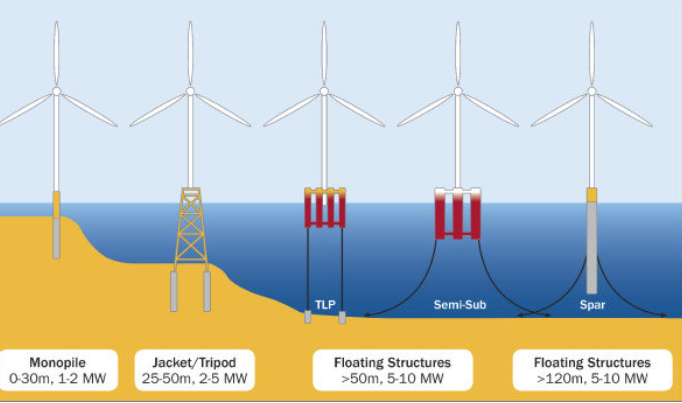
The “Commonwealth Wind” proposals offer options of approximately 800 MW and 1.2 GW of energy and outline investments in offshore wind infrastructure, the creation of thousands of jobs, and substantial commitments to environmental justice communities.

“We have used all of our experience with our existing portfolio to put together an incredibly strong proposal that, if selected, will ensure Massachusetts benefits significantly from its first-mover status in pioneering offshore wind at scale in the U.S.,” says Lars T. Pedersen, CEO of Vineyard Wind.

“We have deliberately named our proposals ‘Commonwealth Wind’ to underline the broad benefit of affordable energy to the entire commonwealth as well as the significant economic benefits that will be delivered to multiple regions of Massachusetts,” he adds.

Other offshore wind news:
Work underway in RI on first US offshore wind farm
U.S. Offshore Wind Industry Has Electrifying Future

Commonwealth Wind will be developed in an area just south of the company’s Vineyard Wind 1 and Park City Wind projects. The project will adhere to the 1×1 nautical mile spacing between turbines, which was endorsed by the United States Coast Guard as the preferred layout for safety and navigation.

Currently, Vineyard Wind has 1,604 MW of wind energy under development for Massachusetts (Vineyard Wind 1) and Connecticut (Park City Wind). The company is 50 percent owned by funds of Copenhagen Infrastructure Partners (CIP) and 50 percent by Avangrid Renewables.

If you liked this post you’ll love our daily newsletter, EnviroPolitics. It’s packed with the latest news, commentary, and legislative updates from New Jersey, Pennsylvania, New York, Delaware…and beyond. Don’t take our word for it, try it free for an entire month. No obligation.

Vineyard Wind Proposes Up To 1.2 GW of Massachusetts Offshore Wind Read More »