Pipes used in the oil business sit in a yard Vernon Mount Vernon, Ohio. Photo: Spencer Platt/Getty Images
By Ellen M. Gilmer, Bloomberg Law
The U.S. Supreme Court hears arguments Wednesday in a case pitting states’ rights advocates against energy companies.
New Jersey and backers of the $1 billion PennEast natural gas pipeline face off over developers’ effort to seize state land along the project’s route.
It’s the latest in a series of pipeline cases to reach the Supreme Court in the past year, an outgrowth of sweeping litigation surrounding a nationwide expansion of oil and gas infrastructure over the past decade. The justices heard an Atlantic Coast pipeline case a year ago, and fielded a flurry of filings involving Keystone XL last summer.
Kirkland & Ellis LLP’s Paul Clement, a former solicitor general and powerhouse Supreme Court advocate who successfully argued the Atlantic Coast case, represents PennEast. The Biden administration is maintaining Trump-era support for PennEast’s arguments, a decision that disappointed many pipeline opponents.
Some justices might find it challenging to weigh New Jersey’s asserted state property rights against pipeline lawyers’ claims of broad industry impacts in the case, University of Minnesota energy law professor Alexandra Klass said.
“It tees up that issue directly in a way that some of these other cases have not,” she said. “Here is a situation where you have a state who is opposed to this particular pipeline and has actual land, saying a private party can’t use delegated eminent domain authority to take state land.”
Backed by Enbridge Inc., Southern Co., and other companies, PennEast would stretch 116 miles across Pennsylvania and New Jersey. Construction hasn’t started, and PennEast faces other permitting and legal hurdles even if it prevails at the Supreme Court.
If you liked this post you’ll love our daily newsletter, EnviroPolitics.It’s packed with the latest news, commentary, and legislative updates from New Jersey, Pennsylvania, New York, Delaware…and beyond. Don’t take our word for it, try it free for an entire month. No obligation.
Pricing and the Advanced Disposal acquisition were key first-quarter boosts. Executives also announced a new chief sustainability officer and discussed Biden policy effects.
Waste Management took what executives and analysts described as a rare step of raising guidance after the first quarter, due to ongoing pandemic recovery trends and higher projected benefits from the Advanced Disposal Services acquisition.
Annual revenue is now expected to be up by 12.5% to 13%, compared to original guidance of 10.75% to 11.25%, as local economic activity continues to rebound.
“Volumes really have not recovered fully, especially in those three high margin lines of business – commercial, landfill and industrial,” said CEO Jim Fish during the company’s Tuesday earnings call. “Pricing, and landfill pricing in particular, we think is a strength for the quarter and will continue to be in the next couple of quarters.”
Get the Recycling weekly from Waste Dive, the free newsletter that keeps industry leaders in-the-know on the latest news, analysis, and insights.Subscribe
Recovery update
Collection and disposal volumes were down 2.3% year over year, an improvement from a 2.7% decline in the fourth quarter. Executives said most of the volume headwinds were offset by pricing and yield increases.
Chief Operating Officer John Morris reported an estimated 72% of the commercial yards lost due to the pandemic have now been recovered and net new business turned positive in the quarter.
Waste Management also reported its highest residential yield since 2008 at 4.2%, as the company continues renegotiating contracts to more favorable terms. This happened even as pricing indexes used in some contracts declined, but Fish said a potential rise in inflation could boost those arrangements in the future.
After passing the anniversary of initial pandemic effects on first quarter earnings in 2020, Waste Management is sticking with its bullish outlook as economic activity expands around the country.
Earth Day projects part of ongoing work to protect horseshoe crab habitat
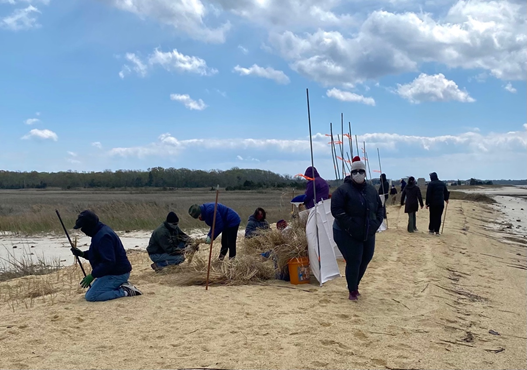
Volunteers and staff from the American Littoral Society conduct an Earth Day dune grass planting and cleanup on South Reed’s Beach in Middle Township.
Cape May Court House, N.J. – Each spring, the American Littoral Society takes the lead on the intricate work of protecting Middle Township beaches for residents – and not just the human ones.
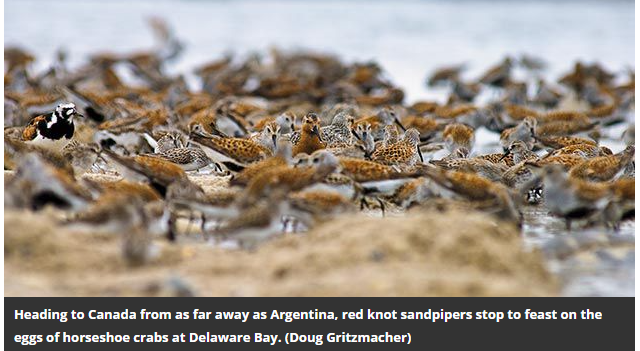
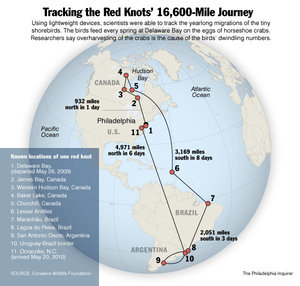
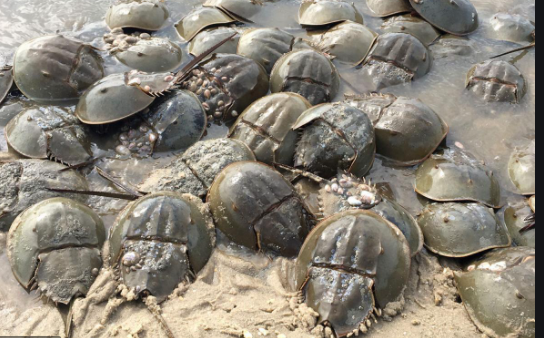
The environmentalists blend innovative strategies and manual labor in the fight to protect the beaches’ horseshoe crab habitats. Red knots, one of the furthest-migrating bird species in the world, rely on the precarious supply of the crab eggs. The shorebirds stop at Middle Township beaches each spring on their 9,000-mile trip from South America to their breeding grounds in the Arctic.
“A healthy ecosystem is the Delaware Bay’s foundation of economic well-being. People come to see the natural phenomenon from all over the world.” said Tim Dillingham, the executive director of the American Littoral Society. “Supporting habitats is in everyone’s best interest.”
The nonprofit conservation group plans a variety of cleanup projects and pursues grants to fund sand replenishment. Middle Township government also embraces the “tremendous responsibility” of caring for the area’s natural resources, Dillingham said.
Partners in preservation
“It’s important to protect our natural resources,” noted Larry Niles, a wildlife biologist who works with the Littoral Society and this month oversaw the addition of just under 5,000 tons of sand to repair breaches at Reed’s Beach, Pierce’s Point and Kimbles Beach.
Flooding causes the breaches in the sand, creating conditions where crabs can get stranded and die. Replenishing the sand and rebuilding dunes is essential to saving crab habitats.
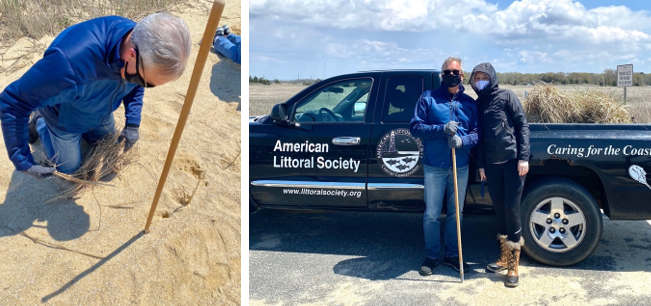
On Earth Day, Middle Township Mayor Tim Donohue and Business Administrator Kim Krauss put their hands in the sand, joining the society in planting dune grass along South Reed’s Beach to protect the horseshoe crab habitat. The day also included a beach cleanup, with Township staff hauling away the trash.
“We want to thank Larry Niles and the team from the American Littoral Society, including Tim Dillingham, Quinn Whitesall and Shane Godshall, for their years of hard work to protect the fragile ecosystem on our Delaware Bay shoreline,” Donohue said. “Administrator Kim Krauss and I were honored to join a great group of volunteers for some Earth Day dune grass planting in support of this good work.”
The Township has provided logistical support to help the conservationists in their mission.
Township Committee passed an ordinance in April 2020 to prohibit driving on the shoreline and beaches along the Delaware Bay, including Cook’s Beach, Norbury’s Landing, Pierce’s Point, Reed’s Beach and Sunset Beach. There are select exceptions, such as for NJ Department of Environmental Protection staff and the Army Corps of Engineers.
Environmentalists had supported the measure to prevent beach damage and protect migrating birds.
The Township also has helped secure permission from local land owners for the Littoral Society to work on their bay shore property.
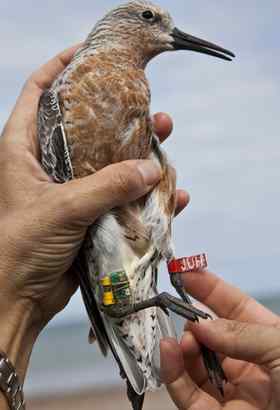
Red Knot Tagged CREDIT: Jan van de KAM – Atiny tracking device on the leg of a red knot weighs about as much as two squares of toilet paper. But inside all in extreme miniature were a clock, a microprocessor, a memory and a battery. And it gave scientists their first intimate view of a year-long journey
Edge of extinction
While federal and state support is critical to environmentalists, local municipalities can become closely involved with the cause, Dillingham explained.
“We see the communities as stewards of these animals that have been around for 450 million years and the birds that have been stopping here on this migration for thousands of years.”
But after 450 million years on earth, horseshoe crabs’ numbers have dwindled on Middle Township beaches. Overharvesting in the late 1990s dramatically reduced the crab population. Then, in 2012, Hurricane Sandy wiped out much of the crab spawning habitat. Niles said blustery storms over last winter had similar effects to Sandy.
Warming temperatures also have left the beach line more vulnerable, he said. “The bay isn’t freezing anymore, so there’s a lack of ice to shield the shoreline.”
The horseshoe crab numbers are still about half of what they once were, but conservationists say having the Township’s full support has helped them expand the habitats – and save the birds that feed on the crabs’ eggs.
“The partnership is key to the success that we’ve had to keep the red knots from going over the edge of extinction,” Dillingham said. “Middle Township has been such a leader in collaborating with everything we do. “
Tons of sand, endless dedication
The constant addition of sand requires a steady influx of funding. The Littoral Society joins forces with Niles’ Wildlife Restoration Partnerships and Stockton University’s Coastal Research Project to pursue grants in support of their work.
The conservationists received a $250,000 grant from the National Fish and Wildlife Foundation last year and this year is seeking cash from the state to match grants.
In the meantime, the work continues. The environmental advocates are now experimenting with breakwaters – barriers made of stone with oyster shells backing them – to tame waves and protect the beach.
“Our projects are trying to bring serious science to this. It’s adaptive management. We’re monitoring everything so that whatever we do will inform the next project,” Niles said.
The team is also committed to involving the community.
A breakwater project is planned for Pierce’s Point and the process will include a stakeholder meeting, Niles said.
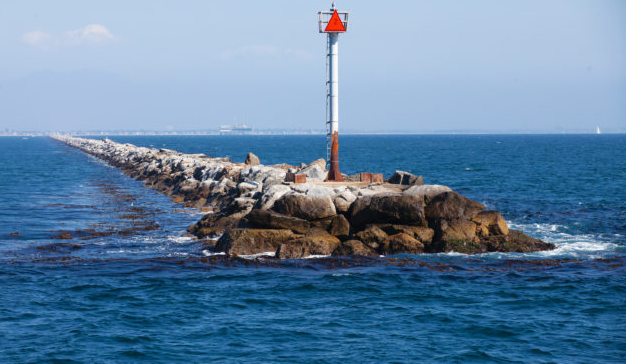
A breakwater in Long Beach, California pictured in 2019
The conservationists’ research to provide better habitats for crabs can get down to minute details, such as measuring eggs and checking the coarseness of sand. But there’s a payoff for those who love to see nature in action, Niles said.
“Because of the protection that we provide, people who want to see the migration can come to see the red knots.”
POSSESSION SOUND, Everett, Washington — Now is the sweet season, with its lengthening days and warm radiance of spring on Puget Sound.
The return of the light is rousing the natural world from dormancy. Puget Sound is on the rebound, not only in the turn of the season, but in a resurgence of life.
Today there are more humpbacks and gray whales, more harbor porpoises and seals, more sea lions and more orcas in these waters than a generation ago. These surging populations are the result of decades of protection. An exception are southern resident killer whales, an endangered species. They, and the Chinook salmon the southern residents primarily eat, are struggling for survival against an array of threats.
Jennifer Olson, left, Josh Searle (in blue, center), and Katherine Dye check water samples collected as Ardi Kveven, at the rail, cleans equipment on Possession Sound. (Alan Berner / The Seattle Times)
But there is another story underway here, too, of a marine mammal comeback in Washington from the urban waters of Puget Sound, to the seascapes of the San Juan Islands. The ordinary places we think we know onshore are an altogether different matter seen — and heard — from the water, where the creatures with whom we share this place are cavorting in a spring catenation of life.
In an uncertain world, made even more precarious by a warming climate, it’s also important to celebrate what’s getting better, and understand that changes we make can allow nature to heal and recover.
Ardi Kveven was at the helm of the research vessel Phocoena just offshore of Everett on a recent spring morning. She had the vessel built with funding from the National Science Foundation for the Ocean Research College Academy (ORCA) she directs at Everett Community College. The program instructs kids in the science, wonder and history of Puget Sound through a curriculum centered on getting students out on the water.
Instructors use an interdisciplinary approach, with all hands literally on deck, as professors of English, history and science all explore what Puget Sound can teach. And who knew there was so much to see and explore, all within sight of Interstate 5, whizzing by in the distance?
Here was a menagerie in an ecosystem that actually starts in the forests miles away, in the Snohomish River.
“Marbled murrelet!” called out Kveven, pointing to a chunky pair of birds bobbing in the blue not far off the bow of the boat. These birds nest in the forests of the Cascades and fly all the way to the estuary of the Snohomish River, where they feed on sand lance, herring, and other fish they take back to their forests nest.
Gray whale, Eschrichtius robustus (Emily M. Eng / The Seattle Times)
The Snohomish also carries the nutrients and silty sediment in a freshwater plume all the way out to these nearshore waters of Puget Sound around Whidbey and Camano islands. Ghost shrimp feast on the detritus, as they burrow in the soft silt — and become a meal for one of the largest animals in the Sound: gray whales.
Snuffling in the mud, a small population of gray whales, nicknamed the Sounders, has taught itself to split off from the northbound migration of grays each spring for a side trip to this estuary, for a ghost shrimp snack that plumps them up before they return to the rest of the population to finish their trip.
If you liked this post you’ll love our daily newsletter, EnviroPolitics.It’s packed with the latest news, commentary, and legislative updates from New Jersey, Pennsylvania, New York, Delaware…and beyond. Don’t take our word for it, try it free for an entire month. No obligation.
This environmental news update reports on the first DERA funds offered for alt-fuel and electric buses
The U.S. Environmental Protection Agency (EPA) has awarded some $10.5 million to replace 473 older diesel school buses nationwide. The funds are going to 137 school bus fleets in 40 states, each of which will receive rebates through EPA’s Diesel Emissions Reduction Act (DERA) funding. The new buses will reduce pollutants that are linked to asthma and lung damage, better-protecting health and air quality in communities across the country. In New Jersey, EPA is providing $500,000 to five entities to replace 25 buses across the state.
“The rebates provide children with a safe and healthy way to get to school by upgrading older diesel engines in our nation’s school buses,” said EPA Administrator Michael S. Regan. “Through the Diesel Emissions Reduction Act, EPA is equipping local school districts with cleaner-running buses, helping them along the route to healthier kids and communities.”
The 2020 Rebates are the first year in which EPA is offering additional funds for alt-fuel and electric bus replacements. Applicants scrapping and replacing diesel buses with engine model years 2006 and older will receive rebates between $20,000 and $65,000 per bus, depending on the fuel type of the replacement bus.
The funding selectees in New Jersey are:
Berlin Township Board of Education – $20,000 to replace one bus
First Student in Berlin – $200,000 to replace 10 buses
Irvin Raphael, Inc., in East Brunswick – $40,000 to replace two buses
Toms River Regional Schools – $40,000 to replace two buses
Yellow Bus Leasing.com LLC in Bellmawr – $200,000 to replace 10 buses
EPA has implemented standards to make newer diesel engines more than 90 percent cleaner, but many older diesel school buses are still operating. These older diesel engines emit large amounts of pollutants such as nitrogen oxides and particulate matter, which are linked to instances of aggravated asthma, and other health effects or illnesses that can lead to missed days of work or school.
Since 2008, the DERA program has funded more than 1,300 projects across the country, reducing diesel emissions in more than 70,000 engines. A comprehensive list of the 2020 DERA School Bus Rebate recipients can be found at www.epa.gov/dera/awarded-dera-rebates.
For more information about the DERA program, visit www.epa.gov/dera