NJDEP answers your questions about air quality

Have you wondered about how DEP regulates air emissions from industrial facilities, truck traffic, and other sources?

Get answers to questions about air quality in your community.

Join DEP in Elizabeth on May 6th to learn more!

Many residents have expressed interest in learning more about air quality issues, such as how emissions are regulated, how air quality is monitored, and how the Department of Environmental Protection enforces regulations. 

Speak directly with DEP Acting Commissioner Ed Potosnak, Director of the Office of Environmental Justice Kandyce Perry, and other DEP professionals to have your questions answered. 

Air Quality Info Session: Mobile vs. Stationary Sources

When: Wednesday, May 6th, 2026, 6:00-8:00 PM 

Where: Main Room, Erxleben Recreation Center
513 Richmond St, Elizabeth, NJ 07202

*Spanish interpretation will be available

Register today!

NJDEP answers your questions about air quality Read More »

The long-term case for carbon removal is not good

By David Gelles, The New York Times

Microsoft has been the biggest supporter of the much-hyped market for carbon removal technologies, which are designed to remove a key planet-warming gas from the atmosphere.

But now, the tech giant is stepping back from an industry it almost single-handedly was propping up. With the company now telling some partners that it is pausing future purchase commitments for carbon removal credits, the outlook for the hundreds of companies looking to sell those credits is grim.

In an article I just published, I take a close look at Microsoft’s retreat and what it means for an industry that, its proponents say, is destined to play an important role in beating back global warming.

In the short term, there’s little to celebrate.

Click here to read the full article

The long-term case for carbon removal is not good Read More »

Opinion: New Jersey broke its promise to the Highlands

By Jeff Tittel in The Jersey Vindicator

A region vital to drinking water, open space, and local communities still awaits the full protections and funding promised under the Highlands Act

The Highlands region is one of the true gems of New Jersey, a landscape of beautiful mountains, deep forests, pristine streams, and clear lakes. The people who live there know how special their homes are. It is a place where you can hike, swim, boat, fish, hunt, ski, bird-watch, or simply enjoy nature. The region contains countless state parks, forests, wildlife management areas, county parks, and preserved open spaces. In many ways, the Highlands are New Jersey’s Yellowstone and Yosemite, a natural treasure that belongs to all of us. In fact, the Highlands receive more visitors each year than those two parks combined.

The New Jersey Highlands are more than a beautiful place to visit. They are the source of life-sustaining drinking water for nearly 6 million people. A North Jersey Water Supply Commission study in 2004 warned that continued overdevelopment in the Highlands could cost ratepayers as much as $50 billion in additional water treatment and infrastructure upgrades. The forests, wetlands, and streams of the region naturally filter and store water that supplies homes, farms, and major industries across the state. Protecting the Highlands is not just an environmental issue; it is a public health, economic, and quality-of-life issue for millions of residents.

As Dean Noll, chief engineer of the North Jersey District Water Supply Commission, explained at the time:

“It’s cheaper and easier to have clean, safe drinking water if the water going into the treatment plant is cleaner in the first place.”

That is why the Highlands Water Protection and Planning Act was one of the most important environmental laws ever adopted in New Jersey. The act was designed to protect drinking water, preserve forests and farms, prevent sprawl, and guide development to appropriate locations. It recognized that the 800,000-acre Highlands region serves the entire state, and that protecting this region was essential to our future.

Just as important, the law was built on a promise, a promise to the people and municipalities of the Highlands. The state pledged that it would provide the funding, planning assistance, and economic support needed to protect the region without unfairly burdening the towns that live there. The act was meant to balance environmental protection with fairness for local governments, landowners, and businesses.

Unfortunately, that promise has never been fully kept.

Read full article here

Opinion: New Jersey broke its promise to the Highlands Read More »

NAVIGATING NUCLEAR

PEOPLE PLACES PRACTICES STAY INFORMED CAREERS ABOUT
Navigating Nuclear: White House Launches National Initiative for American Space Nuclear Power
US Policy and Regulatory Alert 16 April 2026
On 14 April 2026, the White House issued National Security and Technology Memorandum-3 creating the National Initiative for American Space Nuclear Power.
The Office of Science and Technology Policy memorandum implements Executive Order 14369, Ensuring American Space Superiority, and represents the federal government’s most concrete step to date to deploy nuclear power systems in orbit and on the lunar surface.
READ MORE
Visit our website at klgates.com, The K&L Gates Experience.

NAVIGATING NUCLEAR Read More »

Big batteries hit the grid in New England

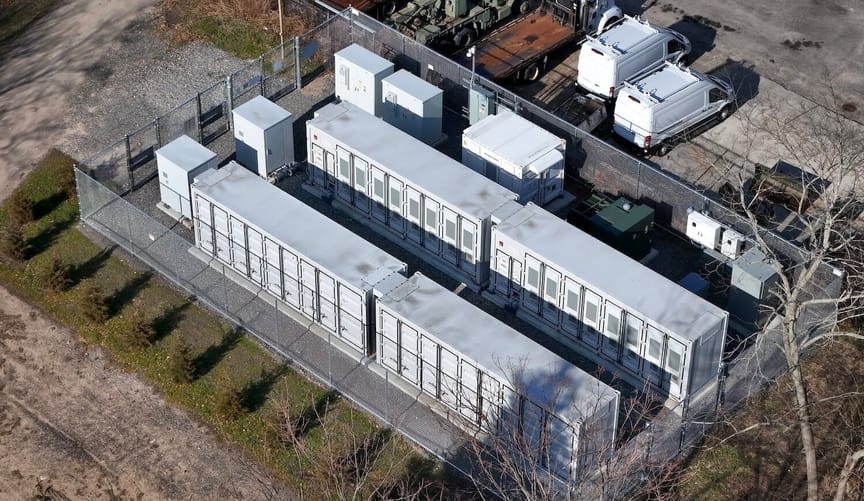
The region’s largest battery yet recently came online in Massachusetts, where state climate policies aimed at cleaning up the grid are boosting the tech.

By Julian Spector, Canary Media

    Redbrick statehouse of three stories with a gleaming golden dome
    The Massachusetts Statehouse, in Boston. The state created a new policy driver for battery storage investment, spurring a wave of megaprojects. (Tim Graham/Getty Images)

    Enormous new batteries keep appearing on the grid, making it devilishly tricky to keep track of which is the biggest in a given region. That’s certainly the case in New England, where acute power needs and robust state climate goals are fueling a buildout of big batteries that keep breaking capacity records.

    Canary Media recently covered the inauguration of the 175-megawatt Cross Town battery in Gorham, Maine, which was the largest in New England when it began operating in late November. But that trophy has already passed to a 250-megawatt facility in Medway, Massachusetts, southwest of Boston and about 10 miles from the Patriots’ Gillette Stadium.

    The Medway battery came online fully Feb. 25, according to developer VC Renewables, a subsidiary of global energy trader Vitol.

    “To be fair, I don’t expect Medway to hold that title for very long, either,” said Tom Bitting, managing director at Advantage Capital, which supported the project with a $158 million tax equity deal. ​“There are other batteries being developed in New England that are bigger, but I think it is all just a sign that we need all of it, and there’s huge demand for it.”

    For instance, Jupiter Power, a heavyweight in Texas’ booming grid storage market, is developing the 700-megawatt/2.8-gigawatt-hour Trimount battery plant at a former oil-storage site in Everett, Massachusetts, just north of Boston. Jupiter aims to finish the project in 2028 or 2029. Trimount is slated to be among the largest stand-alone batteries in the whole country — Vistra’s battery in Moss Landing, California, set that record with 750 megawatts/​3 gigawatt-hours, before much of that capacity burned up in a disastrous fire.

    Read the full story here

    Stop missing out. Get your free, 30-day EnviroPolitics newsletter trial today.

    Big batteries hit the grid in New England Read More »

    NJ groups file amicus to stop ICE detention center

    April 15, 2026 – Today, a nonpartisan coalition of environmental organizations and Roxbury community residents filed a motion and a proposed amicus brief supporting New Jersey’s and Roxbury Township’s request for a preliminary injunction to the United States District Court of New Jersey. 

    The emergency request seeks to stop the U.S. Department of Homeland Security (DHS) and U.S. Immigration and Customs Enforcement (ICE) from converting a vacant industrial warehouse in Roxbury into a mass immigration detention facility.

    The warehouse is in the New Jersey Highlands, a 1,300-square-mile, environmentally vital region stretching from Philipsburg on the Delaware River to West Milford and Mahwah on the New York border, encompassing 88 municipalities across seven counties. Designated for protection, it provides clean drinking water to over 6.2 million residents (two-thirds of the state) while offering significant scenic, historic, and recreational areas.

    On March 20, 2026, New Jersey and Roxbury filed a complaint and, subsequently, on April 7, requested emergency relief because DHS has indicated it plans to begin construction activities as early as late May. The complaint claims the construction threatens New Jerseyans’ drinking water resources, environmental justice communities already overburdened with stressors, important but constrained sewer service systems, a state-issued environmental protection easement, and other environmental harms. 

    Earlier in March of 2026, another federal court found an identical DHS decision to convert a warehouse into an ICE detention facility likely unlawful because federal law requires a full assessment of the impacts on state and local infrastructure and environmental resources.

    “This warehouse conversion in the midst of New Jersey’s environmentally sensitive Highlands Region must be stopped because federal law requires a hard look at the impacts and none has been offered,” said Julia Somers, the Executive Director of the Highlands Coalition “The Highlands Region is protected because the State Legislature found that it is a ‘landscape of special significance’ and an important source of drinking water depended on by over 70% of the State’s residents.”

    “DHS and ICE’s misguided decision to target the Roxbury Township property for their detention center makes absolutely no sense as this property is largely protected from further development through a conservation easement,” said Alison Mitchell, executive director of New Jersey Conservation Foundation. “From an environmental protection standpoint, their plans run afoul of federal requirements and counter to New Jersey’s efforts to protect critical wildlife habitat and the Highlands region.”

    Concerned Residents of the Roxbury Community, a group of local residents most immediately affected by DHS’s plans, joined the brief to provide first-hand perspective on what the conversion would mean for daily life in Roxbury. 

    Ann Mauro, a member of the Concerned Residents, wrote, “I’ve lived in Roxbury Township for nearly 30 years and have been actively involved the entire time. My family went through the public school system, played on teams at the parks, and volunteered with local groups to serve our community. Our neighborhoods, parks, clubs, businesses, and schools all reflect the people who live here, and all would be negatively impacted by an ICE warehouse.”

    Related: Judge sets May 12 hearing in fight over Roxbury ICE plan

    =======================================================

    Stop missing out. Get your free, 30-day EnviroPolitics newsletter trial today

    NJ groups file amicus to stop ICE detention center Read More »