
#BILLYPENNGRAM OF THE DAY (2/28/21)
 South Street’s sexy architecture (photo by @justjo1002) Want to see your photo here? Tag #billypenngram on Instagram |
#BILLYPENNGRAM OF THE DAY (2/28/21) Read More »
South Street’s sexy architecture (photo by @justjo1002) Want to see your photo here? Tag #billypenngram on Instagram |
#BILLYPENNGRAM OF THE DAY (2/28/21) Read More »
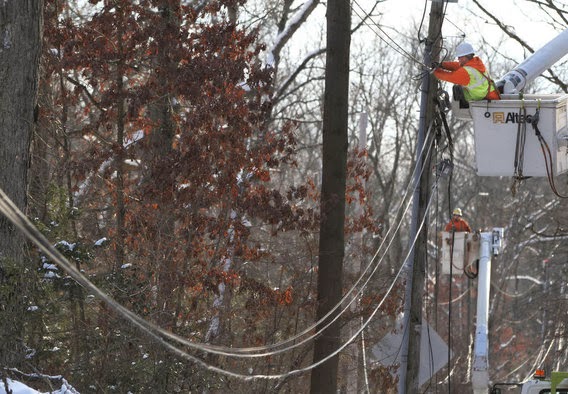
Legislation sponsored by Assembly Democrats Dan Benson, Sterley Stanley, and Carol Murphy to improve the response of public utility companies to major storms and hold them accountable cleared the Assembly Homeland Security Committee on Wednesday.
The bill is in response to the power outages following Hurricane Sandy in late October 2009 that left many residents without power until Thanksgiving, and the more recent outages following the back-to-back nor’easters that knocked out power for tens of thousands of New Jersey residents for weeks at a time. These power outages prompted the Board of Public Utilities to hold public hearings.
BPU report with power outage response recommendations
“Ratepayers have paid for reliability improvements over the last decade since Superstorm Sandy,” said Assemblyman Benson (D-Mercer / Middlesex). “This bill ensures that customers see the return on that investment in actual improved service and communications.”
The bill (A2427) , known as “The Reliability, Preparedness, and Storm Response Act,” would require the Board of Public Utilities (BPU) to develop and enforce performance benchmarks for service reliability, service disruption, service restoration, and communications for electric public utilities that distribute electricity to end users within New Jersey.
“Extended power outages are not just inconvenient, but potentially dangerous when it impacts residents with debilitating health issues,” said Assemblyman Stanley (D-Middlesex). “The response from the public utilities to recent storms needed to be stronger. This bill will ensure that a more comprehensive approach is taken.”
Don’t miss information like this. Sign up for FREE EP Blog updates
“Having residents go without power for weeks is strenuous and further delays the recovery process,” said Murphy (D-Burlington). “This will ensure that the public utilities are well prepared to minimize the impact on residents so they can get back on their feet sooner than later.”
The bill would require every electric public utility to file an emergency response plan with the BPU that reflects the performance benchmarks established by the BPU. This plan would serve as an official plan of action for each electric public utility in the event of a widespread power outage and is to include, but not be limited to:
* the identification of management staff responsible for electric public utility operations during an emergency;
* an explanation of the electric public utility’s system of communication with customers during an emergency that extends beyond normal business hours and business conditions;
* a history of contacts with customers that report or document to the electric public utility a need of essential electricity for medical reasons;
* designation of electric public utility staff to communicate with local officials and relevant regulatory agencies;
* provisions regarding how the electric public utility will assure the safety of its employees and contractors;
* procedures for deploying electric public utility and mutual aid crews to work assignment areas;
* the designation and prioritization of areas where a power outage may result in the malfunctioning of septic systems or the loss of drinkable water due to customers’ use of electric well water pumps;
* strategies to address flooding, wind damage, and vegetation management; and
* identification of supplies and equipment anticipated to be needed by the electric public utility during an emergency and the means of obtaining additional supplies and equipment.
Care to share? Use icons below to share this post on social media
By Michael Busler, Ph.D., public policy analyst, economics expert and a professor of finance at Stockton University.
Special to the USA TODAY Network
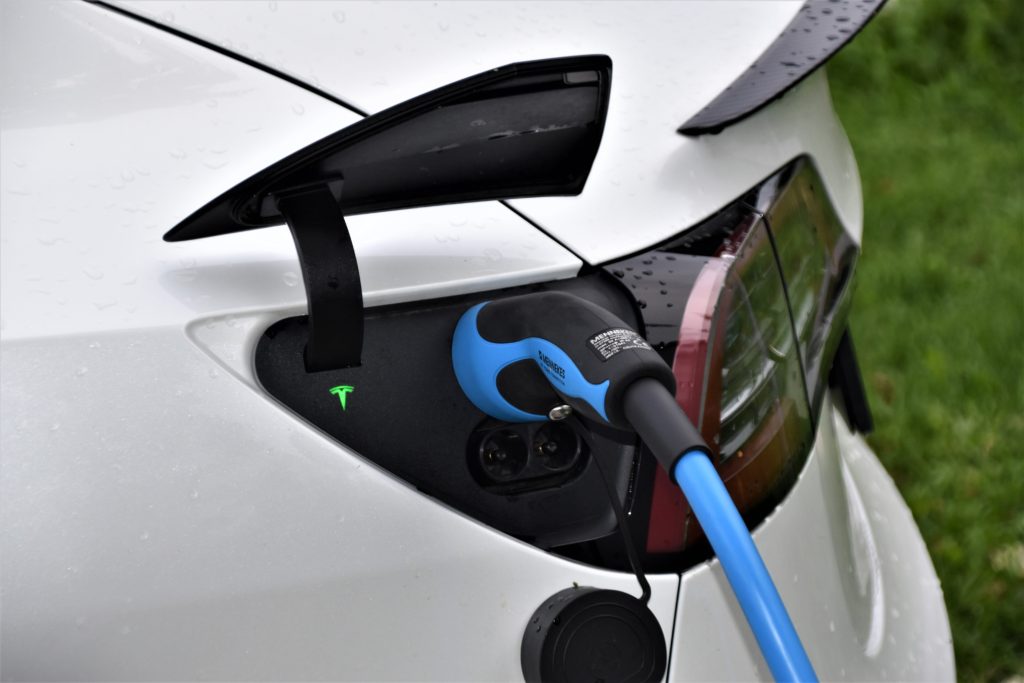
In yet another misguided attempt to make the Garden State “greener,” the New Jersey Department of Environmental Protection (DEP) recently proposed a regulatory rule that would ban the sale of new gasoline-powered vehicles by 2035. Constituents and consumers alike should be wary of this clumsy attempt by policymakers to plant New Jersey’s flag as the preeminent supporter of electric vehicles.
New Jersey’s move raises questions about the government meddling in the market while pushing policy agendas over consumer freedom and consumer choice. Despite $30 million in annual taxpayer subsidies through New Jersey’s Drive Green program the Garden State only has 31,000 zero emissions vehicles on the road as of June last year.
The fact is electric vehicles are too expensive for average families. Limiting consumer choice to only electric vehicles may price people out of cars altogether (perhaps a secondary goal of such a mandate) or force them to pay more money for something they don’t want.
According to research from Quartz the average price of a new electric vehicle is significantly higher than a new gasoline powered vehicle. Families who are barely struggling to make ends meet due to the economic disruptions of COVID-19 will be unable to afford this additional expense. Alternatively, such a mandate may just push consumers to visit neighboring Pennsylvania or Delaware to purchase a gasoline powered vehicle, depriving the Garden State of tax revenues and needlessly sending thousands of car salesmen to the unemployment lines.
Further, creating scarcity in the marketplace and limiting consumer choice to fewer options rarely causes prices to become more affordable. New Jersey’s subsidy program could incentivize electric car companies to capture extra revenue by lowering prices slowly and hoping subsidies increase. Companies would in effect not only capture these subsidies but could influence them with pricing behavior. Equally concerning are the perverse incentives subsidy programs perpetuate. In January, the PSE&G approved a plan to spend over $166M on EV infrastructure over the next six years. The funding serves to rectify the state’s plan to build out charging infrastructure for EVs, which is troublesome considering that the move will likely translate into additional subsidies or EV mandates in the future.
If you liked this post you’ll love our daily newsletter, EnviroPolitics. It’s packed with the latest news, commentary and legislative updates from NJ, PA, NY, Delaware…and beyond. Try it free for an entire month.

By Michael Sol Warren | NJ Advance Media for NJ.com
Scattered across New Jersey, four looming incinerators spend day and night torching our trash.
The facilities receive tons of waste from homes and businesses each day, burn it all, then recycle the metal that’s left behind and sell the electricity generated in the process to power thousands of homes.
It’s a model that incinerator companies have held up as a cleaner alternative to simply dumping trash in methane-belching landfills. But many Garden State residents living in their shadow, often in places plagued by dirty air, have long seen incinerators as a threat to their health. Organizations advocating for these communities have for years railed against the incinerators and pushed for their closures.
Now, a newly-released catalog of pollution and violations associated with those incinerators, plus information about subsidies provided to the facilities, has opened a new chapter in the controversy.
A new report published Wednesday by a coalition of environmental groups details the scope of collective pollution from New Jersey’s four active incinerators, plus one that was retired less than two years ago.
The report also highlights millions of dollars worth of subsidies paid to the incinerators by electric customers, and questions whether such payment was legal.
The findings are presented by Earthjustice, the Vermont Law School Environmental Advocacy Clinic, the New Jersey Environmental Justice Alliance and the Newark-based Ironbound Community Corporation. The information matches much of what the groups sent in a letter to the New Jersey Department of Environmental Protection and the New Jersey Board of Public Utilities last April. That letter was first reported by Politico.
The two companies that operate New Jersey’s incinerators, Morristown-based Covanta and New Hampshire-based Wheelabrator Technologies, blasted the new report as anti-industry misinformation and defended their environmental records to NJ Advance Media.
The report focuses on four incinerators currently operating in the state — three facilities run by Covanta in Newark, Camden and Rahway, and another run by Wheelabrator in Gloucester County — plus the former Covanta facility in Warren County that closed in 2019.
Those five incinerators, according to the report, consistently ranked among the largest sources of air pollution in New Jersey between 2015 and 2018, when compared to all 215 facilities with major air permits in in the state — places like factories and power plants.
That pollution is compounded by the incinerators’ proximity to other major industrial facilities, leaving nearby communities to breathe air dirtied by the cumulative effects. The Newark incinerator, for example, is on the edge of the city’s Ironbound neighborhood and near to factories, tank farms, a natural gas power plant and a sewage treatment facility.
“They’re not standalone facilities that are in the middle of nowhere,” Ana Baptista, a Newark-native and professor at The New School who focuses on environmental justice, told NJ Advance Media.
“Even when they’re within their permit limits, they’re part of the problem,” she added.
The legacy of heavy pollution in these places has left residents, who are largely people of color, with higher rates of respiratory problems and at higher risk of COVID-19.
James Regan, a Covanta spokesman, said the locations of the company’s incinerators were chosen years before the company took them over.
“These facilities were sited by local governments for their use,” Regan said. “Covanta operates them as best we can with minimal environmental impact.”
Regan stressed that pollution from incinerators is dwarfed by tailpipe pollution from cars, trucks, buses and other transportation sources in the communities. The transportation sector is the state’s largest source of air pollution, according to the DEP.
But environmentalists argue it is misleading to compare a single source of pollution to the collective total of thousands of other smaller sources. They also point out that transportation pollution is predictable, and theoretically easier to address. Pollution from incinerators, however, can fluctuate based on the type of trash is being burned at a given time.
If you liked this post you’ll love our daily newsletter, EnviroPolitics. It’s packed with the latest news, commentary and legislative updates from NJ, PA, NY, Delaware…and beyond. Try it free for an entire month.
By Kathryne Rubright, Pocono Record
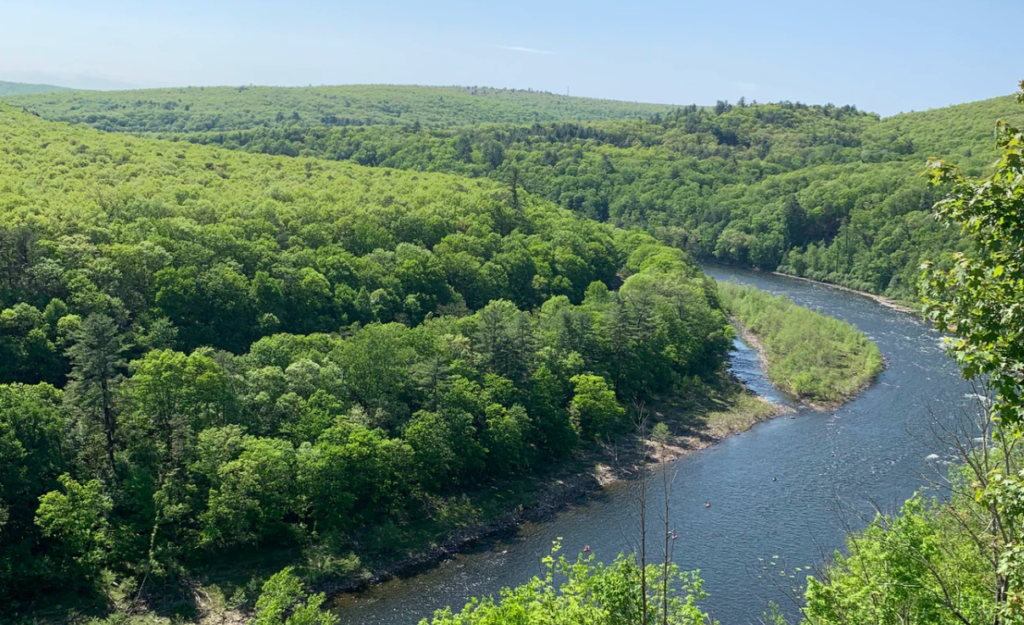
Fracking has been banned on 13,539 square miles of land surrounding the Delaware River following a 4-0 vote Thursday by the Delaware River Basin Commission.
The ban is a long-sought win for environmental activists and a defeat to some landowners in the watershed who would have liked to profit from the natural gas below their properties.
Pennsylvania Department of Environmental Protection Secretary Patrick McDonnell, alternate for Gov. Tom Wolf, voted in favor of the new regulations, along with alternates for Gov. John Carney of Delaware, Gov. Phil Murphy of New Jersey and Gov. Andrew Cuomo of New York.
The federal representative, Brigadier Patrick McDonnell, commander and division engineer of the North Atlantic Division of the U.S. Army Corps of Engineers, abstained, citing the need for more time to coordinate with the new Biden administration.
Reading a statement from the governor, McDonnell said Wolf is “proud to join with other DRBC commissioners in preserving the water resources of this unique region for generations to come.”

By a 5-0 vote, the DRBC also approved a resolution to start a rulemaking process regarding the exportation of water for fracking elsewhere, and the importation of fracking wastewater, issues activists including the Delaware River Frack Ban Coalition have pushed to see addressed.
The watershed includes all or part of 17 Pennsylvania counties, seven of which sit entirely or partly over the Marcellus Shale that can be fractured by millions of gallons of water to extract natural gas: Carbon, Monroe, Lackawanna, Luzerne, Pike, Schuylkill and Wayne.
Officially, the DRBC had not imposed a moratorium on fracking, but in practice, the ban is a continuation of the past decade. The commission voted in 2010 to put off considering well pad dockets until regulations were adopted, and no fracking applications have been submitted since, “a situation that has sometimes been referred to as a ‘de facto moratorium,’” the DRBC said in an FAQ on the new regulations.
The vote was in line with the governors’ previously stated positions. Wolf, Carney and Murphy had expressed support for fully banning fracking in the Delaware River basin, and New York has already banned fracking.
Environmental groups across the watershed, which includes parts of Pennsylvania, New York, New Jersey and Delaware, applauded the move while making clear they’d like to see more action on water and wastewater.
“This is a watershed moment for protecting one of America’s most iconic watersheds. Fracking shouldn’t be allowed anywhere, much less near an iconic natural waterway like the Delaware River, which provides drinking water for so many,” said David Masur, executive director of the environmental advocacy group PennEnvironment in a statement issued after the vote.
“The data is conclusive: From cradle to grave, fracking puts the health of our planet and our communities at risk. By banning this toxic practice in such a vital and beloved watershed, regional leaders are taking strong action to protect millions of people,” Masur said.
In addition to protecting drinking water, the move protects a river that is vital to tourism, Halle Van der Gaag, senior manager for Pennsylvania and Delaware Programs for the National Parks Conservation Association.
“The number of visitors at parks along the Delaware River, notably at Delaware Water Gap National Recreation Area, has skyrocketed as the pandemic stretches on. More people are getting outside at our parks, and they deserve safe access and clean water,” Van der Gaag said in a statement, going on to highlight the economic impact.
“This river is more than a tourist destination; it’s the economic lifeblood for many surrounding communities and local businesses. In 2019, Delaware Water Gap and the Upper Delaware Scenic & Recreational River welcomed more than 3 million visitors, whose spending in the area generated nearly $130 million in economic activity. It is imperative that we protect our parks, our resources, and the people who love and depend on them from the devastating environmental impacts of fracking.”
Don’t miss information like this. Sign up for FREE updates
PennFuture also commended the DRBC’s action on fracking, adding “the fight isn’t over yet.”
“Because the DRBC withdrew its proposed regulations regarding interbasin water transfers and fracking wastewater treatment within the basin, and instead plans to issue new regulations for public comment by September of this year, PennFuture will review those regulations and will explore all of our options to ensure that the Commission’s regulations are fully protective of water quality,” the advocacy group’s president and CEO, Jacquelyn Bonomo, said in a statement.
Other groups including the Delaware Riverkeeper Network, PennEnvironment and Catskill Mountainkeeper signaled their intent to keep working on water and wastewater issues.
Joseph Minott, Clean Air Council’s Executive Director and Chief Counsel said is goup was “ thrilled that the DRBC listened to the public and banned fracking in the Delaware River Watershed once and for all. We welcome DRBC’s next steps to complete its fracking ban by prohibiting water withdrawals needed for fracking as well as the disposal of toxic fracking wastewater in the watershed.”
“Today’s ban on fracking in the Delaware River basin is a huge deal, and a testament to the persistence and dedication of grassroots activists in a battle that has lasted over a decade,” said Eric Benson, NJ Campaigns Director, Clean Water Action.
Jeff Tittel, director of the New Jersey Sierra Club, called Thursday’s move “the first step towards a full ban.”
“Today they took an important step forward, and we are glad that they have committed to a full ban,” he said. “We’ll be glad to work with them to do additional rules to ban the treatment and dumping of fracking wastewater in the Basin or taking water for fracking elsewhere. This will help protect public health and the River from more contamination.”
“The Commission’s blatant disregard for scientific evidence and bodies of independent research – including from the neighboring Susquehanna River Basin where continuous water quality and quantity monitors have shown no impact from shale development – further demonstrates the purely political nature of this action,” Callahan said.
He pointed to a 2015 report from the Susquehanna River Basin Commission that did not find correlations between well pad density and several water quality indicators.
The DRBC cited reports from the New York Department of Environmental Conservation, which found that “there are potential significant adverse environmental and public health impacts associated with high-volume hydraulic fracturing operations” and the U.S. Environmental protection agency, which while noting “data gaps and uncertainties” concluded that fracking “can impact drinking water resources under some circumstances.”
Gene Barr, president and CEO of the Pennsylvania Chamber of Business and Industry, called the outcome “a political decision uninformed by science.”
Tickner’s abstention was “extremely disappointing,” Barr said, “given the national energy security implications of reduced domestic energy development and President Biden’s stated commitment to reducing emissions and re-shoring manufacturing. With our economy reeling due to the pandemic and associated lockdown measures, and recent events highlighting how imperative energy production is, this is no time to let irresponsible voices carry the day and impede energy development.”
Fracking banned in 13,000 acres of the Delaware River Basin Read More »
By K&L Gates Attorneys David J. Raphael, Tad J. Macfarlan, Sandra E. Safro, Cliff L. Rothenstein, and Dean Brower.
On 22 February 2021, the U.S. Court of Appeals for the District of Columbia Circuit (D.C. Circuit) brought clarity to the current and future status of the U.S. Environmental Protection Agency’s (EPA) 2015 Clean Power Plan (CPP) when it issued an order that will prevent the CPP from springing back to life.1 The D.C. Circuit’s order provides EPA a clean slate to work from in developing a new plan to reduce greenhouse gas (GHG) emissions from the electric generating sector.
As background, in 2015, EPA under the Obama administration promulgated the CPP.2 The CPP was an expansive rule that attempted to restructure the nation’s electric generation system. In 2019, the Trump administration repealed the CPP as part of the same rulemaking in which it established its own, more narrowly tailored replacement rule, the Affordable Clean Energy Rule (ACE Rule).
As further discussed in our prior alert, on 19 January 2021, the D.C. Circuit struck down the ACE Rule.3 Although the D.C. Circuit did not discuss the reinstatement of the CPP in its opinion, the court vacated the Trump administration’s rulemaking that repealed the CPP.4 Following that action by the D.C. Circuit, uncertainty and questions regarding the future vitality of the CPP rule and its regulatory obligations began to develop among stakeholders in, and regulators of, the energy industry.
Don’t miss information like this. Sign up for FREE EP Blog updates
In order to assure that the CPP rule did not again take effect upon the D.C. Circuit’s issuance of the mandate with respect to its 19 January decision, EPA subsequently filed an unopposed motion to partially stay the issuance of the mandate solely with respect to the vacatur of the ACE Rule’s repeal of the CPP.5 In its motion to stay, EPA explained that its requested partial stay of the mandate would “promote regulatory certainty[,]” “avoid the possibility of administrative disruption,” and “remove any doubt about states’ and regulated entities’ obligations under the CPP” while EPA considered “afresh” on remand how to best regulate power plants’ GHG emissions.6 EPA’s duty to establish GHG emissions guidelines for existing coal-fired power plants flows from Section 7411 of the statute, which directs EPA and states to regulate categories of stationary sources that “cause[], or contribute[] significantly to, air pollution” that “may reasonably be anticipated to endanger public health or welfare.”7
On 22 February, in a brief order, the D.C. Circuit granted EPA’s motion, indicating that it would withhold issuance of the mandate with respect to the repeal of the CPP until EPA responds to the court’s remand in a new rulemaking action. By granting EPA’s motion to stay, the D.C. Circuit presents EPA with a clean slate (and an obligation) to establish emissions guidelines for existing coal-fired power plants under the Clean Air Act (assuming the D.C. Circuit’s 19 January decision is not appealed and overturned by the Supreme Court or the full D.C. Circuit sitting en banc). EPA will provide status reports on the progress of the administrative proceedings at 90-day intervals.8
EPA’s request for a partial stay provides a hint that EPA wants additional time—to conduct a comprehensive review of the structure and substance of the CPP rulemaking—before undertaking a new rulemaking action establishing new emissions guidelines for existing coal-fired power plants under the Clean Air Act. This partial stay provides a new window of opportunity to those impacted by how these GHG emissions are regulated to make their views known as EPA develops a new regulation.
Footnotes:
1Order, Am. Lung Ass’n v. EPA, No. 19-1140, 2021 U.S. App. LEXIS 1333 (D.C. Cir. Feb. 22, 2021).
280 Fed. Reg. 64,662 (Oct. 23, 2015).
3Am. Lung Ass’n, 2021 U.S. App. LEXIS 1333.
4Id. (“Because promulgation of the ACE Rule and its embedded repeal of the Clean Power Plan rested critically on a mistaken reading of the Clean Air Act, we vacate the ACE Rule and remand to the Agency.”)
5Respondents’ Motion for a Partial Stay of Issuance of the Mandate at 1, Am. Lung Ass’n, 2021 U.S. App. LEXIS 1333.
6Id. at 4.
742 U.S.C. § 7411(b)(1)(A); see id. § 7411(d), (f) (providing that the EPA administrator “shall” adopt performance standards for existing and new sources of air pollution).
8Respondents’ Motion for a Partial Stay of Issuance of the Mandate at 5, Am. Lung Ass’n, 2021 U.S. App. LEXIS 1333.
Care to share? Use icons below to share this post on social media
Federal district court keeps EPA’S Clean Power Plan on ice Read More »