Northwest Arctic villages to break ground on solar projects next spring

Aerial view of the Native Village of Shungnak
The Native Village of Shungnak (Photo courtesy of Northwest Arctic Borough)

By Wesley Early, KTOO

Construction is set to start next spring on a solar battery project in the Northwest Arctic villages of Shungnak and Kobuk. It’s the latest renewable project for a region routinely struck by high energy costs.

It’s always been expensive to provide energy to rural Alaska. With most communities not falling on the road system, locals are forced to barge and fly in diesel fuel to power generators. There is a state program that reduces energy costs but with the state’s budget crisis, it’s unknown how long that program will be around.

Edwin Bifelt said even with state support, energy in rural Alaska remains pricey.

“Even with Power Cost Equalization, people see rates anywhere from 20 cents up to 40 to 50 cents a kilowatt-hour, which is four or five times the national average,” Bifelt said.

Bifelt, who grew up in the village of Huslia, is the founder and CEO of Alaska Native Renewable Industries. The company specializes in providing renewable energy to rural Alaska communities.

ANRI wrapped up the construction of Alaska’s largest rural solar farm in Kotzebue earlier this year, a 576-kilowatt project with more than 1,400 solar panels. Combined with the local electric co-op’s wind turbines, it’s estimated that Kotzebue is about 50% powered by renewable energy.

Now, ANRI is contracted with the Northwest Arctic Borough for just over $2.1 million to construct similar arrays in the villages of Shungnak and Kobuk, the easternmost communities in the borough. Bifelt said he expects the arrays to lower utility bills in the villages.

“Definitely see a decrease in the amount of diesel fuel that they have to fly in every year, but it’s tough to say right now what end effect it’s going to have for residents in the long run,” Bifelt said.

Kobuk and Shungnak combined have about an eighth the population of Kotzebue. Bifelt said the two new arrays will follow a similar design to the Kotzebue project, but they will be much smaller.

“The tentative design we have is for approximately a 38-kilowatt array in Kobuk and a 186-kilowatt array in Shungnak, I believe,” Bifelt said.

Bifelt said rural energy projects aren’t new to the region, though his company puts an emphasis on hiring locals to help with construction rather than fly up workers from larger cities.

“Just to provide some temporary jobs, provide some new skills for people within the community relating to renewable energy, and giving them education and experience with solar,” Bifelt said.

Construction of the solar arrays should wrap up by summer next year.

Read the full story

Northwest Arctic villages to break ground on solar projects next spring Read More »

Pandemic has been tough on workers in NJ’s green energy sector

Analysis estimates that 16% of nearly 38,000 jobs have been wiped out in the COVID-19 slowdown

An energy saving smart meter

Tom Johnson reports for NJ Spotlight

After four years of steady growth, energy-saving programs and other efficiency efforts were slowed by the COVID-19 pandemic, with as many as 6,202 jobs wiped out in New Jersey from last December, according to a new analysis.

The analysis, by E4Future, Environmental Entrepreneurs and BW Research Partners, estimated a 16.3% decline in employment in the sector since the onset of the pandemic, with jobs declining from 37,982 to 31,781 in the state.

The slowdown reflects a nationwide trend, with more than 300,000 workers in the sector still unemployed since the industry began shedding jobs last year as the pandemic took hold in the U.S., according the American Council for an Energy Efficient Economy.

The disruption led states — many like New Jersey with ambitious goals to counter climate change — to abruptly shift their focus to mitigate the health and economic impacts of the deadly global pandemic.

Here in New Jersey, with hundreds of thousands of customers falling way behind in paying utility bills, it has spurred calls by consumer advocates, including the state’s Division of Rate Counsel, to press for a suspension of further utility rate increases. That includes programs the administration of Gov. Phil Murphy deems critical to fund meeting its goals for transitioning to clean energy and reducing emissions that contribute to climate change, such as the electrification of the transportation system.

Green-energy advocates say those efforts should not take a back seat, even during a pandemic.

“A number of states see that they have to act aggressively now to cut carbon emissions, but others aren’t acting urgently,’’ said Steven Nadel, executive director of the ACEEE. “In this pandemic and recession, policymakers can embrace efficiency efforts to help residents reduce their utility bills, and to get more people back to work, all while cutting pollution.’’

A call for more state investment

Jeff Tittel, director of the New Jersey Sierra Club, agreed, saying state investment should be stepped up in its energy efficiency programs — the largest energy sector in New Jersey.

“We’ve said all along — it is a win-win-win situation,” he said. “It creates jobs, reduces air pollution and saves people money on their utility bills. It really makes sense to invest in these programs.’’

In the past year, New Jersey has taken steps to have a more aggressive energy efficiency program, adopting specific energy-saving targets for gas and electric utilities, and developing policies to ensure low-income customers have equitable access to energy efficiency programs.

The state Board of Public Utilities approved a comprehensive energy efficiency program by the state’s largest utility, Public Service Electric & Gas, allowing the company to spend nearly $1 billion over the next few years. Electric utilities have to ramp up energy savings for customers by 2.15% a year and gas utilities by 1.1%. Those requirements are some of the highest levels in the nation, according to the ACEEE.

Nevertheless, New Jersey placed 17th in the nation in a 50-state scorecard (which also includes Washington D.C.) that ranks efforts in energy efficiency, the same spot the group gave New Jersey the previous year.

Read the full story

Like this? You’ll love our daily EnviroPolitics newsletter
FREE, 30-day, trial subscription

Pandemic has been tough on workers in NJ’s green energy sector Read More »

Jennifer Granholm to be named as energy secretary

The former Michigan governor is a strong advocate for electric vehicles. She’ll need an experienced deputy to handle nuclear weapons programs.

By Will EnglundJuliet Eilperin and Dino Grandon, The Washington Post

President-elect Joe Biden is nominating Jennifer Granholm, the former governor of Michigan who has been a strong voice for zero-emissions vehicles, as secretary of energy, two people familiar with the process said Tuesday.

Granholm, 61 and currently an adjunct professor of law at the University of California at Berkeley, has argued that the United States risks being left behind by other countries if it doesn’t develop alternate energy technologies. Her pick is a clear sign that Biden wants the department to play an important role in combating climate change.

Arun Majumdar, a materials scientist and engineer who led a new research agency within the Energy Department under the Obama administration, is under consideration as deputy secretary, according to two people who spoke on the condition of anonymity because no decision had been finalized. Majumdar, who has been working for the Biden transition team and was considered a candidate himself for the top Energy post, is an enthusiastic advocate for modernizing the nation’s electricity grid.

Granholm and Majumdar are both immigrants — she from Canada, he from India. Both come to the department from California with backgrounds and expertise in promoting and developing alternate technologies, even as the bulk of Energy’s mandate has to do with the maintenance and safeguarding of the nation’s nuclear weapons and handling the cleanup efforts at contaminated nuclear sites.

In budgetary terms, the nuclear program consumes about 75 percent of the department’s budget, or $27 billion.

“The Energy Department is actually the Nuclear Weapons Department,” said Daryl Kimball, executive director of the Arms Control Association.

But its role in promoting research began getting more attention in the Obama administration and is likely to feature prominently under Biden, given his promises to tackle climate change.

Read the full story

Try our daily newsletter, EnviroPolitics, FREE for a full month

Jennifer Granholm to be named as energy secretary Read More »

Biden picks former EPA chief Gina McCarthy as White House climate czar

McCarthy heads the Natural Resources Defense Council, which has sued the Trump administration 100 times

By Juliet Eilperin and Brady Dennis, Washington Post

President-elect Joe Biden has tapped Gina McCarthy, who ran the Environmental Protection Agency under President Barack Obama and now leads a major advocacy group, to coordinate the new administration’s domestic climate agenda from a senior perch at the White House.

Three individuals familiar with the matter, who asked not to be identified because the decision had not been publicly announced, confirmed that the final decision had been made to tap McCarthy for the post.

McCarthy is president of the Natural Resources Defense Council, which has sued the Trump administration more than 100 times, successfully overturning its attempts to delay energy efficiency rules and protections for threatened species.

McCarthy, 66, who spearheaded the Obama administration’s efforts to curb greenhouse gases from power plants and vehicles, will be responsible for implementing Biden’s plan to weave climate policy throughout the federal government as the first-ever “national climate adviser.”

She will head the White House White House Office of Domestic Climate Policy. Ali Zaidi, 33, New York’s deputy secretary for energy and environment, will be her deputy.

She will be the domestic counterpart to John F. Kerry, the former secretary of state and senator whom Biden has named special presidential envoy to manage the U.S. role in global climate action.

McCarthy will oversee a broad interagency effort to leverage the federal government’s powers to cut greenhouse gas emissions. While traditional players such as EPA and the Interior and Energy departments will regulate climate pollutants directly, departments including Treasury, Transportation and Agriculture will also use policy to try to tackle climate change.

McCarthy is popular among Democrats. But she has tangled repeatedly with Republicans, and her signature effort at EPA, the Clean Power Plan, was blocked in court and later reversed by Trump officials.

According to an individual familiar with the transition’s thinking, who spoke on the condition of anonymity in advance of a formal announcement, Biden selected her because she is “one of the nation’s most trusted and accomplished voices on environmental issues” who not only spearheaded the Obama administration’s most significant climate policies but worked “to safeguard vulnerable communities from chemical hazards.

“So she will be ready on Day One,” this person said.

Read the full story

Don’t miss information like this. Free EnviroPolitics updates

Biden picks former EPA chief Gina McCarthy as White House climate czar Read More »

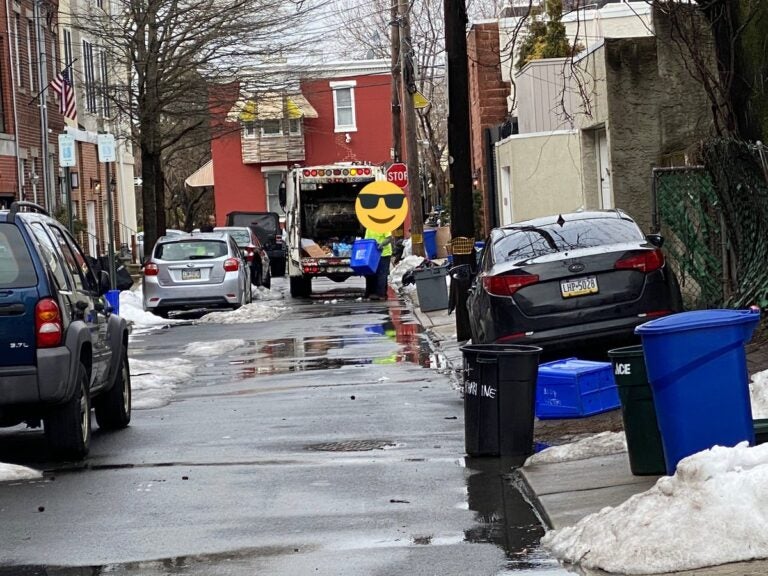
Waste disposal crisis feared in Connecticut when incinerator closes

The Hartford facility will force the state to send waste to out-of-state landfills.

By Adam Redling , Waste Today

Tom Kirk, president and CEO of Connecticut’s Materials Innovation and Recycling Authority (MIRA), recently announced that the state’s Hartford-based waste to energy facility will close by July 1, 2022 at the latest, Connecticut Public Radio reports.

The closure date is dependent, in part, on future operational and maintenance costs.

MIRA represents 51 municipalities in Connecticut. The organization, which was created by the state in 2014, is the successor of the Connecticut Resources Recovery Authority (CRRA). The CRRA was created in 1973 to help the state divert material from landfill through the development of a network of resource recovery facilities.

MIRA’s board took an initial vote to close the Hartford plant earlier this year and transition it to a transfer station after financing prospects and subsidies for the organization dried up. The facility has recently suffered from mechanical failures and other issues due to its age. The state rejected a $330 million proposal to upgrade the aging trash incinerator earlier this year. 

Environment Commissioner Katie Dykes On Connecticut’s Looming Waste Crisis (Public Radio interview)

The Hartford plant incinerates between 600,000 and 720,000 tons of waste annually. With MIRA planning to shut down the Hartford facility by July 2022, the organization is still contractually obligated to manage waste for 50 of its member communities through 2027.

“It’s a very significant change in the way we’re handling our waste,” Kirk says. “We’ve landfilled almost none of our garbage for 30-plus years. To now be stepping backwards to a landfill-dependent solution … is a disappointing development.”

Read the full story

Like this? You’ll love our daily EnviroPolitics newsletter
FREE, 30-day, trial subscription

Waste disposal crisis feared in Connecticut when incinerator closes Read More »

Congress OKs funding for Green Brook, Rahway NJ flood control projects

Mike Deak, Bridgewater Courier News

New studies of the Green Brook Flood Control Project and the renewal of a Rahway River flood study are included in a bill recently passed by the House of Representatives.

The original Green Brook Flood Control plan called for the construction of detention basins on the Watchung Ridge in Berkeley Heights to slow the flow of water off the mountain into the Green Brook and then the Raritan River through Plainfield, North Plainfield, Green Brook, Dunellen, Middlesex Borough and Bound Brook before emptying into the Raritan River.

However, that plan may no longer be viable, according to Raymond Murray, chairman of the Green Brook Flood Control Commission.

“We want to take a good look at what can be done,” he said.

https://www.mycentraljersey.com/story/news/local/land-environment/2020/12/15/congress-oks-funding-green-brook-rahway-nj-flood-control-projects/6539785002/

Congress OKs funding for Green Brook, Rahway NJ flood control projects Read More »