Could voter suppression impact South Jersey’s tight 2nd District race?

‘Vote messenger’ working to get out the vote for Republican Jeff Van Drew in Atlantic City generates widespread criticism from local Black community, officials

Craig Callaway currently works for Jeff Van Drew ‘s campaign and previously worked for his opponent in the 2nd Congressional District, Amy Kennedy.


Editor’s Note: This coverage is made possible through Votebeat, a nonpartisan reporting project covering local election integrity and voting access. It is available for reprint under the terms of Votebeat’s republishing policy.

By JEFF PILLETS, NJ Spotight

Fourteen years ago, Craig Callaway walked out of South Woods State Prison after a 42-month term for bribery committed while serving as the Atlantic City council president.

Federal agents taped Callaway, a Black man with deep roots in the city’s impoverished Black community, taking $10,000 from a contractor in exchange for lucrative work in a public redevelopment project.

Today, and every day through Election Day, Callaway is walking the streets of his native Atlantic City armed with $110,000 in get-out-the-vote money from Jeff Van Drew, the Democrat-turned-Republican who is fighting to retain his seat in South Jersey’s 2nd Congressional District.

“What I do is legal but it’s very expensive — it takes a lot of money,” said Callaway in a phone interview with NJ Spotlight News on Thursday. “In fact, I need a lot more money. We’re out in the streets. We’re hustling.”

Callaway describes himself as a professional “vote messenger.” He says he pays people to go around neighborhoods collecting filled-out ballots and then delivers them to drop boxes or to the local election offices. He usually works for Democrats, and earlier this year even worked for Van Drew’s opponent in the congressional race, Amy Kennedy.

Targeting minority voters

Callaway’s brand of vote hustling has generated widespread contempt from South Jersey’s Black community, and other critics, who say he’s perfected a voter suppression regime that could impact this tight congressional race. Top Democrats say the Callaway controversy reflects broader anxiety in the party that other pockets of minority voters in New Jersey may be targeted this year by similar tactics, or even outright intimidation. Voters are already awash in misinformation, and many are confused about voting in the state’s first almost all-mail general election.

“He’ll go around giving people $20 or $30 for their ballots and then he does what he wants with them — it’s like living in 1954 or something,” said Tanzie Youngblood, a retired schoolteacher from Gloucester County who ran unsuccessfully in the Democratic congressional primary.

“Sometimes he just buys people hot dogs,” Youngblood said. “If you’re dirt-poor, you’re grateful. And a lot of people in Atlantic City are dirt-poor.”

Leading state Democrats say Callaway’s well-known tactics have been copied around New Jersey over the years. His street operation for Van Drew, they say, comes in spite of a new state law passed to limit the work of vote messengers because the practice has been prone to fraud.

“That law came about because of Craig Callaway and the damage his operation has done over the years,” said James Gee, a longtime adviser on race issues who is now chief of staff for U.S. Rep. Bonnie Watson Coleman, a Democrat in New Jersey’s 12th Congressional District.

Read the full story

If you liked this post you’ll love our daily newsletter, EnviroPolitics. It’s packed with the latest news, commentary and legislative updates from New Jersey, Pennsylvania, New York, Delaware…and beyond. Don’t take our word for it, try it free for an entire month. No obligation.

Could voter suppression impact South Jersey’s tight 2nd District race? Read More »

As pandemic raged and thousands died, government regulators cleared most nursing homes of infection-control violations

Despite promises of ‘aggressive enforcement,’ over 40,000 residents died in homes that received a clean bill of health

By Debbie CenziperJoel Jacobs and Shawn Mulcahy, Washington Post

At the outset of a looming pandemic, just weeks after the first known coronavirus outbreak on U.S. soil, the woman responsible for helping to protect 1.3 million residents in America’s nursing homes laid out an urgent strategy to slow the spread of infection.

In the suburbs of Seattle, federal inspectors had found the Life Care Center of Kirkland failed to properly care for ailing patients or alert authorities to a growing number of respiratory infections. At least 146 other nursing homes across the country had confirmed coronavirus cases in late March when Seema Verma, the administrator of the Centers for Medicare and Medicaid Services, vowed to help “keep what happened in Kirkland from happening again.”

The federal agency and its state partners, Verma said, would conduct a series of newly strengthened inspections to ensure 15,400 Medicare-certified nursing homes were heeding long-standing regulations meant to prevent the spread of communicable diseases. It was another key component of a national effort, launched in early March, to shore up safety protocols for the country’s most fragile residents during an unprecedented health emergency.

But the government inspectors deployed by CMS during the first six months of the crisis cleared nearly 8 in 10 nursing homes of any infection-control violations even as the deadliest pandemic to strike the United States in a century sickened and killed thousands, a Washington Post investigation found.

Read the full story

If you liked this post you’ll love our daily newsletter, EnviroPolitics. It’s packed with the latest news, commentary and legislative updates from New Jersey, Pennsylvania, New York, Delaware…and beyond. Don’t take our word for it, try it free for an entire month. No obligation.

As pandemic raged and thousands died, government regulators cleared most nursing homes of infection-control violations Read More »

NJ Senate passes bill making it easier for gas stations to add EV charging units

From NJ Senate Democrats

https://www.senatenj.com/uploads/Electric-Car-520x299-1.jpg

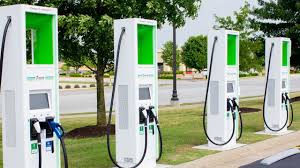
Legislation sponsored by Senator Joe Pennacchio expanding access to charging stations for electric vehicles was approved today by the New Jersey Senate.  

Pennacchio’s bill (S-938) streamlines the approval process for installing recharge portals at gasoline service stations, making it more convenient for drivers to plug in and charge their batteries.

“As the popularity of Tesla and other plug-in transportation continues to grow, the number of electric vehicles on New Jersey roads will steadily increase,” said Pennacchio. “This bill would help the availability of charging locations keep pace with the expanding usage of zero-emission vehicles.”

There are over 30,000 plug-in electric vehicles registered in New Jersey, and the number continues to expand. A law signed in January providing a $5,000 rebate on the sale of electric vehicle fueled a buying surge, and more than 1,800 rebate applications have been filed with the state.

Under the bill, electric installations would be permitted at gas stations without the need for them to file additional applications.

Pennacchio noted that these locations have already received zoning approval to operate as a gas station. He said station owners shouldn’t have to go through more bureaucratic red tape to install a charging station.

“There are 565 municipalities in the state,” said Pennacchio. “The last thing we need is each municipality issuing different rules for adding charging facilities to gas stations. My bill would ensure that electric car drivers have lots of convenient options to recharge.”

To meet state clean air goals, 330,000 zero emission vehicles are needed by 2025.

“Cutting emissions reduces air pollution—so when we get more electric vehicles on the road, it will benefit the environment and public health,” said Pennacchio. “My legislation will help expand the charging network to keep pace with demand and help New Jersey families breathe easier.”

Don’t miss information like this. Click to receive free EP Blog updates

NJ Senate passes bill making it easier for gas stations to add EV charging units Read More »

A Long Island wedding and birthday party infected 56 with the coronavirus: ‘Blatant disregard for the well-being of others

By Kate Shepherd, Washington Post

coronavirus outbreak in Long Island that has left 56 people infected this month and forced nearly 300 others to quarantine started with a country club wedding and a birthday party.

Flouting New York state restrictions, 91 people gathered on the North Fork Country Club’s neatly manicured lawns and elegant white rooms lined with floor-to-ceiling windows to celebrate a wedding on Oct. 17.

Within two weeks, 30 guests had tested positive for the coronavirus. Suffolk County health officials said an additional 159 people who had potentially been exposed to the virus by wedding attendees had been forced to self-quarantine to prevent further spread of the virus.

A Long Island wedding and birthday party infected 56 with the coronavirus: ‘Blatant disregard for the well-being of others Read More »

A push for New Jersey to follow California’s lead on recycling plastic

Revised bill is designed to encourage reuse and keep plastics out of the environment, landfills, incinerators

File photo: A worker sorts out plastic bottles collected for processing at a plastic recycling center.

Tom Johnson reports for NJ Spotlight

New Jersey is not yet done with trying to reduce plastic pollution.

The Senate Environment and Energy Committee is reworking draft legislation designed to spur use of recycled plastic and modeled after a California law that encourages the reuse of plastic beverage containers to keep plastics from being dumped in landfills, incinerators, and oceans.

The draft bill (S-2515), not yet made public, is viewed by proponents as a way of reducing use of plastics and helping to develop a domestic market for recycled material in the United States, a market that has virtually disappeared with the closure of overseas markets in China and elsewhere.

Sen. Bob Smith, who chairs the Senate panel, announced the revisions to a bill he originally introduced in June at a committee hearing last week. Smith (D-Middlesex), the bill’s sponsor, said he hopes to have the legislation signed into law early next year.

The committee substitute emerged after Smith had extensive discussions with the state Department of Environmental Protection, which convinced Smith that a California bill signed into law last month ought to establish the framework of such a bill.

“It is much more to the California model than the way we started out,’’ said Smith, who described the proposed changes to the bill at the committee meeting last week.

Industry and environmentalists in favor

So far, this draft legislation seems to have attracted more support from both industry and environmentalists than a bill awaiting Gov. Phil Murphy’s signature that would ban single-use plastic and paper bags.

“We are encouraged,’’ said Dennis Hart, executive director of the Chemistry Industry Council of New Jersey. He said the sector is committed to the reuse and recycling of plastics. “The more we can encourage reuse, the less of fossil fuels we will use,’’ Hart said.

Instead of bans, the council wants to work with legislators to enact ways to encourage more reuse of plastics in recycling containers, according to Hart.

Under the revised bill, the recycled content would start at 25% for rigid plastic containers and 15% for plastic beverage containers one year after the bill’s effective date and then increase by 5% every three years to a cap at 50%. The legislation also would prohibit polystyrene loose-fill packaging, commonly known as packing peanuts.

The bill also would require manufacturers to register with the DEP and pay an annual fee, which would help to cover audit and enforcements costs for the department. The bill would authorize the DEP to audit any manufacturer to ensure compliance with the law.

A way to revitalize recycling?

“This bill is an important first step for our state,’’ said Jeff Tittel, director of the New Jersey Sierra Club. “If we can’t get rid of certain plastics, we need to make sure that they’re made with recycled plastic to get it out of the waste stream. We need to be able to reduce plastic use and be able to recycle them.’’

The proposed committee substitute incorporates provisions the business community supports, including a mechanism allowing the DEP to adjust content standards through regulation. That provision is aimed at addressing industry’s concerns that some content standards may not be achievable under current regulations.

New Jersey’s recycling community, while yet to see the substitute bill, seems to be on board, at this point. “It is one of the ways to revitalize recycling,’’ said Frank Brill, a lobbyist representing recycling groups. “It will help stimulate recycling of what we lost with China collapsing its market,’’ he said.

Gov. Phil Murphy has a bill (S-864) on his desk that would ban single-use plastic and paper bags, as well as polystyrene containers, a measure backers say is one of the strongest such bans in the nation. Plastic pollution in state waters and the ocean has become so widespread that many environmental groups have banded together to press policymakers to address the problem.

If you liked this post you’ll love our daily newsletter, EnviroPolitics. It’s packed with the latest news, commentary and legislative updates from New Jersey, Pennsylvania, New York, Delaware…and beyond. Don’t take our word for it, try it free for an entire month. No obligation.

A push for New Jersey to follow California’s lead on recycling plastic Read More »

Illinois sparked a solar boom — then it ran out of money

Credit: Allison Washko, Solar Power World

By Kelly Pickerel, Solar Power World

The solar market in Illinois imitates many in the Midwest — very middle of the pack. Ranked 28th in the nation for installed solar capacity, Illinois does have well intentioned solar legislation but the follow-through has been less than exemplary.

In 2016, Republican Gov. Bruce Rauner signed the Future Energy Jobs Act (FEJA) which propped-up Illinois’ renewable portfolio standard (RPS) of 25% by 2025 by providing over $200 million in annual funding for renewable resources. Solar project developers seeking renewable energy credits (RECs) now apply for funding through the Adjustable Block Program (ABP). The ABP offers a set price for RECs in three categories — small DG, large DG and community solar. The goal for the ABP was to have enough contracts to result in 1 million credits being delivered annually by 2021, which would spur 666 MW of new PV generation in the state.

The problem? Illinois underestimated the interest companies would have in building solar projects in the state. Illinois went from around 12.9 MW installed annually in 2017 to 106 MW in 2019. Over 800 community solar projects were waitlisted as early as 2018, with the large DG project category of the ABP reaching its capacity in early 2020 — there is no more funding or RECs to dole out. FEJA was successful in stimulating a stagnant solar market, but now its popularity is threatening to bring a burgeoning industry to a stand-still.

Care to share? Use icons at bottom to share this post on social media

As soon as projects began stalling out, a group of trade organizations, local solar installers and policymakers formed the Path to 100 Coalition to bring awareness to the threats against the renewable energy industry.

“If I had to pinpoint the most immediate concern for the industry, it would be addressing the funding cliff in Illinois. It’s something that we have been calling to the attention of stakeholders in Illinois for some time,” said Nakhia Morrissette, central region director for SEIA and spokesperson for the Path to 100 Coalition. “Our industry is losing quite a bit of jobs. Illinois companies are getting to the point where they have to make a decision about whether the market here is sustainable.”

Read the full story

We’re always looking for stories that might interest our readers. If you come across something so interesting that it cries out to be shared, please send it to editor@enviropolitics.com  If we agree, you’ll see it here soon.   

Illinois sparked a solar boom — then it ran out of money Read More »