Egg Harbor Township, NJ – February 4, 2026 – The Atlantic County Utilities Authority (ACUA) was recognized with a 2026 National Environmental Achievement Award from the National Association of Clean Water Agencies (NACWA) for its microplastics removal project developed in partnership with PolyGone Systems.
Currently operating at ACUA’s wastewater treatment plant in Atlantic City, this first-of-its-kind system captures microplastics from treated wastewater before it is discharged into the ocean. Since its opening in September 2024, the system has successfully removed millions of microplastic particles.
“This award brings much-deserved recognition to PolyGone’s innovation and ACUA’s continued commitment to implementing new technologies that improve our environment,” said ACUA President Matthew DeNafo.
The National Environmental Achievement Awards recognize individuals and NACWA member agencies that demonstrate outstanding leadership in environmental protection and clean water management.
Madeline “Maddy” Urbish, a well-respected adviser on environmental issues to companies and state government, has been named the head of government affairs and policy in New Jersey for Ørsted.
Urbish will be responsible for setting and shaping Ørsted’s legislative and regulatory agenda in New Jersey and for working with government and nongovernmental partners across the state to grow the offshore wind industry in New Jersey and North America.
Urbish brings extensive experience working with state governments and officials on environmental and energy issues.
Most recently, she served as a senior associate at River Crossing Strategy Group, where she represented and advised clients on New Jersey state politics and policies, including energy and environmental protection. Prior to that, she was a policy adviser for Gov. Phil Murphy, with a focus on energy, environment and agriculture policy.
“Maddy’s extensive experience working in energy and in the state will benefit us as we continue to develop the Ocean Wind 1 project and our Ocean Wind 2 bid,” said Fred Zalcman, head of government affairs at Ørsted.
A resident of Lambertville, Urbish previously served on the Lambertville city council and as a member of the Lambertville planning board of adjustments and the Lambertville zoning board of adjustments. Urbish was a member of the board of trustees of the Delaware River Greenway Partnership.
Urbish, a 2017 fellow with the New Leaders Council – New Jersey, received a master’s degree in public administration from the University of Pennsylvania and a bachelor’s degree from the College of New Jersey in history and political science.
If you like this post, you’ll love our daily environmental newsletter, EnviroPolitics.It’s packed daily with the latest news, commentary, and legislative updates from New Jersey, Pennsylvania, New York, Delaware…and beyond. Don’t take our word for it. Try it free for a whole month
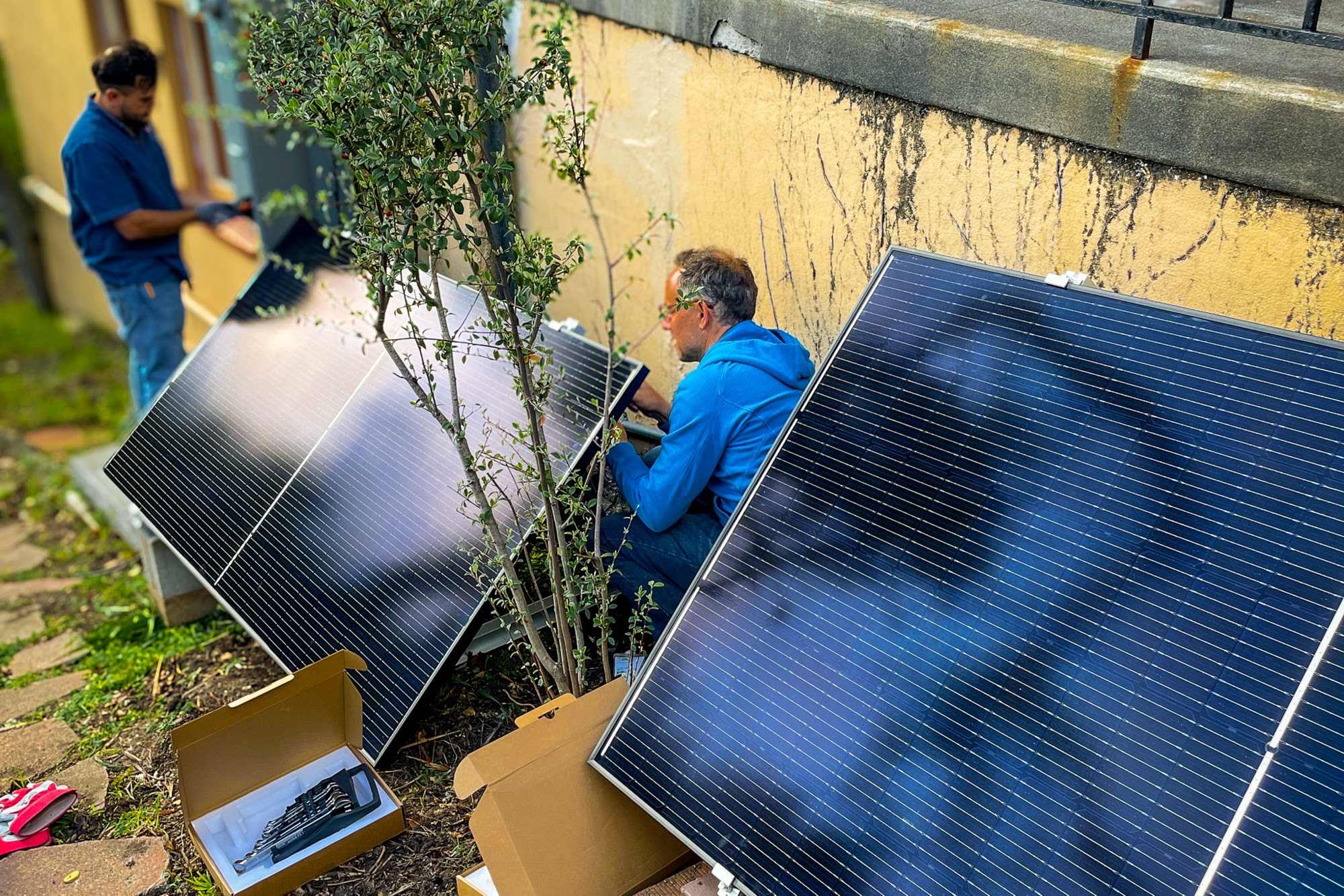
As electricity prices soar and rooftop solar subsidies vanish, some US renters and homeowners are surreptitiously installing solar panels on balconiesand backyards without their utility’s permission. Legislation recently introduced in nearly two dozen states would legalize “plug-in solar” systems, jumpstarting a nascent market for an affordable renewable energy source.
Also called balcony solar, these systems typically consist of two to four solar panels connected to wall outlets. They typically cost $2,000 or more and generate enough electricity to power a refrigerator, electronics, and lights, potentially reducing utility bills by several hundred dollars a year. Some plug-in solar systems include batteries to store power for use during peak demand, when electricity rates spike, and during storms or heat waves that knock out the grid.
Millions of balcony solar systems have been deployed in countries like Germany, which regulates the technology. But only about 5,000 have been installed in the US, according to advocates, most without utility authorization. That’s because plug-in solar has remained in the shadows due to a lack of safety standards and often costly requirements imposed by utilities, but that’s changing. Utah in 2025 enacted a law allowing plug-in solar without utility approval, and other states are considering similar legislation, including New York and California, the nation’s largest solar market.
“The impact of California passing legislation would be huge and will get manufacturers to come into the market,” said Kevin Chou, cofounder and executive director of Bright Saver, a Bay Area nonprofit that sells do-it-yourself plug-in solar systems and has pushed to legalize the technology.
Under California legislation introduced in January, residents may install plug-in solar systems without utility authorization. But those systems couldn’t generate more than 1.2 kilowatts of electricity and must be certified by a nationally recognized testing lab. Legislation in other states contains similar requirements.
Utah’s Republican-dominated legislature unanimously approved a plug-in solar bill in 2025, and the state’s Republican governor signed it into law. Although pro-renewable energy Democrats hold a supermajority in the California legislature, the bill introduced by state Senator Scott Wiener, who is running to replace US Representative Nancy Pelosi, is likely to face opposition from some landlords, homeowner associations, and utilities, according to Chou.
Utilities have expressed concern about plug-in solar’s impact on grid balancing if systems feed excess electricity into the network without their knowledge. Landlords may worry about solar panels falling off balconies or how they change the look of a building, he said. Homeowners associations, which regulate everything from house colors to landscaping, may object to the aesthetics of backyard solar.
California’s three big investor-owned utilities currently require plug-in solar owners to apply and secure approval to interconnect to the grid, just as owners ofrooftop solar must do.
Chou estimates that more than a thousand plug-in solar systems have been installed in California. But PG&E and San Diego Gas & Electric have not yet received any interconnection applications for the equipment, according to spokespeople.
If you like this post, you’ll love our daily environmental newsletter, EnviroPolitics.It’s packed daily with the latest news, commentary, and legislative updates from New Jersey, Pennsylvania, New York, Delaware…and beyond. Don’t take our word for it. Try it free for a whole month