Legislation includes criteria in statute that defines environmental justice populations
From Wicked Local Waltham
As the effects of the COVID-19 health crisis continues to evolve, State Reps. Thomas Stanley and John Lawn helped pass legislation building on the Statehouse’s continued commitment to “address the effects of climate change” by requiring the commonwealth to achieve net-zero statewide greenhouse gas emissions by 2050.
The legislation, An Act Creating a 2050 Roadmap to a Clean and Thriving Commonwealth (H. 4933), establishes the criteria in statute that define environmental justice populations. The legislation also increases support for clean energy workforce development programs, improves access to renewable energy and energy efficiency programs for low-income communities and requires the state to increase its use of renewable resources for its electricity needs.
“This comprehensive climate legislation puts the commonwealth well on the way to not only doing that but also puts us on the path to a cleaner, safer state,” said Stanely. “The bill also includes historic environmental justice components, which will protect some of our most important communities from being neglected by harmful projects.”
“Despite the ongoing public health and economic hardships relating to the COVID-19 pandemic, the house is committed [to] maintaining Massachusetts’ nation-leading clean energy and climate policies,” said Lawn. “The legislation builds on the house’s long-standing commitment to effective and lasting climate change policy and fulfills Speaker DeLeo’s and the house’s January pledge to pass 2050 greenhouse gas emissions net zero limits during the 2019-20 legislative session.”
If you liked this post you’ll love our daily newsletter, EnviroPolitics.It’s packed with the latest news, commentary and legislative updates from New Jersey, Pennsylvania, New York, Delaware…and beyond. Don’t take our word for it, try it free for an entire month. No obligation.
BY REBECCA BEITSCH reports for The HIll– 08/12/20 06:04 PM EDT
The Trump administration is moving to loosen environmental standards for showerheads following a string of public complaints from the president about low-flow fixtures designed to save water.
A new proposal from the Department of Energy (DOE) would change the definition of a showerhead, essentially allowing different components within the device to count as individual fixtures, sidestepping requirements that allow no more than 2.5 gallons to flow through per minute.
“If adopted, this rule would undo the action of the previous Administration and return to Congressional intent, allowing Americans-not Washington bureaucrats–to choose what kind of showerheads they have in their homes,” DOE spokeswoman Shaylyn Hynes said in an email to The Hill.
The move drew swift criticism from consumer groups.
“There is absolutely no need to change current showerhead standards,” David Friedman, vice president of advocacy at Consumer Reports and a former DOE official during the Obama administration, said in a statement.
“Thanks to the standards, consumers have access to showerheads that not only score well on [Consumer Reports] tests and achieve high levels of customer satisfaction, but also save consumers money by reducing energy and water consumption,” Friedman added.
“Showerheads — you take a shower, the water doesn’t come out. You want to wash your hands, the water doesn’t come out. So what do you do? You just stand there longer or you take a shower longer? Because my hair — I don’t know about you, but it has to be perfect. Perfect,” he said to laughter at an event in July on rolling back regulations.
In December, he said that “people are flushing toilets 10 times, 15 times.”
While Trump’s comments have been mocked on late-night TV shows, communities in water-scarce areas, particularly in the West, rely on low-flow fixtures to preserve their water supplies.
“The new plan is a gimmick in search of a problem,” Andrew deLaski, executive director of the Appliance Standards Awareness Project, wrote in a blog post.
We’re always looking for stories that might interest our readers. If you come across something so interesting that it cries out to be shared, please send it to editor@enviropolitics.com If we agree, you’ll see it here soon.
A single truck makes its way along Corbin Street on a quiet morning in Port Newark in Newark, New Jersey in this 2012 file photo. Environmental justice advocates point out that ports are major sources of air pollution in overburdened communities. (Frank H. Conlon | For The Star-Ledger)
Olivia Glenn is fighting for your right to breathe.
Glenn, who last month was named as a new deputy commissioner of the New Jersey Department of Environmental Protection, grew up in Camden, where a humming industrial waterfront has over time diminished the city’s air quality.
Glenn and many of her family members suffered from asthma, joining a disproportionate Camden County population affected by the illness — regularly linked to air pollution — at higher rates than the rest of New Jersey, according to a 2014 report.
“It’s kind of like how everyone talks about having allergies now,” Glenn tells NJ Advance Media. “Everybody had asthma.”
In Camden city, residents were sent to the emergency room for asthma more than 11,000 times between 2008 and 2012: Nearly 50% of the county total (the city makes up only 15% of the county’s population).
Now, its Glenn’s job to further the state’s environmental justice efforts in urban industrialized areas like Camden and Newark, which are known to have dirtier air than other parts of New Jersey. She says her goal is to boost public and environmental health in low-income communities of color that have long been burdened by the pollution of industry — from the refineries and factories just blocks from their neighborhoods, to the highways and airports in their backyards.
A courtesy photo of Olivia Glenn, who was named deputy commissioner of the New Jersey Department of Environmental Protection in July 2020.Photo courtesy of the NJDEP
“I think if there was ever a moment in time where everything was lining up — social, economic, environmental, just people’s sense and empathy for others — this is our moment,” Glenn said.
Environmental justice advocates in the state have a long wishlist for the DEP, which stretches well beyond air quality, from stronger regulation of chronic polluters and troubled drinking water systems, to more support for green infrastructure development and the remediation of abandoned, contaminated lots that dot Garden State cities.https://3735ebfe5328ad0a87ce34e5a15728ca.safeframe.googlesyndication.com/safeframe/1-0-37/html/container.html
“We really want the DEP to be a good partner and go beyond the status quo of compliance and enforcement,” said Ana Baptista, the associate director of the Tishman Environment and Design Center at the New School. Baptista is a Newark native who works on a number of environmental advocacy campaigns in the Garden State.
Glenn’s new role comes at a key moment in New Jersey’s environmental justice timeline. A shake-up in Gov. Phil Murphy’s administration and a major bill at the precipice of passage are signs that the movement is on the verge of a breakthrough.
One of Glenn’s main responsibilities will be the implementation of Murphy’s Executive Order 23 which directs all departments in state government to take on environmental justice initiatives.
That could mean helping the Department of Community Affairs work environmental considerations into housing policy, or working with the Department of Agriculture to improve food access for underserved communities.
“There are tie-ins to advancing environmental justice that depend on all of government working together,” Glenn said.
Air quality is a top priority for New Jersey’s environmental justice advocates. The state’s main sources of air pollution today are cars, trucks and other vehicles. This means communities near busy ports and highways — like Newark, where one in four kids has asthma — breathe some of the state’s dirtiest air.
“We’re disproportionately polluted on,” said Kim Gaddy, a Newark resident who is the environmental justice organizer for Clean Water Action of New Jersey. “We’re just fighting for a chance to breathe.”
If you liked this post you’ll love our daily newsletter, EnviroPolitics.It’s packed with the latest news, commentary and legislative updates from New Jersey, Pennsylvania, New York, Delaware…and beyond. Don’t take our word for it, try it free for an entire month. No obligation.
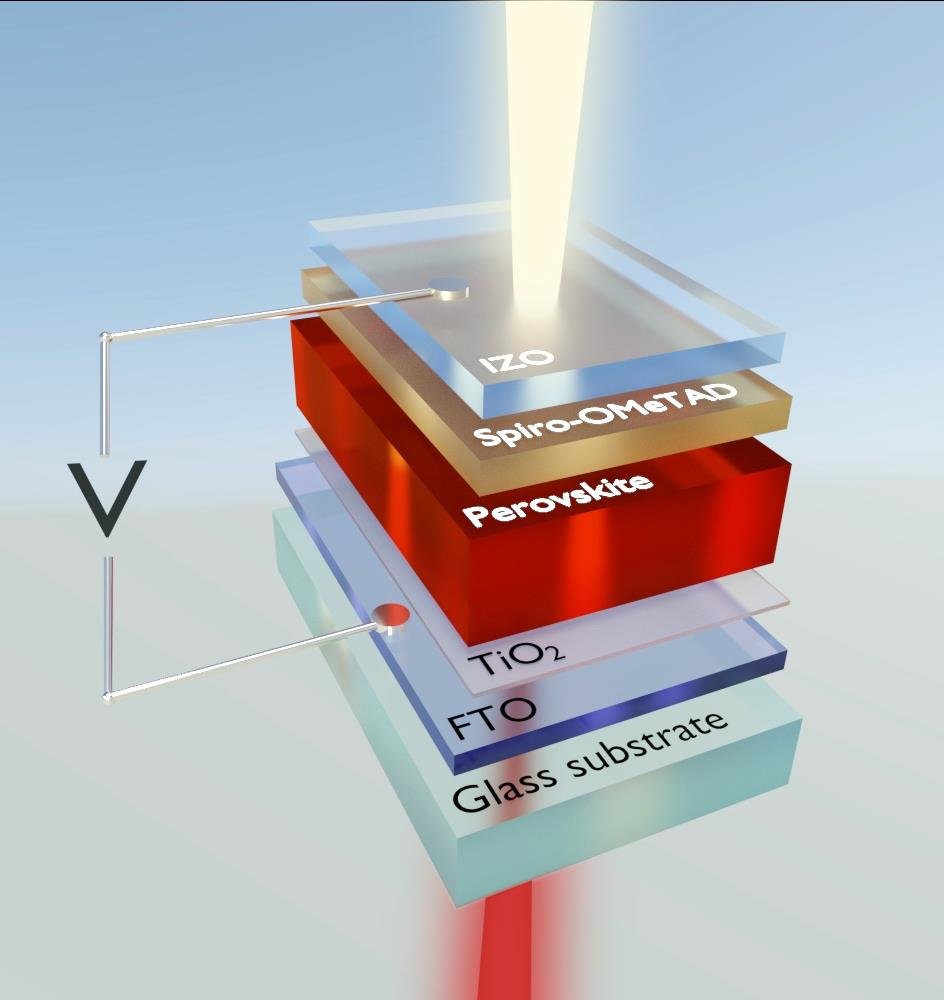
Perovskite solar cells convert ultraviolet and visible light into electricity very efficiently, meaning they might be excellent tandem partners with absorber materials such as crystalline silicon that efficiently convert lower-energy light.
Department of Energy News Release
WASHINGTON, D.C. – Today, the U.S. Department of Energy (DOE) announced $20 million in funding to advance perovskite solar photovoltaic technologies. Perovskites are a family of materials with a specific crystal structure, named after the mineral with that structure. When used to create solar cells, they have shown potential for high performance and low production costs. To be competitive in the marketplace, perovskite’s long-term durability must be tested and verified, the aim of this funding opportunity announcement through DOE’s Office of Energy Efficiency and Renewable Energy (EERE).
“Under this Administration, the Department of Energy is committed to an ‘all-of-the-above’ energy strategy, including solar and other renewable technologies,” said U.S. Secretary of Energy Dan Brouillette. “We will continue to invest in early-stage research and development to improve the affordability, reliability, and value of solar technologies on the grid and position the United States as the world’s leading manufacturer of clean energy technologies.”
“Perovskites are a promising solar technology that could help us reach the next level of innovative and efficient solar power,” said Deputy Secretary of Energy Mark W. Menezes. “Our goal is to further advance this technology here in the United States. The research and development supported by this $20 million investment will help us better understand how perovskite solar cells, which can be manufactured quickly, can further this mission.”
Some of the goals of the DOE Solar Energy Technologies Office are to improve understanding of perovskite stability; establish methods to produce high-efficiency, stable perovskite devices using industry-relevant fabrication techniques; and develop test protocols that enable high confidence in long-duration field performance of perovskite-based photovoltaic technologies.
DOE will fund projects in three topic areas:
Topic Area 1: Device R&D (Efficiency and Stability)
This topic area will focus on research projects to advance perovskite efficiency and stability at the cell or mini-module scale beyond the current state of the art technology. Projects may include intrinsic and extrinsic approaches to improve stability, methods to understand and characterize degradation, alternative materials or processes to improve performance or reduce costs, and advanced device architecture, including tandems. Teams may be led by academic, DOE National Laboratory, or industry researchers, and should include diverse participants from the research and development (R&D) community to maximize relevance and utilization of results.
Topic Area 2: Manufacturing R&D
This topic area will fund research projects to address challenges with manufacturing perovskite modules at relevant scale and throughput. Key areas will include process uniformity and repeatability, cell to module conversion losses, and encapsulation approaches. Teams must be led by a for-profit or nonprofit business and should include substantial involvement by established manufacturing and process engineering entities with proven expertise in the area.
Topic Area 3: Validation and Bankability Center
This topic area seeks to establish a neutral, independent validation center that can be used to verify perovskite device performance and address acceptance and bankability challenges. Independence and neutrality are required to ensure there are no conflicts of interest between this effort and other projects seeking to demonstrate high-performance devices. This center will be responsible for developing and refining test protocols, including accelerated life testing that closely correlates with long-term field performance. The center will also be responsible for operating an extensive field testing effort using devices produced by the R&D community to iteratively refine all test protocols and improve community understanding of remaining stability and performance issues. The center will investigate the environmental impact of perovskite technologies and serve as an objective source of information and analysis for the investment and finance communities. Teams must be led by a DOE Federally Funded Research and Development Center/National Laboratory.
Nestlé Waters North America (NWNA), headquartered in Stamford, Connecticut, has announced that three more of its U.S. still water brands—Ozarka, Deer Park and Zephyrhills—have started to convert to 100-percent-recycled polyethylene terephthalate (rPET) packaging. The company says this transition means nearly 60 percent of all households in the U.S. will have access to one of its regionally distributed spring water brands in bottles made entirely with recycled plastic.
“We have made significant strides on our journey to use more sustainable packaging,” David Tulauskas, NWNA vice president and chief sustainability officer, says. “Bottles made with other bottles—like these—provide tangible proof that recycling works and the circular economy for plastics is achievable. By using recycled plastic, we are breathing new life into existing materials, reducing the need for new plastic and our carbon footprint and supporting the 757,000 jobs in recycling and reuse activities in the U.S.”
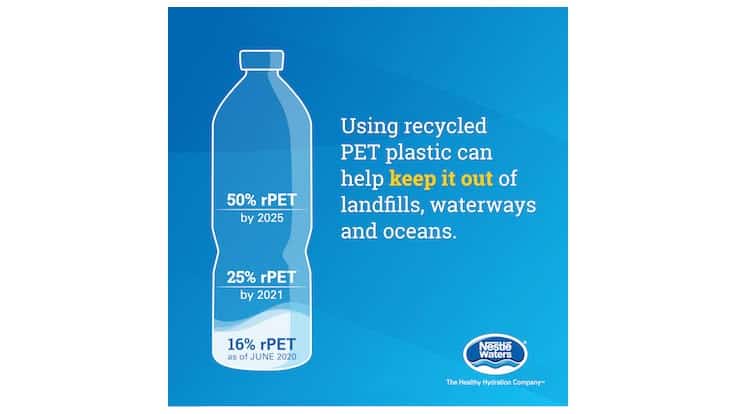
With this change, NWNA has doubled the amount of rPET used since 2019 across its U.S. domestic portfolio to 16.5 percent. NWNA has set a goal to use 25 percent rPET across its U.S. domestic portfolio by 2021 and 50 percent by 2025.
“Based on our own research, we found that consumers value higher amounts of rPET, so we wanted to offer a bottle that was made entirely with 100 percent rPET,” Tulauskas tells Recycling Today. “It is also helping us better understand the operational feasibility, investment requirements and impact of running bottles with 100 percent rPET content.”
He says long-term agreements and collaborative relationships with suppliers will help the company meet its 2025 recycled-content goal, adding, “we are hoping we can help them invest in their existing operations and expand capacity for more high-quality, food-grade recycled plastic.”
Tulauskas says NWNA often pays more for recycled plastic than for virgin plastic. “This is an investment we prioritize for the business, given our responsibility as a producer of packaged goods and our commitment to sustainability as we work toward a waste-free future.”
Among the company’s rPET suppliers is Los Angeles-based CarbonLite, which recently expanded its Dallas plant that is located near an NWNA bottling facility. Tulauskas says the expansion “allows us to source more material from a location that is better positioned logistically to serve another key region for our brands.”
Insufficient PET bottle recovery could affect NWNA’s ability to fulfill its 2025 recycled-content goal. “To achieve this, there needs to be a robust and stable supply of food-grade recycled content,” he says.
“Unfortunately, less than 30 percent of all plastic bottles are recycled, and many recovered beverage containers are being down-cycled and used in nonfood-contact applications versus being made back into beverage containers.”
Tulauskas continues, “To create a continuous supply of recycled plastic, there needs to be a broad, collective effort by industry, government and NGOs (nongovernmental organizations) to address critical issues related to infrastructure, collection, policy, consumer education and development of end markets for recycled materials. We are encouraged by the accelerated collaboration among these groups, and we will continue to work with them to help increase the use of recycled content in packaging, encourage packaging design that is compatible with the recycling system, improve recycling infrastructure and curbside access and educate consumers about the impact they can make by recycling.”
To help consumers identify the new 100-percent-rPET bottles, all three brands will include a message on the labels of the 20-ounce, 700-milliliter, 1-liter and 1.5L-liter bottles stating they are 100 percent recyclable and made from 100-percent-recycled plastic, NWNA says. Ozarka will launch a TV, digital and social media campaign this summer to inform Texans of the new rPET bottles. Understanding that bottles need to be recycled to create bottles with other bottles, Zephyrhills will launch limited-edition labels that encourage consumers to recycle with the message: “I’m not trash! I’m 100 percent recyclable.” This message will accompany the “100 percent recycled” message on the applicable bottle sizes.
S2098 (Holzapfel) – Requires labeling of ingredients and restricts phosphorus in household cleansing products.
S2099 (Holzapfel) – Provides State income tax credit for removal of lawns near Barnegat Bay.
S2605 (Smith / Bateman) – Directs BPU to establish utility-scale solar energy development program.
S2611 (Smith / Bateman) – Requires BPU to establish and maintain electronic public records access service on its website; requires BPU to provide certain notice of its meetings and hearings and allow public comment.
S2804 (Smith) – Requires BPU to conduct certain analysis and comparison study of electric transmission grid operating in New Jersey.
Due to the public health emergency, the State House Annex remains closed to visitors and members of the public will not be allowed to attend the meeting in person, unless properly registered to testify on a bill under consideration. The public may monitor the committee proceedings on the New Jersey Legislature homepage, at https: / / www.njleg.state.nj.us / . The committee will take in person testimony on bills for those members of the public who properly register. If you are interested in registering your position with the committee, please fill out the Registration Form located on the New Jersey Legislature home page under the applicable committee heading. If you wish to testify, check the box ‘Do you wish to testify?’ on the form. The form must be submitted by 3:00 PM on August 14, 2020. Instructions for providing testimony will be forwarded to you.
The public is encouraged to submit written testimony electronically in lieu of oral testimony. Written testimony will be included in the committee record and distributed to the committee members. Written testimony should be submitted to OLSAideSEN@njleg.org.
(The public may address comments and questions to Matthew H. Peterson, Committee Aide, or make bill status and scheduling inquiries to Pamela Cocroft, Secretary, at 609-847-3855, fax 609-292-0561, or e-mail: OLSAideSEN@njleg.org. Written and electronic comments, questions and testimony submitted to the committee by the public, as well as recordings and transcripts, if any, of oral testimony, are government records and will be available to the public upon request.)