NJDEP calls EPA: Hey, let’s start cleaning up these PFAS sites. EPA: Bad connection. Bye.

By Frank Brill, EnviroPolitics Editor

Environmental organizations gave state regulators a really bad time–deservedly so–when the DEP appeared to be dragging its heels on adopting health standards for a new type of dangerous chemicals, PFAS. The state finally acted, surprising most by not only adopting (on an interim basis) the standards but making them the toughest in the country. Now, it’s DEP’s turn to pester and cajole. Officials there have sent letters to the federal EPA requesting support for New Jersey’s enforcement of the new regulations at military bases and other possible federal sites where drinking water is contaminated or threatened by these potentially cancer-causing compounds. What’s the Trump Administration’s response? You guessed it: Delay. Legal obfuscation. Stonewalling. Following is the latest on the situation from a newspaper reporter who has been following the PFAS story from the beginning–and winning awards for his work.

Kyle Bagenstose reports for the Burlington County Times

New Jersey created standards for PFAS chemicals and says they’re the law of the land. The EPA disagrees, and the military isn’t using them either. The dispute could have huge implications for PFAS cleanup on Joint Base McGuire-Dix-Lakehurst.

The New Jersey Department of Environmental Protection is having a tough time getting the federal government to recognize clean water standards for toxic PFAS chemicals, according to a series of letters exchanged between regulators and a statement from the U.S. Air Force.

Short for per- and poly-fluoroalkyl substances, PFAS are chemicals of growing concern, after they were used for decades in a variety of commercial products, such as non-stick cookware and firefighting foams used by the military and private airports. They remain unregulated at the federal level, but New Jersey has become a national leader in setting state safety limits for the chemicals, after becoming concerned about potential human health effects such as high cholesterol, ulcerative colitis, immunotoxicity, developmental delays, and some cancers.

Major PFAS contamination in drinking water has hit Philadelphia-area communities such as Warminster, Pennsylvania, and Paulsboro in New Jersey’s Gloucester County, but some experts think as much as 28% of water systems nationwide contain the chemicals in some amount.

Last April, the DEP formally signaled its intention to adopt state drinking water standards for two of the most well-known PFAS chemicals: perfluorooctane sulfonate (PFOS) and perfluorooctanoic acid (PFOA). The DEP is proposing to set limits of 14 parts per trillion (ppt) for PFOA and 13 ppt for PFOS. Those limits would be just a fraction of a 70 ppt combined advisory limit set by the U.S. Environmental Protection Agency.

The DEP is now in the midst of a one-year process to gather and respond to public comments on the proposal. But due to a quirk of state law, the DEP automatically created a 10 ppt “interim” standard for the chemicals until the regulations are finalized. That standard is applicable to groundwater and private drinking water wells contaminated above 10 ppt for either chemical.

While the DEP can enforce the interim standard for polluted sites under its jurisdiction, the EPA, Department of Defense, or other federal agencies would need to agree to use it on sites under their control.

It appears they’re not keen to do so, based on documents obtained through open records requests.

Last November, Mark Pedersen, the assistant commissioner for the DEP’s Site Remediation and Waste Management program, wrote a letter to the EPA’s regional office for New Jersey. He asked the agency to recognize the interim standards, arguing they meet the requirements spelled out under federal law to be used for cleanups.

“Interim standards should be accepted by the (EPA) and applicable at all federal sites in New Jersey,” Pedersen wrote.

Pedersen wrote the office again in April, roping PFAS in with several other state-regulated chemicals that he wanted the EPA to prioritize at contaminated sites under federal control. Pedersen even offered an example, saying there is likely PFAS contamination at the Curtis Paper Superfund site in Hunterdon County, and asked the EPA to sample for the chemicals there.

In a June response letter, Pat Evangelista, acting director of the EPA’s regional Superfund & Emergency Management Division, threw cold water on much of Pedersen’s requests. He said due to federal law requiring state standards be considered on a site-by-site basis, he was unable to offer any blanket assurances the EPA would use the interim standards.

“It would be inappropriate for us to make a general upfront determination that any or all existing or future (interim standards) will or will not be identified,” Evangelista wrote.

But Evangelista also went further, writing that in EPA’s estimation, the interim standards fly in the face of New Jersey’s own Administrative Procedures Act because they do not meet requirements for public input. EPA was ultimately “not persuaded” the state’s interim standards meet federal requirements, Evangelista wrote, adding that the agency does anticipate the finalized New Jersey standards would be “evaluated” as appropriate cleanup levels.

In a separate letter, Evangelista also clarified that the EPA is sampling for the chemicals identified in Pedersen’s second letter during regular five-year reviews at Superfund sites in the state.

Asked about the EPA’s letters, DEP spokesman Larry Hajna last month stood by the state’s assessment that its interim standards are acceptable and enforceable.

“The DEP’s goal is to ensure that decisions on remediation activities at all sites are driven by applicable groundwater quality standards. Ten parts per trillion is currently the standard all responsible parties must follow when making decisions regarding remediation activities for PFOA and PFOS,” Hajna wrote in an email.

Hajna added that the state is communicating those requirements to all “responsible parties” at polluted sites, and is itself using the standard at some locations, providing bottled water to those exposed above the standards.

Cleanup on Joint Base

New Jersey’s state standards also have potentially massive implications at military sites such as Joint Base McGuire-Dix-Lakehurst, where testing has found PFAS levels as high as 264,000 ppt in groundwater. A number of private and public water wells have also been found to contain the chemicals.

The military is currently in the midst of environmental investigation at the Joint Base, as it is at hundreds of other bases across the country. But as previously reported, many communities and environmental advocates are unhappy with the speed of cleanup at military sites, and several states have attempted to use their own regulations to force the military to move more quickly on cleanup.

Read the full story

If you liked this post you’ll love our daily newsletter, EnviroPolitics.
It’s packed with the latest news, commentary and legislative updates from New Jersey, Pennsylvania, New York, Delaware…and beyond.
Don’t take our word for it, try it free for an entire month. No obligation.

NJDEP calls EPA: Hey, let’s start cleaning up these PFAS sites. EPA: Bad connection. Bye. Read More »

Clean Water Action says NJ legislature is failing to protect people and environment

Environmental group releases its legislative scorecard and expresses frustration with a lack of progress on key environmental bills

New Jersey capitol

By Frank Brill, EnviroPolitics Editor

In a news release announcing the release of its 2018-2019 Scorecard today, the environmental group Clean Water Action charged state lawmakers with failing to meet key environmental challenges.

“As the scorecard shows, from the climate crisis to the lead crisis, our legislators have been unwilling to rise to the occasion,” said Eric Benson, NJ Campaign Director. “Luckily there is plenty of time in the lame-duck session to change course. Legislative leadership needs to start listening to the public and following the lead of the pro-environment bill sponsors to make New Jersey a leader on environmental protection again.”

After reviewing dozens of bills, Clean Water Action scored the legislature on the 22 most significant actions and found the following:

  • Too many incompletes: 13 key pro-environment actions that are stalled in the legislature
  • Failing Grades: 6 significant bills that were anti-environment, by design or by process, that quickly passed both houses
  • Too few passing Grades: 3 pro-environment bills that did pass and become law
  • Emerging Environmental Leaders: 19 legislators who stood up for the environment even when the majority of the legislature would not stand with them

“The legislature has kicked responsible budget solutions down the road, and appointments to critical environmental commissions have been neglected,” said Janet Tauro, NJ Board Chair. “Too few individual legislators have been willing or able to challenge a process that allows good environmental bills to stall while bills catering to special interests pass quickly.”

Rather than giving each legislator a score based on their individual votes, as it has in the past, the organization graded the legislature as a whole because of what it called the “near-total failure of the legislature to pass substantial environmental bills so far this term.”

What legislation would the group like to see advanced when the legislature returns in November from its extended summer recess?

Clean Water Action cited plastic bag ban and electric vehicle bills as well as an environmental justice bill and a package of bills and funding sources to address lead service lines.

Not all legislators received bad scores.

“We would like to give a special shout-out to the 19 legislators who stood up for the environment this term. It’s not easy being green in NJ,” said Benson. “Colleagues should listen to these environmental legislative leaders and the public and do everything they can to get the stalled bills over the finish line in the strongest form possible before the end of lame duck.”

Clean Water Action’s Legislative Scorecard 2018–19 represents an overview of the New Jersey Legislature as a whole on bills, funding, appointments, and leadership focused on environmental and health issues from January 2018 through September 2019.

The full report is available: www.CleanWaterAction.org/NJscorecard2019.

If you liked this post you’ll love our daily newsletter, EnviroPolitics.
It’s packed with the latest news, commentary and legislative updates from New Jersey, Pennsylvania, New York, Delaware…and beyond.
Don’t take our word for it, try it free for an entire month. No obligation.

Clean Water Action says NJ legislature is failing to protect people and environment Read More »

Apple’s iPhone recycling robot can take apart 200 iPhones an hour—can it dismantle the company’s footprint?

The company is trying to find ways to get more materials out of its old products, but recycling advocates say it needs to be changing how they’re designed, not how they’re recycled.

ADELE PETERS writes for Fast Company

Inside Apple’s sprawling materials recovery lab in Austin, a custom room-size robot with five separate arms has pulled apart hundreds of thousands of iPhones over the last year, making it possible to access the valuable materials inside for recycling. Nearby, the lab is filled with standard equipment that already exists in electronic recycling facilities around the world, so academics and Apple engineers can study ways to improve traditional recycling. It’s part of the company’s work toward a larger vision of a circular economy: What will it take to make electronics in a truly closed loop?

“Our goal is that future products would be made from recycled or renewable materials,” says Lisa Jackson, Apple’s vice president of environmental, social, and policy initiatives, who served as the head of the Obama-era EPA before joining the tech company. “So, in a sense, the materials that are in yesterday’s iPhone . . . could find their way back into the same supply chain we use to make tomorrow’s.”

[Photo: Apple]

Today, smartphones are made with dozens of materials—from gold and silver to phosphorus and titanium—mined in processes that are often environmentally and socially destructive. But all of those materials could eventually be recovered from old electronics instead. “We have lots of trials going on with various specialty recyclers, really around the world, who are all trying to figure out how to get the hundred or so elements of the periodic table back out of our devices and other devices after they come to [their] end of life,” Jackson says.

[Photo: Apple]

Earlier this year, the company announced that it was using recycled cobalt in new batteries for the first time, sourced from old iPhones that Apple collected through a trade-in program and then disassembled with Daisy, its custom recycling robot. Avoiding the need to mine cobalt is a major step; the majority of the world’s cobalt comes from the Democratic Republic of Congo, sometimes mined by hand (despite the toxicity of the material) in dangerous pits. Mining waste can pollute local drinking water. Though Apple audits its suppliers to make sure they meet the tech company’s standards for supplier responsibility—and scored highest in a recent report about how companies manage conflict minerals—it can be difficult for companies to fully track what each supplier is doing. And even if a particular mining company avoids human rights abuses such as child labor, the basic process of digging any material out of the ground (sometimes with heavy machinery or explosives), and smelting and refining it, has an environmental cost. Recycling materials from the billion-plus iPhones that already exist makes more sense.

[Photo: Apple]

The company’s massive robot, which it considers a pilot project, is one experiment in finding a way to better access materials in old phones. At e-waste recycling plants now, old electronics go through shredders that tear up the device before the materials are sorted and sold on the commodities market. The process of shredding makes full recovery impossible; valuable rare earth minerals used as magnets in the iPhone’s speaker, for example, can attach themselves to other metal during the process and be lost.

The robot works much more carefully, though it can disassemble as many as 200 phones in an hour. Recovering more of an individual material—like cobalt—makes it possible for Apple to have enough volume to convince a recycler to take its material so it can be recycled back into new batteries. The company spent years developing the technology behind Daisy, which builds on another disassembly robot, called Liam, that it released in 2016. It now has two massive, 33-foot-long Daisy robots, and continues to improve the design. But the company recognizes that it also needs to find ways to work with the existing recycling process for electronics even as it continues exploring brand-new technology. “We have to do both,” says Jackson. “We found that the state of the recycling sector has really not moved much when it comes to consumer electronics.”

It’s critical to work with existing systems, says Kyle Wiens, CEO of the electronics repair company iFixit. “The idea that you can have a specialized robot that’s designed for one product that can take it apart carefully and precisely and get you a better material yield for that product—that’s totally true,” he says. “You can do that . . . You’re going to get more gold running it through Daisy than you would through a traditional recycling process. However, the idea that [a recycling plant has to] have to have a million-dollar robot per product that they’re going to disassemble just doesn’t work. It’s not the way recycling works.”

Read the full story

If you liked this post you’ll love our daily newsletter, EnviroPolitics.
It’s packed with the latest news, commentary and legislative updates from New Jersey, Pennsylvania, New York, Delaware…and beyond.
Don’t take our word for it, try it free for an entire month. No obligation.

Apple’s iPhone recycling robot can take apart 200 iPhones an hour—can it dismantle the company’s footprint? Read More »

Environmental Attorney Carmella M. Seslar Joins Wilentz, Goldman & Spitzer

Wilentz, Goldman & Spitzer, P.A. is pleased to welcome Carmella M. Seslar as an associate in the firm’s Environmental group. Ms. Seslar focuses her practice on environmental regulatory compliance, brownfield and landfill redevelopment, land use permits and related litigation.

Carmella M. Seslar

Ms. Seslar has extensive experience handling environmental matters in New Jersey and New York, especially in connection with CERCLA/Superfund litigation and allocations, as well as environmental permitting and regulatory compliance involving wetlands, coastal/CAFRA areas, riparian/tidelands law, and flood hazard areas.

Ms. Seslar graduated from St. John’s University School of Law in 2016. She earned her undergraduate degree from King’s College in 2012. She is admitted to practice in New Jersey and New York.

If you liked this post you’ll love our daily newsletter, EnviroPolitics.
It’s packed with the latest news, commentary and legislative updates from New Jersey, Pennsylvania, New York, Delaware…and beyond.
Don’t take our word for it, try it free for an entire month. No obligation.

Environmental Attorney Carmella M. Seslar Joins Wilentz, Goldman & Spitzer Read More »

Wind energy could supply one-third of global power by 2040, says Siemens

Joshua S Hill reports for Renew Economy

Wind farm in Western Australia

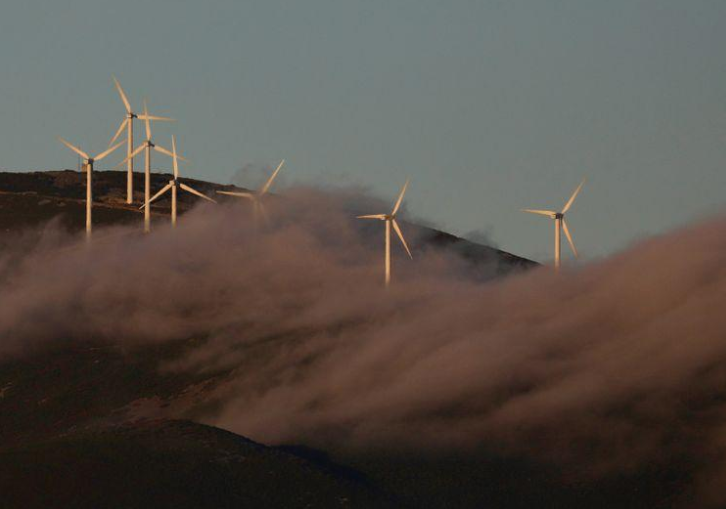
Wind energy could supply more than one-third of global electric power demand by 2040 and could, in turn, save up to four million lives a year, according to a new study from professional services network KPMG and commissioned by wind turbine manufacturer Siemens Gamesa Renewable Energy.

The new study – entitled The socioeconomic impacts of wind energy in the context of the energy transition– was published last week in an effort to highlight the wider benefits of wind energy adoption around the world.

The report concludes that accelerating the uptake of wind energy would not only reduce our reliance on fossil fuels, but would slash pollution, save lives, and preserve vital water resources.

It says wind energy is a key to achieving an effective energy transition away from fossil fuels and that wind energy’s power supply could be nine times greater than it is currently – growing from supplying 4% of global electric power today to 34% by 2040.

In turn, wind energy could provide around 23% of the carbon emission reductions necessary in 2050 – 5.6 billion tons of CO2, or equivalent to the annual emissions of the 80 most polluting cities.

On top of that, however, there are a myriad of secondary benefits that wind energy could have on the world.

For example, the report found that wind power could save up to 16 billion cubic meters of water in 2030 – around 15% of the Dead Sea water, for example – and that in Europe alone, it would avoid the use of 1,571 million m3 (the equivalent consumption of 13 million EU households).

The wind industry would also be in a position to employ three times more people than it does today – with an industry workforce growing from 1.1 million to 3 million people, including both direct and indirect jobs.

Read the full story

Like this? Click to receive free EnviroPolitics Blog updates

Wind energy could supply one-third of global power by 2040, says Siemens Read More »

Scientists endorse mass civil disobedience to force climate action

Julia Steinberger, an ecological economist at Britain’s University of Leeds, endorses mass civil disobedience to pressure governments to tackle climate change at a protest at London’s Science Museum, Britain October 12, 2019. Louise Jasper/Handout via REUTERS

Matthew Green reports for Reuters

LONDON (Reuters) – Almost 400 scientists have endorsed a civil disobedience campaign aimed at forcing governments to take rapid action to tackle climate change, warning that failure could inflict “incalculable human suffering.”Julia Steinberger, an ecological economist at Britain’s University of Leeds, endorses mass civil disobedience to pressure governments to tackle climate change at a protest at London’s Science Museum,

In a joint declaration, climate scientists, physicists, biologists, engineers and others from at least 20 countries broke with the caution traditionally associated with academia to side with peaceful protesters courting arrest from Amsterdam to Melbourne.

Wearing white laboratory coats to symbolize their research credentials, a group of about 20 of the signatories gathered on Saturday to read out the text outside London’s century-old Science Museum in the city’s upmarket Kensington district.

“We believe that the continued governmental inaction over the climate and ecological crisis now justifies peaceful and non-violent protest and direct action, even if this goes beyond the bounds of the current law,” said Emily Grossman, a science broadcaster with a PhD in molecular biology. She read the declaration on behalf of the group.

“We therefore support those who are rising up peacefully against governments around the world that are failing to act proportionately to the scale of the crisis,” she said.

The declaration was coordinated by a group of scientists who support Extinction Rebellion, a civil disobedience campaign that formed in Britain a year ago and has since sparked offshoots in dozens of countries.

Read the full story

Like this? Click to receive free EnviroPolitics Blog updates

Scientists endorse mass civil disobedience to force climate action Read More »