Andrew Maykuth reports for the Philadelphia Inquirer November 25, 2019
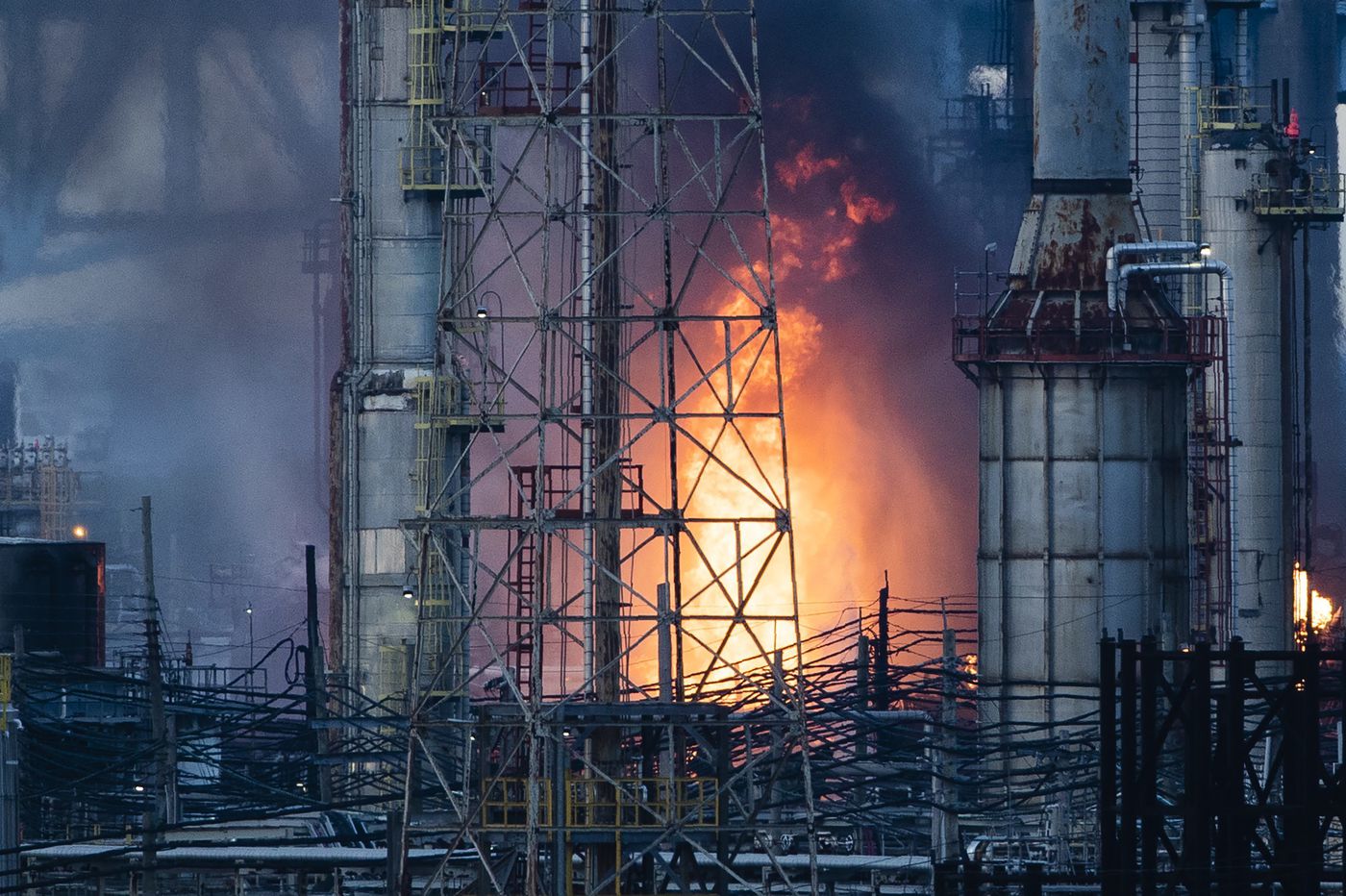
Bankrupt Philadelphia Energy Solutions is seeking a new round of bonuses that would pay seven top executives millions of dollars, depending upon the success of a plan to reorganize or sell the company.
The refinery, in a filing Friday with the U.S. Bankruptcy Court, wants to create a bonus pool for the seven key employees whose payouts would be based upon how much the refinery fetches from a sale and in insurance proceeds. The bonus pool would range from $2.5 million to as much as $20 million if the refinery generates $1 billion in net proceeds from a sale and insurance policies.
The PES executives were already paid $4.59 million in retention bonuses after a catastrophic June 21 fire that led to the plant’s closure and bankruptcy filing, which resulted in all but 175 of the refinery’s 1,100 employees losing their jobs. The company’s chief restructuring officer told the court that it is “essential” to create a new bonus plan tied to the greatest recovery of money for the refinery’s creditors.
If you liked this post you’ll love our daily newsletter, EnviroPolitics. It’s packed with the latest news, commentary and legislative updates from New Jersey, Pennsylvania, New York, Delaware…and beyond. Don’t take our word for it, try it free for an entire month. No obligation.
Many NJ cleanup locations are seen as vulnerable to fires, floods, storm surge, and sea-level rise
Crown Vantage Landfill Superfund site in Alexandria Township
Jon Hurdle reports for NJ Spotlight
If you liked this post you’ll love our daily newsletter, EnviroPolitics. It’s packed with the latest news, commentary and legislative updates from New Jersey, Pennsylvania, New York, Delaware…and beyond. Don’t take our word for it, try it free for an entire month. No obligation.
The congressional watchdog agency named 141 New Jersey sites in a national survey of more than 1,500 that have been or are still subject to environmental cleanup, and said that many of the Garden State locations could be damaged by floods or fires that are caused by climate change.
The survey included the Kin-Buc Landfill in Edison Township, Middlesex County which lost its state permits as a municipal and industrial waste facility in the 1970s after being found to have leaked PCBs into a nearby creek and discharged millions of gallons of oil and other wastes.
Fires, hurricanes, floods
Now, the Kin-Buc site is seen to have a high potential for wildfires, vulnerability to hurricanes at even their lowest intensity, the highest exposure to floods and the potential to be inundated by only one foot of sea-level rise, far less than is forecast for the Jersey Shore by the end of the century.
Likewise, the Federal Creosote site next to the Raritan River in Manville, Somerset County, was deemed by the GAO to be susceptible to wildfires and once-in-a-century flooding. The conclusion comes after some 20 years of environmental remediation that removed thousands of tons of contaminated soil and capped areas found to contain carcinogenic material left by wood treatment that took place there for about 45 years until the mid-1950s.
And the Crown Vantage Landfill beside the Delaware River in Alexandria Township, Hunterdon County was deemed by the GAO to be vulnerable to a once-in-a-century flood almost 30 years after New Jersey environmental officials began investigating its discharges of contaminants from a nearby paper mill. The site is now fenced off and monitored to make sure it is not disturbed, according to the U.S. Environmental Protection Agency.
Nationally, some 60% of Superfund sites are vulnerable to climate change, the agency said, basing its conclusions on climate and other data from four federal agencies. It said the sites “are located in areas that may be impacted by selected climate-change effects.”
NJ at higher risk
New Jersey Sierra Club director Jeff Tittel said the report is of particular concern in New Jersey because of its unusual vulnerability to the effects of climate change, including sea-level rise.
“When these sites flood, they will wash all kinds of toxic chemicals into streams, rivers and even homes,” he said.
Where contaminated material has been capped rather than removed, flooding will cause the caps to fail, allowing the contaminants to enter groundwater, Tittel said.
The GAO analyzed Superfund sites on the National Priority List. (New Jersey has the highest number of any state, according to EPA data.) About 90% of the so-called NPL sites are not federal, which means they are typically owned by private businesses or municipal or state governments. Cleanups at those sites, however, are conducted or overseen by the EPA.
The agency was asked by Congress to look at whether the contaminated sites could be exposed to flooding, sea-level rise, wildfires and storm surge, and whether the EPA, which oversees the sites’ cleanup, has been doing enough to plan for climate-related effects in those locations.
Noting that the NPL program has recorded more than 500 contaminants including arsenic and lead, the GAO cited the Fourth National Climate Assessment of 2018 in predicting that climate change could make natural disasters more frequent or intense and increase the risk of damage to the sites.
The GAO recommended that the EPA do more to integrate climate change into its assessment and risk-response of Superfund sites and clarify how its actions at the sites help to meet its goals of protecting human health and the environment.
If you liked this post you’ll love our daily newsletter, EnviroPolitics. It’s packed with the latest news, commentary and legislative updates from New Jersey, Pennsylvania, New York, Delaware…and beyond. Don’t take our word for it, try it free for an entire month. No obligation.
William Ruckelshaus, shown in 1973, resigned as deputy attorney general when asked to fire Watergate special prosecutor Archibald Cox. (Charles Gorry/AP)
By Timothy R. Smith for the Washington Post November 27, 2019, at 2:08 p.m. EST
William D. Ruckelshaus, a pragmatic and resolute government official who shaped the Environmental Protection Agency in the early 1970s as its first administrator and returned to the agency a decade later to restore its shattered morale after its watchdog powers had been muzzled, died Nov. 27 at his home in Medina, Wash. He was 87.
The death was confirmed by a daughter, Mary Ruckelshaus. She did not cite a specific cause.
In a long career in government and private industry, Mr. Ruckelshaus was widely promoted as “Mr. Clean” as much for his uprightness as for his role with the EPA. He cemented his reputation for unshakable integrity when, in 1973, as President Richard Nixon’s deputy attorney general, he defied a presidential order to fire the special prosecutor investigating the Watergate break-in.AD
Decades later, as chief executive of Houston-based Browning-Ferris Industries, the second-largest trash-disposal company in the country, he expanded the company’s presence into New York and worked with law enforcement agencies to help break mob control of the city’s trash removal business.
President Barack Obama presents the Presidential Medal of Freedom to Mr. Ruckelshaus in 2015. (Evan Vucci/AP)
Mr. Ruckelshaus, the scion of a prominent Indianapolis legal family, was a moderate Republican educated at Princeton and Harvard who rose in the Nixon-era Justice Department before guiding the EPA at its birth in 1970.
Hulking, rawboned and bespectacled, Mr. Ruckelshaus shepherded several federal environmental entities into a robust regulatory agency and did as much as anyone to mold the EPA’s mission.AD
During his three-year tenure, he created policies that forced cities to adopt anti-pollution laws, held automakers to strict emissions standards and banned the harmful pesticide DDT.
J. Patrick Dobel, a University of Washington public affairs professor who has written about Mr. Ruckelshaus’s leadership abilities, said he focused the agency’s mission and drew early media attention to the EPA.
“He got the EPA a lot of public support and built up visibility,” Dobel said.
Around the time Mr. Ruckelshaus stepped down from the EPA in April 1973, the Nixon administration was foundering amid accusations that it had obstructed justice by covering up its involvement in the June 1972 break-in at the Democratic National Committee offices at the Watergate complex in Washington.AD
Mr. Ruckelshaus, who had no connection to the scandal, was made acting FBI director and then deputy attorney general in an effort by the Nixon administration to rebuild public confidence.
In 1973, Archibald Cox, a Harvard law professor appointed by Attorney General Elliot L. Richardson to investigate the break-in, had requested complete access to Oval Office tape recordings of the time immediately after the break-in. Nixon rebuffed the request and ordered Richardson to fire Cox on Oct. 20, 1973. Richardson refused and resigned.
Shortly afterward, Gen. Alexander Haig, Nixon’s chief of staff, phoned Mr. Ruckelshaus and instructed him to fire Cox.AD
“Your commander in chief has given you an order,” Haig said.
Mr. Ruckelshaus, who had promised the Senate during confirmation hearings that he would protect Cox, refused to carry out Nixon’s order and then resigned. The duties of the attorney general were transferred to Solicitor General Robert H. Bork, who agreed to fire Cox.
The event became known as the “Saturday Night Massacre” and precipitated the downfall of the Nixon presidency in August 1974.
If you liked this post you’ll love our daily newsletter, EnviroPolitics. It’s packed with the latest news, commentary and legislative updates from New Jersey, Pennsylvania, New York, Delaware…and beyond. Don’t take our word for it, try it free for an entire month. No obligation.
Seastreak Wall Street docked at the East 34th Street Ferry Landing
NEW YORK (November 27, 2019) – The U.S. Environmental Protection Agency has awarded a $1,832,567 Diesel Emissions Reduction Act (DERA) grant to the Connecticut Maritime Foundation, Inc. to curb harmful pollution from ferries in the greater New York and New Jersey area.
“Upgrading older marine engines will improve air quality and reduce harmful air pollutants for ferry commuters and port communities in New York and northern New Jersey,” said EPA Regional Administrator Pete Lopez.
“EPA’s DERA funding to public and private entities allows it to strengthen partnerships and invest in innovative technologies that will benefit both the environment and the economy.”
EPA’s funding to the Connecticut Maritime Foundation will replace six marine diesel engines on a SeaStreak passenger ferry that operates in the waterways between New Jersey and New York City metropolitan area. The ferry, which has a capacity to carry 505 passengers, currently operates approximately 4,500 hours per year and transports an estimated 50,000 – 100,000 passengers annually between Highlands, NJ and Manhattan. Replacement of the vessel engines is expected to be completed by the end of June 2021.
The replacement of existing marine diesel engines with new, cleaner engines will reduce emissions of diesel particulate matter and other pollutants such as nitrogen oxides, carbon monoxide, hydrocarbons and carbon dioxide, providing important public health and air quality benefits.
Exposure to diesel exhaust can lead to serious health conditions, like asthma and respiratory illnesses and can worsen existing heart and lung disease, especially in children and the elderly. EPA’s Diesel Emission Quantifier estimates the health benefit of this project as avoiding approximately $21.2 million in annual health care-related costs attributable to diesel emissions.
In FY 2019, EPA awarded over $89 million in DERA funding for state, national, and tribal grants to reduce emissions from a variety of diesel emission sources, including school buses, trucks, locomotive, marine engines, and other nonroad equipment.
CONCORD — A judge has temporarily stopped the state from implementing new regulations on groundwater contamination.
In his ruling, Merrimack County Superior Court Judge Richard B. McNamara wrote that it was likely that the Department of Environmental Services had not conducted an “adequate cost-benefit analysis” when the department decided to regulate chemicals known as PFOS, PFOA, PFHxS and PFNA.
The state’s earlier guideline of 70 parts per trillion standard for perfluorooctanoic acid was reduced to 12 ppt. A level of 38 ppt had been proposed.
On Sept. 30, Plymouth Village Water and Sewer District, Resource Management Inc., Charles G. Hansen and 3M sued the Department of Environmental Services to block the new regulations, which had been scheduled to take effect that day.
The strict standards made New Hampshire the first state to require routine testing and treatment for the four chemicals in water systems, landfills and wastewater plants.
The plaintiffs argued that the department did not allow enough notice for public input on the standards, and that they constituted an unfunded mandate.
McNamara wrote that the state law prohibiting unfunded mandates likely does not apply to any of the plaintiffs, and that the department provided years of notice that it intended to make rules around PFOS and the other chemicals.
But, McNamara wrote, the Department of Environmental Services likely had not performed a cost-benefit analysis as a 2018 state law required of all new regulations.
The department’s cost-benefit analysis seemed scanty to the plaintiffs, especially when compared with the U.S. Environmental Protection Agency’s standards for preparing cost-benefit analyses.
The higher standards the department wanted to implement would result in much higher costs, the plaintiffs said, between 27 and 35 times higher than the lower standards the department first suggested in January.
DES did not cite any scientific research to justify the higher standards, McNamara wrote.
McNamara ruled Tuesday to stop the new regulations from being enacted until the department performs a more robust cost-benefit analysis. The order is to take effect on Dec. 31.
Philadelphia’s first city-wide composting facility will open in the spring. According to Mayor Jim Kenney’s Zero Waste and Litter Cabinet, this marks a major milestone toward Philly’s goal of eliminating landfills and incinerators by 2035.
A two-year update report, released on Monday by the Cabinet, describes the Lawncrest facility as the linchpin of the city’s plan to dramatically reduce the amount of waste buried and burned locally.
Philadelphia residents and businesses generated over two million tons of waste in 2017, according to the report. About half went to landfills and incinerators.
“There are many different materials that are being used and discarded. And a lot of those materials can find new lives, either through reuse, repair or recycling,” said Nic Esposito, Zero Waste and Litter cabinet director.
Food and organics are some of them. Which is why taking food waste out of the kitchen trash can has been one of the cabinet’s priorities since it was created by Mayor Kenney in 2016. But a major obstacle was blocking progress: The state doesn’t have a permit for composting in dense urban areas. So the city is creating the first, in partnership with the Pennsylvania Department of Environmental Protection and the Pennsylvania Recycling Markets Center.
“One of the cabinet’s highlights this year is finally plugging the gap … around compost: having our community composting network up and running, our urban composting RFP finally out after four years of development, and other larger industrial-scale composters being attracted to a site here in the city,” said Esposito.
According to the request for proposals open until December 6, the facility will be privately operated on city-owned land on Rising Sun Ave, in Tacony Creek Park. The facility will compost food scraps from 30 – 35 city recreation centers, with the goal of eventually scaling up to enable composting at all 156 city centers. Smaller-scale composting operations will happen at about 11 other sites around the city — community gardens, schools and other rec centers — as part of the community composting network.
“Compost can be processed and used right here in the city,” Esposito said. “Philly will really be the city kind of opening the door, working with the DEP to make this happen. It will benefit many other cities throughout the Commonwealth as well.”
The city also celebrated another 2019 win in the report. In 2018, after China stopped accepting recyclables that were more than 0.5% contaminated for processing, Philadelphia started sending about half of its recyclables to incinerators. But now the city is back to recycling everything that residents put in their blue bins through a new contract with Waste Management. The city hopes that it will reduce the amount of waste sent to landfills and incinerators this year.
The city also decided to no longer include incineration, with or without conversion to fuel energy, as a waste diversion strategy. Its goal is to eliminate the use of all incinerators by 2035.
“We want that to be a very small piece of our solution. The bigger pieces are that we’re either recycling, composting or most importantly reusing and reducing our waste,” Esposito said.
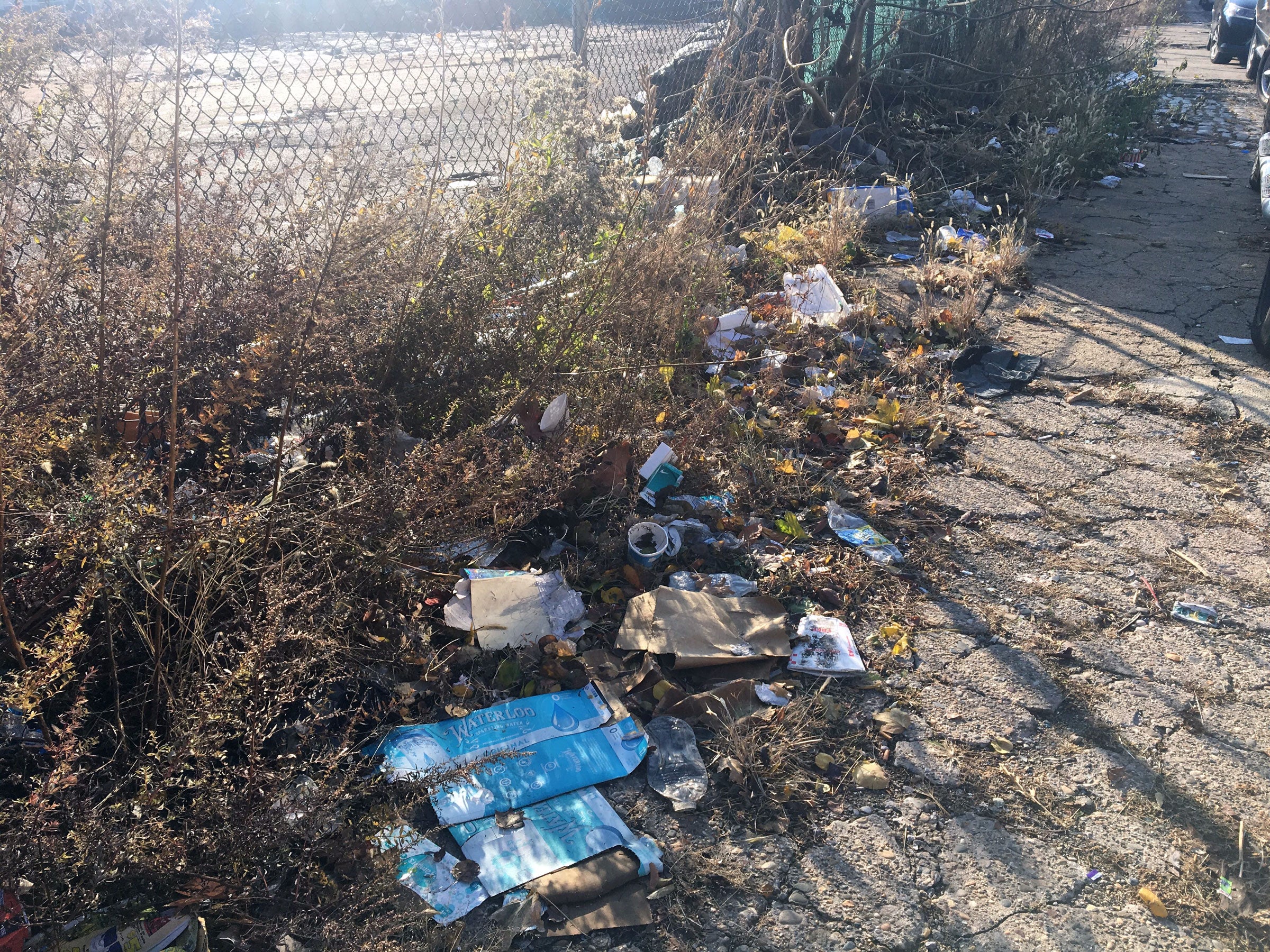
Illegal dumping and litter on Berks Street, in Kensington. (Catalina Jaramillo/WHYY)
Is the city cleaner? Not yet
Even as the city makes strides towards changing Philly’s relationship with waste, the scene on the ground hasn’t changed much. Philadelphia’s streets were only 0.06 cleaner in 2018 compared to 2017, according to the city’s Litter Index.
Esposito says that while litter remains a big problem, the city has laid the foundation needed to reduce litter and waste over the long term. Tools such as the city’s municipal building waste audit, the commercial waste report and the litter index will make future progress possible, he said.
According to the report, the amount of heavy illegal dumping cleaned up by the city went from 11,525 tons in fiscal year 2016 to 6,808 tons in 2019, as a direct result of increased enforcement.
If you liked this post you’ll love our daily newsletter, EnviroPolitics. It’s packed with the latest news, commentary and legislative updates from New Jersey, Pennsylvania, New York, Delaware…and beyond. Don’t take our word for it, try it free for an entire month. No obligation.