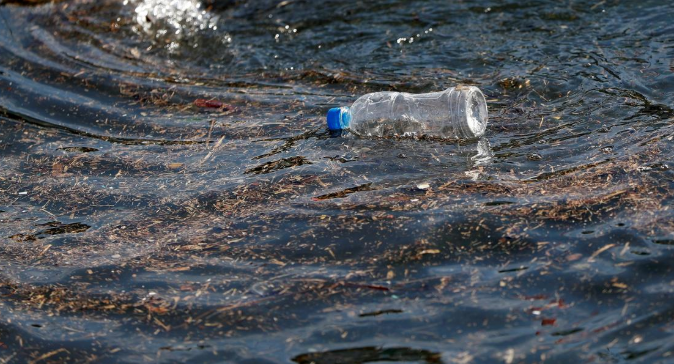
A plastic bottle drifts on the waves of the sea at a fishing port in Isumi, east of Tokyo, Japan November 21, 2018. REUTERS/Issei Kato/File Photo
Eric Onstad reports for Reuters
LONDON (Reuters) – Global bottled water giants are ramping up trials of easily recyclable aluminum cans to replace plastic that pollutes the world’s seas. Sound like a slam-dunk for the environment? Not entirely.
Aluminum cans might indeed mean less ocean waste, but they come with their own eco-price: the production of each can pumps about twice as much carbon into the atmosphere as each plastic bottle.
French group Danone (DANO.PA) has become the latest company to make a move, telling Reuters it had started to replace some plastic bottles with aluminum cans for local water brands in Britain, Poland and Denmark.
The shift, previously unannounced, comes as multinational rivals like Coca-Cola Co (KO.N), PepsiCo (PEP.O) and Nestle (NESN.S) are also launching some canned versions of water brands.
The beverage industry has been scrambling to react to public anger over scenes of huge piles of plastic waste contaminating oceans, pledging to step up recycling efforts.
However, it’s not black and white on the green front. By increasing recycling via cans, companies could fall back in efforts to reduce their carbon footprints, illustrating the tough juggling act they can face to keep environmentally conscious investors, campaigners and consumers on-side.
“That’s the dilemma you’re going to have to choose between,” said Ruben Griffioen, sustainability manager of packaging materials at Heineken, adding the company was trying to reduce both plastic waste and emissions.
Recycling plastic is more complex, leads to degradation and has lower reuse rates than aluminum – so the metal has been heralded as a greener alternative. Cans have on average 68% recycled content compared to just 3% for plastic in the United States, Environmental Protection Agency data shows.
New water brands are also making a splash.
“Mananalu will rid the world of plastic water containers and start a wave of change,” says the website of the new canned water launched by Hollywood actor Jason Momoa, of Aquaman fame. Another entrant, Liquid Death, meanwhile, hails its “eco-friendly cans” and uses the hashtag #DeathtoPlastic.
“The aluminum industry can play on the fact that its product is infinitely recyclable, and they’re right,” said Martin Barrow, director of footprinting at UK-based non-profit consultancy the Carbon Trust.
“But primary aluminum uses huge amounts of electricity and it’s also got some chemical releases of greenhouse gas emissions.”
Comparing the carbon footprints of aluminum and plastics is a complex calculation because making the metal with hydropower instead of fossil fuels reduces emissions while using recycled aluminum slashes it even further.
But when all types of metal are averaged out, however, cans still account for about double the greenhouse gases of plastic bottles, Barrow said, citing figures for Europe.
If you liked this post you’ll love our daily newsletter, EnviroPolitics. It’s packed with the latest news, commentary and legislative updates from New Jersey, Pennsylvania, New York, Delaware…and beyond. Don’t take our word for it, try it free for an entire month. No obligation.
The exclusion had been a reprieve for the solar industry which lost thousands of jobs and put projects on hold as a result of the Trump administration tariffs.
Due to the positive business case made possible by the exemption, some panel manufacturers had begun shifting supply chains to produce more bifacial panels abroad.
While bifacial panels accounted for just 3 percent of the solar market last year, they are gaining traction since their double-sided nature means they absorb more power and are therefore more efficient.
But like any other new technology in the early stages of development, manufacturers try to find cost-effective ways of manufacturing thereby choosing to produce in China.
Also, stripping the exemption represents a setback to developers building big U.S. solar projects.
This fresh blow to the industry means U.S. based solar panel manufacturers like First Solar and SunPower will regain an edge on these foreign-manufactured solar panels.
The news was described as “an extraordinary and unprecedented turn of events” by the Solar Energy Industry Association (SEIA)’s President and CEO Abigail Ross Hopper.
In a public statement, she noted that the exemption was hastily rescinded “without any opportunity for public notice and comment.”
RONG-GONG LIN II reports for the Los Angeles Times OCT. 17, 2019
At 5:04 p.m. 30 years ago today, the ground shook under the Santa Cruz Mountains.
It took about six seconds for the energy to hit Santa Cruz, about 15 to 20 seconds to get to San Jose and 30 to 35 seconds to get to the northern edge of San Francisco. As a World Series game was getting underway at Candlestick Park, the shaking began to collapse a portion of the San Francisco-Oakland Bay Bridge and flattened a double-decker section of Interstate 880 in Oakland.
In 1989, there was no way to warn residents that the shaking from one of California’s most destructive earthquakes was on its way. That robbed millions of people of precious seconds to prepare.
Officials aim to make sure that won’t be the case with a future quake. On Thursday, the California Governor’s Office of Emergency Services will unveil an app created by UC Berkeley that will give all Californians who download it on iOS and Android phones the chance to get earthquake early warnings from any corner of the state.
Authorities will also begin issuing quake early warnings through the Wireless Emergency Alerts system, offering text message alerts even for people who have not downloaded the app.
The unveiling of the new version of UC Berkeley’s MyShake app is a major achievement in the years of efforts to bring California an earthquake early warning system. Until Thursday, only people with the city of Los Angeles’ ShakeAlertLA app and physically present in Los Angeles County could get the alerts.
Richard Allen, director of the Berkeley Seismology Lab, said a few seconds of warning can give people time to drop, cover and hold on before the shaking begins.
A repeat of the 1989 earthquake could give perhaps 20 seconds of warning to the Marina District in San Francisco, which saw major fires, apartment collapses and deaths; the former site of Candlestick Park would get perhaps 15 seconds of warning, as it’s a bit closer to the epicenter; San Jose might get a few seconds. The city of Santa Cruz was too close to the epicenter and probably wouldn’t get a warning.
The idea of earthquake early warnings has been around for a while; even after the magnitude 7.9 earthquake in 1906, a proposal was printed in the San Francisco Chronicle for a system that would sense quakes and send alerts by telegraph ahead of the shaking.
One of the first practical tests of the concept in California came after the Loma Prieta quake. Scientists devised a system to use sensors near the epicenter in the Santa Cruz Mountains to radio in alerts to rescue workers searching for survivors and victims about incoming shaking 60 miles away. The idea was to get the rescue workers an alert about a significant aftershock before the shaking hit. The system was in operation for six months and sent 12 warnings.
Officials say that the MyShake app is a prototype and that there could be bugs that need to be fixed; it’s possible that warnings could be delayed or come late, and there is always the possibility of false alerts or missed warnings. But Allen said the app is now good enough that they’re confident it will save lives, and distributing the app more widely is more helpful than keeping it away from the public.
“We cannot promise you a perfect system,” Allen said, but based on tests, “the system seems to be performing reasonably well.” The MyShake app’s systems operate in the cloud, and it was built to scale up to meet demand.
Environmental organizations gave state regulators a really bad time–deservedly so–when the DEP appeared to be dragging its heels on adopting health standards for a new type of dangerous chemicals, PFAS. The state finally acted, surprising most by not only adopting (on an interim basis) the standards but making them the toughest in the country. Now, it’s DEP’s turn to pester and cajole. Officials there have sent letters to the federal EPA requesting support for New Jersey’s enforcement of the new regulations at military bases and other possible federal sites where drinking water is contaminated or threatened by these potentially cancer-causing compounds. What’s the Trump Administration’s response? You guessed it: Delay. Legal obfuscation. Stonewalling. Following is the latest on the situation from a newspaper reporter who has been following the PFAS story from the beginning–and winning awards for his work.
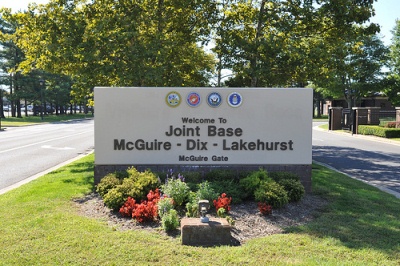
New Jersey created standards for PFAS chemicals and says they’re the law of the land. The EPA disagrees, and the military isn’t using them either. The dispute could have huge implications for PFAS cleanup on Joint Base McGuire-Dix-Lakehurst.
The New Jersey Department of Environmental Protection is having a tough time getting the federal government to recognize clean water standards for toxic PFAS chemicals, according to a series of letters exchanged between regulators and a statement from the U.S. Air Force.
Short for per- and poly-fluoroalkyl substances, PFAS are chemicals of growing concern, after they were used for decades in a variety of commercial products, such as non-stick cookware and firefighting foams used by the military and private airports. They remain unregulated at the federal level, but New Jersey has become a national leader in setting state safety limits for the chemicals, after becoming concerned about potential human health effects such as high cholesterol, ulcerative colitis, immunotoxicity, developmental delays, and some cancers.
Major PFAS contamination in drinking water has hit Philadelphia-area communities such as Warminster, Pennsylvania, and Paulsboro in New Jersey’s Gloucester County, but some experts think as much as 28% of water systems nationwide contain the chemicals in some amount.
Last April, the DEP formally signaled its intention to adopt state drinking water standards for two of the most well-known PFAS chemicals: perfluorooctane sulfonate (PFOS) and perfluorooctanoic acid (PFOA). The DEP is proposing to set limits of 14 parts per trillion (ppt) for PFOA and 13 ppt for PFOS. Those limits would be just a fraction of a 70 ppt combined advisory limit set by the U.S. Environmental Protection Agency.
The DEP is now in the midst of a one-year process to gather and respond to public comments on the proposal. But due to a quirk of state law, the DEP automatically created a 10 ppt “interim” standard for the chemicals until the regulations are finalized. That standard is applicable to groundwater and private drinking water wells contaminated above 10 ppt for either chemical.
While the DEP can enforce the interim standard for polluted sites under its jurisdiction, the EPA, Department of Defense, or other federal agencies would need to agree to use it on sites under their control.
It appears they’re not keen to do so, based on documents obtained through open records requests.
Last November, Mark Pedersen, the assistant commissioner for the DEP’s Site Remediation and Waste Management program, wrote a letter to the EPA’s regional office for New Jersey. He asked the agency to recognize the interim standards, arguing they meet the requirements spelled out under federal law to be used for cleanups.
“Interim standards should be accepted by the (EPA) and applicable at all federal sites in New Jersey,” Pedersen wrote.
Pedersen wrote the office again in April, roping PFAS in with several other state-regulated chemicals that he wanted the EPA to prioritize at contaminated sites under federal control. Pedersen even offered an example, saying there is likely PFAS contamination at the Curtis Paper Superfund site in Hunterdon County, and asked the EPA to sample for the chemicals there.
In a June response letter, Pat Evangelista, acting director of the EPA’s regional Superfund & Emergency Management Division, threw cold water on much of Pedersen’s requests. He said due to federal law requiring state standards be considered on a site-by-site basis, he was unable to offer any blanket assurances the EPA would use the interim standards.
“It would be inappropriate for us to make a general upfront determination that any or all existing or future (interim standards) will or will not be identified,” Evangelista wrote.
But Evangelista also went further, writing that in EPA’s estimation, the interim standards fly in the face of New Jersey’s own Administrative Procedures Act because they do not meet requirements for public input. EPA was ultimately “not persuaded” the state’s interim standards meet federal requirements, Evangelista wrote, adding that the agency does anticipate the finalized New Jersey standards would be “evaluated” as appropriate cleanup levels.
In a separate letter, Evangelista also clarified that the EPA is sampling for the chemicals identified in Pedersen’s second letter during regular five-year reviews at Superfund sites in the state.
Asked about the EPA’s letters, DEP spokesman Larry Hajna last month stood by the state’s assessment that its interim standards are acceptable and enforceable.
“The DEP’s goal is to ensure that decisions on remediation activities at all sites are driven by applicable groundwater quality standards. Ten parts per trillion is currently the standard all responsible parties must follow when making decisions regarding remediation activities for PFOA and PFOS,” Hajna wrote in an email.
Hajna added that the state is communicating those requirements to all “responsible parties” at polluted sites, and is itself using the standard at some locations, providing bottled water to those exposed above the standards.
Cleanup on Joint Base
New Jersey’s state standards also have potentially massive implications at military sites such as Joint Base McGuire-Dix-Lakehurst, where testing has found PFAS levels as high as 264,000 ppt in groundwater. A number of private and public water wells have also been found to contain the chemicals.
The military is currently in the midst of environmental investigation at the Joint Base, as it is at hundreds of other bases across the country. But as previously reported, many communities and environmental advocates are unhappy with the speed of cleanup at military sites, and several states have attempted to use their own regulations to force the military to move more quickly on cleanup.
If you liked this post you’ll love our daily newsletter, EnviroPolitics. It’s packed with the latest news, commentary and legislative updates from New Jersey, Pennsylvania, New York, Delaware…and beyond. Don’t take our word for it, try it free for an entire month. No obligation.
Environmental group releases its legislative scorecardand expresses frustration with a lack of progress on key environmental bills
New Jersey capitol
By Frank Brill, EnviroPolitics Editor
In a news release announcing the release of its 2018-2019 Scorecard today, the environmental group Clean Water Action charged state lawmakers with failing to meet key environmental challenges.
“As the scorecard shows, from the climate crisis to the lead crisis, our legislators have been unwilling to rise to the occasion,” said Eric Benson, NJ Campaign Director. “Luckily there is plenty of time in the lame-duck session to change course. Legislative leadership needs to start listening to the public and following the lead of the pro-environment bill sponsors to make New Jersey a leader on environmental protection again.”
After reviewing dozens of bills, Clean Water Action scored the legislature on the 22 most significant actions and found the following:
Too many incompletes: 13 key pro-environment actions that are stalled in the legislature
Failing Grades: 6 significant bills that were anti-environment, by design or by process, that quickly passed both houses
Too few passing Grades: 3 pro-environment bills that did pass and become law
Emerging Environmental Leaders: 19 legislators who stood up for the environment even when the majority of the legislature would not stand with them
“The legislature has kicked responsible budget solutions down the road, and appointments to critical environmental commissions have been neglected,” said Janet Tauro, NJ Board Chair. “Too few individual legislators have been willing or able to challenge a process that allows good environmental bills to stall while bills catering to special interests pass quickly.”
Rather than giving each legislator a score based on their individual votes, as it has in the past, the organization graded the legislature as a whole because of what it called the “near-total failure of the legislature to pass substantial environmental bills so far this term.”
What legislation would the group like to see advanced when the legislature returns in November from its extended summer recess?
Clean Water Action cited plastic bag ban and electric vehicle bills as well as an environmental justice bill and a package of bills and funding sources to address lead service lines.
Not all legislators received bad scores.
“We would like to give a special shout-out to the 19 legislators who stood up for the environment this term. It’s not easy being green in NJ,” said Benson. “Colleagues should listen to these environmental legislative leaders and the public and do everything they can to get the stalled bills over the finish line in the strongest form possible before the end of lame duck.”
Clean Water Action’s Legislative Scorecard 2018–19 represents an overview of the New Jersey Legislature as a whole on bills, funding, appointments, and leadership focused on environmental and health issues from January 2018 through September 2019.
If you liked this post you’ll love our daily newsletter, EnviroPolitics. It’s packed with the latest news, commentary and legislative updates from New Jersey, Pennsylvania, New York, Delaware…and beyond. Don’t take our word for it, try it free for an entire month. No obligation.