A heavy downpour and strong winds pounded Tokyo and surrounding areas on Saturday as a powerful typhoon forecast to be Japan’s worst in six decades made landfall southwest of the city. Shortly before the storm made landfall an earthquake shook the area.
The U.S. Geological Survey said the magnitude 5.3 quake was centered in the ocean off the coast of Chiba, near Tokyo.
At least one person is confirmed dead. A man died after a tornado flipped over his car.
Flooding was reported Saturday south of Tokyo. Rivers have swelled and boats have flipped. Mudslide warnings have also been issued.
“Be ready for rainfall of the kind that you have never experienced,” said meteorological agency official Yasushi Kajihara, adding that areas usually safe from disasters may prove vulnerable.
“Take all measures necessary to save your life,” he said.
Kajihara said people who live near rivers should take shelter on the second floor or higher of any sturdy building if an officially designated evacuation center wasn’t easily accessible. He also expressed fears that disaster may have already struck in some areas.
Hagibis, which means “speed” in Filipino, was advancing north-northwestward with maximum sustained winds of 144 kilometers (90 miles) per hour on Saturday evening, according to the meteorological agency. It was traveling toward Tokyo and northern Japan at a speed of 35 kph (22 mph).
The storm brought heavy rainfall in wide areas of Japan all day ahead of its landfall, including in Shizuoka and Mie prefectures, southwest of Tokyo, as well as Chiba to the north, which saw power outages and damaged homes in a typhoon last month.
Yusuke Ikegaya, a Shizuoka resident who evacuated ahead of the storm, said he was surprised that the nearby river was about to overflow in the morning, hours before the typhoon made landfall.
If you liked this post you’ll love our daily newsletter, EnviroPolitics. It’s packed with the latest news, commentary and legislative updates from New Jersey, Pennsylvania, New York, Delaware…and beyond. Don’t take our word for it, try it free for an entire month. No obligation.
By Caryn Shinske, New Jersey Department of Environmental Protection
A business that recycles almost 80 percent of its waste, a university with a comprehensive waste-reduction and recycling program, and a municipal recycling coordinator whose dedication has increased recycling in multi-family housing developments, are among those honored Wednesday as New Jersey’s 2019 recycling leaders.
IKEA Distribution Services North America in Westampton, Burlington County; Monmouth University in West Long Branch, Monmouth County; and Kellie Ann Keyes, Roxbury Township’s Recycling Coordinator, Morris County; are among the nine businesses, organizations and individuals recognized during the 39th Annual Association of New Jersey Recyclers symposium and luncheon held at the Jumping Brook Country Club in Neptune, Monmouth County.
“I commend these award winners for their work to promote recycling and educate their communities about the importance of diverting waste to better protect our natural resources,” Department of Environmental Protection Commissioner Catherine R. McCabe said. “New Jersey is consistently a national leader in recycling, and we applaud the winners for going above and beyond to help safeguard the environment.”
“We proudly honor the award winners for their focused and innovative efforts to keep our environment clean and healthy,” said Francis Steitz, Acting Assistant Commissioner for Air Quality, Energy and Sustainability. “We hope promoting their accomplishments will inspire others to adopt better recycling practices.”
In 1987, New Jersey became the first state to enact legislation that requires recycling in residential, commercial and institutional settings. New Jersey achieved an overall recycling rate of 61 percent in 2016. The DEP administers a number of grant and educational programs to help improve the statewide recycling rate.
All residents are urged to participate in their local recycling program and do their part to keep non-acceptable materials, such as plastic bags, trash, propane tanks and used syringes, out of curbside and workplace recycling bins.
“For recycling to work, we need to keep our recycling mix clean and free of these problematic items,” Commissioner McCabe said. “It is important to remember that recyclable materials are not trash, but rather valuable raw materials used to make new products.”
The DEP and Association of New Jersey Recyclers co-sponsor the symposium and luncheon, where recycling awards are presented to outstanding businesses, organizations, local government agencies, and individuals who have made significant contributions to recycling in New Jersey.
RECYCLING AWARDS
COMMISSIONER’S AWARD: Mary Ellen Gilpin During her 30-year tenure as director of Environmental Programs for the Hudson County Improvement Authority, Mary Ellen Gilpin has served as the Solid Waste coordinator, county recycling coordinator, county Clean Communities coordinator and Household Hazardous Waste coordinator. Mary Ellen was a graduate of the first-ever Certified Recycling Professional series in 1993. She has led the charge in many first-of-their-kind recycling programs and coordinated and attended household hazardous waste events, mobile paper shredding events, Earth Day events, compost bin and rain barrel sales, and numerous other education-based programs. She received an Association of New Jersey Recyclers award for a school program in 2007.
BUSINESS: IKEA Distribution Services North America IKEA Distribution Services North America recycles materials including bottles and cans, paper, corrugated cardboard, metal, plastics, shrink wrap, strapping, mattresses and wooden pallets. Food waste from the facility’s staff café is collected and composted off-site. In addition, damaged glass, candles and ceramics are sent to a facility that pulverizes the materials into a powder that is used to reinforce concrete. As a result of these efforts, IKEA was able to recycle 77.5 percent of its waste. To ensure that recycling and sustainability programs are working well, IKEA does biweekly site audits to document progress or note areas needing improvement. The business regularly educates employees about recycling and sustainability programs and goals.
INSTITUTION: Monmouth University The university has a broad-based program to recycle glass, plastic, aluminum, paper, corrugated cardboard, metal, tires, yard waste, concrete, light bulbs, batteries, used oil, antifreeze, electronic waste, toner cartridges and more. The university also donates old electronic equipment, clothes and books to charitable organizations and has installed water hydration stations to encourage use of reusable containers. As a result of these initiatives, the university was able to recycle 46 percent of the waste generated on campus in 2018. The school also purchases green cleaning products and recycled content products for campus operations.
GOVERNMENT: Maurice River Township The community embarked on an aggressive and successful campaign to keep single-use plastic bags out of curbside recycling bins. The program, coordinated with the Cumberland County Improvement Authority, provided residents with 7-quart red buckets with “No Bags in Your Bin!” imprinted on them, to transport their recyclables from their kitchens to their curbside recycling bins. The township used a variety of educational strategies to promote the program and had their vendor leave bins on the curb with a contamination sticker if the bins contained plastic bags. Within a short period of time, the township’s recycling stream was found to be significantly cleaner when inspected at the recycling processing center.
LEADERSHIP: Carolyn Brown-Dancy Carolyn Brown-Dancy is the Environmental Health Safety and Sustainability director for Atlantic Health System, which comprises more than 400 sites of care, including six hospitals. As a result of Carolyn’s leadership, Atlantic Health System recycles plastics, glass, paper, cardboard, batteries, fluorescent light bulbs, items containing lead, food waste, cooking oils, mercury waste, electronics and chemicals. Carolyn was also instrumental in establishing recycling programs in all offices and waiting rooms in Atlantic Health System hospitals. She also led her team on a variety of waste reduction initiatives and has implemented numerous other sustainability programs, as well as educational initiatives on behalf of the health system’s environmental programs.
RISING STAR: Kellie Ann Keyes Kellie Ann Keyes is Roxbury Township’s municipal recycling coordinator, Clean Communities coordinator and assistant general supervisor. Along with her many other duties at the Department of Public Works, including running the recycling depot, she has implemented recycling programs at schools, conducted recycling inspections at businesses and organized volunteers for litter cleanups. Kellie Ann’s focus to improve education and reduce contamination of the recycling stream at multi-family complexes has resulted in increased compliance and improved communication between the town and property managers.
OUTSTANDING EDUCATOR/EDUCATIONAL PROGRAM: Raritan Valley Community College After discovering that too many office recyclables were ending up in employee trash cans and not being recycled, the college serving Somerset and Hunterdon counties implemented a major change to their recycling program that featured new bagless office recycling bins with small “buddy” bins for waste. Employees now sort their recyclables and waste at hallway sorting stations. The school undertook a comprehensive outreach and education plan to promote the new program and saw impressive results. A follow-up analysis of the school’s hallway bins showed that between 80 percent and 95 percent of recyclables generated are being recycled.
RECYCLING INDUSTRY: Waste Management of New Jersey Inc. The Elizabeth company is recognized for its patented CORe® system, an innovative process that recycles pre- and post-consumer food waste into an engineered bioslurry organic feedstock. The bioslurry is then introduced into an anaerobic digester at the nearby Rahway Valley Sewerage Authority to increase the facility’s production of biogas. Through this program, the company recycled 58,140 yards of food waste, or 13,567.50 tons from March 2018 through July 2019.
SOURCE REDUCTION, RESOURCE MANAGEMENT/SUSTAINABILITY: Second Chance Toys The non-profit Second Chance Toys keeps rigid plastic toys out of landfills by promoting their collection and then arranging for the toys to be donated to local organizations serving disadvantaged children. In 2018, Second Chance Toys collected 13,520 plastic toys in New Jersey, a 20 percent increase from the 10,875 toys collected in 2017. Since 2017, the program has saved solid waste disposal tipping costs for participating communities and kept more than 140,000 pounds of plastic toys from being disposed of in landfills.
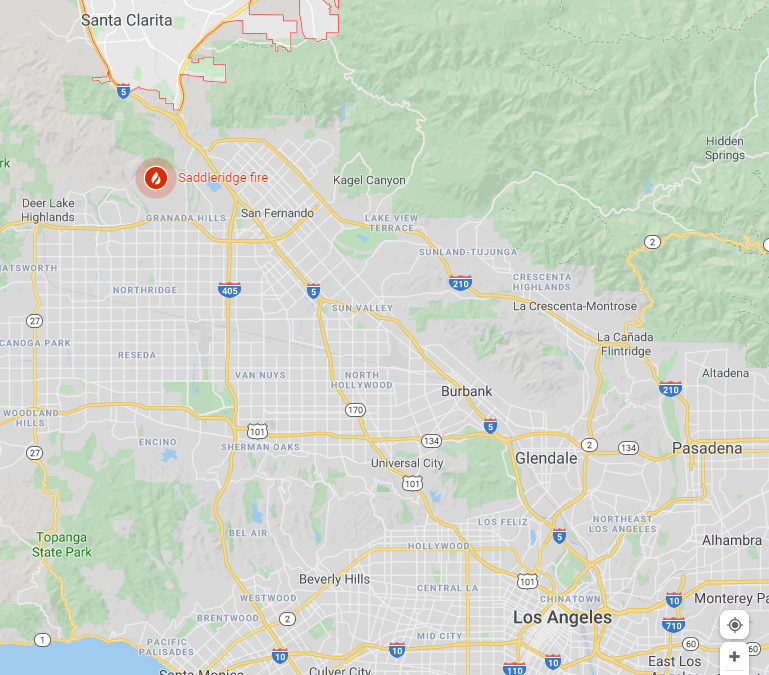
A wind-driven brush fire carved a devastating path in the northern foothills of the San Fernando Valley on Friday, chewing through 7,500 acres, burning at least 25 homes and forcing thousands to flee.
The Saddleridge fire, which broke out about 9 p.m. Thursday on the north side of the 210 Freeway in Sylmar amid strong Santa Ana winds, spread rapidly westward into Porter Ranch and other communities. At its peak, the blaze was moving at a rate of roughly 800 acres per hour. The fire is 13% contained
Mandatory evacuations were issued overnight to roughly 23,000 homes encompassing a large swath of neighborhoods north of the 118 Freeway from Tampa Avenue all the way to the Ventura County line — an area covering 100,000 residents. Officials warned that other communities near the fire need to be ready to leave at a moment’s notice if the winds shift.
“The fact that community members heeded evacuation warnings early made a huge difference, allowing firefighters to enter those communities and protect properties,” said Los Angeles County Fire Chief Deputy David R. Richardson.
If you liked this post you’ll love our daily newsletter, EnviroPolitics. It’s packed with the latest news, commentary and legislative updates from New Jersey, Pennsylvania, New York, Delaware…and beyond. Don’t take our word for it, try it free for an entire month. No obligation.
Shepard Smith, one of Fox News’ leading anchors and a frequent critic of President Trump, will step down from the network, effective immediately, the network announced Friday.
Smith, Fox’s chief news anchor and anchor of its afternoon news program, “Shepard Smith Reporting,” said the decision to leave was his own, but gave no further reason for stepping down. He announced his resignation on the air on his Friday program, which Fox said would be his last.
Smith has been at Fox News since its founding 23 years ago, and was one of the first people hired for its launch in 1996.
In a statement, Smith said, “Recently I asked the company to allow me to leave Fox News and begin a new chapter. After requesting that I stay, they graciously obliged. The opportunities afforded this guy from small town Mississippi have been many. It’s been an honor and a privilege to report the news each day to our loyal audience in context and with perspective, without fear or favor.”
Smith has often incurred the wrath of loyal Fox viewers by his skeptical reporting and commentary on President Trump. After a presidential press conference in early 2017, for example, he called some of Trump’s responses “absolutely crazy.” He went on to defend CNN, Fox’s rival news network, when Trump called its reporting “fake news.”
“CNN’s reporting was not fake news,” Smith said at the time. “Its journalists follow the same standards to which other news organizations, including Fox News, adhere.”
Smith even had the stature to take on his own network’s conservative commentators. After one suggested in early 2017 that British agents had been recruited by President Obama to bug Trump Tower during the 2016 campaign, Smith set the record straight: “Fox News knows of no evidence of any kind that the now-president of the United States was surveilled at any time, in any way. Full stop.”
Trump, in turn, has occasionally disparaged Smith on Twitter.
If you liked this post you’ll love our daily newsletter, EnviroPolitics. It’s packed with the latest news, commentary and legislative updates from New Jersey, Pennsylvania, New York, Delaware…and beyond. Don’t take our word for it, try it free for an entire month. No obligation.
Waves churned up by advancing typhoon in Kihu, Japan (Associated Press photo)
**Updated at 1:40 p.m.** By CBS News Tateyama, Japan — This city of 45,000 sits on the southern end of Chiba Prefecture, also known as the Boso Peninsula. Bordering Tokyo Bay to the east, it is usually known for surfing, sun and recreation.
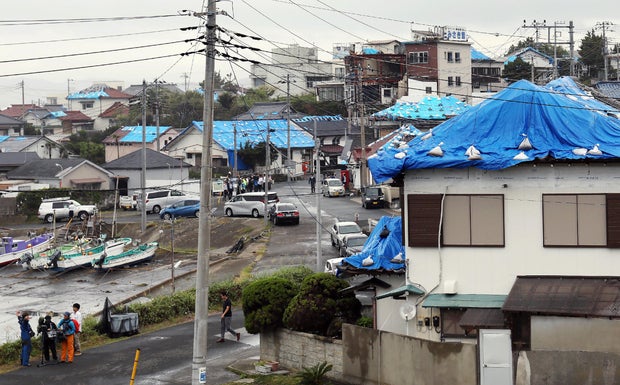
But driving south down the Tateyama Expressway, we start to see the first signs of distress left from the last typhoon, Faixi, which roared through only a month earlier. On either side of the highway, across otherwise placid countryside, is that familiar sign of damage in one of Asia’s most typhoon-prone nations: buru-sheet — blue tarps shielding damaged roofs from the elements.
Along the coast and even further inland, there are broken windows and scarred facades. Heavy pieces of decor at a theme park, Tokyo German Village, were overturned like Tinker Toys; the roof of one building was ripped off like cardboard.
Now, the area is bracing for a new storm, expected to usher in roaring winds and as much as 30 inches of rain. It is forecast to hit Japan’s east coast this weekend, including Tokyo.
When we stopped at a shore in Tateyama, a pair of employees from the local Aeon supermarket were busy at work, shoveling dirt into dozens of trash bags. They explained the makeshift sandbags would be stacked around the entrance, in hopes of preventing storm surge flooding from Saturday’s super-typhoon, Hagibis.
The store won’t be open for business, of course. Across central and eastern Japan, home to tens of millions, life will screech to a halt. Nearly all subways and local trains will be shuttered, as will the famous bullet train on part of its most lucrative run, between Tokyo and Nagoya. Nearly all domestic flights have been canceled in and out of Tokyo’s gateways, Haneda and Narita.
This photo shows blue sheets on damaged houses from the previous Typhoon Faxai in Tateyama, Chiba prefecture on October 11, 2019. JIJI PRESS/JIJI PRESS/AFP VIA GETTY IMAGES
Countless weddings, concerts and sporting events — including pro baseball series games and two matches of the World Rugby Cup — are also off. The Japan Meteorological Agency, which has issued stark warnings about the severity of the typhoon, told the nation that Hagibis will match the ferocity of the Kanogawa typhoon of 1958, when more than 1,200 lives were lost.
The monster of a storm will unleash gusts of up to 157 mph (252 kph), and waves could reach as high as 43 feet (13 meters). The effects will not only be felt in Tateyama, but also across much of Japan’s main island, Honshu. For residents, who have picked grocery and hardware store shelves clean as they stocked up, it will be a weekend to hunker down, and hope the electricity stays on.
If you liked this post you’ll love our daily newsletter, EnviroPolitics. It’s packed with the latest news, commentary and legislative updates from New Jersey, Pennsylvania, New York, Delaware…and beyond. Don’t take our word for it, try it free for an entire month. No obligation.
The New York State Department of Environmental Conservation (DEC) today announced that the agency will soon be removing its boating docks located along the Mohawk River.
The docks are removed annually after Columbus Day to prevent damage from lowered water levels as part of the seasonal management of the canal. Boaters who use the docks are advised to plan accordingly. The removals will take place on a rolling basis, and some docks may still be in place after Oct. 14, but boaters should not expect them to remain in place throughout the fall and winter. For questions about the docks, call Regional DEC fisheries Manager Chris VanMaaren at (607) 652-2620. The Nelliston dock has already been removed. The docks affected by the removals are:
Amsterdam at Quist Road;
Amsterdam at Lock 10;
Canajoharie;
Ft. Plain; and
Freeman’s Bridge
The Mohawk River’s water levels are managed by the New York Power Authority/Canal Corporation to prevent flooding and aid boat navigation. Heavy snowpack and/or spring rain have a direct impact on the canal levels.
The opening of the navigation season is dependent upon these natural conditions. Once the gates are dropped at each section of the dam, the water level rises to allow safe boating. The navigation buoys are installed first, then the boat docks are installed.
DEC plans to install the boat docks by Memorial Day, depending on weather and other factors. Official notice of the canal’s opening and closing dates will be announced by Canal Corporation, usually in May.
If you liked this post you’ll love our daily newsletter, EnviroPolitics. It’s packed with the latest news, commentary and legislative updates from New Jersey, Pennsylvania, New York, Delaware…and beyond. Don’t take our word for it, try it free for an entire month. No obligation.