Beginning Oct. 1, an electric service contract will require up to 48% of electric power used by Hunterdon County government to come from renewable energy sources.
In place of the current state standard JCP&L rate of 8.929 cents per kilowatt-hour, through the contract, the county will pay an electric service enhanced renewable rate of 8.103 cents per kilowatt-hour.
This could bring nearly $123,000 in electric cost savings for the county over the next two years, or between 9% and 10% of what the county spent on electricity in 2018.
According to County Administrator Kevin P. Davis, in October, up to 43% of the electricity used by the county will be drawn from renewable sources — 23% higher than the state standard requirement.
Next year, when the state standard requirement increases from 20% to 28%, the county will receive up to 48% of its electricity from renewable sources in alignment with the electric service contract.
The contract, approved by Hunterdon County Freeholders on Aug. 20, continues to Sept. 30, 2021.
Of the 26 municipalities in Hunterdon County, nine agreed to also participate in the contract: Alexandria, Bloomsbury, Califon, Delaware, East Amwell, Flemington, Frenchtown, Kingwood and Raritan.
These municipalities will elect to either imitate the county and seek to have up to 48% of its electricity drawn from renewable sources, or purchase electricity through a provider that adheres to state renewable energy requirements.
Davis said if any of the municipalities fail to elect an option by Sept. 12, that municipality will automatically receive electricity that aligns with state renewable energy standards.
If all nine municipalities elect the “green” option, they will cumulatively save approximately $30,000 in electric costs over the course of two years, Davis said.
“The whole reason behind doing everything that we did was in an attempt to save money for the county and for the municipalities as well,” Lanza said. “If this reverse auction did not yield a satisfactory result, we were free to reject the bid. Since it worked for us and for everybody else, we accepted the bid.”
Concord Energy Services, along with the county’s Purchasing Division, organized the online reverse auction bidding process and coordinated the participation of the Hunterdon municipal governments in the shared service program at no direct cost to the county.
Davis said that he hopes more municipalities in the county will participate in the contract in 2021.
“We anticipate, in two years – if we do this again, which I think we would because shared services is a big deal in Hunterdon County – more towns will join in,” Davis said.
The ex-director of the agency that once managed Newark’s water told federal investigators in 2015 that she pressured vendors to make campaign contributions to then-mayor Cory Booker and his political friends, new court records show.
Linda Watkins-Brashear, who is currently serving an eight-year sentence for soliciting bribes in exchange for no-show contracts, said a Booker ally at the Newark Watershed Conservation and Development Corp. set a donation goal for vendors who usually bought $500 fundraising tickets without question, she told the FBI. If they refused, there were repercussions, her testimony said.
The records raise new questions about Booker’s record as mayor of Newark, the 2006-2013 tenure that was a springboard to his successful U.S. Senate campaign and his current bid to win the Democratic Party nomination for the presidency. Booker has repeatedly said he was unaware of the corruption that eventually led to the agency’s downfall.
“Without any supporting evidence or corroboration whatsoever, this baseless story rests entirely on the disputed words of a person who, to feed an out-of-control gambling addiction, schemed to defraud the people of Newark and lied to the FBI about it,” Sabrina Singh, a spokeswoman for his presidential campaign, said Thursday after the story published.
Singh previously told NJ Advance Media Booker “faithfully executed his duties” at the NWCDC “where a small group of employees and contractors conspired to conceal their criminal enterprise so effectively that accountants and even independent auditors didn’t discover the fraud.”
“For years as mayor, Cory waged a public battle to reform Newark’s water system, but those efforts were repeatedly blocked by opponents,” she said in a statement. “When serious evidence of wrongdoing at the watershed emerged, then-Mayor Booker took immediate action to dissolve it and bring its operations under direct control of the city.”
The NWCDC was tasked with managing the city’s reservoirs and treating water at the Pequannock water treatment plant that now serves more than 300,000 customers in North Jersey. But the plant has come under fire in recent years after failed treatment caused lead to leach into the city’s tap water in 2017. The city this month began distributing bottled water as lead levels remain high.
“I find it very alarming that this was the entity set up to ensure water quality in Newark and this is what they’re doing, they’re putting the squeeze on contractors and vendors for campaign contributions,” said Guy Sterling, a Newark resident who helped expose wrongdoing at the NWCDC and a former reporter for The Star-Ledger.
A scathing February 2014 state comptroller report found rampant abuse of public funds, illegal payments and sweetheart deals at the NWCDC and said it operated free of meaningful oversight despite $10 million in annual service contracts from the city to manage water assets.
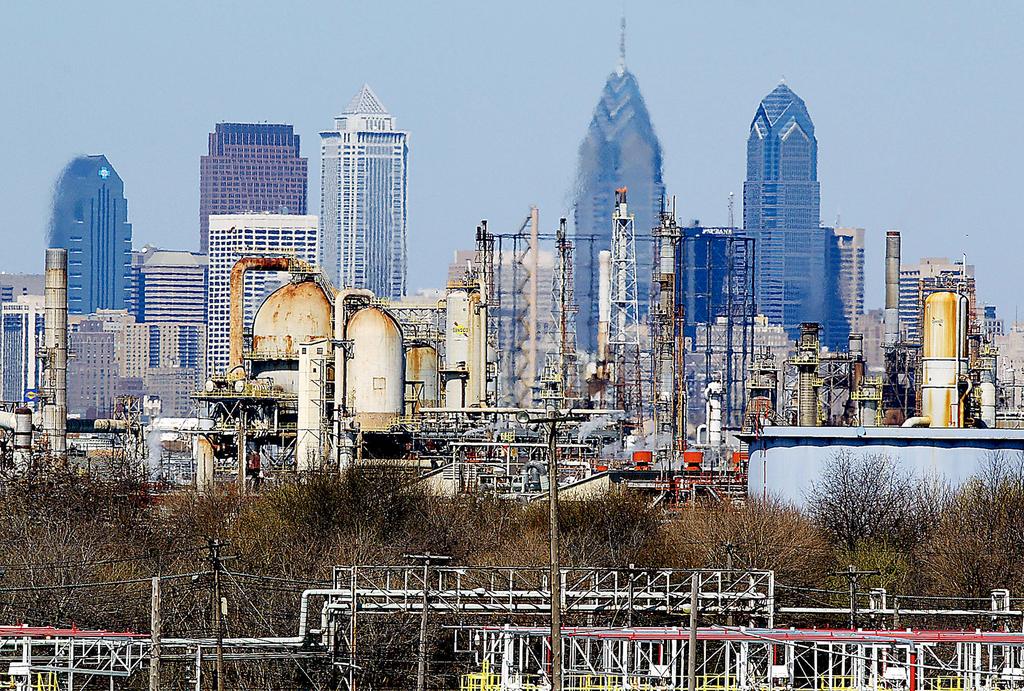
Philadelphia Energy Solutions has two entities interested in buying its refinery in South Philadelphia.
By Kennedy Rose – Editorial Intern, Philadelphia Business Journal
Another hat was thrown in the ring for the Philadelphia Energy Solutions refinery.
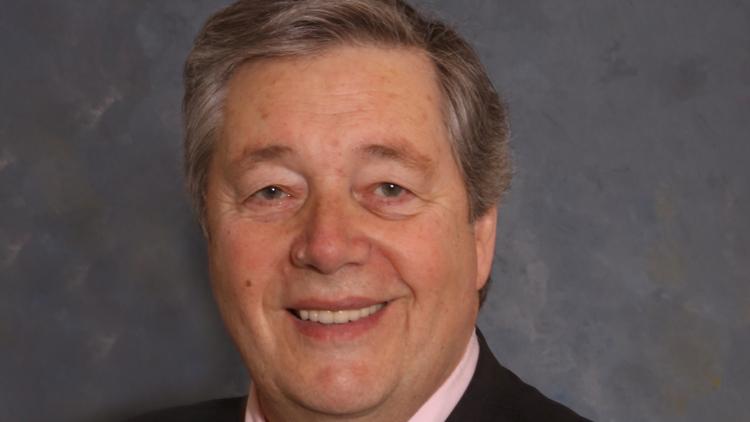
Philip Rinaldi, the retired founder, chairman and CEO of the shuttered refinery’s owner, has formed a new company — Philadelphia Energy Industries — to try to acquire PES, he announced Wednesday.
Philadelphia Energy Industries and RNG Energy have entered into a mutual “cooperation agreement” to make renewable fuels and other green energy projects if Philadelphia Energy Industries acquires the 1,300-acre refinery.
PES announced the refinery’s closure earlier this summer following a catastrophic explosion and fire that left much of it damaged. PES had financial troubles in the past, including filing for Chapter 11 bankruptcy protection last year and again this year. The refinery produced more than one-third of the gasoline consumed on the East Coast, and more than 1,000 workers were laid off as a result of the closure.
Philadelphia-based biofuels producer SG Preston is also reportedly in talks to buy the refinery, according to Reuters. SG Preston would transform the refinery into a plant that would produce biodiesel, marine diesel and jet fuel. The company was reportedly in talks with local unions and city economic development officials about its plans for the refinery. SG Preston could not be reached for comment.
“We can reinvigorate the site as an economic juggernaut that generates billions of dollars of revenue and provides thousands of high-paying jobs for our skilled professional and labor workforce,” Rinaldi said in a release.
Philip Rinaldi
Rinaldi has also met with leaders of United Steelworkers Local 10-1, according to the release.
Rinaldi retired from PES In March 2017. He led PES when Carlyle Group, the equity firm that owns the company, purchased the Sunoco refineries in South Philadelphia.
“Where do you find that kind of property with all of this industrial infrastructure, so close to rail, so close to river, so close to deep water access to the ocean, so close to population centers? I said ‘holy cow, this is really, what a very special place. You’d never be allowed to build anything like that in a location like this today.’ So it’s irreplaceable,” Rinaldi said of the refineries’ locations in 2015.
New Hampshire-based RNG Energy and PES have worked together in the past, including an agreement to build a $120 million anaerobic digester facility at Point Breeze Renewable Energy on PES’ property in 2018, partner WHYY reported. RNG currently operates a similar plant in Colorado. The plant will convert food waste into energy.
RNG Energy specializes in producing renewable energy through its anaerobic digesters, according to its website. It is the successor company to AgEnergy USA, which also worked with renewable energy.
President Trump has instructed Agriculture Secretary Sonny Perdue to exempt Alaska’s 16.7-million-acre Tongass National Forest from logging restrictions imposed nearly 20 years ago, according to three people briefed on the issue, after privately discussing the matter with the state’s governor aboard Air Force One.
The move would affect more than half of the world’s largest intact temperate rainforest, opening it to potential logging, energy and mining projects. It would undercut a sweeping Clinton administration policy known as the “roadless rule,” which has survived a decades-long legal assault.
Trump has taken a personal interest in “forest management,” a term he told a group of lawmakers last year he has “redefined” since taking office.
Politicians have tussled for years over the fate of the Tongass, a massive stretch of southeastern Alaska replete with old-growth spruce, hemlock and cedar, rivers running with salmon, and dramatic fjords. President Bill Clinton put more than half of it off limits to logging just days before leaving office in 2001, when he barred the construction of roads in 58.5 million acres of undeveloped national forest across the country. President George W. Bush sought to reverse that policy, holding a handful of timber sales in the Tongass before a federal judge reinstated the Clinton rule.
In a statement, Murkowski said Alaska’s entire congressional delegation and the governor have sought to block the roadless rule.
“It should never have been applied to our state, and it is harming our ability to develop a sustainable, year-round economy for the Southeast region, where less than one percent of the land is privately held,” she said. “The timber industry has declined precipitously, and it is astonishing that the few remaining mills in our nation’s largest national forest have to constantly worry about running out of supply.”
Alaskan leaders have found a powerful ally in the president. Speaking to reporters on June 26, after meeting with Trump during a refueling stop at Elmendorf Air Force Base, Dunleavy said of the president, “He really believes in the opportunities here in Alaska, and he’s done everything he can to work with us on our mining concerns, timber concerns; we talked about tariffs as well. We’re working on a whole bunch of things together, but the president does care very much about the state of Alaska.”
Trump expressed support for exempting the Tongass from the roadless rule during that conversation with Dunleavy, according to three people who spoke on the condition of anonymity to discuss internal deliberations. Earlier this month, Trump told Perdue to issue a plan to that effect this fall, these individuals said.
It is unclear how much logging would take place in the Tongass if federal restrictions were lifted because the Forest Service would have to amend its management plan to hold a new timber sale. The 2016 plan identified 962,000 acres as suitable for commercial timber and suggested no more than 568,000 acres of that should be logged.
John Schoen, a retired wildlife ecologist who worked in the Tongass for the Alaska Department of Fish and Game, co-authored a 2013 research paper finding that roughly half of the forest’s large old-growth trees had been logged last century. The remaining big trees provide critical habitat for brown bears, Sitka black-tailed deer, a bird of prey called the Northern Goshawk and other species, he added.
Trump has frequently talked with his advisers about how to manage the nation’s forests and signed an executive order last year aimed at increasing logging by streamlining federal environmental reviews of these projects. The president was widely ridiculed after suggesting during a visit to Paradise, the California community devastated by a 2018 wildfire, that the United States could curb such disasters by following Finland’s model, claiming that nation spends “a lot of time on raking and cleaning and doing things, and they don’t have any problem.”
The president has peppered Perdue with questions about forest management and has indicated that he wants to weigh in on any major forestry decision, according to current and former aides. Trump wanted to deprive California of federal funds in retaliation for the way officials managed the state’s forests, but he did not follow up on the plan.
One former Trump staffer, who spoke on the condition of anonymity to avoid retaliation, said forest policy has become “an obsession of his.”
White House and Agriculture Department officials referred questions this week to the Forest Service, which declined to comment. But the three people who spoke on the condition of anonymity said it was forging ahead with an exemption at Perdue’s instructions.
Chris Wood, president of the environmental group Trout Unlimited, joined with local business owners and conservation and outdoors organizations in urging federal officials to make more limited changes to the rule. He said the shift could jeopardize the region’s commercial, sport and subsistence salmon fishing industry.
About 40 percent of wild salmon that make their way down the West Coast spawn in the Tongass: The Forest Service estimates that the salmon industry generates $986 million annually. Returning salmon bring nutrients that sustain forest growth, while intact stands of trees keep streams cool and trap sediment.
Wood, who worked on the Clinton rule while at the Forest Service, said that in recent years, agency officials have “realized the golden goose is the salmon, not the trees.”
“They need to keep the trees standing in order to keep the fish in the creeks,” Wood said.
The question of what sort of roads should be built in the United States’ remaining wild forests sparked intense battles in the 1990s, culminating in the 2001 rule affecting a third of the Forest Service’s holdings in a dozen states. Some Western governors, including in Idaho and Wyoming, challenged the restrictions.
In some cases, conservationists and developers have forged compromises. A decade ago, Idaho officials opened up roughly 400,000 acres of roadless areas to ease operations for a phosphate mine while protecting 8.9 million acres in exchange.
But in Alaska, consensus has been more elusive, with many state officials arguing that the limits have hampered development.
The Forest Service has approved at least 55 projects in roadless areas, according to the agency, including 36 for mining and 10 related to the power sector. Most win approval “within a month of submission,” according to an agency fact sheet.
But Robert Venables, executive director of the Southeast Conference, said permitting for some projects has taken years and made them too costly to complete. A proposal that would have lowered electricity costs in the Alaskan community of Kake by connecting its supply to neighboring Petersburg, he said, won approval only after a lengthy review, which imposed requirements that boosted the price tag into the tens of millions.
“The roadless rule has shown itself to be very arbitrary and cumbersome,” Venables said in a phone interview. “Many projects have proven to be uneconomic because of the constraints here.”
A number of businesses operating in the region back the current restrictions, arguing that the forest’s rugged landscapes, abundant wildlife and pristine terrain draw visitors.
Dan Blanchard, owner and CEO of the adventure travel firm UnCruise Adventures, said in an interview that when he was working as a boat captain in the 1980s, “we had a difficult time avoiding clear cuts in southeast Alaska.”
“The forest has come back,” said Blanchard, who has 350 employees and brings 7,000 guests to Alaska each year. “The demand for wilderness and uncut areas have just dramatically increased. Our view here is, there are very few places in the world that are wild. Here we have one, in southeast Alaska, and it’s being put at risk.”
The county says new charges for inbound contamination violate its original processing agreement with ReCommunity. Republic says it’s still abiding by contract terms.
As commodity markets remain tight, the contractual relationships that underpin local recycling programs are being tested around the country. Now, a dispute over contamination rates in one New Jersey county has landed Republic Services in court.
Earlier this month, Camden County filed a complaint alleging the company’s recent decision to start enforcing a load inspection protocol with new “fees” constitutes a breach of contract. It also requested a temporary injunction, along with compensation for applicable recycling and attorney fees.
“The contract is quite clear and transparent with regard to the services that should be rendered,” Camden County Director of Public Affairs Dan Keashen told Waste Dive. “We believe that Republic is trying to change the playing field after it’s already been established.”
Republic, which declined to comment for this story, disputed these claims in a legal filing outlining why it believes everyone involved must adapt to the “changed environment” of recycling.
Like other large MRF operators, the company has repeatedly ensured shareholders it’s working diligently to renegotiate terms early, lock in more “fair” rates going forward and potentially walk away from unprofitable business if necessary. While some local governments are going along with this plan, others are digging in.
Contract terms and inspection protocols
Camden County has worked with FCR since 1993 and is currently about halfway through a three-year contract that expires in April 2020. The May 2017 deal includes a $70 per ton average commodity revenue threshold. FCR agreed to rebate 70% of any value beyond that amount, but never charge more than $5 per ton if value dropped below it.
That summer, everything changed. China made its initial scrap import ban announcement in July, and Republic announced plans to acquire ReCommunity, FCR’s prior parent company, weeks later.
Camden County is only responsible for a fraction of the estimated 42,000 tons per year coming in from member communities, but has acted as a representative in the past and chosen to take a lead role with this suit.
According to Republic’s filing, the company began communicating with county and local officials about contamination concerns in early 2018. This continued over multiple meetings and led to a March 2019 composition audit, for which local officials were reportedly present, finding an average inbound contamination rate of 17.5%.
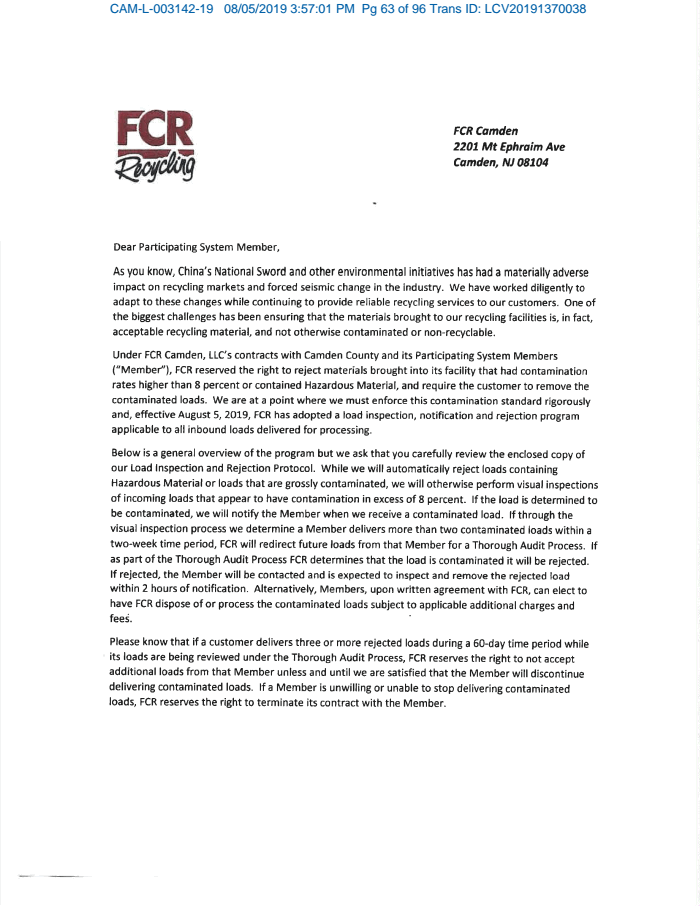
Still, FCR claims, local governments have been unresponsive to the company’s “predicament” caused by a “seismic change in the industry” due to market shifts. As a result, Municipal Services Manager Gary Smalley sent a letter in late July that kicked off the current dispute. Page 63 of CamdenvFCRExhibits2
The letter went on to outline the steps involved, ranging from visual inspections to a “Thorough Audit Process” (TAP). Any contaminated loads detected in the TAP stage must be collected by the member municipality within two hours. Alternatively, if agreed to in writing, the member can “elect to have FCR dispose of or process the contaminated loads subject to applicable additional charges and fees.”
According to the county’s complaint, processing would entail a $75 per ton surcharge for the entire load – well above the contract’s $5 per ton floor price. The disposal option would entail “a $250 handling charge, actual costs and an additional 15% to transport and dispose of the load.”
If three or more contaminated loads are detected in a 60-day period, FCR said it will stop taking material on a temporary basis. If the situation continues, FCR “reserves the right to terminate its contract” with any member.
The current legal dispute now revolves around whether these theoretically elective “additional charges and fees” fall outside contract terms, and constitute a breach of the floor price agreement.
The company has rejected Camden County’s call for a temporary injunction on the inspection protocols, saying it’s just asserting contractual rights: “FCR is not imposing any new fees. It is simply offering the County and its municipalities an additional service for rejected loads and will only invoice those municipalities that request that service and agree in writing to pay for it.”
In conclusion, Republic’s lawyers essentially claim the county and its member municipalities are asking to be “allowed to deliver contaminated loads with impunity.” They go on to point out that Camden County itself has only delivered an average of 17 tons per month during the first seven months of 2019, which means the “assertion that FCR’s ‘new fees’ will ‘wreak havoc’ on its budget is totally unsupported and lacks all credibility.”
Next steps
As of the latest filing, FCR said it had verified multiple loads with high contamination levels from member municipalities since the new protocol took effect. It remains unclear how the court will address questions around budgetary effects or legal standing given that Camden County filed the complaint, but also works with municipalities in the contracting process.
The presiding judge has scheduled an initial hearing for Sept. 9. In the meantime, the county maintains Republic has gone too far and market changes shouldn’t be an excuse to allegedly alter the agreement.
“[T]hose pressures from the marketplace do not void any piece of that contract that we signed in 2017,” said Keashen. “Everybody’s got an acute understanding of what’s been happening and how the marketplace has changed. Still a deal is a deal.”
Discussions about how to reduce contamination, and who should bear the cost during that process will continue to play out for months and years. Multiple companies have chosen to take a harder line by finding ways to charge new fees, but the legal avenue is still less common.
ABC Disposal remains engaged in its lawsuit with New Bedford, Massachusetts over whether high contamination rates could justify force majeure contract termination. Republic recently filed suit against a quasi-public agency in Connecticut over similar contamination issues in a MRF operations contract.
As long as market conditions remain challenging in the Northeast – including New Jersey, where state legislators recently held a hearing on the topic – this may not be the last time a local recycling contract ends up in court
Newark will receive a $120 million loan to fix its water woes in less than three years, officials said Monday, responding to growing public pressure and national attention to the city’s ongoing lead water crisis.
Flanked by Gov. Phil Murphy, Newark Mayor Ras Baraka and other officials, Essex County Executive Joseph DiVincenzo Jr. announced the county will issue bonds to more quickly eliminate the 18,000 old pipes causing lead to leach into the drinking supply.
Newark’s lead service lines, which connect individual homes to underground mains, will now be replaced in 24-30 months, instead of over a decade.
“This challenge was too important to ignore, and I am happy that Essex is able to help,” DiVincenzo said.
The money will speed up the timeline on Newark’s original $75 million plan, which was scheduled to take eight years and began in March. So far, more than 770 pipes have been replaced, according to the city.
“I don’t want to wait that long,” DiVincenzo said. “I want this long-term solution to happen sooner rather than later.”
With the new county funds, Baraka said lead line replacement will be entirely free for homeowners. Under the original program, homeowners were on the hook for up to $1,000 each.
“With this new money, we’re anticipating that no one will have to pay anything to have their lead service lines replaced,” Baraka said. He added that the hundreds of homeowners who already had their lines replaced will not be billed for the work.
The Essex County Improvement Authority will issue bonds at no cost to county taxpayers. The Essex County Freeholders, the Newark City Council and the ECIA’s Board of Commissioners are all scheduled to vote on the bond ordinance Tuesday. If approved, the money will be available by fall.
Newark will pay the county $6.2 million annually for 30 years. Baraka, however, said Newark taxes will not increase to pay back the bond; he will seek state or federal funding to cover the debt.
U.S. Rep. Donald Payne Jr., D-10th Dist., said he’s consulted with U.S. Rep. Dan Kildee of Michigan, who represents Flint, to find federal funding for Newark.
“I’m not starting from scratch. I have a program that has worked,” Payne said. “There were federal dollars that were allocated to Flint during this time, and I’m looking to recreate that for Newark.”
The $120 million bond will add to the$12 million the state already provided for the first phase of the program, bringing the total amount of committed funding to $132.2 million.