Jaclyn Rhoads, assistant executive director of the Pinelands Preservation Alliance, calls on governor to “fix and depoliticize” Pinelands Commission.
Top environmental organizations in the state yesterday pressed Gov. Phil Murphy to overhaul the Pinelands Commission, an agency they say fell short in protecting the preserve the past eight years.
The groups, in a rare show of solidarity, called on the governor to recast the commission, where many holdovers from the administration of former Gov. Chris Christie, all serving expired terms, remain in place 10 months after Murphy took office.
The 1-million-acre preserve, the largest intact coastal ecosystem between New Hampshire and Virginia, is widely viewed as a national treasure by conservationists. Home to rare plants and species found nowhere else, trillions of gallons of pristine water lie underneath the Pinelands.
Its future, however, has come under scrutiny as decisions have undermined protections to preserve the forests and habitat there, environmentalists say. Critics, including four former governors, have railed about proposed gas pipelines through core preservation areas.
“Inherently, the Pinelands are New Jersey’s wilderness,’’ said Alison Mitchell, policy director of the New Jersey Conservation Foundation. “They are still a wild place.’’
Whittling away at preserve

Recent decisions by the commission are not only whittling away at the edges of the Pinelands, but also at its core, according to Mitchell.
“We call on Gov. Murphy to fix and depoliticize the Pinelands Commission now,’’ said Jaclyn Rhoads, assistant executive director of the Pinelands Preservation Alliance. “Swift action is crucial; as long as the current leadership continues, we will see further poor decision making, assaults on rational, open processes, and violations of the Comprehensive Management Plan.’’ (The plan details where and what developments are suitable for the Pinelands.)
The governor appoints seven of the 15 members on the commission; seven others are named by county freeholders from within the Pinelands region. One is a federal appointment by the U.S. Secretary of the Interior.
Murphy has yet to make any Pinelands Commission appointments. Some of the holdover gubernatorial appointments are backed by environmentalists, although a few are looking to get off the commission after serving many years.
Rhoads said the groups have submitted names to the governor’s office, suggesting potential nominees. Murphy responded to the recommendations, saying his team is working on the issue, according to Rhoads.
The governor’s office did not respond to multiple emails requesting comment.
His lack of action on the Pinelands contrasts with other appointments Murphy has made on the New Jersey Highlands Council, where he replaced the executive director with a choice applauded by environmentalists.

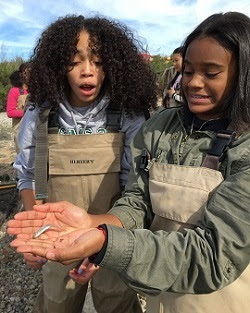 On October 16th, waterfronts up and down the Hudson River and the piers of New York Harbor were bustling with activity. Nearly 6,000 students and teachers armed with seine nets, minnow pots, and water-testing gear collected data and studied some of the Hudson River’s 200-plus species of fish and myriad invertebrates, tracked its tides and currents, and examined water quality and chemistry.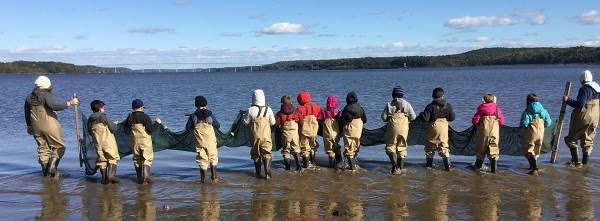


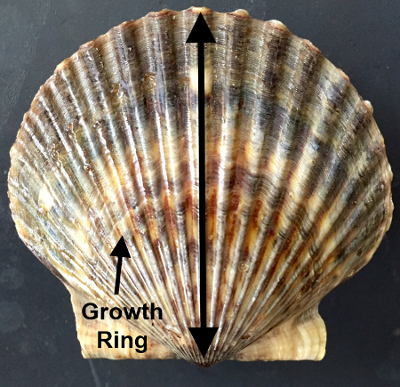 To retain bay scallops, they must be over 2-¼ inches in length from its mid-hinge to mid-bill and also display an annual growth ring(pictured), which ensures they have been able to reproduce prior to being harvested.Bay scallops have a relatively short life expectancy, averaging about 20-22 months but could live up to 26 months. Spawning occurs from mid-May through October or early November. During these months, shell growth occurs at a rate of about 10-12 mm per month, but can vary depending on environmental factors, including their surrounding habitat, water temperature, and food availability.Annual growth rings form where the stoppage of growth during the winter meets new growth that resumes in the spring. The location of the annual growth ring on the scallop valve (shell) may vary and is sometimes confused with growth checks on the scallop shell so you need to carefully check scallops for the presence of an annual growth ring.The annual growth ring is typically raised and easy to see. You can also check for the annual growth ring by running your fingernail from the shell edge to hinge; if it catches, this can be a good indicator of where the annual growth ring is. The growth ring can also be associated with a change in shell color and can be seen easier on the bottom shell but this is not always the case.For more information, visit