Hotly contested stormwater utilities bill inches forward

                                                                                             Chesapeake Bay Magazine


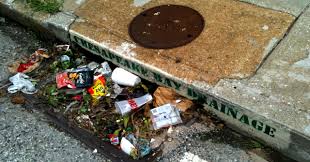
New Jersey has been talking about overhauling decrepit stormwater systems for a good 10 years. Is real progress finally in the offing?

Tom Johnson reports for NJ Spotlight:

A decade-long legislative push to overhaul the system that controls runoff from storms that pollute New Jersey’s waterways and increases flooding is edging closer to becoming law.
By a narrow 5-3 vote, the legislation (S-1073) won approval from an Assembly committee this past Monday. The bill, debated in one form or another for years, aims to fix a $15 billion problem — repairing and replacing aging, and in many cases failing, stormwater systems.
Those systems end up fouling a large portion of the state’s waters anytime it rains heavily, an occurrence that is becoming more common with climate change already impacting New Jersey. Aging infrastructure, much of it poorly maintained, fails to adequately control runoff from parking lots, streets, and farmland.
The result? A wide range of contaminants, including heavy metals, oil, and fertilizers wind up in streams, rivers, and bays — a major reason why only 5 percent of New Jersey’s waterways meet federal standards for being fishable, swimmable and drinkable.

Taxing impervious surfaces

The way to tackle the problem, advocates say, is to do what up to 40 other states have done: create stormwater utilities and give towns and other governmental entities the ability to impose fees on parking lots and other impervious surfaces to fund improvements to failing systems.
Critics, however, have dubbed the fees another “tax,’’ and another expensive expansion of government bureaucracy.
“I know people get offended at this, but it is a rain tax,’’ said Assemblyman Hal Wirths, a Republican from Sussex County, who voted against the bill in the Assembly Telecommunications Committee.

Hotly contested stormwater utilities bill inches forward Read More »
Some of Philly’s recyclables are being burned, not reused

reports for Action News ABC 6:

You collect it, sort it, and think it is being recycled.

But instead of being reused, some of the recyclables in the City of Philadelphia are being burned.

The reason comes down to money. In the past, municipalities actually made money getting rid of recyclables.

Not anymore.

In recent years, the price to get rid of bottles and other recyclables has skyrocketed, leaving budgets in tatters.

Why is the price going up? China, which used to be a dumping ground for much of America’s recycling, has tightened its standards.

They’re now turning away some foreign garbage.

“I would say we’re in a bit of a crisis given what’s going on in China with their strict regulations banning certain materials,” said Commissioner Carlton Williams of the Philadelphia Streets Department.

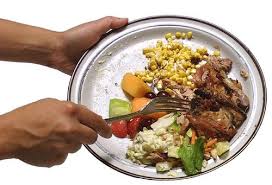
China is now keeping a close eye on what, in recycling parlance, is called contamination. It’s when the potential recyclables come in wet, or still contain food or residual waste.

All of those things play a big role in what they can accept and process.

In 2012, Philadelphia took in $6 million getting rid of its recycling. That was the last profitable year.

It now pays between $3 million and $4 million annually, and that number is climbing. The city’s recycling contract with Republic Services expired at the end of September.

Commissioner Williams says, last year, the city paid Republic on average $16 per ton to get rid of recycling.

When the contract expired last month, Republic wanted $170 per ton until a new contract was reached. The city refused.

Waste Management stepped in and is now taking half of the city’s recycling at a cost of $78 per ton.

The other half is being incinerated with other trash at a Southwest Philadelphia Covanta facility.


Read the full story


Like this? Click to receive free updates


Some of Philly’s recyclables are being burned, not reused Read More »

NJ food-waste recycling bill blocked; changes coming

Cole Rosengren reports
for Waste Dive:

New Jersey State Sen. Bob Smith now recognizes his efforts to
pass a commercial organics diversion mandate,
S1206, have essentially stalled. “I’m going to have to go at
it another way with them,” Smith told Waste Dive, referring to a group of
counties who operate landfills and have opposed the bill. “They really
should be out of the food waste business.”
Smith expects to do this through two new amendments. One will
tighten methane emissions regulations for landfills, with penalties for failure
to meet those standards. The second will open up new funding opportunities
for anaerobic digestion or other systems via the
New Jersey Environmental Infrastructure Trust (EIT). “I’d like to see the EIT not finance
methane recovery in a landfill. That should be stopped because it’s the wrong
way to go,” said Smith.
S1206 is currently in the Senate’s budget and
appropriations committee, following a February vote out of the environment
committee. Smith expects it will stay there for the foreseeable future given
the upcoming holiday season. He now expects to have a new version ready by the
spring of 2019
Smith first introduced a version of this
bill back in 2015. Its
successor, S771, moved further
along and prompted a range of comments from
counties and industry representatives. That bill received the endorsement of
the National Waste & Recycling Association’s local chapter. Though because
New Jersey’s disposal network is largely owned by counties, the majority of which have some
form of flow control
, many are still opposed to the concept.
This has remained the case even with key
amendments, such as reducing the coverage radius for generators near a facility
from 35 miles to 25 miles and making landfills with gas capture systems
eligible sites. That latter point had the additional effect of bringing Covanta
into the mix, as waste-to-energy (WTE) facilities would essentially be some of
the only non-compliant sites left. The New Jersey-based company
signed on to a letter with
two organics processors that called for an end to the landfill gas exemption.

Because
language is still being drafted, Smith was unclear on whether landfills with
gas capture systems would be taken back off the list of compliant sites, or
whether there might be a phase-out period as other sources have indicated is a
possibility. He did note there could be leeway for existing relationships
between counties and generators, with some type of “grandfather”
provision.


Read the full story


Like this? Click to receive free updates

NJ food-waste recycling bill blocked; changes coming Read More »

A great day in the life of the Hudson River and Harbor

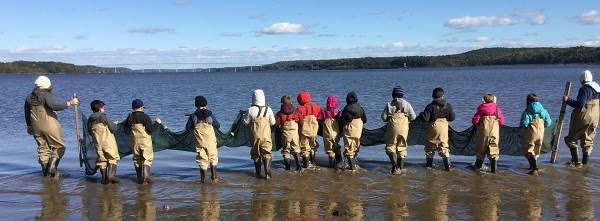
Elementary students line up in waders to seine at Kingston Point Beach


Hudson RiverNet  News from the Hudson River Estuary Program

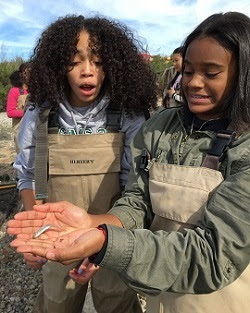
Students in Yonkers look at an Atlantic silversides. Rebecca HouserOn October 16th, waterfronts up and down the Hudson River and the piers of New York Harbor were bustling with activity. Nearly 6,000 students and teachers armed with seine nets, minnow pots, and water-testing gear collected data and studied some of the Hudson River’s 200-plus species of fish and myriad invertebrates, tracked its tides and currents, and examined water quality and chemistry.


During A Day in the Life of the Hudson and Harbor, schools partnered with environmental education centers and DEC using hands-on field techniques to capture a snapshot of the river’s ecology at more than 90 sites. Participating classes represent the diversity of the school population in urban and rural communities along the estuary.

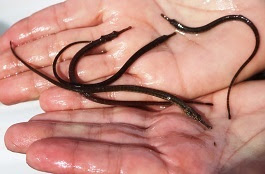
These northern pipefish were caught in the East River at Ferry Point in the Bronx. Photo by Chris BowserFluctuations in fish catches and ranges are due to many factors including weather, tides and salinity. Most are young fish, evidence of the Hudson’s importance as a nursery habitat. One of the more unusual fish caught during the day was the northern pipefish, which blends in perfectly with long seaweed and debris. Like its cousin the seahorse, the male pipefish takes a major role in taking care of its eggs until they hatch.
A Day in the Life of the Hudson and Harbor is sponsored by DEC’s Hudson River Estuary Program and organized with assistance from the Lamont-Doherty Earth Observatory of Columbia University.


Watch a clip about this year’s A Day in the Life of the Hudson and Harbor and check out other clips on the NY Department of Environmental Conservation’s YouTube Channel.


Like this? Click to receive free updates

A great day in the life of the Hudson River and Harbor Read More »

Greasy pizza boxes (and other stuff) you shouldn’t recycle

Greasy pizza boxes (and other stuff) you shouldn’t recycle Read More »

New York State’s Bay Scallop Season Opens November 5

The NY Department of Environmental Conservation reports:

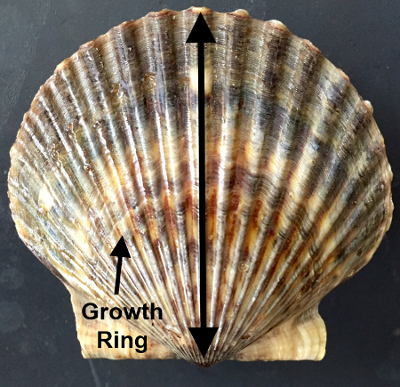
Bay scallops (Argopecten irradians) are New York’s official state shellfish, and a highly anticipated local seafood option this time of year. They get their name from the shallow waterbodies they’re found in, such as the Peconic, Gardiners and Shinnecock bays here in New York’s marine waters. Shellfish, which include scallops, clams, oysters, and mussels, can be harvested from certified waters in New York year-round, with the exception of bay scallops. Bay scallop season opens on the first Monday of November, which this year is November 5th and closes on March 31st.Bay scallop showing annual growth ring and direction of measurement To retain bay scallops, they must be over 2-¼ inches in length from its mid-hinge to mid-bill and also display an annual growth ring(pictured), which ensures they have been able to reproduce prior to being harvested.Bay scallops have a relatively short life expectancy, averaging about 20-22 months but could live up to 26 months. Spawning occurs from mid-May through October or early November. During these months, shell growth occurs at a rate of about 10-12 mm per month, but can vary depending on environmental factors, including their surrounding habitat, water temperature, and food availability.Annual growth rings form where the stoppage of growth during the winter meets new growth that resumes in the spring. The location of the annual growth ring on the scallop valve (shell) may vary and is sometimes confused with growth checks on the scallop shell so you need to carefully check scallops for the presence of an annual growth ring.The annual growth ring is typically raised and easy to see. You can also check for the annual growth ring by running your fingernail from the shell edge to hinge; if it catches, this can be a good indicator of where the annual growth ring is. The growth ring can also be associated with a change in shell color and can be seen easier on the bottom shell but this is not always the case.For more information, visit Shellfish Harvest Limits.Like this? Click to receive free updates

New York State’s Bay Scallop Season Opens November 5 Read More »