NJ gets $84.5 in federal water-infrastructure funding

From NJBIZ:

The U.S. Environmental Protection Agency said Thursday it has awarded nearly $84.5 million to New Jersey to help finance water infrastructure projects. The funds will primarily be used to upgrade wastewater and drinking water systems throughout the state.
EPA awarded $65,589,000 to the New Jersey Clean Water State Revolving Fund program and $18,957,000 to the New Jersey Drinking Water Revolving Fund program. These programs are administrated by the New Jersey Department of Environmental Protection and its financing program, the New Jersey Infrastructure Bank.
These awards, plus a 20 percent state match and repayments from prior CWSRF and DWSRF loans and interest earnings and bond issuances, will enable the financing of up to about $450 million of clean water and drinking water infrastructure projects in New Jersey, the EPA said.
“Working with our state and local partners to ensure our communities have affordable access to clean drinking water remains a critical priority for EPA,” said EPA Regional Administrator Pete Lopez in a statement. “We are pleased to provide significant funding as part of our overall efforts to help New Jersey meet its critical water infrastructure needs.”
Based on estimates from the U.S. Water Alliance, New Jersey’s CWSRF and DWSRF programs have the potential to create approximately 7,000 jobs.

NJ gets $84.5 in federal water-infrastructure funding Read More »

Could this be community solar’s chance to shine in NJ?

Murphy administration looks to deliver the benefits of solar power to low- and moderate-income customers

Tom Johnson reports for NJ Spotlight:

The Murphy administration is proposing a new pilot program aimed at bringing affordable solar power to low- and moderate-income customers.
The New Jersey Board of Public Utilities has proposed a new rule to create a community solar program to allow households that have largely been unable to take advantage of the surge in solar systems throughout the state in the past decade.
The pilot, mandated under a sweeping clean-energy bill signed into law by the governor this spring, is designed to create opportunities to offer solar power to renters, multifamily dwellings, and others.
The state has seen the installation of more than 90,000 solar arrays in recent years, but the boom has, for the most part, excluded less well-off populations — even though they also pay a surcharge on utility bills to subsidize the program.
“Heretofore, they pay the SBC (societal benefits charge) just like you and I do,’’ said BPU President Joseph Fiordaliso. “This will give them an opportunity to participate in the program.’’

Community solar catching on

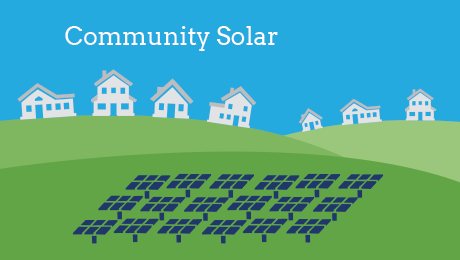
Community solar is a fast-growing segment of the clean-energy sector; more than 17 states already have established such programs. Generally, it refers to local installations that allow multiple subscribers to tap into the solar systems. These are usually people who cannot install their own arrays because their dwellings are in too much shade, or the condition of the roof is unsuitable, or they are simply unable to afford the panels.
“We must ensure that these policies, which are intended to improve the environment for all residents, do not keep any population in the margins,’’ said Gov. Phil Murphy in a press release.
To that end, the proposed program carves out a 40 percent earmark of the overall capacity for low- and moderate-income projects. That provision exceeds the 15 percent target recommended by many stakeholders at a meeting earlier this summer.
But the proposal only establishes a 75-megawatt annual capacity for the community solar program, half of the 150-megawatt capacity suggested by many developers.
“The bigger the program, the more benefits it generates,’’ said Pari Kasotia, Mid-Atlantic director of Vote Solar. “To incentivize project developers, they are looking for a larger program.’’

Could this be community solar’s chance to shine in NJ? Read More »

Republicans want to know if environmental groups are really foreign agents

Dino Grandoni reports for The Energy 202 
Utah Republican Rep. Rob Bishop speaks on the Senate floor at the Utah State Capitol in Salt Lake City in February. (AP Photo/Rick Bowmer, File)
Utah Republican Rep. Rob Bishop speaks on the Senate floor at the Utah State Capitol in Salt Lake City in February. (AP Photo/Rick Bowmer, File)
For years, environmentalists have criticized Republicans in Congress for ignoring climate change and trying to whittle down protections for endangered species.

Now, some top House members have found a way of striking back with more than just rhetoric. Two top GOP members of the House Natural Resources Committee have opened probes into three high-profile U.S. environmental groups working on issues abroad. The Republican congressmen want to know whether during their advocacy work the groups have acted as agents of foreign governments.

The environmental groups that find themselves in the GOP’s crosshairs say that big environmental issues, such as ocean pollution and climate change, are global in nature and require engaging foreign leaders.
They cast the probes as part of a campaign to browbeat them for opposing Republican policies that prioritize energy development over environmental concerns.

“We know this whole issue is an effort — a clumsy, McCarthyist effort — to intimidate us,” said Kieran Suckling, executive director of one of the targeted groups, the Center for Biological Diversity.

The latest environmental group probed by Reps. Rob Bishop of Utah and Bruce Westerman of Arkansas is the World Resources Institute. On Wednesday, the pair requested documents pertaining to the group’s work in China, where it has hailed the Chinese government’s pledges under the 2015 Paris climate accord.

“The Committee is concerned that WRI’s relationship with the Chinese government may have influenced its political activities in the United States,” Bishop and Westerman wrote in a letter sent to WRI on Wednesday.

Describing itself as “a global research organization,” WRI responded to the letter by saying in a statement to The Post that “it’s vital to work in the world’s developing countries and major economies, including China.” The group welcomes “the opportunity to respond to the Committee’s letter.”
 

Bishop and Westerman, respectively the chairmen of the committee and of its oversight and investigations subcommittee, have requested reams of documents from the groups by invoking the Foreign Agents Registration Act. The requests came in letters to WRI, the Natural Resources Defense Council and the Center for Biological Diversity sent over the past four months.

The 80-year-old FARA law requires those paid by or acting as agents of nations abroad to influence political activity at home to periodically disclose those ties with the U.S. government. The committee wants correspondence between the groups and foreign governments to see whether they are required to register as foreign agents and failed to do so.

FARA — once a low-profile law resulting in only “about a half-dozen prosecutions,”  according to Rosenstein — has made headlines recently since its use by special counsel Robert S. Mueller III to prosecute President Trump’s former campaign chairman, Paul Manafort.

Merely agreeing with the policy position of a foreign government, as many environmental groups end up doing, does not mean an organization needs to register with the Justice Department, said Joshua Rosenstein, a partner at Sandler Reiff Lamb Rosenstein & Birkenstock and an expert in foreign-registration law.

“Just having overlapping issues with some third party,” Rosenstein said, “does not mean you’re acting as an agent for that third party.”

That has been the defense of the NRDC and the Center for Biological Diversity. Both say they do not need to register under FARA because they do not work at the behest of foreign governments.
“We answer to our leadership, and only our leadership,” said Bob Deans, director of strategic engagement at the NRDC. “We’re held to account by our members and supporters.”

Like WRI, the NRDC is being investigated by the committee over its climate and environmental activities in China and, as Bishop and Westerman put it in their letters, with “the ruling Chinese Communist Party.”

“Of course we work in China,” Deans said. “The most populous country in the world, China is a key player in any serious effort to leave our children a livable world.”

Read the full story


Like this? Click to receive free updates

Republicans want to know if environmental groups are really foreign agents Read More »

I am part of the resistance inside the Trump administration


I work for the president but like-minded colleagues and I have vowed to thwart parts of his agenda and his worst inclinations.

The New York Times today took the rare step of publishing the following anonymous Op-Ed essay. It did so at the request of the author, a senior official in the Trump administration whose identity is known to the paper and whose job, the Times said, would be jeopardized by its disclosure.
President Trump is facing a test of his presidency unlike any faced by a modern American leader.
It’s not just that the special counsel looms large. Or that the country is bitterly divided over Mr. Trump’s leadership. Or even that his party might well lose the House to an opposition hellbent on his downfall.
The dilemma — which he does not fully grasp — is that many of the senior officials in his own administration are working diligently from within to frustrate parts of his agenda and his worst inclinations.

I would know. I am one of them.
To be clear, ours is not the popular “resistance” of the left. We want the administration to succeed and think that many of its policies have already made America safer and more prosperous.
But we believe our first duty is to this country, and the president continues to act in a manner that is detrimental to the health of our republic.
That is why many Trump appointees have vowed to do what we can to preserve our democratic institutions while thwarting Mr. Trump’s more misguided impulses until he is out of office.

I am part of the resistance inside the Trump administration Read More »

These vulnerable Republicans really don’t want voters to remember they tried to repeal Obamacare

Each of them is a competitive 2018
re-election race. Two are from New Jersey, one from New York.

Save_ObamaCre_poster_at_rally_in_2017
Supporters of the Affordable Care Act rally in 2017.

Josh  Israel reports for Think Progress:
With their party majority in extreme peril in November’s midterm elections, House Republicans are facing a dilemma. While they ran on a pledge to “repeal and replace” the Affordable Care Act, support for Obamacare now far exceeds support for the GOP-controlled Congress. Several incumbents have employed a bold strategy: hide the evidence of their position.
ThinkProgress examined the campaign websites of dozens of Republican incumbents in races deemed competitive by the Cook Political Report. More than 30 of those candidates omit mention of Obamacare repeal on their main page and any issues sections. But the Internet Archive’s Wayback Machine reveals that on at least 15 of those candidates did explicitly mention their intention to gut the law on their 2016 campaign sites.
All of these lawmakers but two voted to strip millions of Americans of their health insurance via the American Health Care Act — known as TrumpCare. One of the holdouts, Rep. Leonard Lance (R-NJ), said at the time that while he opposed the specific legislation, he remained “committed to repealing and replacing Obamacare.” The other, Rep. David Joyce (R-OH), reaffirmed he would “always keep an open mind on working to repeal the federal government-controlled healthcare system and replace it with a patient-centered bill that has real reforms and makes health care more accessible and affordable to all Ohio families.”
The list includes:

These vulnerable Republicans really don’t want voters to remember they tried to repeal Obamacare Read More »

NJDEP grants to offset electric charging stations costs

It Pay$ to Plug In
It Pay$ to Plug In:
NJ’s Electric Vehicle Charging Grants

It Pay$ to Plug In provides grants to offset the cost of purchasing and installing electric vehicle charging stations. The program is designed to expand New Jersey’s growing network of electric vehicle infrastructure, allowing residents, businesses, and government agencies to purchase and drive electric vehicles. EVs dramatically reduce vehicle emissions and improve air quality for everyone.
We are accepting applications for our waitlist in anticipation of funding becoming available!


Eligible Projects
  1. Workplaces: Charging stations for employees who drive electric vehicles. Examples include workplace chargers for employees who drive electric vehicles to work, and chargers for fleet vehicles.
  2. Public Places: Charging stations that are open to the public. Examples include charging stations in downtown areas, public parking lots and garages, hotels, transit centers, leisure destinations, colleges and universities, retail parking areas, and public parks.
  3. Multi-Unit Dwellings: Charging stations for multi-family residences, including apartments, condominiums and townhouses.

For more information, see the Flyer, Frequently Asked Questions, and Application Form and Instructions.
Still have questions? Email us at Drivegreen@dep.nj.gov or call (609)292-7953.

Eligible Applicants

Private residential dwellings other than multi-unit dwellings are not eligible for grants.

The program is open to all other applicants: Businesses, governments, non-profit organizations, and educational institutions.

Reimbursement Amounts

Upon completion of work in accordance with the eligibility criteria,NJDEP will reimburse each applicant for a percentage of eligible costs, up to a maximum of:

  • $750 per Level 1 charging station;
  • $5,000 per single-port Level 2 charging station;
  • $6,000 per dual-port Level 2 charging station.
Location Charging station available to the general public Charging station on government-owned property Charging station on non-government-owned property
Public place Yes 100% up to maximum 80% up to maximum
Workplace No 60% up to maximum 60% up to maximum
Multi-unit dwelling No 60% up to maximum 60% up to maximum
How to apply for a Charging Grant

Step 1: Complete the Application Form, Project Information Form, Certification Checklist, Deadlines Acknowledgement Form, W-9 Form, and sign your business up for NJStart if you haven’t already. Visit the It Pays to Plug In FAQ for answers to the most frequently asked questions.
Step 2: Submit to NJDEP Bureau of Mobile Sources at DriveGreen@dep.nj.gov.
Step 3: If the grant application is approved, NJDEP will provide and execute a grant agreement with the applicant.
Step 4: Install charging station(s) within 9 months of NJDEP grant execution. Do not purchase or install equipment before your grant has been executed. Completed projects are not eligible.
Step 5: Complete and submit the Reimbursement Request Form along with paid invoices to NJDEP Bureau of Mobile Sources at DriveGreen@dep.nj.gov.
Step 6: After NJDEP review and approval of provided invoices, grant funds will be disbursed.

NJDEP grants to offset electric charging stations costs Read More »